 Bellingham
 Exterior Work Built for Blaine's Coastal Conditions
Blaine sits right on the water at the northern edge of Whatcom County, where Semiahmoo Bay and Drayton Harbor meet the open air rolling in off the Strait of Georgia. That location is a big part of what makes the town special, and it's also what makes exterior maintenance a different animal than it is even a few miles inland. Homes here deal with a combination most contractors elsewhere never have to think about: salt-laden air working on fasteners and finishes, wind-driven rain that gets pushed sideways into wall assemblies, and a long, damp shoulder season that gives moss, algae, and mildew months to get established on anything that stays wet.
We've worked on homes throughout Whatcom County long enough to know that "coastal" isn't a marketing word out here — it's a maintenance schedule. Siding, roofing, windows, and decks all age faster near the water if they weren't built or installed with that in mind. This page walks through what we actually see on Blaine homes and how we approach siding, roofing, window, and deck work for this specific stretch of coastline.
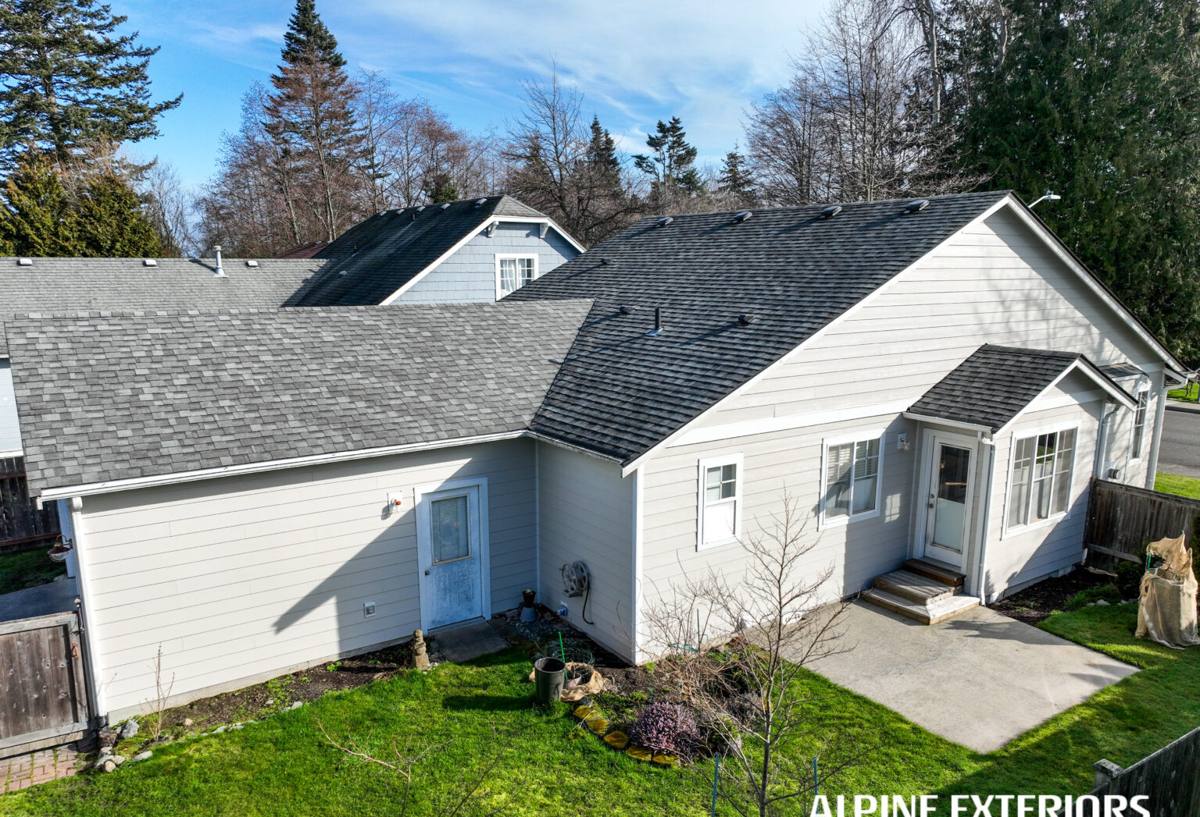
What Salt Air and Driving Rain Actually Do to a House
Salt Air
Airborne salt doesn't just sit on the surface — it settles into every seam, fastener head, and unpainted edge on the exterior. Over years, it accelerates corrosion on exposed metal (nail heads, flashing, hinges, hardware) and can dull or chalk lower-grade paint finishes faster than the same product would fade inland. It's a slow process, which is exactly why it's easy to underestimate until a homeowner is repainting or replacing trim a decade earlier than they expected to.
Driving Rain
Blaine's exposure to wind off the water means rain doesn't just fall straight down — it gets driven horizontally into walls, especially on the water-facing and windward sides of a house. That matters enormously for how siding is installed. Correct flashing details, properly lapped house wrap, and adequate clearance at butt joints aren't optional extras in this climate — they're the difference between a wall assembly that sheds water and one that slowly wicks it into the sheathing behind the cladding. A siding product can be excellent and still fail here if it goes up without those details done right.
Moss and the Long Wet Season
Whatcom County's wet season runs long, and Blaine's marine exposure keeps humidity and dampness lingering even between storms. North-facing walls, shaded rooflines, and anywhere airflow is limited become prime real estate for moss and algae. On roofing this shows up as dark streaking and moss colonies that hold moisture against shingles. On siding, it shows up as green-tinged staining, especially low on walls and near ground contact. None of this is unique to any one product, but it's a real factor in how often a homeowner ends up cleaning, treating, or repainting an exterior.
Why We Install James Hardie Fiber Cement — And Nothing Else
We made a deliberate decision to install only James Hardie fiber cement siding, and we don't install vinyl, LP SmartSide, Cemplank, Allura, or bare cedar or primed spruce. That's not a knock on every homeowner who has one of those products on their house today — it's a standard we hold ourselves to because of what we've seen play out over time, particularly in exposures like Blaine's.
- Non-combustible material. Fiber cement doesn't feed a fire the way wood-based products can, which matters for insurance conversations as much as safety.
- Engineered for moisture, not just painted against it. Hardie's HZ5 product line is specifically formulated for wetter, harsher climates like the Pacific Northwest coast — it resists moisture-related swelling and deterioration in a way that untreated or lightly primed wood products can't match over decades.
- Factory-applied ColorPlus finish. Because the color and finish are baked on at the factory under controlled conditions, you get more consistent salt- and UV-resistance than field-applied paint can typically deliver, and touch-up product is formulated to match.
- Won't rot or delaminate. Fiber cement doesn't have the wood fiber that gives pests and moisture something to work on, which removes one of the most common long-term failure points we see on older coastal homes.
- Strong transferable warranty. A warranty that survives a sale matters to resale value, which is a real consideration for coastal property.
We're upfront that fiber cement costs more upfront than vinyl and is heavier and more labor-intensive to install correctly than most alternatives. We think that trade-off is worth it for a house that's going to sit a few blocks from saltwater for the next 30-50 years, but we're happy to talk through the honest cost and performance differences for your specific home.
Siding Installation Details That Matter Here
Product choice is half the equation. Installation is the other half, and it's where a lot of coastal siding jobs actually go wrong — even with a good product on the wall.
| Detail | Why It Matters in Blaine's Climate |
|---|---|
| Rain screen / drainage gap | Gives any moisture that does get behind the siding a path to drain and dry instead of sitting against the sheathing |
| Flashing at windows, doors, and penetrations | These are the most common leak points on wind-driven-rain exposures — flashing has to be layered correctly, not just caulked |
| Fastener selection | Corrosion-resistant fasteners matter more near saltwater; the wrong fastener shows rust streaks within a few years |
| Butt joint and panel gaps | Manufacturer-specified clearances allow for expansion and prevent water from being trapped at joints |
| Caulking and sealant choice | Marine-grade, flexible sealants hold up to the freeze-thaw and wet-dry cycling that stiffer caulks crack under |
We install to James Hardie's published specifications for this climate zone, not a generic national standard. That's a meaningful distinction on a house exposed to this much moisture and wind.
Roofing in a Marine, Moss-Prone Climate
Roofs in Blaine face the same driving-rain and moss pressures as siding, plus direct UV and wind-driven precipitation with nowhere to hide. We look at a few things specifically for coastal Whatcom County roofs: ventilation (a well-ventilated attic dries out faster and slows moss growth from the underside), underlayment quality (a secondary water barrier matters more when wind pushes rain up under shingle tabs), and valley and flashing work, which is where the overwhelming majority of roof leaks actually originate — not in the field of the shingle itself.
Windows: Sealing Out Wind-Driven Rain
Old or poorly installed windows are one of the most common sources of water intrusion we find on coastal homes, and it's rarely the window unit itself that's the problem — it's the flashing and sealant around it. A window installed without proper flashing integration into the wall's water-resistive barrier can leak for years in small, hard-to-notice ways before the damage shows up as staining or soft trim inside. When we replace windows, we treat the flashing and integration with the surrounding wall assembly as seriously as the window unit itself, which matters more here than in a drier inland climate.
Decks: Built to Handle Wet Wood and Salt
Decks take a different kind of abuse near the water — constant damp-dry cycling, salt exposure on fasteners and hardware, and moss or algae buildup on any surface that doesn't dry out quickly. Ledger board flashing (where the deck attaches to the house) is one of the highest-risk failure points on any deck, and it's especially important to get right in a climate where that connection point rarely gets a chance to fully dry out. We use corrosion-resistant hardware and pay close attention to drainage and airflow underneath the deck structure, both of which slow down the moss and mildew that show up fast on shaded, damp decking near the coast.
Signs Your Exterior Is Losing the Fight With the Climate
- Green or black staining on siding, especially low on walls or on north-facing sides
- Moss buildup on the roof, particularly in shaded valleys or along the north slope
- Rust streaking below fasteners or metal trim
- Caulk that's cracked, shrunk, or pulled away from window and door trim
- Soft or discolored trim near window corners or deck ledger boards
- Paint that's chalking, peeling, or fading unevenly across different sides of the house
- A musty smell in a room near an exterior wall after heavy rain
None of these are emergencies by themselves, but they're the early signals worth having a local contractor look at before they turn into a sheathing or framing repair.
Why a Local Crew Matters for Blaine Homes
A contractor based elsewhere in the region can absolutely do competent work, but there's real value in a crew that works this specific stretch of coastline regularly. We see how Blaine's exposure compares to Bellingham proper, Birch Bay, and other parts of Whatcom County, and we adjust installation details — flashing, fastener choice, ventilation — accordingly rather than applying one generic approach everywhere. We're also close enough to come back for a warranty check or a quick look at something that's bothering you without it being a special trip.
What to Expect From an Estimate
A straightforward exterior evaluation covers a few things: the current condition of your siding, roofing, windows, and any decking; where moisture or moss has already gotten a foothold; what's driving the timeline (a known leak, an aging product, or just planning ahead); and an honest range for the scope of work that actually needs doing — not an upsell to redo everything at once if it doesn't need it.
If you're in Blaine and dealing with siding that's showing its age, a roof that's collecting more moss every year, windows that let in more draft and moisture than they used to, or a deck that needs attention, we'd be glad to take a look. Reach out for a free, no-pressure estimate using the form below.