 Bellingham
 Board and batten siding has become one of the most requested looks in Whatcom County — the vertical lines, the shadow detail, the way it reads as both farmhouse-simple and modern at the same time. It shows up on new builds in the county, on remodels around Fairhaven and Sehome, and on garage and shop conversions all over Bellingham. But "board and batten" is a pattern, not a product, and the material behind that pattern matters more here than almost anywhere else in Washington. Bellingham sits where salt air off the Sound, long stretches of driving rain, and a moss season that can run half the year all combine to punish siding that isn't built for it. This guide explains what board and batten actually is, which materials hold up and which don't, and why we install it exclusively in James Hardie fiber cement.
What Board and Batten Siding Actually Is
Board and batten is a two-layer siding pattern: wide, flat boards installed vertically, with narrower strips (the "battens") covering the seams between them. Historically it started as a practical barn-building method — the battens kept wind and rain out of the gaps between rough-sawn boards. Today it's chosen mostly for how it looks, but the original logic still applies: how well the seams are protected determines how well the whole wall performs over time.
There are a few ways to execute the look:
- True board and batten — wide boards with separate battens fastened over the joints.
- Reverse board and batten — the batten sits proud and the field board is recessed, giving a deeper shadow line.
- Panel systems with integrated battens — factory-milled panels that simulate the look without field-installed battens, often faster to install but with less depth to the reveal.
All three can look good from the curb. What separates a board and batten wall that lasts thirty years from one that needs re-siding in ten is almost entirely about the material and the seam detailing — not the pattern itself.
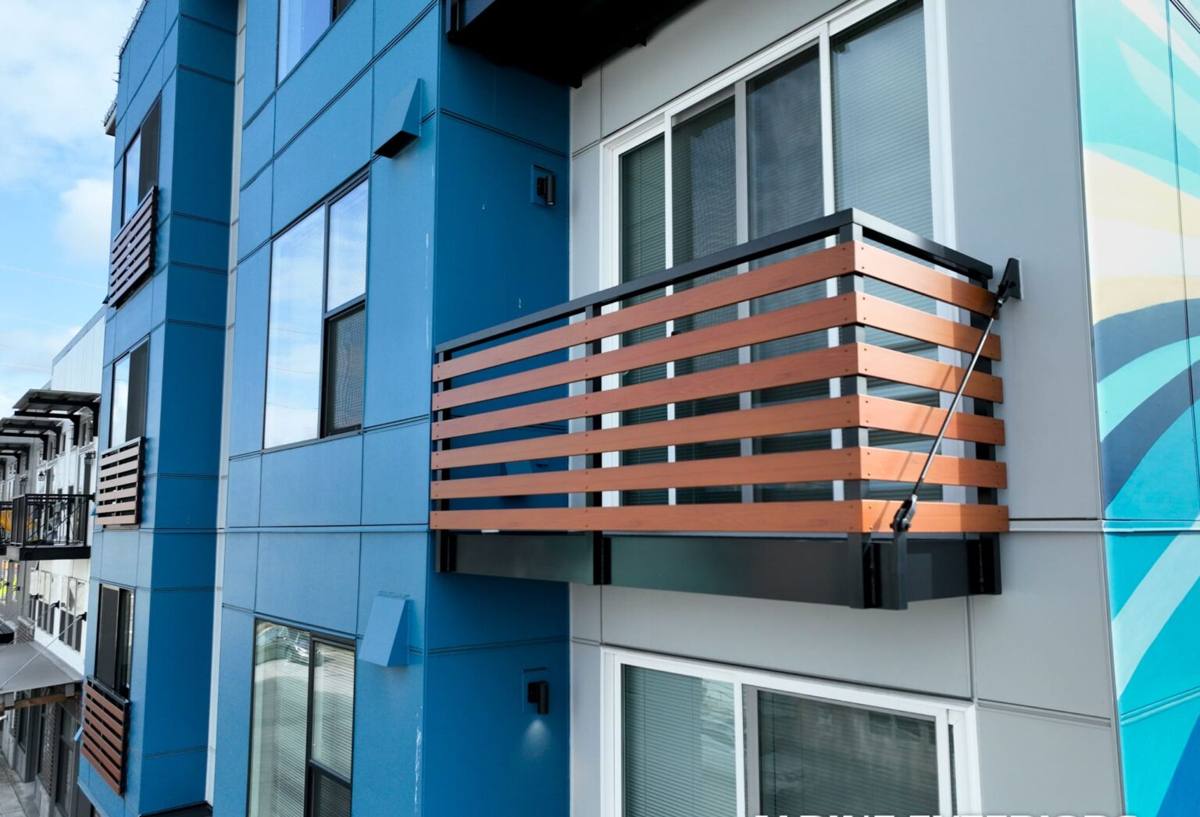
Why the Material Choice Matters More With This Profile
Vertical siding patterns have more horizontal joints and more places where water can find its way behind the cladding than a standard lap siding wall does. Every seam, every batten edge, every board end is a potential entry point for moisture if the material swells, shrinks, or degrades at the joint. In a drier climate that's a minor concern. In Bellingham, with Whatcom County's marine air and a rainy season that can deliver weeks of saturated ground and standing dampness against lower wall sections, it's a real one.
That's the core reason we don't install board and batten in every material that offers the look. The pattern itself is fine in any siding — the question is whether the material can survive being cut into narrow battens and butted joints for years of wet-dry cycling without cupping, splitting, or rotting at the edges.
Wood (Primed Spruce or Cedar)
Real wood board and batten has genuine charm, and cedar in particular has a long history in the Pacific Northwest. But solid wood battens are narrow, and narrow wood pieces move more per inch of width than wide boards do. In a climate with Bellingham's rainfall and humidity, those battens are exactly the pieces most likely to cup, crack, or pull away from fasteners first. Add moss growth from prolonged damp shade — common under mature trees in neighborhoods like Edgemoor and York — and you get a maintenance schedule that includes regular re-caulking, spot priming, and repainting on a cycle most homeowners underestimate when they first fall for the look.
Vinyl
Vinyl board and batten panels exist and are inexpensive, but vinyl is a thin, flexible material that was never designed to hold a crisp batten shadow line — it reads as plastic up close, and it can't be finished with the deep, factory-baked colors that make this style pop. Vinyl also expands and contracts significantly with temperature swings, which is a bad match for a pattern that depends on tight, stable seams.
LP SmartSide and Other Engineered Wood Products
Engineered wood siding is wood-based — strand or fiber composite bonded with resin — and it depends entirely on its factory coating and correct field sealing to keep moisture out of the wood core. That's a workable system in many climates. In a wet coastal county where cut edges and joints are exposed to sustained damp for months at a stretch, we've made the professional call that fiber cement is the more dependable long-term choice for a pattern with this many seams, and we don't install engineered wood products.
Cemplank, Allura, and Other Fiber Cement Alternatives
Other fiber cement brands exist and are technically similar to Hardie at the raw-material level. Our reason for standardizing on James Hardie isn't that the category is different — it's the specifics: Hardie's HZ5 formulation is engineered for climates like ours, the ColorPlus factory finish process, and the manufacturer's long, transferable limited warranty when installation follows their spec. Consistency across every job — one product line, one installation standard, one warranty path — is also simply easier to stand behind than juggling multiple manufacturers.
James Hardie Board and Batten: How It's Built
Hardie's board and batten options come in two main forms:
- Hardie Artisan and HardiePanel vertical siding — factory-engineered panels designed specifically for this look, with consistent thickness and factory-primed or ColorPlus-finished edges.
- HardieTrim battens — fiber cement trim boards installed over panel or board seams, matched to the same finish system so the whole wall weathers uniformly.
Because it's fiber cement, the material doesn't expand and contract the way wood or vinyl does, which means tighter, more stable joints over time — the exact detail that matters most on a vertical pattern. It also doesn't feed moss and mildew the way bare or lightly primed wood can, which matters through a Whatcom County wet season that keeps north-facing walls damp for long stretches.
ColorPlus Finish
Hardie's ColorPlus finish is baked on at the factory under controlled conditions, rather than brushed on in the field. That gives board and batten walls — where color consistency across narrow battens and wide boards is very noticeable if it's off — an even, durable finish that resists fading and chipping far longer than field-applied paint, and it comes with its own finish warranty separate from the product warranty.
Installation Details That Determine Whether It Lasts
Board and batten is less forgiving of installation shortcuts than standard lap siding, because there are more joints per square foot of wall. The details that separate a wall that performs for decades from one that fails early:
| Detail | Why It Matters |
|---|---|
| Weather-resistant barrier and proper flashing behind every seam | Battens cover the visible joint but don't stop water on their own — the drainage plane behind the siding does the real work |
| Correct fastener type and spacing | Under-fastened or wrong fasteners are the most common cause of early board movement and cracking |
| Rain screen or vertical furring where called for | Gives the wall an air gap to dry out between Bellingham's wet weeks, rather than trapping moisture against the sheathing |
| Batten spacing and reveal consistency | Uneven spacing is the fastest way to make an otherwise correct installation look amateurish |
| Proper caulking at trim, corners, and penetrations — not at every horizontal seam | Hardie's lap and panel joints are engineered to shed water without caulk in most spots; over-caulking traps moisture instead of releasing it |
This is also where hiring matters as much as the material choice. Board and batten hides installation mistakes less than horizontal lap siding does — gaps, uneven reveals, and poor flashing show up as visible defects, not just performance problems down the road.
Cost Factors to Expect
Board and batten generally costs somewhat more than standard lap siding in the same material, mainly due to labor — more cuts, more seams, more precision in layout. Rough cost drivers homeowners should understand before getting quotes:
- Wall complexity — dormers, gables, and multiple wall heights add cutting and layout time.
- Whether it's a full re-side or a mix (board and batten as an accent alongside lap siding, a common choice for gables or entry features).
- Existing wall condition — sheathing repair or rain screen additions on an older home add cost but improve long-term performance.
- Trim and corner detailing, which is more visually prominent on vertical patterns than on horizontal siding.
We'll always walk through these specifics for your actual home rather than quoting off a generic number — every wall and every roofline changes the math.
Where Board and Batten Works Best on a Bellingham Home
We see the strongest results when board and batten is used deliberately rather than as a blanket choice for the whole exterior:
- As a full-wall treatment on modern farmhouse or craftsman-adjacent designs, where the vertical lines suit the massing of the home.
- As an accent on gables, dormers, or a front entry feature, paired with horizontal Hardie lap siding on the main walls.
- On shops, ADUs, and garage conversions, where the pattern's simpler, cleaner lines fit smaller structures well.
Whichever approach fits your home, the pattern only pays off long-term if the material underneath can handle Bellingham's climate — and that's the piece worth getting right before anything else.
If you're considering board and batten for a Bellingham or wider Whatcom County home, we're happy to walk the property with you, talk through where it makes sense, and put together a straightforward, no-pressure estimate — no obligation either way.