 Bellingham
 What Primed Wood Siding Is, and Why Homeowners Still Ask About It
Primed wood siding — typically finger-jointed spruce, pine, or fir milled into lap boards and coated at the factory with a base primer — has been a staple of Pacific Northwest construction for decades. It's affordable, it's familiar, it's easy for crews to cut and nail, and it takes paint well when it's fresh. A lot of homes around Bellingham, from Fairhaven to the Samish neighborhood, still wear original or replacement primed wood siding from the 1980s and 90s.
We get asked about it fairly often, usually by homeowners comparing quotes and wondering why our company doesn't offer it as an option. It's a fair question, and the honest answer isn't that primed wood is a bad product on paper. It's that once you factor in Whatcom County's climate and what primed wood actually requires to perform over 20-30 years, it stops making sense as something we're willing to install and stand behind.
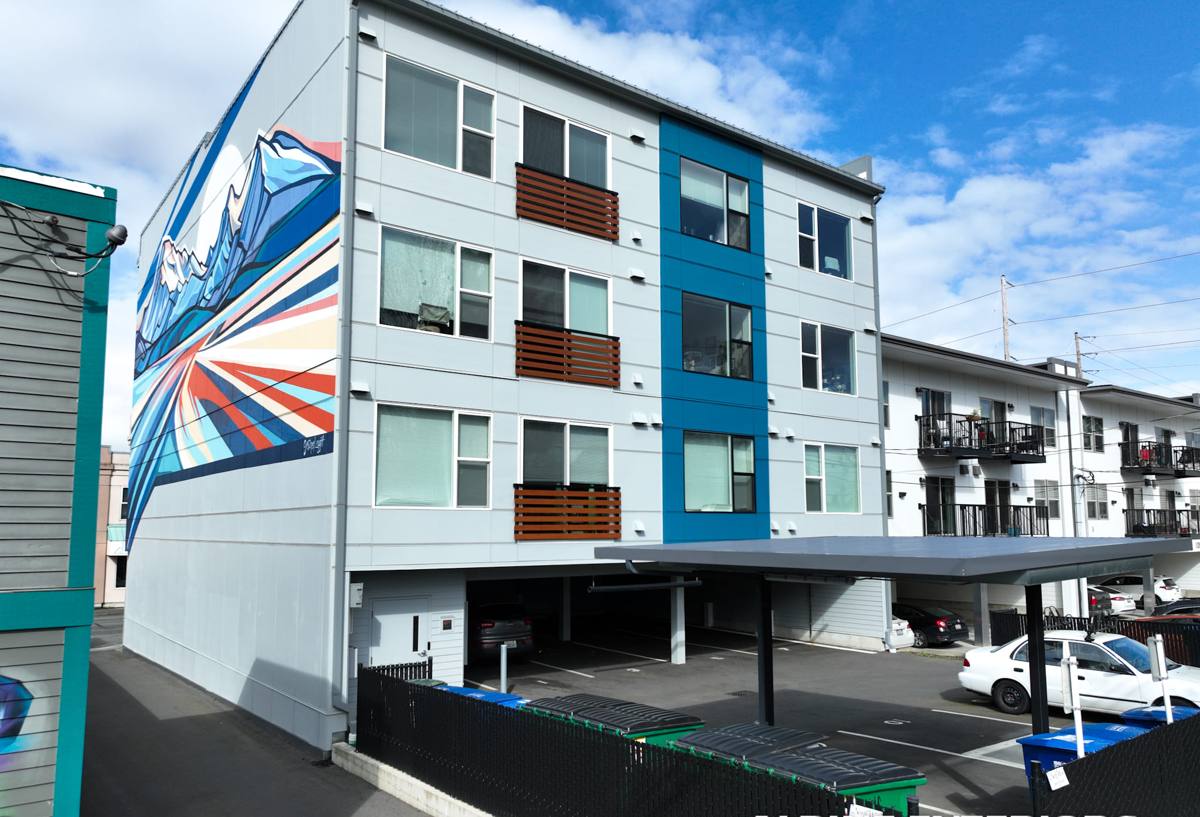
What Primed Wood Siding Gets Right
Before explaining why we don't install it, it's worth being straight about what it does well:
- Workability — it cuts, copes, and nails easily with standard tools, which keeps labor costs down.
- Familiar look — real wood grain and traditional lap profiles that some homeowners specifically want.
- Lower material cost upfront — it's usually one of the cheaper siding materials by the square foot before installation.
- Repairable in small sections — a damaged board can be cut out and replaced without much fuss, at least early in its life.
Those are real advantages, and for a dry climate with a short paint-refresh cycle and a homeowner committed to staying on top of maintenance, primed wood siding can hold up reasonably well. Bellingham is not that climate.
Primer Is Not a Finish — It's a Head Start
This is the detail that gets lost in the sales conversation. Factory "primed" siding is not factory-finished siding. The primer coat is there to seal the wood enough to survive shipping, storage, and installation before a painter applies the actual finish coats on site. If that final finish isn't applied promptly, and applied correctly on all six sides of every board (including the back and the cut ends), the wood starts absorbing moisture immediately.
In practice, we see a lot of primed wood siding that sat exposed for weeks during a build, or that only ever got painted on the visible face, never on the back or the field-cut ends where boards meet at corners and openings. Those unsealed edges are exactly where Bellingham's driving rain gets in first.
Why Bellingham's Climate Works Against This Product
Salt Air and Driving Rain
Being this close to Bellingham Bay and the Salish Sea means siding here deals with salt-laden air on top of ordinary rainfall. Salt air accelerates the breakdown of paint films and speeds up wood's natural swell-and-shrink cycle. Add wind-driven rain off the water, which pushes moisture sideways into lap joints and butt seams rather than letting it simply run off, and you have conditions that stress a paint film in ways a drier inland climate never would.
A Long, Genuine Moss Season
Whatcom County doesn't get a short shoulder season of dampness — it gets months of it. Moss and algae need constant moisture and shade to establish, and that's exactly what north-facing walls, tree-lined lots, and covered porches provide here for a good chunk of the year. Once moss gets a foothold on painted wood siding, it holds water directly against the surface, and that's when paint failure and wood softening usually follow.
Freeze-Thaw and Swelling Cycles
Wood is hygroscopic — it takes on and releases moisture with the weather. Every wet-dry cycle causes slight expansion and contraction. Over enough cycles, that movement works paint loose at the edges and opens hairline cracks at nail heads and butt joints, which then become the next entry point for water. In a climate with as many wet-to-dry swings as ours, that cycle repeats far more often than it would somewhere drier.
The Maintenance Math Doesn't Work in Real Life
Every primed wood siding system is sold with the same asterisk: it needs to be repainted on a schedule, caulked at the joints, and inspected regularly for soft spots. In theory that's manageable. In practice, most homeowners repaint on the schedule their budget and calendar allow, not the schedule the wood actually needs — and in a marine climate like ours, those two schedules drift apart fast.
We've been called out to enough homes with 12-15 year old primed wood siding to see the pattern: paint holding fine on the south and west walls that get sun and airflow, and soft, delaminating boards on the north wall and around downspouts where moisture never fully leaves. That's not a defect in any one paint job — it's what happens when a moisture-absorbent material meets a climate that doesn't give it much of a chance to dry out.
What We Typically See on Failing Primed Wood Siding
- Peeling or alligatored paint, especially on north and shaded walls
- Soft or spongy boards near the bottom courses and around window sills
- Moss and algae staining that returns within a season of cleaning
- Open joints at butt seams and corner boards where caulk has failed
- Swollen or cupped boards where the back side was never sealed
- Nail popping from repeated swell-and-shrink movement
Primed Wood vs. James Hardie Fiber Cement
| Factor | Primed Wood Siding | James Hardie Fiber Cement |
|---|---|---|
| Core material | Solid or finger-jointed wood — absorbs moisture | Cement, sand, and cellulose fiber — dimensionally stable, non-combustible |
| Finish | Site-applied paint over factory primer | Factory-applied ColorPlus finish, baked on and warranted separately |
| Repaint cycle in our climate | Roughly every 4-7 years to stay ahead of failure | Typically well over a decade before repaint is needed, if ever with ColorPlus |
| Moisture behavior | Swells, cups, and can rot if paint film fails | Engineered to resist moisture damage; won't rot |
| Moss/algae resistance | Textured surface and organic material both feed growth | Denser, less hospitable surface; still needs occasional washing |
| Warranty structure | Product warranty rarely covers paint failure or installation | Manufacturer warranty on the board and separately on the ColorPlus finish |
| Upfront material cost | Lower | Moderate |
| Realistic lifecycle cost here | Higher once repaint labor is factored in over 20+ years | Lower over the same period due to reduced maintenance |
The Warranty Problem
Most primed wood siding manufacturers warranty the board itself against manufacturing defects — not against paint failure, moisture damage, or rot once it's installed. That leaves the homeowner carrying essentially all of the long-term risk, because the two things most likely to go wrong (paint breakdown and moisture intrusion) are also the two things the warranty is least likely to cover.
That's a hard thing for us to stand behind as installers. When we put siding on a home, we want to be able to tell the homeowner what's covered and for how long, in plain terms. With primed wood, the honest answer is usually "not much, once it's painted and up on the wall" — and that's not a conversation we want to keep having.
What We Install Instead, and Why
We install James Hardie fiber cement siding exclusively, in the HZ10 product line engineered for this region's wet, marine climate. It's non-combustible, dimensionally stable in a way wood simply cannot be, and it carries a ColorPlus factory finish backed by its own warranty separate from the substrate warranty. It also comes with a strong transferable product warranty, which matters if a home changes hands before the siding's functional life is up — something that's much harder to offer with a repainted wood system.
None of this means Hardie is maintenance-free. It still needs periodic washing, especially given how much moss and algae pressure this area sees, and joints and caulking still need attention over time. But the baseline performance — how it handles constant dampness, salt air, and long stretches without direct sun — is built into the material itself rather than dependent on a paint job holding up perfectly year after year.
A Few Questions Worth Asking Any Siding Contractor
- What does the warranty actually cover — the substrate, the finish, or just materials before installation?
- How often will this siding realistically need repainting or resealing in a marine climate like Whatcom County's?
- Are all six sides of every board sealed, including field cuts made on site?
- What happens to moisture that gets behind the siding — is there a drainage plane and proper flashing detail?
- Is the warranty transferable if the home is sold?
Our Honest Bottom Line
Primed wood siding isn't a scam or a bad product used by bad contractors — it's a material that was designed for a level of upkeep that's genuinely hard to sustain in a place with this much rain, salt air, and moss pressure. We'd rather tell homeowners that up front than sell a product we know will demand more time, money, and attention than most people expect, especially once the original paint job starts to age.
If you're weighing your options for a siding replacement in Bellingham or anywhere in Whatcom County, we're happy to walk your home, point out where moisture and moss are likely to cause the most trouble, and talk through why we've standardized on James Hardie fiber cement. Reach out for a free, no-pressure estimate using the form below.