 Bellingham
 Sudden Valley's Setting Creates Its Own Siding Challenges
Sudden Valley sits wrapped around the south end of Lake Whatcom, just outside Bellingham, and the setting that makes it such a desirable place to live is the same setting that's hard on exterior building materials. Homes here range from lakefront properties with open exposure to wind and driving rain, to hillside lots tucked under mature fir and cedar canopy where sunlight barely reaches the north-facing wall for months at a time. Both situations put real stress on siding, just in different ways.
We've worked on homes throughout Whatcom County long enough to know that a one-size-fits-all approach to siding doesn't hold up out here. A product that performs fine on a sunny, open lot in town can struggle on a shaded Sudden Valley property where moisture lingers on the wall for days after a storm. That's part of why we standardized on one siding system rather than offering a menu of options — we'd rather install the product we trust in every condition this area throws at it than sell whatever's cheapest for a given job.
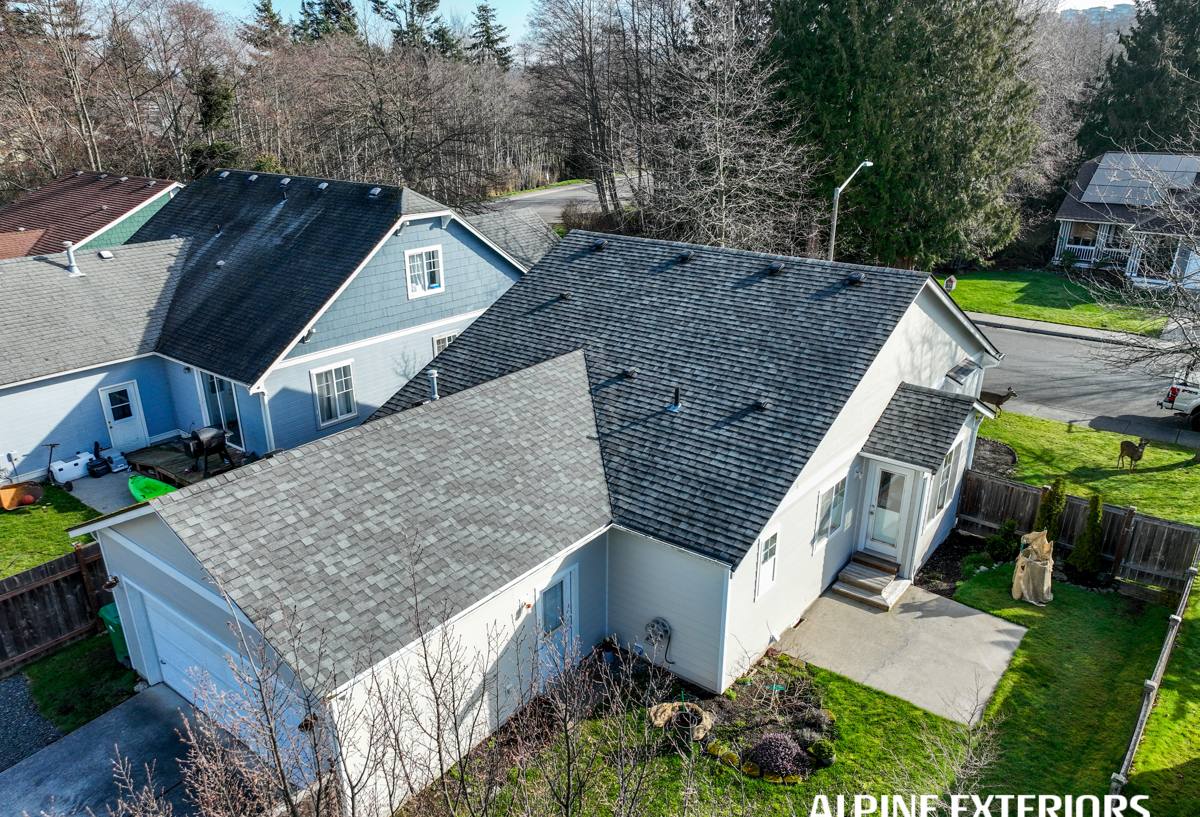
The Climate Sudden Valley Homes Actually Face
Driving Rain and Wind-Driven Moisture
Whatcom County gets a lot of rain, but it's not always the gentle, straight-down kind. Storms moving in off the water can push rain sideways against exposed walls, driving moisture into seams, trim joints, and anywhere the siding system wasn't detailed correctly. On lakefront and higher-elevation lots around Sudden Valley with fewer windbreaks, this wind-driven rain is a bigger factor than most homeowners realize until they see staining or soft spots developing around windows and corners.
Shade, Tree Cover, and a Long Moss Season
The flip side is the interior, tree-covered lots that make up a large share of Sudden Valley. Heavy canopy keeps homes cooler in summer, but it also means walls stay damp longer after every rain, sunlight doesn't dry things out the way it would on an open lot, and moss and algae get a real foothold. In this climate, moss season isn't a two-week nuisance — it can run for much of the fall through spring. Siding that traps moisture against the substrate, or that develops surface texture moss can grip onto, is going to need more attention here than it would almost anywhere else in the state.
Marine Air and Humidity
Bellingham and the surrounding lowlands sit close enough to the water that homes throughout the region deal with a steady dose of marine air and humidity, and that moist, salt-tinged air accelerates wear on fasteners, finishes, and any material that isn't built to shrug off constant moisture cycling. Sudden Valley, being inland on a freshwater lake, gets less direct salt exposure than waterfront Bellingham neighborhoods, but the same general humidity and rainfall pattern applies — it's simply compounded here by the shade and tree cover.
Why We Only Install James Hardie Fiber Cement
We install James Hardie fiber cement siding exclusively. Not because it's the only decent product on the market, but because after years of working on homes in exactly the conditions described above, it's the one system we're confident holds up without turning into an ongoing maintenance project for the homeowner.
Fiber cement is made from cement, sand, and cellulose fibers, which means it doesn't absorb and swell with moisture the way wood-based products can, and it won't rot. That matters enormously on a shaded Sudden Valley lot where a wall might stay damp for days at a stretch. It's also non-combustible, which is worth factoring in in a region where wildfire smoke and dry summer stretches have become more common even in a generally wet climate.
We get asked why we don't offer vinyl, LP SmartSide, or other fiber cement brands like Cemplank or Allura. Vinyl is inexpensive and low-maintenance in mild conditions, but it can warp or crack in temperature swings and simply doesn't hold paint or color the way fiber cement does if a homeowner ever wants to change the look. LP SmartSide is an engineered wood product — treated and reasonably durable, but wood-based products depend heavily on flawless caulking, flashing, and maintenance to keep moisture out over the long run, and in a climate like this one, that margin for error is thinner than we're comfortable with. Other fiber cement brands may be perfectly serviceable, but we've built our installation crews, warranty relationships, and product knowledge around one manufacturer so we can guarantee the work rather than juggling multiple systems. James Hardie's factory-applied ColorPlus finish and transferable warranty backing give us and the homeowner more certainty than we get anywhere else.
The Right Hardie Product Line for This Setting
James Hardie engineers its siding by climate zone, and the Pacific Northwest falls under their HZ5 line, built specifically for regions with sustained moisture, humidity, and freeze-thaw cycling. For Sudden Valley homes we typically look at:
- HardiePlank lap siding — the standard horizontal siding for most homes, available in several exposure widths and textures
- HardiePanel vertical siding — often used for accent sections, gables, or a more modern look on newer builds
- HardieTrim — matched trim boards around windows, corners, and fascia, which is where a lot of moisture problems start if mismatched materials are used
- HardieShingle — for homes wanting a shingle-style accent without the maintenance burden of real cedar shingles
ColorPlus factory-finished color is worth calling out specifically for shaded, moss-prone lots: because the color and protective coating are baked on at the factory rather than field-applied, the finish holds up better to the repeated wet-dry cycling that breaks down field paint faster in low-sun areas.
Beyond Siding: Roofing, Windows, and Decks for the Full Envelope
Siding doesn't work in isolation — it's one piece of the building envelope, and on a lake or hillside lot, the roof, windows, and any exterior decking all interact with the same moisture and shade issues. We handle roofing, window replacement, and deck construction alongside siding work for that reason. A roof with failing flashing will send water straight down behind new siding no matter how well it's installed; windows with worn seals will do the same at every opening. When we're on site for a siding job, we're looking at the whole envelope, not just the wall surface, and we'll tell you honestly if something else needs attention before or alongside the siding work.
Decks are their own category out here — lakefront and forested lots mean a lot of outdoor living space that takes a beating from the same rain and shade patterns. If your deck is due for attention at the same time as your siding, doing both in one project can save on setup and disruption.
What a Sudden Valley Siding Project Looks Like
Every home is different, but a typical project follows the same general sequence:
- On-site assessment of existing siding, trim, flashing, and any moisture or rot already present behind the wall
- Removal of old siding and inspection of the sheathing underneath — this is where hidden damage from long-term moisture exposure often turns up
- Repair of any damaged sheathing or framing before new material goes on
- Installation of a proper water-resistive barrier and correctly lapped flashing at every window, door, and penetration
- Installation of Hardie siding, trim, and accessories to manufacturer spec, with attention to fastener placement and clearances
- Final walkthrough and cleanup
Access and staging can take a little more planning on hillside or wooded Sudden Valley lots than on a flat, open lot in town, and we account for that when scheduling and quoting rather than treating every job the same.
Cost Factors for Sudden Valley Homes
| Factor | Why It Matters Here |
|---|---|
| Home size and wall area | Larger lakefront and multi-level hillside homes naturally require more material and labor |
| Existing damage | Shaded, moisture-prone walls sometimes hide rot that needs repair before new siding goes on |
| Access and terrain | Steep or wooded lots can require extra staging, scaffolding, or protective work around landscaping |
| Trim and detail complexity | Homes with more windows, gables, and architectural detail take more time to flash and trim correctly |
| Product line and texture | Panel, lap, and shingle-style siding, along with texture and color choice, affect material cost |
Choosing a Local Contractor
A siding job is only as good as the crew installing it — the best material in the world will fail early if it's flashed or fastened wrong. A few things worth checking before hiring anyone for exterior work in this area:
- Are they licensed and insured to work in Washington, and can they show proof without hesitation
- Do they have direct, hands-on experience with James Hardie fiber cement specifically, not just siding in general
- Will they walk you through flashing and moisture-barrier details, not just color and product line
- Do they offer a clear written estimate with no vague allowances
- Are they familiar with the terrain and access challenges of hillside or wooded lots, not just flat suburban jobs
- Do they carry manufacturer certification that supports the full Hardie warranty
Being local matters here in a practical way, not just a marketing one — a crew that's worked through a few Whatcom County winters knows what wind-driven rain and prolonged shade actually do to a wall, and builds the job accordingly.
Living with Fiber Cement in a Moss-Prone Environment
No siding material is entirely maintenance-free in a climate this wet, but fiber cement gives homeowners the easiest version of that maintenance. Because the material itself doesn't absorb moisture or rot, moss and algae growth stays a surface-level cosmetic issue rather than a structural one. A periodic gentle wash — never high-pressure blasting directly into seams — keeps the ColorPlus finish looking clean without wearing down the coating. Homeowners on heavily shaded Sudden Valley lots should expect to clean siding somewhat more often than a neighbor on an open, sunny lot, but they're not fighting the rot and warping issues that come with wood-based products in the same conditions.
If you're weighing a siding, roofing, window, or deck project on your Sudden Valley home, we're happy to come take a look and give you a straight answer about what your home actually needs. There's no cost and no pressure — just a local crew's honest read on your property, and an estimate you can use to make a decision on your own timeline.