 Bellingham
 Exterior Work in Birch Bay: A Different Set of Conditions
Birch Bay sits right on the water in Whatcom County, a few minutes from Blaine and a short drive up the coast from Bellingham. That waterfront location is exactly why homes there wear differently than homes further inland. Salt-laden air off the bay, near-constant wind exposure, driving winter rain, and long stretches of gray, damp weather all put extra stress on siding, roofing, trim, windows, and decks. A house that would coast along for decades in a more sheltered part of the county can start showing real problems in half that time if it's sitting exposed to the water.
We work throughout Bellingham and Whatcom County, and Birch Bay is one of the areas where we see the clearest difference between exterior materials that were built for this environment and exterior materials that weren't. This page covers what we typically see on Birch Bay homes, how our siding, roofing, window, and deck work addresses it, and why we've standardized on one siding product rather than offering a menu of options.
What Salt Air and Coastal Wind Actually Do to a House
Salt Exposure
Airborne salt doesn't just affect metal fasteners and railings — it accelerates the breakdown of paint films, caulking, and lower-quality composite materials. Salt is hygroscopic, meaning it pulls moisture out of the air and holds it against the surface it settles on. On siding, that means finishes fail faster, seams stay damp longer, and any material with a paper-based core or edge is at higher risk of swelling and delamination over time.
Wind-Driven Rain
A home set back a mile from the water rarely deals with rain hitting the wall sideways. A home in Birch Bay, especially one facing the water or sitting in an open exposure, regularly does. Wind-driven rain finds its way into gaps that would never be a problem in a calmer setting — around window trim, at butt joints in lap siding, behind poorly flashed penetrations. Over years, that's how rot starts, usually from the inside out, long before it's visible from the street.
Moss, Algae, and the Long Damp Season
Whatcom County's marine climate means mild temperatures but a long wet season, and shaded or north-facing walls near the water hold moisture even longer. That's ideal growing conditions for moss and algae on roofing and siding. Beyond the cosmetic issue, sustained moss growth holds water against the surface underneath it, which is a slow but steady path to material breakdown if the underlying product can't handle prolonged moisture contact.
Why We Install Only James Hardie Fiber Cement Siding
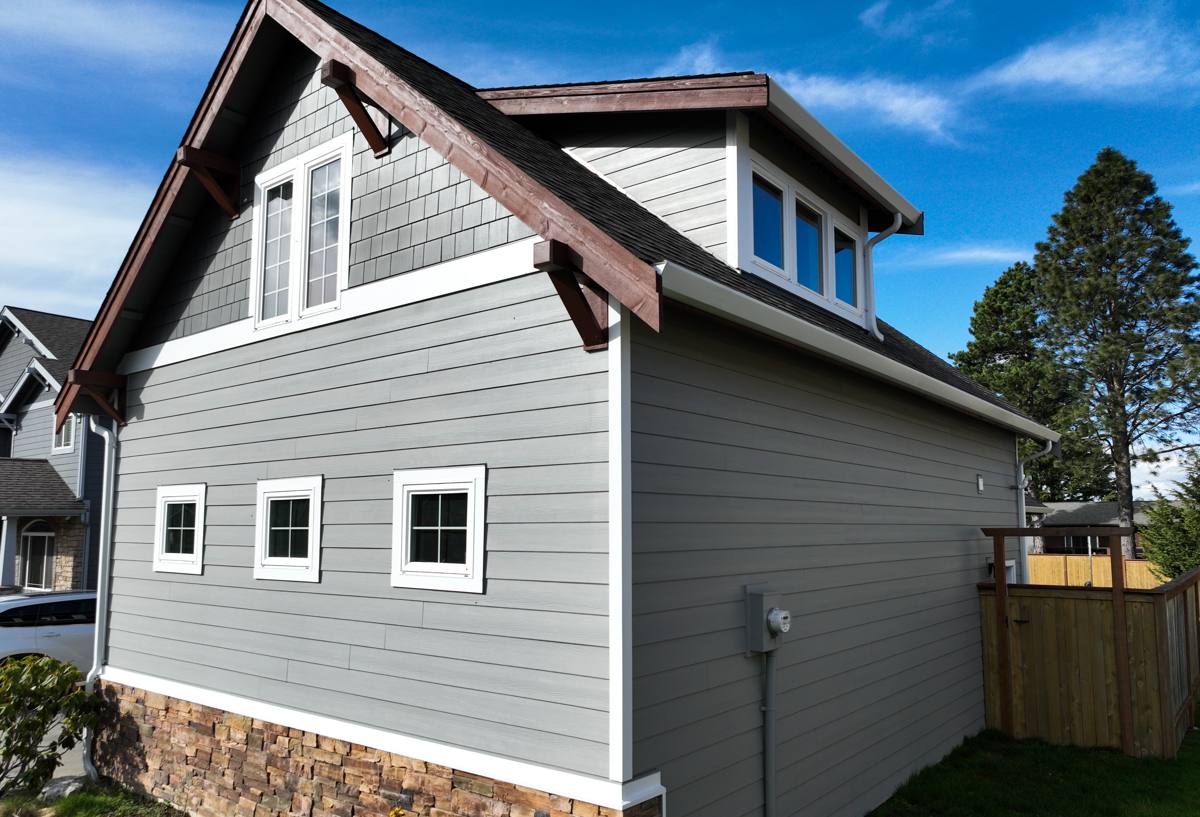
We get asked fairly often why we don't offer vinyl, LP SmartSide, or other fiber cement brands. The honest answer is that after years of installing and repairing siding across Whatcom County, including plenty of homes in wind- and salt-exposed spots like Birch Bay, we standardized on James Hardie because it holds up to exactly the conditions this area throws at a house.
- Non-combustible core — fiber cement doesn't feed a fire the way wood-based products can, which matters for insurance and long-term risk regardless of coastal exposure.
- Climate-engineered HZ product lines — Hardie formulates its siding differently for different climate zones, including moisture-heavy regions like the Pacific Northwest.
- ColorPlus factory finish — a baked-on finish applied under controlled conditions holds color and resists the fading and chalking that field-applied paint struggles with in a salt-air environment.
- Moisture-resistant composition — fiber cement doesn't swell, delaminate, or absorb water the way wood-fiber composite products can when caulking and paint eventually wear thin.
- Strong transferable warranty — Hardie's warranty structure is built around correct installation, which is why installation detail matters as much as the product itself.
We're not going to tell you vinyl or LP SmartSide are bad products in every setting — they have their place, and each has genuine strengths. But in a coastal, high-moisture environment, the trade-offs stack up: vinyl can warp and fade faster under sun and salt exposure, and wood-fiber composite siding depends heavily on caulking and paint maintenance staying ahead of moisture intrusion at every seam. That's a maintenance burden we don't think makes sense to sign a homeowner up for in Birch Bay. Fiber cement is the one material in that lineup that's inherently resistant to the specific failure modes salt air and driving rain create.
Roofing, Windows, and Decks for the Same Conditions
Siding is only part of the exterior envelope. The same wind and moisture exposure that drives our siding recommendation shapes how we approach the rest of the house.
Roofing
Roofs in Birch Bay deal with the same wind-driven rain and moss pressure as siding, plus direct exposure to gusts coming off the water. Flashing details around chimneys, vents, and valleys matter more here than in a sheltered location, because a small gap that would stay dry inland won't stay dry on an exposed coastal roof.
Windows
Window failures near the water usually show up as seal failure (fogging between panes) or as water intrusion at the flashing, not as a sudden break. Replacement windows need to be flashed and sealed correctly for wind-driven rain, and the window unit itself should be rated for the exposure it's actually facing.
Decks
Outdoor living space is a big part of why people live in Birch Bay in the first place, and decks there take a beating from sun, salt, and moisture cycling through the seasons. Fasteners, ledger flashing, and board spacing all need to account for a wetter, saltier environment than a typical inland deck.
Signs a Birch Bay Home Needs Exterior Attention
Because coastal exposure accelerates wear, it's worth checking a few things more often than you might inland:
- Paint that's chalking, peeling, or fading unevenly, especially on water-facing walls
- Soft spots or slight give when you press on siding near the bottom courses or around windows
- Moss or dark streaking building up on north-facing or shaded siding and roofing
- Caulking that's cracked, shrunk, or pulling away at trim and window edges
- Rust staining around fasteners or metal flashing
- Fogged or hazy glass between window panes, a sign the seal has failed
- Deck boards that feel spongy, or fasteners that have started to rust and stain the wood
None of these are emergencies on their own, but they're the early signals that tell us where moisture is starting to win.
What Drives the Cost of Exterior Work in a Coastal Setting
Every home is different, so we don't quote pricing sight unseen, but these are the factors that most often move the number up or down for Birch Bay properties:
| Factor | Why It Matters Here |
|---|---|
| Home size and wall complexity | More corners, dormers, and trim details mean more cutting, fitting, and flashing work |
| Tear-off vs. install over existing material | Coastal homes with hidden moisture damage often need old siding fully removed to assess the sheathing underneath |
| Wind and water exposure | Water-facing or elevated exposures typically need more careful flashing and sealant detailing |
| Trim and accessory scope | Corner boards, window trim, and fascia work add labor beyond the flat wall area |
| Siding profile and color | Lap width, shingle-style panels, and ColorPlus finish tiers carry different material costs |
| Access and site conditions | Waterfront lots, slopes, and limited staging space can affect labor time |
Why a Local Crew Matters in a Spot Like This
Birch Bay isn't a generic exposure — it's a specific microclimate within Whatcom County, and it behaves differently than siding jobs we do a few miles inland toward Bellingham. A crew that works this area regularly knows which walls tend to hold moisture, where moss builds up fastest, and how much extra attention flashing and sealant details need on a water-facing elevation. That local knowledge shows up in the details: how a job is sequenced around weather, where extra flashing gets added even if it's not strictly required by code, and which trouble spots get a second look before they're closed up.
It also matters for the long haul. A local company is the one you can actually call in five or ten years if something needs attention, and that accountability is part of why we stand behind the installation work as much as the material itself.
Our Process for Birch Bay Projects
- A no-pressure walkthrough of your home's exterior, checking siding, trim, roofing, windows, and decking for current condition and problem areas
- An honest conversation about what needs attention now versus what can be monitored
- A written estimate that spells out scope, material, and timeline
- Installation done to manufacturer specification, with flashing and sealant detail suited to a coastal exposure
- A final walkthrough so you know exactly what was done and what to expect going forward
Get a Local Look at Your Home
If you're seeing early wear on siding, roofing, windows, or a deck in Birch Bay, it's worth getting a second set of eyes on it before small issues turn into bigger repairs. We offer free, no-pressure estimates for homeowners in Birch Bay and throughout the Bellingham area — fill out the form below and we'll take a look.