 Bellingham
 What Allura Fiber Cement Actually Is
Allura makes fiber cement siding — the same basic building material as James Hardie, formed from Portland cement, sand, and cellulose fiber under high pressure. If you're comparing siding options for a home in Bellingham, it's a name that comes up often enough that homeowners ask us about it directly. We want to answer that honestly rather than dodge it.
Fiber cement as a category is a good choice for the Pacific Northwest. It doesn't rot the way wood does, it doesn't warp or buckle like vinyl in temperature swings, and it stands up to the kind of driving rain that Whatcom County sees for months at a stretch. Allura's boards, lap siding, and panel products are manufactured to the same general ASTM standards as other fiber cement brands, and on paper the specs look similar to what we install. So it's a fair question: why does Bellingham Siding pass on it?
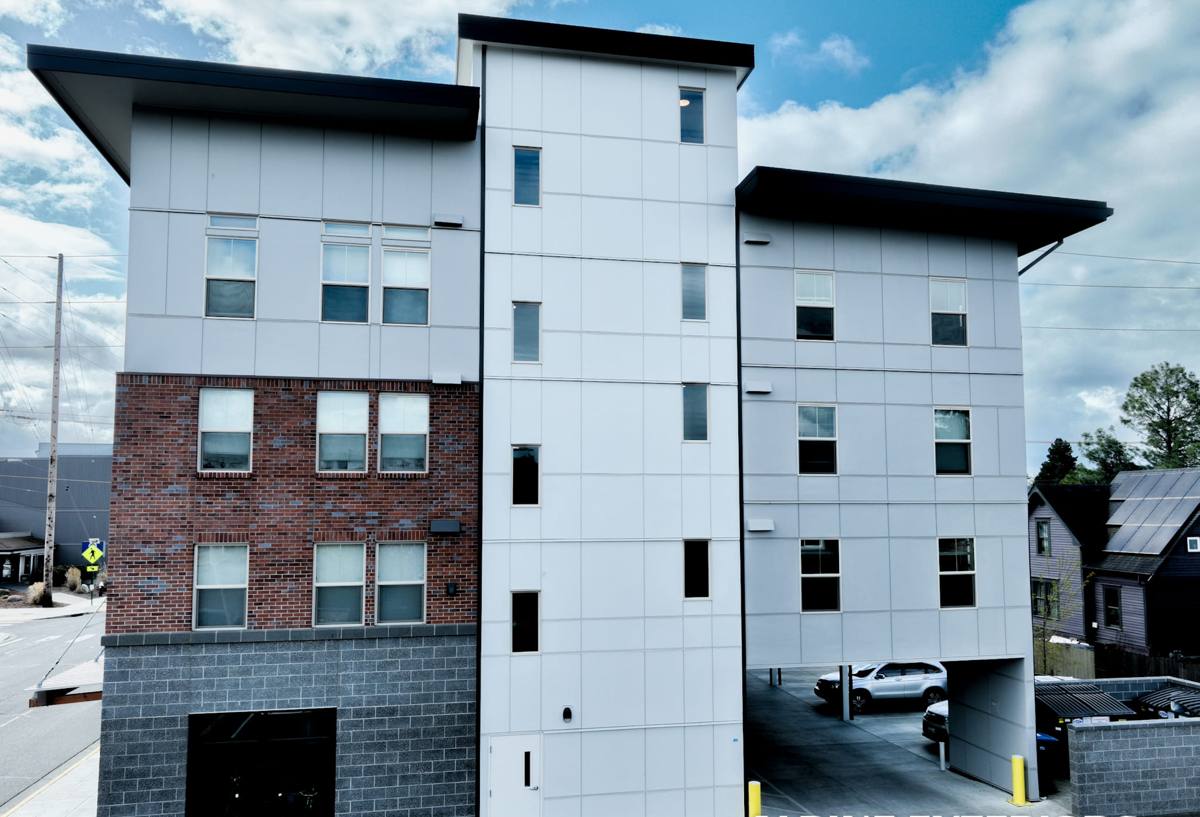
Where Allura Gets It Right
We're not going to pretend Allura is a bad product — it isn't. Fiber cement, done well, is one of the better exterior claddings available for a marine climate like ours. Allura's boards are non-combustible, resist pest damage, and hold paint or factory finish longer than wood siding does. For a homeowner shopping strictly on upfront price, Allura often lands a step below James Hardie, and that gap matters to a lot of budgets.
Allura also offers a reasonable range of profiles — lap siding, vertical panels, shake-style panels — so it's not a one-trick product. If your only goal is "fiber cement instead of vinyl or wood," Allura will get you there.
Where the Trade-offs Start
Factory Finish and Color Consistency
This is the biggest practical difference we run into. James Hardie's ColorPlus finish is baked on in a controlled factory process, with a documented multi-coat system and a finish warranty that travels with the product. Allura offers primed and some pre-finished options, but the factory-finish ecosystem isn't as deep or as consistently available depending on the product line and region. In practice, that often means more field-painting, and field-painted fiber cement is only as good as the paint job and the maintenance schedule behind it — which shifts the long-term durability burden back onto the homeowner.
Regional Engineering
James Hardie builds distinct product formulations for different climate zones — an HZ5 product engineered for freeze-thaw regions, and a separate HZ10 line engineered for hot-humid, coastal-adjacent climates. That's not marketing language; it changes how the board handles moisture cycling over decades. Allura doesn't offer that same climate-zoned engineering tier structure, which matters more in a place like Bellingham than it would somewhere with a drier, more stable climate.
Warranty Structure
Warranty terms and transferability differ by product line and change over time for any manufacturer, so we won't quote numbers here — we'd rather a homeowner pull the current warranty document directly from the manufacturer before deciding. What we will say: warranty length and transferability were factors we weighed when we standardized our install crews, tools, and fastening details around a single product family instead of splitting our expertise across several.
Installation Sensitivity: The Part Nobody Puts on the Brochure
Fiber cement siding, any brand, is not forgiving of a bad installer. Improper fastener placement, missing flashing details, caulking gaps at butt joints, or siding installed too close to grade or a roofline will cause moisture problems years down the road — regardless of whose logo is on the board. This is true of Allura and it's true of Hardie.
The difference for us is depth of experience. We install one fiber cement system, on every job, every week. Our crews know the fastening schedule, the clearance requirements, the flashing sequence, and the manufacturer's installation instructions for that one product cold. When a contractor splits time between Allura, LP SmartSide, vinyl, and Hardie depending on what a given customer wants that month, install quality on any single product tends to drift. We decided the better path was to get exceptional at one system rather than adequate at four.
How Bellingham's Climate Actually Tests Siding
Whatcom County isn't a brutal climate in the way a hot-humid Gulf Coast town is, but it's a persistent one. Salt-laden air off Bellingham Bay and the Salish Sea works on fasteners and finishes slowly but continuously, especially on homes closer to the water. Driving rain — wind-blown, not just falling straight down — pushes moisture sideways into lap joints and butt seams that a calmer climate wouldn't stress nearly as hard. And our long moss season, stretching from fall through spring, means anything on a north-facing wall or under tree cover holds moisture longer than most manufacturers' test climates assume.
None of that makes fiber cement a bad choice — it's still far better suited to this climate than wood or vinyl. But it does mean the margin for installation error and finish quality is thinner here than it would be in a drier region. A finish that chalks or a joint that wasn't properly caulked shows up faster in Bellingham than it would in eastern Washington.
Allura vs. James Hardie: A Side-by-Side Look
| Factor | Allura | James Hardie |
|---|---|---|
| Core material | Fiber cement (cement, sand, cellulose) | Fiber cement (cement, sand, cellulose) |
| Factory finish system | Primed and some pre-finished lines; less standardized | ColorPlus factory finish with documented multi-coat process |
| Climate-specific engineering | General product line | HZ5 / HZ10 zone-engineered formulations |
| Field painting typically needed | More common depending on product line | Less common with ColorPlus finish |
| Our crew's install experience | None — we don't stock or install it | Every job, every week |
| Availability of matching trim/accessories | Varies by market | Full trim, soffit, and accessory system |
The Real Cost Picture Over Time
Upfront price is only one line in the actual cost of siding. What matters more over a 20-30 year ownership window is how much maintenance the finish demands, how the warranty holds up if something goes wrong, and how the material performs against the specific stresses of this climate.
| Cost factor | What to weigh |
|---|---|
| Upfront material + install | Allura often runs somewhat lower; get written quotes to compare directly |
| Repaint cycle | Field-painted fiber cement typically needs repainting sooner than a factory ColorPlus finish |
| Caulking and joint maintenance | Butt joints and trim seams need periodic inspection on any fiber cement siding |
| Warranty claim experience | Depends on manufacturer support network and documentation — verify current terms directly |
| Resale / appraisal recognition | Hardie is widely recognized by name in the Pacific Northwest resale market |
What Owning Fiber Cement Siding Actually Involves
Whichever brand you choose, fiber cement is low-maintenance compared to wood — but it isn't zero-maintenance, especially under Bellingham's moss and rain conditions. Here's what we tell every homeowner to plan for:
- Rinse siding annually, especially north-facing walls and anything under tree canopy, to slow moss and mildew buildup
- Inspect caulking at butt joints, window trim, and penetrations every year or two and re-caulk as needed
- Keep siding at least 6-8 inches above grade and clear of soil, mulch, or deck contact
- Watch for chalking or fading on painted (non-factory-finish) sections, which signals the finish is due for attention
- Repaint field-painted sections on a realistic schedule rather than waiting for visible failure
- Check gutters and downspouts stay clear so runoff isn't sheeting down wall sections
Why We Standardized on James Hardie
We made a deliberate choice to install one fiber cement system rather than offer a menu of brands. That's not because every alternative is unusable — it's because splitting our crews' expertise, our fastening details, our flashing practices, and our supplier relationships across multiple products makes every one of those jobs slightly worse than it could be. James Hardie's factory-finish consistency, climate-zoned product engineering, and the depth of our own installation experience with that specific system are why it's what goes on homes we build.
For a coastal county with salt air, sideways rain, and a moss season that doesn't really end, we'd rather bring you one product we know inside and out than four we know moderately well.
Making Your Own Decision
If you're weighing Allura, Hardie, or another fiber cement brand, ask any contractor you're considering three things: how many of that specific product's installations they've done, what the current factory warranty document actually says, and whether the finish is factory-applied or will need field painting. The answers tell you more than any spec sheet.
If you'd like to talk through your home's siding specifically — what's on it now, what the exposure looks like, and what we'd recommend — we're glad to walk the property with you and put together a free, no-pressure estimate.