 Bellingham
 Why Color Choice Matters More Here Than Most Places
Picking a siding color feels like the fun part of a re-side, until you realize Whatcom County weather is going to test that decision every single day. Bellingham sits close enough to the water that salt air is a real factor on the west and north sides of town, we get long stretches of driving rain off the Sound from fall through spring, and anything shaded by fir or cedar trees is fighting moss for at least half the year. A color that looks sharp on a sample chip in a showroom in Seattle or Spokane can behave very differently on a house two blocks from Bellingham Bay or tucked into a tree-lined lot in Fairhaven or the Puget neighborhood.
This guide walks through how James Hardie's ColorPlus finish system actually works, which factors matter for long-term color performance in our climate, and how to think through a palette that will still look good in year twelve, not just the day the crew leaves.
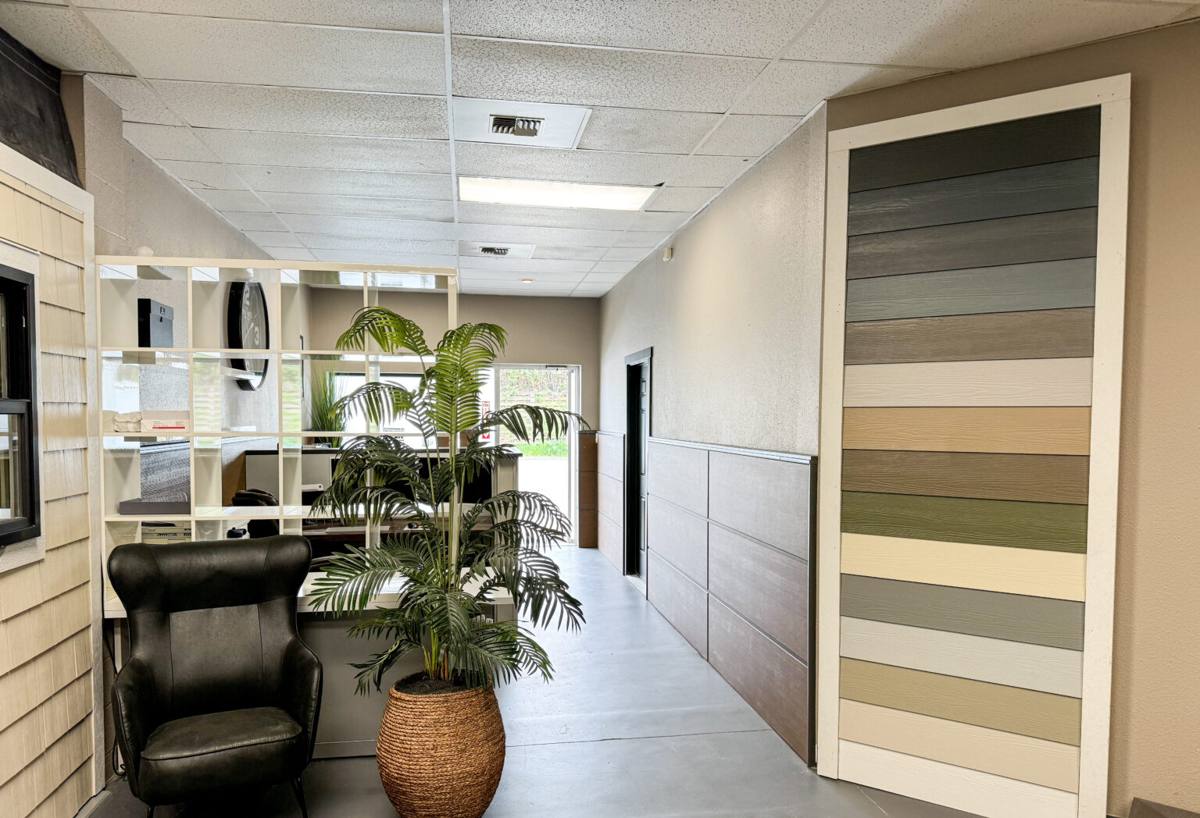
ColorPlus Technology: The Part That Actually Matters
The single biggest reason we standardized on James Hardie instead of field-painted fiber cement, primed wood, or vinyl comes down to how the color gets onto the board in the first place. ColorPlus is a factory-applied, baked-on finish, not a coat of paint rolled or sprayed onto siding after it's hung on your house.
How it's different from job-site painting
- Multiple coats are applied in a controlled factory environment, then cured with heat — not air-dried on a scaffold in Bellingham drizzle.
- Coverage is even across every plank, including cut edges when touch-up is done correctly, so you don't get the thin spots or lap marks that happen with field spraying.
- The finish is bonded to the fiber cement substrate specifically, rather than a generic exterior paint formulated for wood, stucco, or metal.
- Color consistency from board to board is far tighter, which matters on a full elevation where mismatched batches stand out immediately.
Field-painted siding — whether it's primed spruce, cedar, or a fiber cement product without a factory finish — depends entirely on paint quality, weather during application, and the skill of whoever's holding the sprayer that week. In a climate where you might get a two-day dry window between rain systems, that's a real risk, not a theoretical one.
What "Climate-Engineered" Actually Means for Bellingham
James Hardie makes different formulations of their fiber cement board for different climate zones (HZ5 for the northern/wetter zones, HZ10 for hot/humid regions, and so on). Western Washington falls into the HZ5 category, which is engineered around freeze-thaw cycling and sustained moisture exposure rather than extreme heat. That matters for color performance specifically because the substrate underneath the finish handles moisture differently than a generic board would — less swelling and contracting at the surface means the ColorPlus finish has less reason to crack or lift at the edges over time.
This is a case where the color and the substrate aren't really separate decisions. A great color on a product that wasn't built for our rain load is still going to give you problems eventually.
ColorPlus vs. Field-Applied Paint: A Side-by-Side Look
| Factor | ColorPlus Factory Finish | Field-Applied Paint |
|---|---|---|
| Application environment | Controlled factory, heat-cured | On-site, weather-dependent |
| Coverage consistency | Even across every board | Varies by crew, weather, technique |
| Typical repaint interval | Not required for 15+ years in most cases | Often 5-8 years in wet coastal climates |
| Fade/chalk resistance | Backed by manufacturer warranty terms | Depends on paint brand and prep |
| Touch-up matching | Factory-matched touch-up paint available | Matching depends on saved records/batch |
| Upfront cost | Built into material cost | Often cheaper material, added labor later |
The trade-off is honest: field-painted siding can be cheaper on day one. Where it costs you is in year six or seven, when you're scheduling a repaint on a house that gets pounded by fall storms rolling in off Bellingham Bay, and doing it again a few years after that.
Reading the Palette: What Actually Changes With Light and Moisture
Overcast light shifts colors cooler
Bellingham gets a lot of soft, diffuse light rather than harsh direct sun. Warm colors — tans, warm grays, muted golds — tend to read a little cooler and flatter under our cloud cover than they would in a sunnier climate. If you're choosing from a chip or a small sample, view it outdoors on an overcast day, not just under indoor lighting, since that's the light your house will actually live in most of the year.
Dark colors and moss/algae growth
Darker, matte colors on shaded elevations — north-facing walls, anything under mature trees — are more prone to visible moss and algae buildup simply because they hold moisture longer and show organic growth more readily than lighter, satin-finish colors. This isn't a defect in the paint; it's physics. If your lot has heavy tree cover, a mid-tone or lighter color on the shaded sides will show less green streaking between cleanings than a deep charcoal or black.
Salt air and near-water exposure
Homes closer to the water — South Hill with bay views, Marine Drive, parts of Fairhaven — deal with a fine layer of salt-laden moisture that can accelerate wear on lesser finishes. ColorPlus holds up well here, but it's worth mentioning during your estimate if you're within a mile or two of the water so we can talk through trim and fastener details too, not just the field color.
Popular Approaches for PNW and Craftsman-Style Homes
Bellingham's housing stock leans heavily Craftsman, farmhouse, and Pacific Northwest contemporary, with a fair number of older bungalows in neighborhoods like Columbia and York. A few patterns that work well with this architecture and our climate:
- Two-tone body and trim: a mid-tone body color (warm gray, deep greens, muted blues) paired with a crisp white or cream trim reads classic and hides weather streaking better than an all-one-color approach.
- Board-and-batten accents: a contrasting accent color on gables or entry features draws the eye without committing the whole house to a bold shade.
- Shadow-line/lap siding in muted earth tones: greens, deep blues, and warm grays tend to sit naturally against the evergreen backdrop most Bellingham lots have.
- Lighter trim on shaded elevations: keeping soffits, fascia, and trim lighter reduces how visible moss streaking becomes between cleanings.
Practical Checklist Before You Commit to a Color
- View large sample boards outdoors, in both direct light and shade, not just a small chip indoors.
- Check the color against your roof, existing stonework, and any features that aren't changing.
- Ask which elevations of your home get the most shade and rain exposure, and consider a lighter tone there if moss is already a problem on your current siding.
- Confirm the color is available in the specific Hardie product line you're installing (lap siding, panel, shingle, trim) since not every color is offered across every profile.
- Ask about factory-matched touch-up paint and how it's supplied after install.
- Review what the ColorPlus warranty actually covers versus the standard substrate warranty — they're separate.
The Warranty Angle
James Hardie's ColorPlus finish carries its own warranty coverage separate from the substrate warranty on the fiber cement board itself, and it's transferable to a new owner if you sell the home within the coverage period — a detail worth mentioning if resale is anywhere on your radar. That transferability is one of the practical reasons homeowners in this market lean toward Hardie over primed wood or unfinished cement board: a documented, factory-backed finish is something a buyer's inspector can actually verify, rather than a guess about who painted the house and when.
Warranty terms are specific about proper installation, including the sealed and painted cut edges, correct fastening, and manufacturer-specified clearances from grade and roofing. This is exactly why installation quality matters as much as the color decision itself — a great color on a poorly installed board doesn't hold up, warranty or not.
Getting the Color Right the First Time
Color decisions are hard to walk back on siding — repainting later means giving up the factory finish advantages that made ColorPlus worth choosing in the first place. Taking the time to view samples outdoors, think through which elevations get shade and rain, and match trim to body color pays off for the life of the siding, not just the first season.
If you're weighing colors for a Bellingham or Whatcom County home, we're happy to bring out large-format samples, walk your specific lot and light conditions, and talk through what's held up well on homes in similar settings. Reach out for a free, no-pressure estimate and we'll help you land on a color and product line that's built for this climate, not just the showroom.