 Bellingham
 Siding in Puget: A Climate That Doesn't Forgive Cheap Materials
Puget sits in that stretch of Whatcom County where the marine air off the Salish Sea meets steady winter rain and a growing season for moss that can run eight months or longer. Homes here don't fail because of one dramatic storm — they fail slowly, from siding that was never engineered to handle constant moisture cycling, salt-laden air, and shade-grown organic growth. If you've owned a home in this neighborhood for more than a few years, you've probably already noticed it: caulk lines that crack faster than they should, paint that peels on the north-facing wall, or a green tint creeping up from the foundation line no matter how often you pressure wash.
We're a local siding, roofing, window, and deck contractor, and Puget is squarely in our service area. This page covers what the climate actually does to exterior materials here, how we approach siding replacement and repair for homes in this part of Bellingham, and why we've standardized on one product — James Hardie fiber cement — instead of offering the full menu of options other contractors sell.
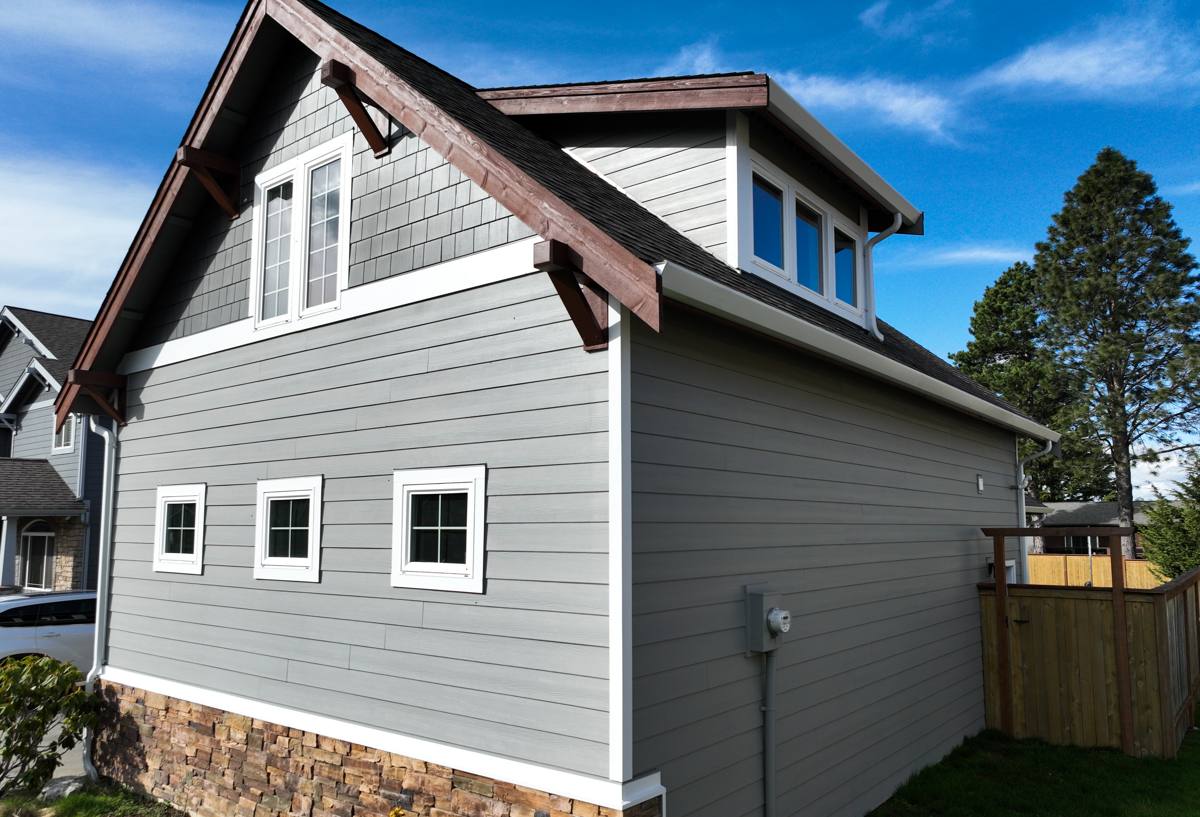
What Driving Rain and Salt Air Actually Do to a House
Wind-Driven Moisture
Rain in this region rarely falls straight down. Storms off the water push moisture sideways into wall assemblies, which means siding seams, butt joints, and any place two pieces of material meet are under constant pressure to fail. Materials that swell, warp, or wick water at the edges lose that battle over time, even when they looked fine on installation day.
Salt Air Corrosion
Proximity to Puget Sound means airborne salt settles on exterior surfaces and fasteners. Untreated or poorly coated metal components corrode faster here than they would twenty miles inland. This affects everything from nail heads to flashing to trim hardware, and it's one of the reasons fastener quality and installation detail matter as much as the siding material itself.
The Long Moss Season
Shaded, north-facing walls and anything under tree cover stay damp for extended stretches. Moss and algae take hold on porous or textured surfaces and hold moisture against the wall, which accelerates rot in wood-based products and paint failure on anything with a weak factory finish. A siding product's ability to shed water and resist organic growth isn't a cosmetic detail in Puget — it's a structural one.
Why We Install Only James Hardie Fiber Cement
Most siding contractors sell whatever the homeowner asks for — vinyl, LP SmartSide, primed wood, sometimes cedar. We don't. We install James Hardie fiber cement siding exclusively, and that's a deliberate professional standard, not a sales pitch.
Why We Don't Install the Alternatives
Vinyl siding is affordable and low-maintenance in mild climates, but it can warp under heat and stress and its seams and butt joints are more vulnerable to the wind-driven rain common here. LP SmartSide and other engineered wood products perform reasonably well when the factory coating stays intact, but they're wood-based at the core — meaning any breach in the finish, a common outcome after years of moss and moisture exposure, opens the door to swelling and rot. Primed spruce and cedar require the homeowner to commit to an ongoing painting and sealing schedule that most people underestimate, and in a climate with this much sustained dampness, gaps in that maintenance show up as rot faster than in drier regions.
None of these products are "bad" — they're reasonable choices in the right climate with the right maintenance commitment. We simply don't think Puget's combination of salt air, driving rain, and moss pressure is the right climate for them, and we'd rather stand behind one product we trust than install several we have reservations about.
What James Hardie Gets Right for This Climate
- Fiber cement construction that doesn't swell, rot, or provide a food source for moss and algae the way wood-based siding can
- Non-combustible material, which matters given the wildfire smoke and ember exposure the Pacific Northwest has seen in recent fire seasons
- ColorPlus factory-baked finish that resists fading and holds up against salt air better than field-applied paint
- HZ5 and climate-engineered product lines built specifically for cold, wet, coastal-influenced regions like Whatcom County
- A strong, transferable manufacturer warranty when the product is installed to Hardie's specifications
Our Siding Installation Process
Inspection and Assessment
Every project starts with a walk-around of the home, checking for existing moisture damage, soft trim, failed caulk joints, and problem areas — especially on north- and west-facing walls that take the brunt of wind-driven rain. We're looking for what's underneath the current siding, not just what it looks like from the driveway.
Moisture Barrier and Prep Work
Correct water management behind the siding matters more than the siding itself in a climate like this. That means a properly lapped weather-resistive barrier, correctly flashed windows and doors, and attention to the details that keep water moving down and out rather than trapped against the sheathing. Skipping or rushing this step is the single most common cause of long-term siding failure, regardless of the material on the outside.
Installation to Manufacturer Spec
James Hardie's warranty depends on correct installation — proper fastener spacing, clearances from grade and rooflines, and joint treatment. We install to those specifications, not to whatever shortcuts speed up the job. In a coastal climate, corrosion-resistant fasteners and correctly sealed penetrations are what separate siding that lasts twenty-plus years from siding that needs attention in five.
Trim, Finish, and Cleanup
We finish with trim details and caulking at transitions, then walk the site to confirm everything meets spec before we call the job done. A clean job site and a final walkthrough with the homeowner are part of the process, not an afterthought.
Beyond Siding: Roofing, Windows, and Decks in Puget
Siding is rarely the only exterior system under stress in this climate, and we handle the others too:
- Roofing — the first line of defense against driving rain and the moss growth that follows shaded, damp rooflines
- Windows — proper flashing and installation around window openings is one of the most common failure points we find when we open up old siding
- Decks — exposed to the same moisture cycling and moss pressure as siding, and often the first place homeowners notice rot starting
Bundling exterior work with one contractor who understands how these systems interact — where water moves, where it collects, where flashing has to tie in — tends to produce a tighter, more durable result than treating each system as a separate project with separate crews.
What Drives the Cost of a Siding Project
| Cost Factor | Why It Matters in Puget |
|---|---|
| Home size and wall complexity | More corners, gables, and dormers mean more cuts, flashing, and labor hours |
| Extent of existing damage | Rot behind old siding found during tear-off adds sheathing repair before new siding goes on |
| Siding profile and trim style | Lap siding, shingle-style panels, and trim boards carry different material and labor costs |
| Moisture barrier and flashing detail | Correct water management adds upfront labor but is what prevents callbacks in this climate |
| Site access | Tight lots, mature landscaping, or multi-story walls affect scaffolding and staging time |
Signs Your Siding May Need Attention
Homeowners in Puget often wait too long to address early warning signs because the damage isn't visible from the street. Watch for these:
- Persistent moss or algae staining that returns quickly after cleaning
- Paint that's peeling, bubbling, or chalking, especially on north- or west-facing walls
- Soft spots or visible warping when you press on the siding near the bottom edge
- Cracked or missing caulk at seams, corners, and window trim
- Rising utility bills that may point to compromised insulation behind failing siding
- Visible gaps or separation at butt joints and panel seams
Maintenance in a Moss-Prone Climate
Even durable siding benefits from basic upkeep in this environment. Trimming back vegetation that shades walls, keeping gutters clear so runoff doesn't sheet down the siding face, and an occasional gentle rinse go a long way toward keeping moss and algae from taking hold. James Hardie's factory finish resists staining better than field-painted alternatives, but no siding is entirely maintenance-free in a climate this wet — the difference is how much maintenance it actually needs, and how forgiving it is when that maintenance slips for a season.
Why a Local Crew Matters
A crew that works Whatcom County homes regularly knows what driving rain off the Sound does to a north wall, what a Bellingham winter does to caulk joints, and where moss tends to establish itself first on homes in this specific microclimate. That local knowledge shapes real decisions on the job — where to add extra flashing attention, which details can't be rushed, and what a Puget home actually needs versus a generic installation checklist written for a drier region.
Get a Free, No-Pressure Estimate
If your Puget home's siding is showing its age, or you're planning ahead before problems start, we're happy to take a look and give you an honest assessment — no pressure, no obligation. Use the form below to request a free estimate for siding, roofing, windows, or decks.