 Bellingham
 Birchwood: A Neighborhood That Tests Its Siding
Birchwood sits within Bellingham, close enough to the water and the surrounding evergreen cover that its homes deal with a specific combination of exterior stress most inland towns never see. Whatcom County's marine climate means moisture is a near-constant companion — not just rain volume, but the kind of long, low-intensity soaking that settles into siding seams, corner boards, and anywhere caulking has started to fail. Add in salt-tinged air drifting off Bellingham Bay and the Strait of Georgia, driving rain that comes in sideways during fall and winter storms, and a moss season that can run from October well into spring, and you have a climate that is quietly hard on exterior materials, even when nothing looks obviously wrong from the curb.
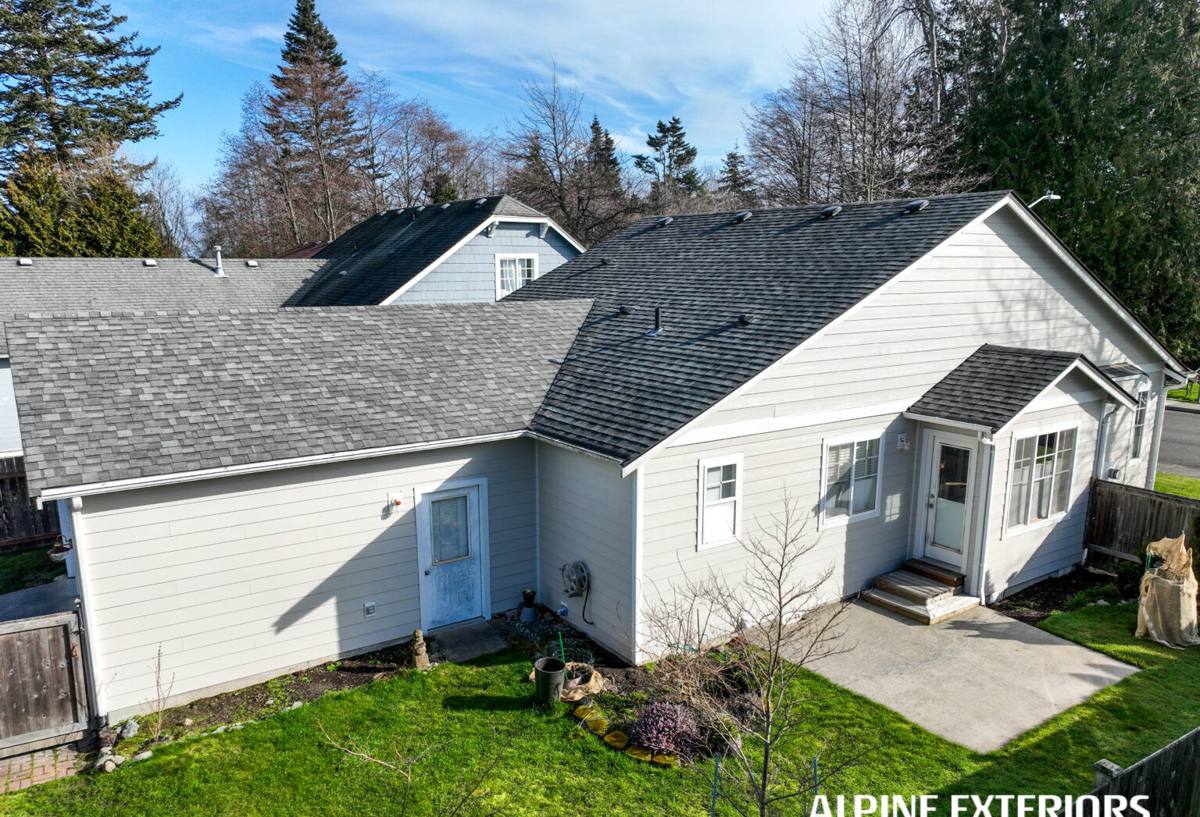
Homes in this part of Bellingham often sit under mature tree canopy, which is part of what makes the neighborhood pleasant to live in — and also part of what keeps north- and shade-facing walls damp longer after every rain. That combination of shade, moisture, and organic debris (needles, leaf litter, seed pods) is exactly what moss, algae, and mildew need to get established on a wall surface. Siding that can't shed water quickly or resist that biological growth ends up doing double duty: looking tired years before it should, and hiding moisture problems behind the surface.
What Salt Air, Rain, and Moss Actually Do to Siding
Salt Air
Bellingham isn't oceanfront in the way a beach town is, but proximity to saltwater still matters. Airborne salt accelerates corrosion on fasteners, flashing, and any metal trim, and it can degrade certain paints and coatings faster than inland exposure would. Siding systems with weak factory finishes show chalking, fading, and coating breakdown earlier in areas with this kind of exposure.
Driving Rain
Wind-driven rain doesn't just wet a surface — it forces water horizontally and upward into laps, seams, and butt joints that were designed for water running straight down. Over years, that repeated intrusion finds every weak point in caulking, flashing, and material joints. Siding that swells, cups, or delaminates when it takes on water fails faster under these conditions than a material engineered to shrug off sustained moisture.
Moss and Algae Season
A long wet season with limited sun exposure on shaded walls is a growth engine for moss and algae. Beyond the cosmetic green-black staining, sustained organic growth holds moisture against the siding surface, which is bad news for any product that isn't dimensionally stable when wet. It also means homeowners in tree-covered neighborhoods spend more time and money on exterior cleaning and maintenance than homeowners in drier, more open areas.
Why We Install James Hardie Fiber Cement — and Only Hardie
We made a deliberate decision as a company: we install James Hardie fiber cement siding, and we don't install vinyl, LP SmartSide, Cemplank, Allura, primed spruce, or cedar. That's not a marketing angle — it's a standard we hold because of what we've seen play out on homes in exactly this kind of climate over time.
Fiber cement is cement, sand, and cellulose fiber, which means it doesn't rot, doesn't feed insects, and doesn't swell or warp the way wood-based or wood-adjacent products can when they take on repeated moisture. James Hardie's ColorPlus factory finish is baked on under controlled conditions, which gives it better fade and color-hold performance than field-applied paint, and it's backed by a real, transferable warranty — an important detail on a coastal-influenced property where owners often want assurance the investment holds up.
James Hardie also engineers regional HZ5 product lines specifically for climates like ours — colder, wetter, and more moisture-exposed than the softer HZ10 zones. That's not a trivial spec-sheet detail; it affects how the product performs against the freeze-thaw cycles, saturation, and biological growth pressure that Whatcom County homes actually face.
None of this means other products are without merit — vinyl is inexpensive and low-maintenance in mild climates, cedar has genuine natural beauty, and engineered wood has real fans. But when we weigh moisture behavior, long-term maintenance burden, fire resistance, and warranty strength against what Birchwood homes are up against every winter, fiber cement is where we land every time, and it's the only product we put our name behind.
How Siding Materials Compare for This Climate
| Material | Moisture Behavior | Maintenance | Typical Lifespan | Fire Resistance |
|---|---|---|---|---|
| James Hardie fiber cement | Dimensionally stable when wet; resists swelling and rot | Occasional wash; factory finish holds color | 30+ years with proper install | Non-combustible |
| Vinyl | Doesn't rot, but can warp/buckle with heat and doesn't seal moisture out at seams | Low, but limited repair options when damaged | 20-30 years, fades over time | Combustible, can melt/deform |
| LP SmartSide (engineered wood) | Vulnerable to swelling and edge failure if moisture reaches the substrate | Requires diligent caulk/paint upkeep | 20-30 years if well maintained | Combustible |
| Cedar | Natural material, absorbs and releases moisture; needs finish upkeep | High — refinishing on a regular cycle | Varies widely with maintenance | Combustible |
These are general tendencies, not guarantees for every product line or installation — but they explain why moisture-heavy, tree-shaded neighborhoods like Birchwood tend to be harder on materials that depend on an intact paint film or tight seams to keep water out.
Our Installation Process
Good material choice only pays off with correct installation, and that's where a lot of siding problems actually start — not with the product, but with shortcuts in the details. Our process on Birchwood homes includes:
- Removing old siding and inspecting the sheathing underneath for hidden moisture damage or rot before anything new goes on
- Installing a weather-resistive barrier and correct flashing details around windows, doors, and penetrations — the parts of the wall assembly that stop wind-driven rain from getting behind the cladding
- Following James Hardie's published installation specifications for fastening, clearances, and joint treatment, since deviating from those details is one of the most common ways warranty coverage and real-world performance both get compromised
- Maintaining proper clearance from grade, decks, and roof lines so the bottom edge of the siding isn't sitting in standing moisture
- Final inspection and cleanup so the property is left in the condition it should be
More Than Siding: The Whole Exterior
Siding doesn't work in isolation — it's one part of a building envelope that includes the roof, windows, and any attached structures like decks. We handle all four because they interact with each other constantly. A roof with failing flashing can send water down behind siding that's otherwise in good shape. Windows with degraded seals can rot the wall framing around them regardless of what cladding is installed. A deck ledger board attached without proper flashing is one of the more common sources of hidden rot on Pacific Northwest homes. Looking at siding, roofing, windows, and decks together — instead of treating them as separate projects done by separate contractors — means fewer gaps where water problems can start.
Why a Local Crew Matters in Whatcom County
Exterior work in this region isn't the same as exterior work in a dry inland climate, and it shows in the details: how flashing gets lapped, how much drainage gap gets left behind siding, how installation timing works around our wet-season weather windows. A crew that works in Bellingham and greater Whatcom County day in and day out has already seen how local moisture, moss growth, and salt exposure play out on real homes over years — not just at the time of installation, but five and ten years later when problems either show up or don't. That local track record is worth more than a lower bid from a crew unfamiliar with how this climate actually treats a building.
Signs Your Birchwood Home May Need New Siding
- Persistent moss, algae, or dark staining that returns quickly after cleaning
- Soft spots, bubbling, or visible warping in siding panels
- Paint that's peeling, chalking, or failing faster than it used to
- Visible gaps, cracks, or separation at seams and corner boards
- Rising energy bills that may point to compromised insulation behind failing siding
- Interior signs like musty odors or discoloration on walls that share an exterior wall
What to Expect: From Estimate to Finished Project
We start with an on-site look at the home's current siding, any moisture or rot concerns, and the specific exposure the walls face — sun, shade, wind direction, tree cover. From there we walk through James Hardie product options, color choices from the ColorPlus lineup, and a realistic project timeline. Because Whatcom County's wet season affects scheduling, we're upfront about weather-dependent windows rather than overpromising a date that depends on dry conditions holding.
Get a Free, No-Pressure Estimate
If moss, moisture, or aging siding are becoming a recurring issue on your Birchwood home, we're happy to take a look and walk you through what we're seeing and what your options are — no pressure, no obligation. Use the form below to request a free estimate for siding, roofing, windows, or decks.