 Bellingham
 Sunnyland's Exterior Challenge
Sunnyland sits close enough to Bellingham Bay and the surrounding waterways that homes here deal with a different set of exterior pressures than neighborhoods further inland. The combination of salt-tinged air, wind-driven rain off the Sound, and Whatcom County's long, gray, wet stretch from October through April creates a slow, steady wear pattern on siding, trim, and roofing that many homeowners don't notice until it's already done damage. It's not one dramatic storm that gets a house in Sunnyland — it's years of moisture finding the same weak points, over and over, while moss and algae quietly work on anything that stays damp too long.
We've worked on homes throughout this part of Bellingham long enough to know the tells: paint that's chalking and peeling on the north and west-facing walls, soft trim around window sills, dark streaking on siding that never quite dries out, and gutters that back up under a canopy of mature trees common in older Sunnyland streets. None of that is unusual for the neighborhood. It's just what this climate does to exteriors that weren't built or maintained for it.
What Salt Air, Rain, and Moss Actually Do to a House
Moisture Intrusion
Bellingham gets a lot of rain, but it's the type of rain that matters more than the volume. Wind-driven rain off the bay doesn't just fall on a house — it gets pushed sideways into seams, lap joints, and anywhere flashing is even slightly off. Over time, water finds its way behind siding that isn't properly lapped or caulked, and once moisture gets trapped against wood sheathing, rot starts even if the surface still looks fine.
Salt Air and Corrosion
Homes closer to the water deal with airborne salt that accelerates corrosion on fasteners, flashing, and any metal components on the exterior. It also breaks down certain paints and coatings faster than they'd wear in a drier inland climate, which is part of why some siding materials hold their finish for a decade in one part of the county and fail years earlier a few miles closer to the shoreline.
Moss and Algae
Whatcom County's moss season is long — shaded, north-facing walls and anything under tree cover can stay damp for weeks at a stretch during fall and winter. Moss and algae don't just look bad; they hold moisture against the surface underneath them, which is exactly the condition that leads to soft wood, failing paint, and premature siding failure. Roofs, deck boards, and siding all take this same hit if they're not built or coated to resist it.
Why We Only Install James Hardie Fiber Cement Siding
We get asked fairly often why we don't offer vinyl, LP SmartSide, cedar, or primed spruce siding. The honest answer is that we've made a standard for what goes on the homes we work on, and it's based on what actually holds up in this climate over the long run — not just what looks good on install day.
- Non-combustible core: James Hardie siding is fiber cement, not wood or wood-based, so it doesn't feed a fire the way engineered wood products can.
- Built for moisture: Hardie's HZ5 product line is engineered specifically for the freeze-thaw, high-moisture Pacific Northwest climate — this isn't a generic product sold everywhere; it's regionally specified.
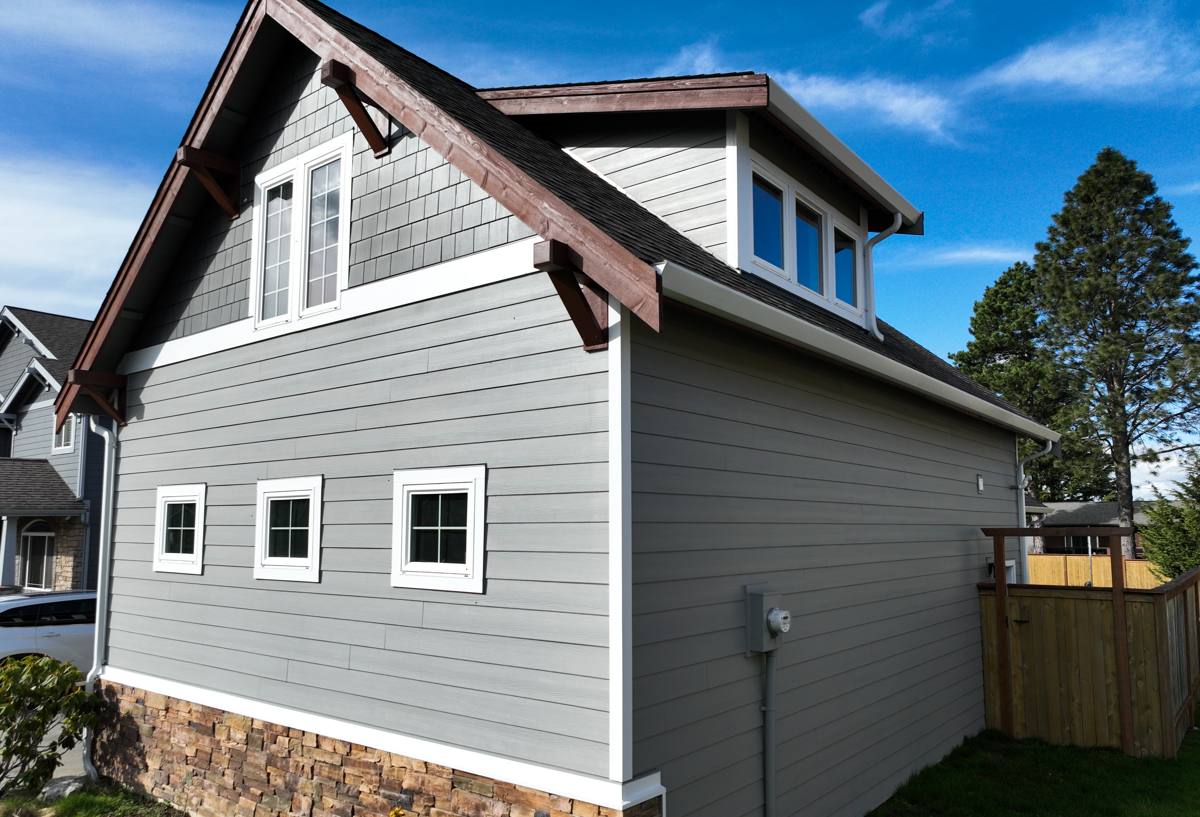
- Factory-applied ColorPlus finish: The color and coating are baked on at the factory under controlled conditions, which holds up to UV and moisture far more consistently than field-applied paint, and resists the fading and chalking we see on older, repainted siding around Sunnyland.
- Won't rot or feed pests: Fiber cement doesn't absorb water the way wood-based products can, and it isn't a food source for insects or fungus, which matters a lot given how long things stay damp here.
- Strong transferable warranty: Hardie backs its products with a warranty that can transfer to a new owner, which matters for resale in a market where buyers are increasingly asking what the siding is and when it was installed.
That doesn't mean other products are worthless — vinyl is inexpensive, cedar looks great when it's new, engineered wood siding has real fans. But we've seen enough of how those materials age in Whatcom County's moisture and salt exposure that we chose not to install them. Vinyl can warp and fade, and it's a petroleum product with real limits in a fire or impact. Cedar and primed spruce require ongoing maintenance — staining, painting, caulking — that a lot of homeowners don't keep up with, and once that maintenance lapses in a wet climate, the wood pays for it. Engineered wood products like LP SmartSide perform reasonably well when installed and maintained exactly to spec, but they're still wood-based, meaning moisture management at every seam and cut edge is non-negotiable — and one missed detail can lead to swelling or degradation years down the road. James Hardie removes that variable. It's the material we're comfortable standing behind on every job.
How We Approach Siding Work in Sunnyland
Every siding job we do starts with an honest look at what's actually happening behind the existing siding, not just what it looks like from the curb. On older Sunnyland homes, that often means checking for water damage around window and door openings, inspecting the condition of the sheathing once old siding comes off, and making sure flashing details — the parts nobody sees once the job is done — are actually correct. Flashing and moisture barrier work is where most siding failures start, and it's also where corners get cut on lower-quality installs.
Our Process, Step by Step
- Inspection and assessment: We look at the current siding, trim, and any signs of moisture damage before quoting anything.
- Moisture barrier and flashing: Proper house wrap and flashing at every penetration — windows, doors, vents — installed to manufacturer spec, not shortcuts.
- James Hardie installation: Correct fastening, clearances, and joint treatment matter as much as the product itself; Hardie's warranty depends on correct installation.
- Trim and detail work: Clean lines around windows, corners, and rooflines that also shed water correctly.
- Final walkthrough: We go over the finished work with the homeowner before calling the job done.
Siding Isn't the Only Thing Fighting This Climate
We install siding, but we also handle roofing, windows, and decks, because on most homes these systems all take the same weather and often fail for related reasons. A roof that's shedding granules or has aging flashing will send water down behind siding it was never meant to touch. Windows with failed seals let moisture into wall cavities right at the point where siding meets the frame. Decks exposed to the same rain and moss pressure need materials and fastening that account for standing water and shade, not just sun exposure.
Looking at the whole exterior together — rather than patching one system while ignoring the others — is usually the more cost-effective approach over time, because a lot of "siding problems" in Bellingham actually start somewhere else.
Where Problems Tend to Start
| Symptom | Likely Source | Why It Happens Here |
|---|---|---|
| Dark staining or moss on siding | Shaded wall, poor drainage, or roof runoff | Long wet season keeps surfaces damp for extended periods |
| Soft or bubbling trim near windows | Failed window flashing or seal | Wind-driven rain pushes moisture into gaps |
| Peeling paint on one side of the house | Sun/moisture cycling on that exposure | Alternating wet and UV exposure breaks down field-applied coatings |
| Corroding fasteners or flashing | Salt air exposure | Proximity to the bay accelerates metal corrosion |
| Deck boards staying damp, developing algae | Shade, poor airflow underneath | Moss season keeps ground-level and shaded surfaces wet |
Why Hiring a Local Crew Matters
A crew that works regularly in Bellingham and Whatcom County knows what to look for that an out-of-area contractor might miss — which wall orientations take the worst weather, how far moss and algae growth typically get before it starts causing real damage, and which flashing details actually matter given the amount of driving rain this area sees. That local knowledge shapes decisions on every job, from where extra moisture barrier attention goes to how trim gets detailed at rooflines.
Local also means accountability. If something needs a follow-up visit, warranty work, or a question comes up two years after the job is done, a local company is easy to reach and has a reputation in the community to protect — not a job number in a call center somewhere else.
What to Look for When Comparing Siding Contractors
- Are they licensed and insured in Washington State, and will they show you proof without hesitation?
- Do they explain their moisture barrier and flashing approach in detail, or just talk about the siding material itself?
- Are they a certified or experienced installer for the specific siding product they're proposing?
- Do they give you a written scope of work, not just a price?
- Can they explain, in plain terms, why they recommend one material over another for your specific home and exposure?
- Do they have an actual local presence, or are they a traveling crew working through the region?
What a Realistic Timeline and Process Looks Like
Most full siding replacements on a typical Sunnyland home take anywhere from several days to a couple of weeks, depending on the size of the house, how much of the substrate needs repair once old siding comes off, and weather windows during Bellingham's wetter months. We try to sequence work to take advantage of drier stretches where possible, since fiber cement installation and flashing work go faster and cleaner in dry conditions, even though the material itself is built to handle this region's moisture once it's installed.
Cost varies by house size, how much trim and detail work is involved, whether there's sheathing repair needed underneath the old siding, and the scope of any roofing, window, or deck work bundled into the same project. We'd rather walk a property and give an honest, specific number than throw out a broad range that doesn't mean much for your actual home.
Ready to Talk About Your Home?
If you're noticing moss buildup, peeling paint, soft trim, or just want an honest read on how your siding, roof, windows, or deck are holding up against Bellingham's weather, we're glad to take a look. Reach out for a free, no-pressure estimate — we'll walk the property with you, point out what we actually see, and explain your options in plain terms.