 Bellingham
 Ferndale's Siding Has a Harder Job Than Most
Ferndale sits close enough to the water and the open flats north of Bellingham that its homes take on a specific mix of weather stress: salt-laden air drifting in off the Strait, long stretches of driving rain through fall and winter, and a moss season that can run most of the year on shaded north and west walls. None of that is unusual for Whatcom County, but it adds up faster than most homeowners expect. Siding here isn't just cladding — it's the one layer standing between a wood-framed house and a climate that stays damp for months at a time.
Salt air accelerates corrosion on fasteners, trim flashing, and any metal components tucked behind the siding. Constant moisture keeps organic growth active on surfaces that don't get much sun, which is most of a typical Ferndale lot given the tree cover and lower winter sun angle. And wind-driven rain doesn't just wet the surface of a wall — it finds gaps, laps, and seams and pushes water sideways and upward, which is exactly the kind of intrusion that ordinary caulking and butt joints eventually lose the fight against. A siding installation done for a drier climate, or done to a generic national standard without accounting for this, tends to show problems inside five to eight years: soft trim, peeling paint, staining, and eventually rot at the bottom courses and around windows.
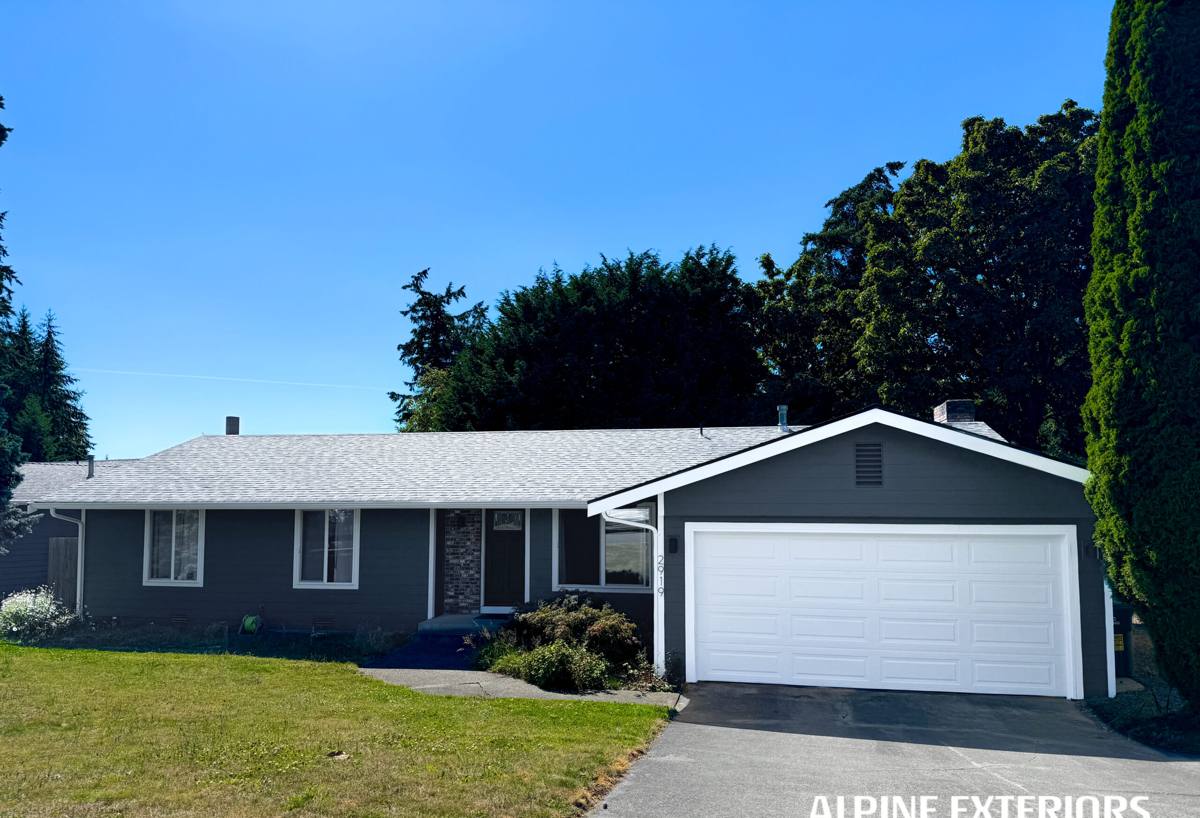
What "Correct" Siding Installation Actually Means Here
A lot of siding jobs fail not because of the product, but because of what's underneath and behind it. Getting this right in a wet coastal climate means paying attention to details that don't show up in a walk-by inspection but matter enormously over a 20 or 30 year window.
Water Management Comes First
- A continuous water-resistive barrier (WRB) installed correctly, lapped shingle-style so water sheds down and out, never inward
- Properly flashed windows, doors, and any wall penetrations, integrated with the WRB rather than just caulked over
- Rainscreen or drainage gap where conditions call for it, so any water that gets behind the siding has somewhere to go besides the sheathing
- Correct fastener placement and type — stainless or coated fasteners rated for coastal exposure, driven to the manufacturer's spec rather than just "snug"
- Proper clearance at the bottom of the wall, deck ledgers, and grade lines so siding isn't sitting in a moisture trap
Fit and Finish Details
Butt joints need to be caulked and, ideally, backed with flashing tape rather than caulk alone. Corners, trim, and J-channel need consistent reveal so water sheds instead of pooling. None of this is glamorous work, but it's the difference between siding that looks good for two years and siding that performs for two decades.
Why We Install James Hardie Fiber Cement Exclusively
We made a decision a while back to stop installing vinyl, LP SmartSide, primed spruce, cedar, and other fiber cement brands, and to install James Hardie exclusively. That's not a marketing position — it's a maintenance and durability call based on what actually holds up in this climate.
Vinyl expands and contracts with temperature swings, can crack in impact or cold, and its seams and J-channel give wind-driven rain plenty of places to get behind the wall. Wood products — cedar, primed spruce — look great initially but need real upkeep in a climate this wet: repainting, caulk maintenance, and vigilance against rot and moss, especially on shaded elevations that never fully dry out. Engineered wood siding like LP SmartSide performs reasonably when installed and maintained to spec, but it's still wood-based, meaning any breach in the factory coating or field-cut edge treatment creates a path for moisture absorption and swelling.
James Hardie is fiber cement — non-combustible, dimensionally stable across our temperature range, and engineered specifically for high-moisture climates through its HZ5 product line. The ColorPlus factory finish is baked on under controlled conditions, which holds color and resists the fading and peeling that field-applied paint struggles with out here. It doesn't rot, and it isn't a food source for the moss and algae that thrive in Whatcom County's shade and moisture. Combined with a strong, transferable manufacturer warranty, it's simply the product we're willing to put our name behind and stand behind after the trucks leave.
Signs a Ferndale Home Needs New Siding
| What You See | What It Usually Means |
|---|---|
| Soft or spongy spots near the bottom of walls | Moisture has reached the sheathing; likely rot starting underneath |
| Persistent green or black staining that returns after cleaning | Moss/algae growth pattern typical of shaded, damp wall sections |
| Paint peeling in sheets rather than fading evenly | Moisture is pushing out from behind the siding, not just UV wear |
| Visible gaps opening at butt joints or corner trim | Material movement or failed caulking — an active water entry point |
| Rising energy bills with no other explanation | Compromised siding and WRB reducing the wall assembly's effectiveness |
Any one of these on its own might be a minor repair. Several together, especially on a home more than 15 years old with its original siding, usually means it's time to look at full replacement rather than patching.
How Our Installation Process Works
1. On-Site Assessment
We walk the exterior, check for existing moisture damage, evaluate the current WRB and sheathing condition, and talk through what we're seeing before any numbers get discussed.
2. Tear-Off and Sheathing Check
Old siding comes off, and we inspect the sheathing underneath. Any soft or damaged sheathing gets replaced before anything new goes back on — covering a compromised wall with new siding just hides the problem.
3. Water-Resistive Barrier and Flashing
This is the step that determines how the house performs in ten years, not two. We install a continuous WRB, integrate flashing at every window, door, and penetration, and add a drainage gap where the wall assembly calls for it.
4. James Hardie Installation to Spec
Panels, planks, or shingle siding go up following James Hardie's fastening and clearance requirements exactly — not "close enough." Correct nailing patterns and reveal consistency protect the warranty and the performance both.
5. Trim, Caulk, and Final Detail
Trim gets set with proper reveal, joints get sealed correctly, and we do a final walk-through so you know exactly what was done and why.
What Drives the Cost of a Siding Installation
| Factor | Why It Matters |
|---|---|
| Home size and wall complexity | More corners, gables, and dormers mean more cutting, flashing, and labor time |
| Sheathing condition | Rot repair found during tear-off adds material and labor before new siding can go on |
| Siding profile (lap, shingle, panel) | Different James Hardie lines and profiles carry different material and install costs |
| Trim and detail work | Window/door trim, corner boards, and fascia work add time relative to plain wall runs |
| Access and site conditions | Steep grades, tight lot lines, or multi-story walls affect scaffolding and staging needs |
We don't quote off square footage alone — every one of these factors gets looked at on-site so the number you get reflects the actual house, not a generic estimate.
Why Hiring a Crew That Already Works in Ferndale Matters
A crew that works regularly in and around Ferndale already knows how the local exposure — salt air, wind direction, moss patterns on shaded lots — tends to hit different elevations of a house. That's not something you get from a crew that mostly works drier, inland jobs and treats every siding install the same way regardless of climate. We're based out of Bellingham and work Whatcom County routinely, which means our flashing details, fastener choices, and drainage decisions are made with this specific weather in mind, not adapted after the fact.
It also matters for follow-up. If a question comes up two years after installation, you're calling a company that's still local, still reachable, and still stands behind the warranty — not chasing down a crew that moved on to the next region.
Before You Sign With Any Siding Contractor
- Ask what water-resistive barrier and flashing details they use, not just what siding brand
- Confirm whether sheathing repair is included if damage is found during tear-off, or billed separately
- Get the manufacturer warranty terms in writing, including what voids it
- Ask how many James Hardie installations they've completed in your specific area
- Check that fastener type and spacing will meet manufacturer spec for your exposure zone
- Get a clear written scope — what's included, what's excluded, and the payment schedule
A contractor who answers these questions specifically and without hesitation is one worth trusting with a project that's supposed to last decades.
Caring for James Hardie Siding After Installation
Fiber cement siding is low-maintenance, not no-maintenance. A rinse with a garden hose once or twice a year keeps salt residue and grime from building up. Keep an eye on caulked joints for cracking over time, and address any landscaping that's shading a wall and keeping it damp longer than necessary. Beyond that, James Hardie's factory finish is doing most of the work — you're not looking at a repaint cycle the way you would with wood siding.
If you're in Ferndale and dealing with siding that's showing its age, or you're planning ahead for a replacement before real damage sets in, we're happy to take a look and walk you through what we're seeing. Reach out for a free, no-pressure estimate using the form below.