 Bellingham
 Board & Batten in Barkley: Why It Fits the Neighborhood
Board and batten has become one of the most requested siding styles in Barkley, and it's easy to see why. The vertical lines read as clean and modern on the newer homes going up in the area, and they also work well as an accent on gables, dormers, and entry walls for homes with more traditional lap siding everywhere else. It's a style choice, but it's also a performance choice — vertical siding sheds water differently than horizontal lap siding, and that matters more here than it would in a drier climate.
What we see most often in Barkley is either a full board and batten exterior on a newer build, or board and batten used selectively — a gable end, a bump-out, a covered porch wall — paired with horizontal siding on the rest of the house. Both approaches work well when the material and the installation are right for our climate. Neither works well when either one is wrong.
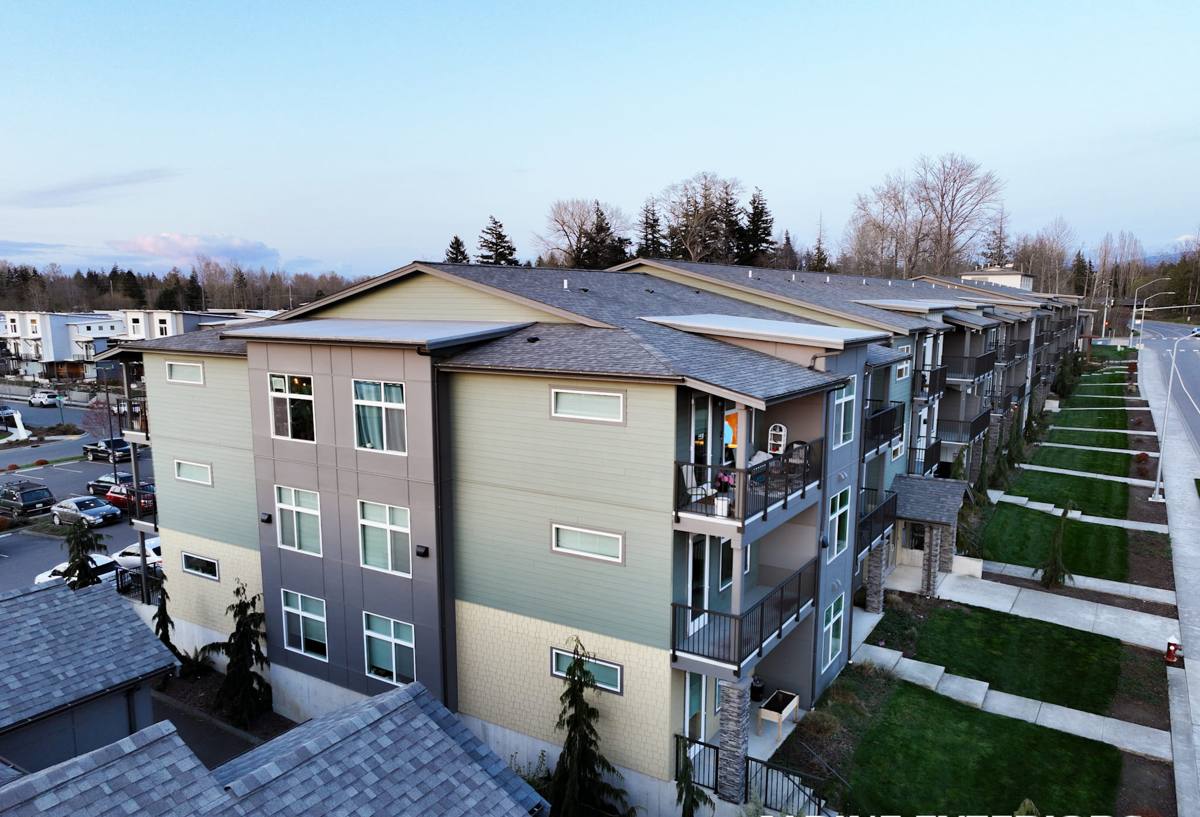
What Bellingham's Climate Does to Board & Batten Siding
Whatcom County sits in a marine climate, and board and batten siding has to deal with three things here that don't show up the same way in most of the country: salt-laden air off Bellingham Bay and the Sound, long stretches of driving, wind-pushed rain rather than gentle vertical rainfall, and a moss and algae season that can run most of the year on shaded or north-facing walls.
Salt Air
Homes closer to the water deal with airborne salt that accelerates corrosion on fasteners and metal flashing, and it slowly breaks down finishes that aren't built for it. This is less about the boards themselves and more about everything holding them on — nail heads, batten fasteners, and any exposed trim hardware.
Driving Rain
Wind-driven rain doesn't just fall on a wall, it gets pushed sideways into every seam, joint, and fastener line. Board and batten has more vertical seams than lap siding, and every one of those seams is a place water can find its way behind the cladding if the assembly behind it isn't built to handle it. This is the single biggest reason board and batten fails when it's installed wrong — not the boards, but what's (or isn't) behind them.
Moss and Algae
Bellingham's tree cover and persistent moisture mean moss and algae growth on siding is a matter of when, not if, especially on shaded elevations. It's mostly cosmetic on a properly finished, dense material, but it accelerates rot and coating failure on materials that absorb moisture or use a paint film that isn't factory-cured.
What a Correct Board & Batten Installation Actually Involves
Board and batten looks simple from the street — wide boards, narrow strips covering the seams — but the part that determines whether it lasts 10 years or 40 is entirely hidden. A correct installation in this climate includes:
- A weather-resistant barrier installed and lapped correctly behind the siding, with all penetrations properly flashed before a single board goes up
- A rainscreen gap (a drainage space between the WRB and the siding) so any water that does get behind the cladding can drain and dry instead of sitting against sheathing
- Fasteners driven into structural framing at the correct spacing, not just into the sheathing, and battens fastened through the boards into the studs beneath
- Proper clearance at the bottom of the wall — siding kept off decks, grade, and roofing so it isn't sitting in standing water
- Correct, minimal caulking at trim and openings — caulk is a backup, not the primary water management strategy
Skip any one of these and the siding can look fine for a few years while moisture quietly does damage behind it. In a climate that gets sustained fall and winter rain the way Whatcom County does, that timeline is shorter than it would be somewhere drier.
The Material We Install: James Hardie Vertical Panel & Batten
We install James Hardie's fiber cement vertical panel and batten system exclusively — no vinyl board and batten, no engineered wood, no primed raw lumber. It's the one material we've found holds up to this specific mix of salt air, wind-driven rain, and year-round dampness without the maintenance burden or moisture risk that comes with the alternatives.
Hardie's siding line is engineered by climate zone, and Bellingham falls into the HZ5 category — built for regions that see freeze-thaw cycles and sustained moisture exposure, which describes a typical Whatcom County winter well. The panels and battens are fiber cement: sand, cement, and cellulose fiber pressed and cured, not wood-based, so there's no OSB core or wood substrate to swell or delaminate if water reaches it.
Most of what we install carries Hardie's ColorPlus factory finish — a baked-on coating applied and cured under controlled conditions before the material ever reaches Barkley, rather than a field-applied paint job that has to cure outdoors in our weather window. That matters here specifically: field-painted siding in a marine climate needs the right stretch of dry weather to cure properly, and Bellingham doesn't always cooperate. A factory finish sidesteps that risk entirely and comes with its own manufacturer coverage against fading and peeling.
Why We Don't Install Vinyl or Engineered Wood Board and Batten
Vinyl board and batten is inexpensive and low-maintenance in the sense that it doesn't need painting, but it's a thin material that expands and contracts more than fiber cement, and the seams and batten reveals tend to look noticeably flatter up close compared to Hardie's textured panels. Engineered wood products use a wood-fiber or OSB substrate, which performs fine in many climates but is more sensitive to sustained moisture exposure at cut edges and butt joints — exactly the kind of exposure a marine climate with heavy driving rain creates. We made the call years ago to standardize on one material rather than install something on a home that we'd be worried about revisiting in five years.
Comparing Board & Batten Materials for This Climate
| Material | Moisture Behavior in Marine Climate | Maintenance | Typical Service Life | Fire Rating |
|---|---|---|---|---|
| Fiber Cement (James Hardie) | Dense, non-wood substrate; doesn't swell or rot from water exposure | Occasional wash; factory finish resists fade/peel | Decades, per manufacturer warranty terms | Non-combustible |
| Vinyl | Doesn't absorb water but can warp/distort with heat or impact; seams flex | Low, but color is baked into a thin panel and can chalk over time | Moderate; shorter than fiber cement in exposed conditions | Combustible |
| Engineered Wood | Wood-based substrate; vulnerable at cut edges and joints if moisture intrudes | Moderate to higher; edge sealing and inspection matter | Moderate; sensitive to sustained wet exposure | Combustible |
| Solid Wood / Cedar | Natural material; absorbs and releases moisture, prone to cupping/checking | Highest; regular refinishing needed | Variable, heavily maintenance-dependent | Combustible |
Our Process for a Barkley Board & Batten Project
- On-site assessment — we look at existing siding, wall assemblies, and any signs of past moisture intrusion before quoting anything
- Moisture check — given how wet Whatcom County winters get, we check sheathing condition at removal, especially around windows, corners, and low walls
- WRB and rainscreen installation — a properly lapped weather barrier and drainage gap go in before any siding does
- Flashing — windows, doors, and any wall penetrations get flashed correctly, not just caulked
- Panel and batten installation — Hardie panels installed and fastened to Hardie's published specs, battens fastened through to framing
- Trim and detail work — corners, water tables, and transitions finished so water sheds away from the wall
- Final walkthrough — we go over the finished work with the homeowner before calling the job done
Signs Your Current Board & Batten Siding Needs Attention
- Soft or spongy spots when you press on boards, especially near the bottom of the wall
- Visible gaps opening up between boards and battens, or battens pulling away from the wall
- Persistent moss or dark staining that keeps returning shortly after cleaning
- Peeling, bubbling, or chalking paint on wood or engineered wood siding
- Warping, bowing, or swelling along butt joints or panel edges
- Water stains or musty smells on interior walls that back up to exterior siding
None of these mean the whole wall needs to come off tomorrow, but they're worth having looked at before the next wet season adds to the problem.
Why a Local Crew That Already Works Barkley Matters
A crew that regularly works in and around Bellingham knows how differently a wall exposed to prevailing wind and rain behaves compared to one tucked behind trees or other structures — and Barkley has both kinds of lots. That's the kind of judgment that comes from doing the work here repeatedly, not from a general contractor's install manual. It also means we're not guessing at how the City of Bellingham and Whatcom County handle permitting and inspections for exterior work, and we're not disappearing after the last panel goes up — if something needs a follow-up look after a hard winter, we're not far away.
If you're weighing board and batten siding for a home in Barkley, we're glad to take a look and walk through what a correct installation would involve for your specific walls and exposure. Reach out for a free, no-pressure estimate using the form below.