 Bellingham
 Barkley Sits Inside Bellingham's Marine Climate, Whether the Water Is Visible or Not
Barkley isn't a waterfront neighborhood, but it doesn't need to be to feel what Bellingham Bay and the Salish Sea do to a house's exterior. Salt-laden marine air moves inland on the prevailing westerlies, driving rain comes in sideways during fall and winter storms, and the same damp, low-light stretches that keep Whatcom County green also keep north- and west-facing walls wet longer than homeowners expect. Add tree cover, which is common throughout Barkley's residential streets, and you get shaded, slow-drying siding for months at a time — exactly the conditions moss and mildew need to take hold.
None of this makes Barkley a harsh climate in the way a hail-prone or wildfire-exposed region is. It's a slow, cumulative kind of wear: paint that chalks and fades a few years early, caulk joints that open up, fasteners that weep rust streaks, and siding that never quite gets to dry out before the next system rolls through. Over ten or fifteen years, that's the difference between a house that still looks tight and one that's started to show its age.
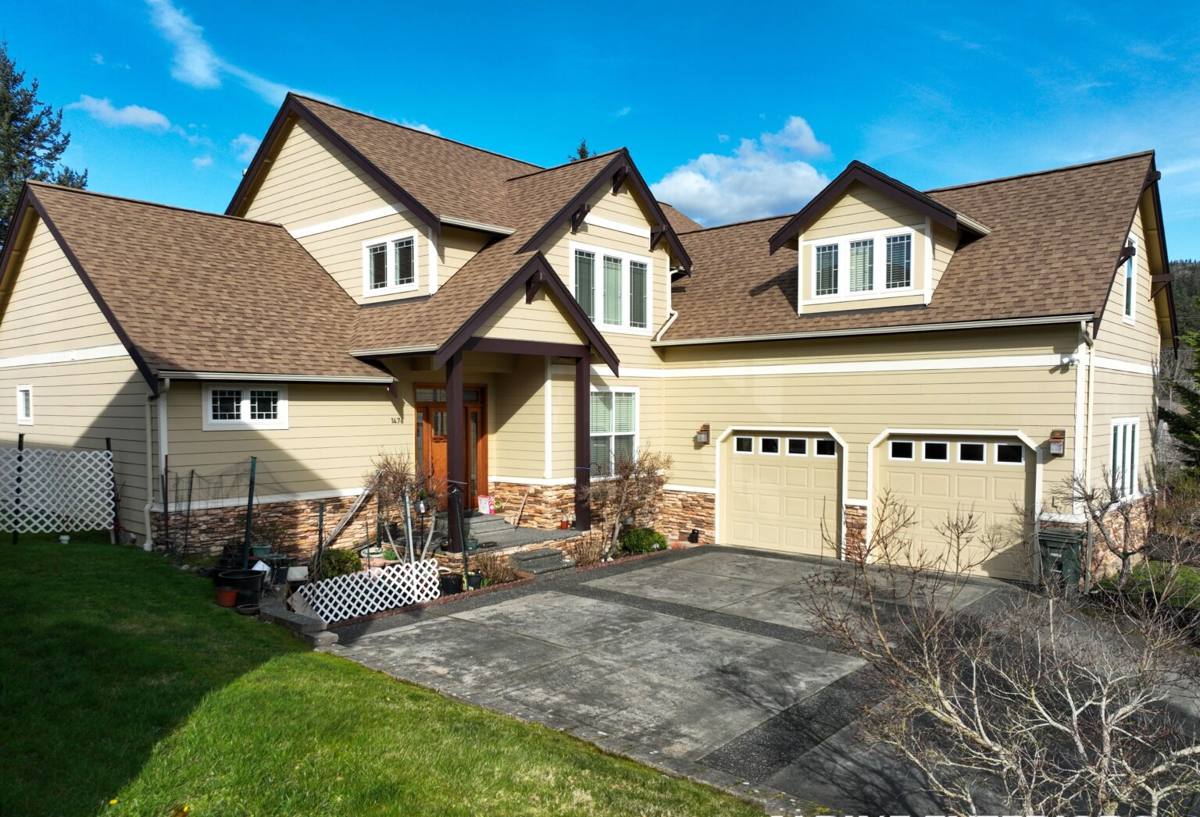
Why We Install Only James Hardie Fiber Cement
We don't install vinyl, LP SmartSide, Cemplank, Allura, primed spruce, or cedar. That's not a marketing line — it's a standard we settled on after weighing how each of those products actually performs over time in a climate like this one, versus how James Hardie performs when it's installed correctly.
James Hardie siding is fiber cement: sand, cement, and cellulose fiber, cured into a board that doesn't absorb water the way wood-based products do and won't feed rot the way real or engineered wood can if moisture gets behind it. It's non-combustible, which matters increasingly to insurers and homeowners alike, and it holds paint and factory finish far longer than most alternatives because it doesn't expand and contract with moisture the way wood-based sidings do.
For this region specifically, Hardie makes an HZ5 product line engineered for climates with sustained moisture exposure — which is exactly what Whatcom County delivers most of the year. That's a meaningful distinction from a generic siding product: the plank itself is formulated and rated for the weather it's going on.
ColorPlus Factory Finish
Most Hardie siding we install goes on with the ColorPlus finish system — color baked on at the factory under controlled conditions, rather than field-painted on site. In a climate where field-applied paint has to cure in unpredictable weather and then survive years of damp, a factory finish with a real manufacturer warranty behind it is one less variable working against the homeowner.
What a Correct Installation Actually Involves Here
Fiber cement siding is only as good as the assembly behind it. A lot of what separates a siding job that lasts twenty-five-plus years from one that fails early has nothing to do with the plank itself — it's the water management system underneath it.
Moisture Management Behind the Siding
In a climate that gets sustained wind-driven rain, a drainage gap — a rain screen — between the weather-resistive barrier and the back of the siding gives any moisture that gets past the cladding a way to drain and dry instead of sitting against the sheathing. Flashing at every window, door, roofline, and horizontal trim intersection has to be detailed correctly, lapped the right direction, and integrated with the barrier underneath rather than just caulked over. Butt joints between planks need proper backing and sealing, not just a bead of caulk at the face. None of this is visible once the job is finished, which is exactly why it matters who's doing the work and not just what brand of board they're using.
Fastening and Manufacturer Specification
James Hardie publishes detailed fastening and installation requirements by climate zone, and HZ5 installations have specific requirements for fastener type, spacing, and placement that differ from what's allowed in milder regions. Field-cut edges need to be primed or sealed before installation, not left raw. Siding needs proper clearance from grade, roofing, decks, and patios so it isn't sitting in standing water or wicking moisture from below. Skipping any of these steps doesn't show up as a problem on install day — it shows up as a callback three, five, or ten years later.
How James Hardie Compares to the Alternatives Barkley Homeowners Consider
Homeowners researching siding usually run into the same handful of options. Here's an honest comparison of how they hold up against the conditions this area actually produces.
| Material | Moisture & Rot Behavior | Moss/Mildew Resistance | Maintenance Burden | Typical Warranty Structure |
|---|---|---|---|---|
| James Hardie fiber cement | Doesn't absorb and swell like wood-based products; dimensionally stable when installed to spec | Doesn't feed organic growth the way wood or wood-fiber products can; surface still needs periodic rinsing | Low — occasional rinse and caulk check | Long, transferable product warranty; separate finish warranty on ColorPlus |
| Vinyl siding | Doesn't rot, but can warp, crack, or blow off in wind-driven storms; hides moisture problems in the wall behind it | Moderate — smooth surface but seams and laps collect grime | Low, but color fades and can't be repainted without special prep | Varies widely by manufacturer and grade |
| LP SmartSide (engineered wood) | Wood-based; treated to resist moisture, but any breach at a cut edge or fastener hole can lead to swelling | More susceptible than fiber cement since it's a wood product at its core | Moderate — edge sealing and touch-up matter more over time | Prorated warranty typical of engineered wood products |
| Cedar siding | Real wood; performs well when maintained but absorbs moisture and can cup, split, or rot if finish isn't kept up | Requires the most active upkeep to prevent moss and mildew | High — refinishing on a recurring cycle | No manufactured product warranty; performance depends entirely on maintenance |
This isn't a claim that the alternatives are poor products — vinyl, engineered wood, and cedar all have legitimate uses. It's a statement of the trade-offs we weighed before deciding what we'd stand behind putting on a roof over someone's head in this specific climate, and why fiber cement won that decision for us.
Our Process on a Barkley Siding Project
- On-site assessment: we walk the property and note which elevations take the most wind-driven rain, where shade and tree cover keep siding wet longest, and where existing moisture damage might be hiding.
- Product and color selection: we help match a Hardie plank profile, texture, and ColorPlus color to the home and the neighborhood, factoring in anything Barkley's residential character or an HOA might expect.
- Tear-off and substrate check: once old siding is off, we inspect sheathing for rot or hidden damage before anything new goes up — this is often where a cheaper "install over existing siding" approach hides problems instead of solving them.
- Weather-resistive barrier and drainage plane: the water management layer goes in correctly before a single piece of Hardie touches the wall.
- Installation to spec: HZ5 fastening pattern, proper flashing integration, correct clearances, and factory or field-sealed edges throughout.
- Caulking, touch-up, and cleanup: joints sealed, any field-cut edges finished, site cleared of debris and fasteners.
- Final walkthrough: we go over the finished job with the homeowner before calling it done.
Living with Hardie Siding Through a Barkley Moss Season
Correctly installed Hardie siding is low-maintenance, not no-maintenance. A short annual routine keeps it looking right through the wet months and protects the warranty.
- Rinse siding at least once a year, focusing on north- and west-facing walls and anywhere tree cover keeps the surface shaded and damp longer than the rest of the house.
- Keep gutters and downspouts clear so water sheets off the roof correctly instead of running down the face of the siding.
- Trim back branches and shrubs that are touching or close to the walls — airflow and sun exposure do more to prevent moss than any cleaning product.
- Check caulking at trim, windows, and joints every year or two, and have any cracked or missing beads redone before the wet season sets in.
- Skip the high-pressure washer. A garden hose or low-pressure rinse is enough; aggressive pressure washing can force water behind the siding or damage the finish.
- Watch for chalking, fading, or hairline cracks in caulk as early signs something needs attention, rather than waiting for a visible problem.
Why It Matters That We Already Work in Barkley
A siding crew that only shows up in this part of Whatcom County once in a while doesn't have the same read on it as one that works here regularly. Knowing which elevations in Barkley catch the worst of the wind-driven rain, which streets sit in enough shade to grow moss faster than the rest of the neighborhood, and what the local permitting process requires for exterior work all comes from repetition, not from a general checklist. It also means we're not learning the neighborhood's housing stock — the mix of home ages and construction styles typical of this area — on the homeowner's dime.
That local familiarity shows up in small decisions throughout a project: where extra flashing attention is worth it, which color choices actually hold up against the amount of shade a particular lot gets, and how to sequence a job around the wet-season weather patterns this part of Bellingham sees every fall and winter.
What Drives Cost on a Barkley Hardie Project
| Cost Factor | Why It Matters |
|---|---|
| Home size and number of stories | More surface area and taller walls mean more material and more labor, including access equipment for multi-story sections |
| Siding profile | Lap siding, shingle-style panels, and vertical or board-and-batten looks all price differently in material and install time |
| Tear-off vs. new construction | Removing and disposing of old siding, and repairing whatever substrate damage it uncovers, adds cost that isn't always visible until the walls are open |
| Trim and moisture repair | Rot found during tear-off has to be fixed before new siding goes on — skipping this is how a job fails early |
| Color and finish | ColorPlus factory finish typically costs more upfront than field-primed board, but it comes with a longer, better-backed finish warranty |
| Site access and complexity | Landscaping, fencing, tight lot lines, and multi-story access all affect labor time |
We give homeowners a real number based on their specific house, not a rough per-square-foot estimate pulled from a national average — those numbers rarely reflect what a job in this climate, with this much moisture detailing required, actually costs to do right.
If you're weighing a siding project on a Barkley home, we're glad to come take a look and put together a free, no-pressure estimate based on what your house actually needs — use the form below to get started.