 Bellingham
 Why Siding Wears Differently in Barkley
Barkley sits close enough to Bellingham Bay and the surrounding wetlands that homes here take on a specific combination of punishment: salt-tinged air drifting in off the water, driving rain that comes in sideways during fall and winter storms, and a moss season that can stretch from October through May. None of these are dramatic events on their own. The damage is cumulative — it's what happens to a wall system over ten, fifteen, twenty winters of that pattern repeating.
Salt air is corrosive to exposed fasteners and metal trim, and it accelerates the breakdown of finishes that aren't engineered to resist it. Driving rain finds every gap in flashing, every hairline crack in caulk, and every seam where two siding pieces don't quite meet correctly — and once it's behind the siding, it doesn't leave quickly in a climate this humid. Moss and algae don't just sit on the surface; on porous or absorbent siding materials, they hold moisture against the wall long after a storm has passed, which is exactly the condition that leads to rot, delamination, and paint failure.
None of this means Barkley is a uniquely harsh place to build. It means the margin for error in material choice and installation detail is smaller here than it is in a dry inland climate, and that's the lens we use on every siding replacement in this neighborhood.
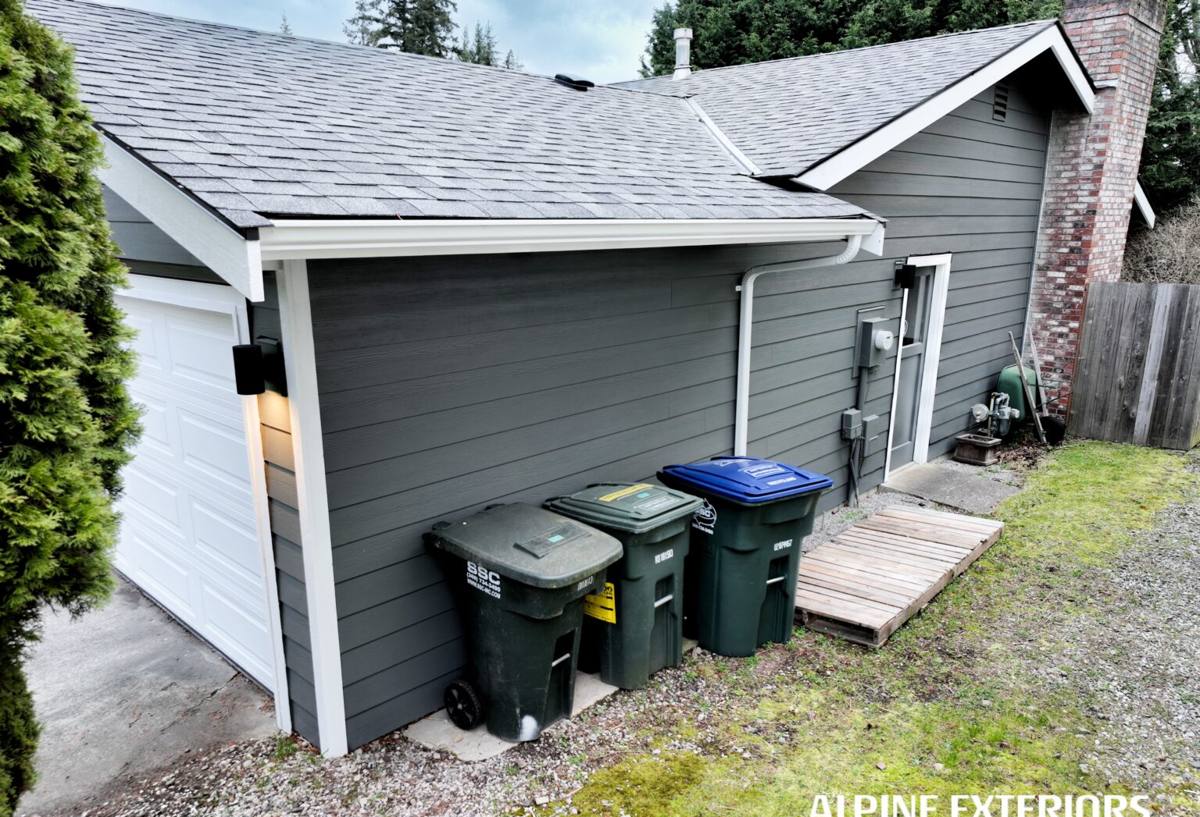
Signs a Barkley Home Actually Needs Siding Replacement
Not every siding problem in Whatcom County means a full tear-off. But there are specific signs that point to replacement rather than repair, especially once moisture has gotten behind the cladding rather than just sitting on top of it.
- Soft or spongy spots when you press on the siding, especially near the bottom courses and around window and door trim
- Paint that's peeling or bubbling in patterns that follow seams, laps, or nail lines rather than just sun exposure
- Persistent moss or algae growth that comes back within a season or two of cleaning
- Visible warping, cupping, or buckling of individual boards or panels
- Gaps opening up at butt joints, corners, or where siding meets trim
- A musty smell in an adjacent interior wall, or moisture showing up on interior drywall near exterior walls
- Siding that's original to a home built more than 25-30 years ago and has never been fully replaced
If you're seeing two or more of these, especially the soft spots or interior moisture signs, it's worth having someone look at what's happening behind the siding, not just the surface.
What a Correct Siding Replacement Actually Involves
Siding replacement done right is not simply removing old boards and nailing up new ones. In a climate that pushes this much moisture at a wall, the layers underneath the siding matter as much as the siding itself.
Full Tear-Off and Inspection
Old siding comes off entirely so the sheathing underneath can be inspected. This is where hidden rot, soft sheathing, or old moisture damage gets found — problems that a re-side over existing material would simply bury for another decade.
Weather-Resistive Barrier
A correctly installed weather barrier, properly lapped and sealed at every penetration, is what actually keeps wind-driven rain from reaching the framing. This layer does more long-term work than people expect from something you never see again once it's covered.
Flashing at Every Penetration
Windows, doors, hose bibs, vents, and any other wall penetration need flashing that directs water back out, not into the wall cavity. This is one of the most common places corners get cut on lower-quality jobs, and it's usually invisible until a leak shows up years later.
Correct Fastening and Clearances
Fiber cement siding has manufacturer-specified nailing patterns, minimum clearances from grade, decks, and roof lines, and specific gapping at joints. These aren't suggestions — they're what the warranty is actually contingent on, and what keeps water from wicking up into the bottom edge of the siding.
Caulking and Finish Details
Trim, corners, and joints get sealed with the right sealants in the right places — not everywhere, since over-caulking can trap moisture just as badly as under-caulking.
Why We Only Install James Hardie Fiber Cement
We get asked fairly often why we don't offer vinyl, LP SmartSide, cedar, or primed spruce as options. It's a fair question, and the honest answer is that we standardized on one product system after weighing how each material actually performs in a wet, salt-air, moss-prone climate like Bellingham's over the long run — not just how it looks on installation day.
| Material | Moisture Behavior | Salt Air / Coastal Exposure | Long-Term Maintenance |
|---|---|---|---|
| Vinyl | Doesn't absorb water, but seams and panels can warp or gap, letting moisture behind the wall undetected | Can fade and become brittle over time in UV and salt exposure | Low upfront, but cracks and impact damage are common repair calls |
| LP SmartSide (engineered wood) | Wood-based core is vulnerable if the factory finish is breached; edges need consistent sealing | Performs reasonably when properly maintained, but is less forgiving of coastal moisture cycles | Requires diligent caulk and paint upkeep to protect cut edges |
| Cedar / primed spruce | Natural wood absorbs moisture readily; prone to rot and moss growth without frequent maintenance | Attractive but demands the most upkeep in wet, mossy climates | Repainting and sealing on a recurring cycle; highest long-term labor cost |
| James Hardie fiber cement | Non-combustible cement-based composition resists moisture absorption and doesn't rot | Engineered HZ product lines are formulated for climate zones like ours | Factory ColorPlus finish reduces repainting; lowest ongoing maintenance burden |
Hardie isn't the cheapest option on day one, and we won't pretend otherwise. Vinyl in particular can look like the more budget-friendly choice up front. What tips the decision for us is what these materials look like at year fifteen in this specific climate, not year one. Hardie's ColorPlus factory finish, HZ5 formulation for our climate zone, and non-combustible composition give Barkley homeowners a wall system that's built for exactly the conditions described above — and it comes with a strong, transferable warranty that reflects the manufacturer's confidence in how the product performs when installed correctly.
Our Process for a Barkley Siding Replacement
- On-site assessment — We walk the exterior, check for soft spots and moisture signs, and look at existing flashing and trim conditions before quoting anything.
- Detailed scope and estimate — You get a clear breakdown of what's being removed, what's being replaced, and which Hardie product line and color fit the home.
- Tear-off and sheathing inspection — Old siding comes off, and we address any rot or damage found underneath before anything new goes up.
- Weather barrier and flashing installation — This is the layer that does the real work against driving rain, installed to manufacturer and code specifications.
- Hardie siding installation — Installed to the manufacturer's nailing, gapping, and clearance requirements so the warranty stays intact.
- Trim, caulking, and final detail work — The finish details that determine how the job looks and performs for the next several decades.
- Walkthrough and cleanup — We review the finished work with you and clear the site completely.
Why a Crew That Already Works Barkley Matters
Siding installation isn't just a product question — it's a local-conditions question. A crew that already works Barkley and the surrounding Bellingham neighborhoods knows how the moss season actually behaves on different lot orientations, which sides of a house take the worst of the driving rain off the bay, and what Whatcom County permitting and inspection expects for exterior work. That familiarity shows up in small decisions — where extra flashing attention matters, how much clearance to leave at grade on a lot that drains slowly, which trim details hold up best against this specific weather pattern — that a crew unfamiliar with the area might not think to prioritize.
It also matters logistically. A local crew can respond quickly if weather changes mid-project, has established relationships with local suppliers and disposal for the old material, and isn't guessing at how the county's building department wants exterior work documented and inspected.
What Affects Cost on a Barkley Siding Job
| Factor | Why It Matters |
|---|---|
| Home size and complexity | More corners, dormers, and trim details mean more cutting, flashing, and labor time |
| Extent of hidden damage | Rotted sheathing found during tear-off adds repair scope before new siding can go up |
| Hardie product line chosen | Lap siding, panel systems, and shingle-style products carry different material and labor costs |
| Color and finish selection | Factory ColorPlus finishes vary in cost by line but reduce future repainting expense |
| Site access and lot conditions | Tight lots, slopes, or limited staging area can affect labor time and equipment needs |
We don't quote off square footage alone — the assessment above is what lets us give you a number that reflects your home's actual condition, not a generic estimate.
Caring for Hardie Siding After Installation in This Climate
- Rinse the exterior periodically to keep moss and algae from establishing, especially on shaded north-facing walls
- Keep gutters clear so overflow isn't running down the siding face during heavy rain
- Trim back vegetation and tree cover that keeps siding damp longer than it should be
- Inspect caulking at trim and penetrations every couple of years and have gaps resealed promptly
- Address any impact damage or chips in the finish sooner rather than later to prevent moisture entry
None of this is heavy maintenance — it's the kind of upkeep that, paired with a properly installed Hardie system, is what actually gets a Barkley home the full lifespan the product is built for.
If your Barkley home is showing any of the signs above, or you're just planning ahead for a siding project, we're glad to come take a look. The estimate is free, there's no pressure, and you'll get a straight answer about what your home actually needs — just fill out the form below to get started.