 Bellingham
 Board & Batten Siding in Birchwood: What the Climate Actually Demands
Birchwood sits close enough to the water and the tree cover that its homes take a steady beating most siding products were never engineered for. Salt-laden air off Bellingham Bay works into seams and fastener heads year-round. Driving rain, pushed sideways by wind off the Strait, finds every gap in a poorly lapped board. And the long gray stretch from fall through spring gives moss, algae, and lichen months to colonize any surface that stays damp longer than it should. Board and batten siding — with its vertical boards and raised battens covering the seams — has real visual appeal for Birchwood's mix of craftsman, farmhouse, and modern homes. But the style only performs as well as the material and the installation behind it.
Vertical siding patterns like board and batten create more seams per square foot than horizontal lap siding, and every one of those seams is a place water can find a way in if the board doesn't hold its shape or the flashing details are wrong. In Whatcom County's climate, that's not a minor detail — it's the difference between siding that looks sharp for decades and siding that's cupping, staining, or rotting at the battens within a few wet seasons.
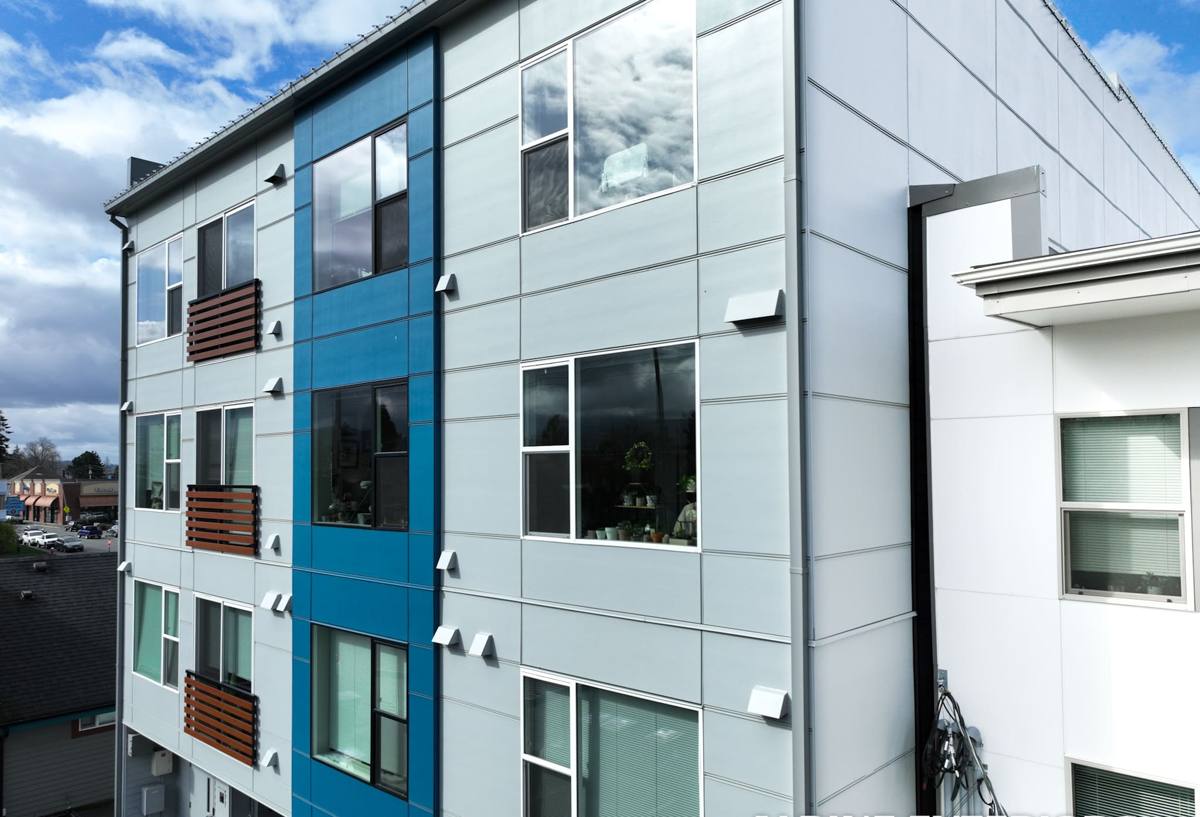
Why Material Choice Matters More With Vertical Patterns
Board and batten siding is unforgiving of material weaknesses because the vertical boards run with the grain of gravity, channeling water straight down toward the bottom of each course and toward every horizontal transition. A board that swells, shrinks, or warps with moisture will telegraph that movement along its full length, and it usually shows up first as a gap or a crack right where you don't want one — behind a batten, where you can't see it until the damage is done.
This is why we install James Hardie fiber cement exclusively for board and batten work in Birchwood. It's a company standard, not a marketing line. We do not install vinyl board and batten, LP SmartSide, Cemplank, Allura, primed spruce, or cedar board and batten, and we think Birchwood homeowners deserve an honest explanation of why.
Why We Don't Install the Alternatives
Vinyl Board & Batten
Vinyl is affordable and low-maintenance in mild climates, and we won't pretend otherwise. But it expands and contracts significantly with temperature swings, which is a bigger problem on vertical panels than horizontal ones because the movement is harder to hide. In driving coastal wind it can rattle, and over enough winters the panels can bow or pull away from their nailing flange. It's also a poor match for the crisp, shadow-lined look that makes board and batten worth choosing in the first place — the reveal depth and board texture that give the style its character are hard to replicate in thin vinyl.
LP SmartSide (Engineered Wood)
LP SmartSide is a legitimate product with a real warranty, and plenty of installers use it well. Our concern is wood-strand cores exposed to sustained coastal moisture: the cut edges and any breach in the factory coating are where trouble starts, and Birchwood's rain-and-moss cycle is exactly the kind of persistent dampness that tests those edges hardest. It leans on perfect, ongoing caulk and paint maintenance to keep water out over the long run — maintenance that's easy to fall behind on.
Cedar and Primed Spruce
Real wood board and batten is beautiful, and it's part of why the style exists. But solid wood in a marine climate needs re-staining or repainting on a tight cycle, and it's genuinely attractive to moisture, insects, and the moss and algae that thrive in this region's shade and humidity. We're honest with clients that the upkeep commitment on cedar is significant — more than most people budget for once they're a few years past the new-home shine.
Cemplank and Allura (Other Fiber Cement)
These are also fiber cement, and fiber cement as a category is the right call for this climate. Our reason for standardizing on Hardie specifically comes down to their ColorPlus factory finish, their HZ5 product engineering for wet, humid, freeze-thaw climates, and a warranty structure we've found to be more straightforward for homeowners to actually use.
What James Hardie Board & Batten Brings to a Birchwood Home
Hardie's fiber cement is non-combustible, dimensionally stable, and engineered specifically for climates like ours through its HZ5 product line, which is built for wetter, harsher regional weather rather than a one-size-fits-all national spec. The ColorPlus factory finish is baked on under controlled conditions rather than field-applied, which matters enormously on vertical siding where every board and batten face is a visible, weather-facing surface. It resists cracking, holds its color longer than field paint, and doesn't feed moss and algae the way porous wood surfaces can.
For board and batten specifically, Hardie's panel and board products hold a straight, true line over time. That straightness is what keeps batten reveals even and keeps the whole wall looking intentional rather than wavy, which is often the first sign of trouble on a lesser material.
What Correct Board & Batten Installation Actually Involves
The style looks simple — vertical boards, battens over the seams — but it's one of the more detail-sensitive siding patterns to install correctly, especially in a wet climate.
Layout and Spacing
Board spacing has to account for material expansion and contraction, and battens need consistent reveal so the wall reads as a straight, deliberate pattern rather than a patchwork. Layout also has to work around window and door openings without leaving awkward partial boards at corners.
Water Management Behind the Boards
This is the part homeowners never see and the part that matters most. A correct install includes a drainable weather-resistant barrier, properly lapped and taped seams, and rainscreen furring in many applications — a small air gap behind the siding that lets any moisture that does get in actually drain and dry out instead of sitting against the sheathing. Skip this step and board and batten siding in a climate like Bellingham's will trap moisture behind the boards regardless of how good the face material is.
Flashing at Every Transition
Every window, door, roofline, and horizontal trim board is a place where water wants to get behind the siding. Correct flashing — head flashing over windows, kick-out flashing where a roofline meets a wall, proper base flashing at the foundation line — is what actually keeps Birchwood's driving rain out, far more than the siding material itself.
Fastening
Fastener placement, spacing, and depth matter for both wind resistance and warranty compliance. Overdriven or misplaced fasteners are a common source of cracking and water intrusion on fiber cement siding installed by crews unfamiliar with the material.
Board & Batten Product and Cost Factors
| Factor | What It Affects | Why It Matters in Birchwood |
|---|---|---|
| Board width and batten spacing | Overall look, material quantity | Wider reveals show more of the weather-resistant barrier detail if not installed correctly |
| Rainscreen / furring strips | Labor and material cost | Adds drying capacity behind boards, critical given sustained regional moisture |
| ColorPlus finish vs. field paint | Long-term maintenance | Factory finish resists moss growth and fading better than site-applied paint |
| House complexity (gables, dormers, trim) | Labor hours, flashing detail work | More transitions mean more flashing points that must be done right |
| Existing wall condition | Prep and repair cost | Coastal homes often have hidden moisture damage behind old siding that needs addressing first |
Our Process for Board & Batten Installations in Birchwood
- On-site assessment of the existing wall assembly, looking specifically for moisture damage common to older Birchwood-area siding jobs
- Removal of old siding and inspection of sheathing, with repairs made before anything new goes up
- Installation of a drainable weather-resistant barrier and, where appropriate, rainscreen furring
- Precise board and batten layout planned around windows, doors, and corners before the first board is cut
- Flashing installed at every window, door, and horizontal transition
- James Hardie board and batten siding installed to manufacturer fastening specifications
- Final walkthrough covering caulk lines, trim details, and reveal consistency
Maintenance in a Marine, Moss-Prone Climate
Even the right material benefits from basic upkeep, especially under tree cover or on shaded, north-facing walls where moss gets the most time to establish itself.
- Rinse siding annually to clear pollen, salt residue, and early moss growth before it takes hold
- Keep gutters clear so overflow doesn't run down and saturate wall sections repeatedly
- Trim back vegetation and tree limbs that keep siding shaded and damp longer than necessary
- Inspect caulk joints at trim and window transitions every year or two and recaulk as needed
- Watch for any soft spots, staining, or bubbling paint on adjacent trim, which can signal a flashing issue worth catching early
Why a Crew That Already Works Birchwood Matters
Board and batten siding fails most often not because of the material but because of installation shortcuts that don't show up until the second or third wet season. A crew that regularly works Birchwood and the broader Bellingham area already knows which wall orientations take the worst weather, where moss tends to establish first, and how the region's rain patterns stress a vertical siding pattern differently than a horizontal one. That local pattern recognition shows up in the small decisions — where to add extra flashing, where rainscreen furring earns its cost, how tight to run batten spacing — that separate a board and batten job that still looks sharp in fifteen years from one that starts showing trouble in five.
If you're weighing board and batten siding for a home in Birchwood, we're happy to walk the property, look at what's there now, and give you a straightforward assessment of what a correct installation would involve — no pressure, no inflated claims, just a clear picture before you decide. Reach out below for a free estimate.