 Bellingham
 Why Blaine's Weather Is Hard on a Roof
Blaine sits right at the water's edge in the northwest corner of Whatcom County, and that location comes with a specific set of roofing problems. Salt air off the bay accelerates corrosion on anything metal — flashing, nail heads, gutter fasteners — faster than it would a few miles inland. Winter storms bring driving rain that comes in sideways more often than straight down, which tests every seam, lap, and flashing detail on a roof rather than just the open field of shingles. And because this part of Washington stays mild and damp for most of the year, moss doesn't take a season off. It grows nearly year-round here, working its way under shingle edges and holding moisture against the roof deck long after a storm has passed.
None of that means every roof in Blaine is destined for trouble. It means storm damage here tends to be sneakier than in drier climates — a lifted shingle or a bent piece of flashing doesn't just sit there, it becomes an entry point that gets pried open a little further with every subsequent rain event. Repairs that look cosmetic from the driveway can hide real water intrusion underneath, which is why we treat every storm call in Blaine as a full inspection first, not a quick patch.
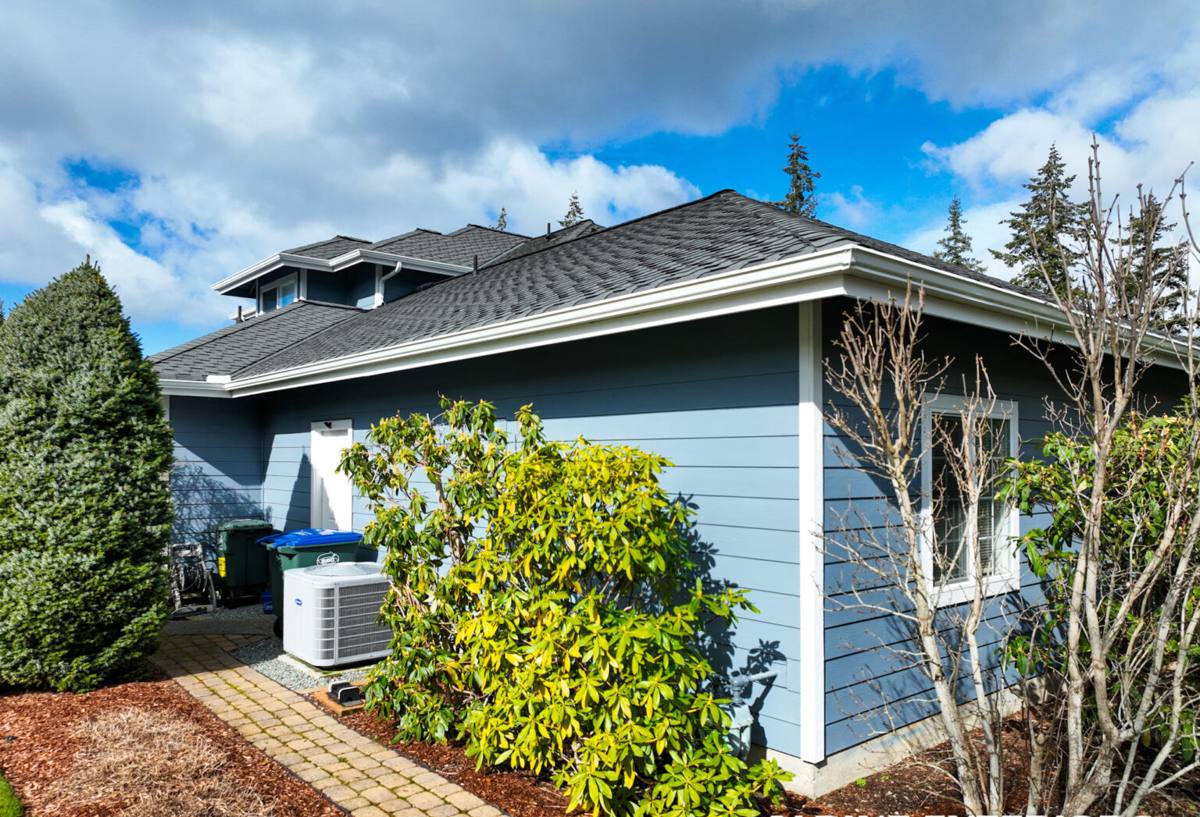
What Counts as Storm Damage — and What Doesn't
Wind and Impact Damage vs. Ordinary Wear
Storm damage has a specific look: shingles creased or torn along a wind line, tabs blown back or missing entirely, ridge caps lifted or gone, flashing bent or knocked loose by wind-driven debris, dents in gutters or vents from falling branches. This is different from ordinary wear like granule loss, curling edges, or general aging, which happens gradually and isn't tied to one weather event. The distinction matters for insurance purposes, but it also matters for the repair itself — storm damage is usually localized and repairable, while age-related wear is a sign the whole roof is nearing the end of its service life regardless of what the last storm did to it.
Damage You Can't See From the Ground
The damage that causes the most trouble is often invisible during a walk-around. Saturated decking under a lifted shingle, underlayment that's been wicking water for weeks, moss dams in a valley backing water sideways under the shingle course above it, flashing at a chimney or vent that's shifted just enough to let water track down the framing instead of shedding off the roof. None of this shows up as a visible leak until it's been happening long enough to soak through to the interior — at which point the repair is bigger than it needed to be.
- Missing, curled, or creased shingles visible from the yard or driveway
- Granules collecting in gutters, downspouts, or on the ground below the eaves
- New water stains on interior ceilings or upper walls, especially near chimneys or skylights
- A soft or slightly sagging feel anywhere on the roofline
- Moss that's noticeably thicker, wetter, or more widespread than it was before the storm
- Loose, bent, or missing flashing around chimneys, vents, and skylights
- Broken branches or debris still resting on the roof after a storm
What a Correct Storm Damage Repair Involves
Inspection Before Any Repair
A proper storm repair starts with a full-roof inspection, not just a look at the spot the homeowner noticed from the ground. That means checking the decking for soft spots or moisture once shingles are lifted, confirming the fastening on the shingle courses surrounding the damaged area, checking flashing at every penetration on the roof, and clearing enough moss and debris to see what's actually happening underneath. Skipping this step is how a small storm repair turns into a callback a year later for a leak that was already there and just hadn't shown up yet.
Repair vs. Replacement
Most storm damage in Blaine is repairable — an isolated area of wind lift or a damaged flashing detail doesn't require touching the rest of the roof. But there are situations where a patch isn't the honest answer: a roof that's already near the end of its expected life and just got pushed over the edge by the storm, a history of repeated moss damage that's compromised more of the deck than the current storm alone would explain, or a roof that's already been patched multiple times in the same area. In those cases we'll say so plainly and explain why, rather than repairing a spot that's likely to fail again within a season or two.
How We Handle a Storm Repair Call in Blaine
Temporary Protection First
If a storm has left an active leak or an open area of the roof exposed, the first priority is stopping ongoing water intrusion — usually with a tarp or temporary sealing — before scheduling the permanent repair. Given how often Blaine gets back-to-back rain systems in the fall and winter, waiting even a few days without temporary protection can turn a contained problem into a much bigger one.
Documentation for Insurance
We photograph the damage before touching anything and again once the repair is underway, and we provide a clear written scope of work that itemizes what was damaged and what the repair involves. If you're filing an insurance claim, that documentation is what your adjuster will need, and we're glad to walk through it with you — but our job is to give you an honest assessment of the roof, not to negotiate the claim for the insurance company.
The Repair Itself
Once the scope is confirmed, the repair replaces flashing and underlayment as needed — not just the visible shingles — and matches the existing roofing material as closely as we reasonably can. Given the salt air here, we use corrosion-resistant fasteners and flashing rather than standard galvanized hardware, and where moss contributed to the damage, we address the cause as part of the repair, not just the symptom. We clean up and haul away debris before we consider the job finished.
Materials and Workmanship Standards We Hold To
Not every material choice matters the same amount everywhere. In a drier, inland climate, standard felt underlayment and galvanized fasteners hold up fine for decades. On a roof exposed to Blaine's salt air and driving rain, those same standard choices age faster, so our default recommendations skew toward materials built for a coastal, wet climate rather than a general-purpose spec.
| Component | Standard Option | What We Typically Recommend in Blaine | Why It Matters Here |
|---|---|---|---|
| Underlayment | Asphalt-saturated felt | Synthetic underlayment | Better resistance to the extended, saturating rain events this area gets in fall and winter |
| Fasteners and flashing | Standard galvanized steel | Stainless steel or heavy hot-dip galvanized | Salt air off the bay speeds up corrosion on lighter galvanized hardware |
| Eaves and valleys | Underlayment only | Self-adhered ice-and-water membrane | Extra protection where moss and debris tend to dam water and force it sideways |
| Moss suppression | None, or occasional cleaning | Zinc or copper strips near the ridge (optional add-on) | Ongoing suppression given how long the moss season runs in Whatcom County |
These are our standard recommendations, not requirements — we'll always explain the trade-offs and let you decide what fits your roof and your budget.
What Affects the Cost of a Storm Repair
Storm repair pricing varies more than routine maintenance pricing because you often don't know the full extent of the damage until the roof is opened up. A few of the biggest factors that move the price:
- The size and location of the damaged area — a single flashing repair costs far less than several separate areas of wind-lifted shingles
- Whether the decking underneath needs to be replaced once the old shingles come off
- How closely we're able to match your existing roofing material
- Roof pitch and accessibility — steep or complex rooflines take longer to work safely
- Whether moss or algae remediation is needed at the same time as the repair
- Insurance coverage and deductible, if the repair is being filed as a claim
We give a written estimate before any work starts, and if we find something once we're up on the roof that changes the scope, we'll walk you through it before proceeding — not after the invoice.
Why It Matters to Hire a Crew That Already Works in Blaine
Roofing in a coastal Whatcom County community isn't the same trade as roofing twenty miles inland. A crew that's used to Bellingham's weather generally still needs to understand how a Blaine roof facing open water behaves differently from a similar roof a few miles away that's sheltered by trees or terrain — which slopes take the worst of the wind-driven rain, how much faster moss returns on a shaded, damp roof near the water, and how corrosion shows up sooner on hardware here than it would elsewhere in the county. That local pattern recognition is what keeps a repair from being a generic fix that doesn't actually hold up to the next storm.
It also matters for response time. When a storm moves through Whatcom County, it typically damages more than one roof at once, and a crew already working in the area can usually get to a temporary fix faster than one dispatching from farther away — which matters when the difference is a tarp going up before the next rain system arrives rather than after.
If a recent storm has left you with damage — or you just want a roof checked over before the next one hits — we're happy to take a look. Fill out the form below for a free, no-pressure estimate on storm damage roof repair for your Blaine home.