 Bellingham
 Why Columbia Homes Take a Different Kind of Beating
Columbia sits close enough to the water and the weather patterns coming off Bellingham Bay that its homes deal with a combination most inland Whatcom County neighborhoods don't: salt-laden air, long stretches of driving rain, and a moss season that can run most of the year on shaded, north-facing walls. Any one of those on its own is manageable. Together, they shorten the life of siding that wasn't built or installed with this specific exposure in mind.
We've worked enough homes in and around Columbia to know the failure patterns aren't hypothetical. They show up as chalky, faded paint on the west and south walls that catch the most weather, soft trim boards near ground level, and dark-green streaking on siding that never gets a full day of direct sun. None of that is a mystery — it's what happens when a marine climate meets a siding product or installation that wasn't matched to it.
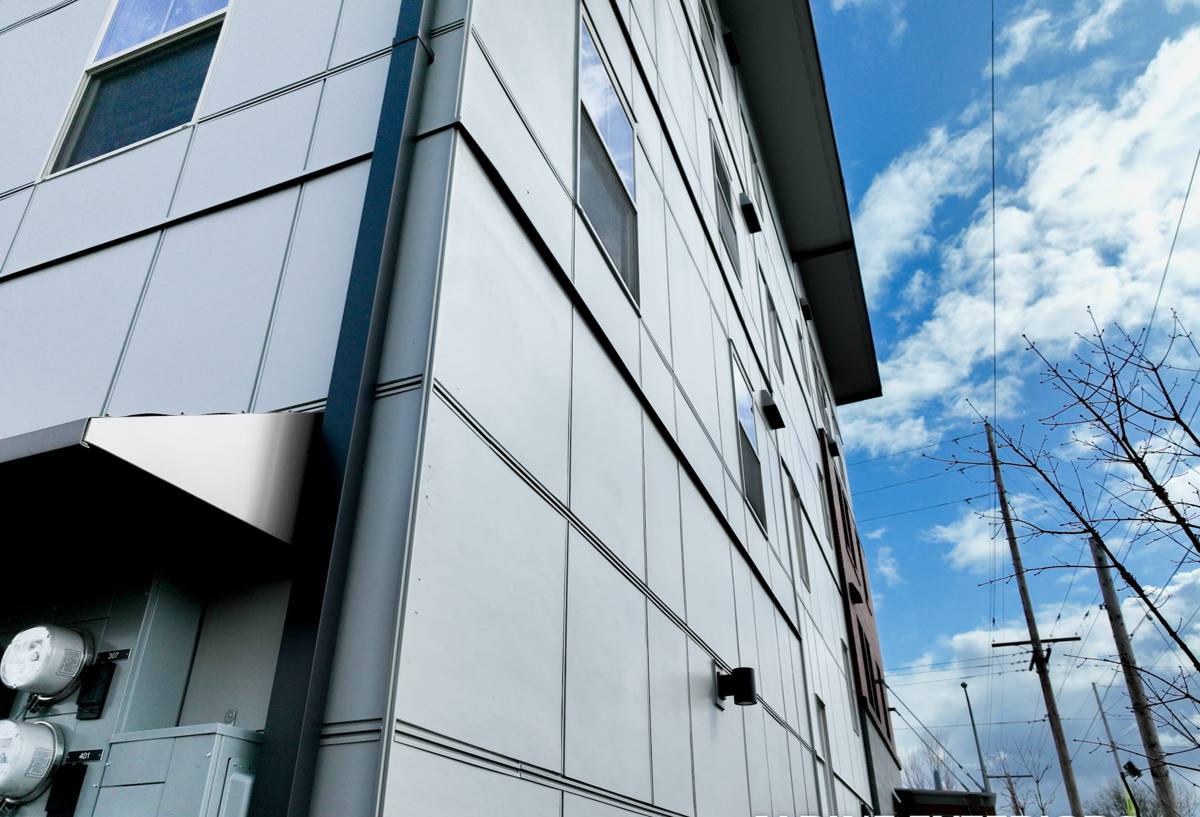
What Salt Air, Rain, and Moss Actually Do to Siding
Salt Air
Airborne salt from the bay settles on exterior surfaces and accelerates the breakdown of paint films and caulking. On wood-based sidings it also speeds up moisture absorption at cut edges and fastener heads, which is where rot typically starts. Fiber cement doesn't absorb moisture the way wood-based products do, which is a big part of why it holds up better here — but the finish on top of it still matters. A factory-baked finish resists that salt exposure far longer than a job-site paint job.
Driving Rain
Bellingham's rain doesn't just fall straight down — wind off the water pushes it sideways into walls, laps, and seams. That means the drainage plane behind the siding, the flashing above windows and doors, and the way each course overlaps the one below it all matter more here than they would in a drier, calmer climate. A siding job that looks fine on a dry day can still be letting water behind it if those details were rushed.
Moss and Sustained Dampness
Shaded walls, especially those facing north or tucked under mature trees common in Columbia's older lots, stay damp longer after every rain. That sustained dampness is what moss and algae need to take hold. On porous or absorbent siding materials, that moisture doesn't just sit on the surface — it works its way in. Fiber cement's density gives it a real advantage here, but ongoing dampness will still leave organic growth on the surface if it isn't occasionally rinsed off.
Why This Company Installs Only James Hardie Fiber Cement
We standardized on James Hardie products for every home we side, including in Columbia, and we don't install LP SmartSide, vinyl, Cemplank, Allura, primed spruce, or cedar. That's not a marketing position — it's a decision based on what holds up in this specific climate. Hardie's fiber cement is non-combustible, doesn't swell or rot the way wood-based sidings can when they take on moisture at cut ends, and its ColorPlus factory finish is baked on under controlled conditions rather than applied on a scaffold in variable weather. In a neighborhood dealing with salt air and near-constant moisture exposure, that finish durability is the difference between repainting in seven years and repainting in fifteen or more.
We also like that Hardie engineers specific product lines for different climate exposures (their HZ5 line, for example, is built for climates with freeze-thaw cycles and heavy moisture), and that the warranty is transferable if the home sells. Standardizing on one manufacturer also means our crews aren't relearning installation specs for a different product on every job — they install Hardie correctly because it's the only thing they install.
What a Correct Fiber Cement Installation Involves
Fiber cement siding is only as good as the details underneath it. This is where most siding problems we get called to fix actually originate — not in the siding material itself, but in shortcuts taken during installation. A correct job in a climate like Columbia's includes:
Drainage Behind the Siding
A proper water-resistive barrier and, on most walls, a rainscreen gap that lets any moisture that gets behind the siding drain and dry out rather than sitting against the sheathing. This matters more in driving-rain climates than in drier ones, because more water is going to find its way behind the cladding over the life of the house.
Flashing at Every Penetration
Windows, doors, hose bibs, vents, and deck ledgers all need flashing detailed so water sheds outward and down, never back into the wall assembly. This is tedious, unglamorous work, and it's the single most common place we find corners cut on older installations.
Correct Fastening and Clearances
Hardie specifies fastener type, spacing, and minimum clearance from grade, decks, and roof lines. Siding installed too close to the ground or to a roof surface stays wet longer and is far more prone to moss and staining — exactly the problem Columbia's shaded, damp lots are prone to.
Sealed and Caulked Joints Where Required
Hardie's panel and lap systems are designed with specific joint treatments — some sealed, some intentionally left to drain. Getting this wrong either traps water or leaves gaps that let wind-driven rain in.
Matching the Right Hardie Product to Columbia's Exposure
Not every wall on a Columbia home faces the same conditions. A south or west wall catching direct weather off the water needs a different level of protection than a sheltered wall under an eave. We walk every home and match products to actual exposure rather than defaulting to one option everywhere.
| Hardie Product | Best Fit | Why It Fits Columbia |
|---|---|---|
| HardiePlank Lap Siding (HZ5) | Most wall areas, standard exposure | Engineered for moisture- and freeze-prone climates; the workhorse for full-house re-sides |
| HardiePanel Vertical Siding | Accent walls, gables, modern facades | Fewer horizontal laps means fewer water-catching ledges on exposed elevations |
| HardieTrim Boards | Corners, window and door casing, fascia | Resists the soft, rotting trim we commonly see on older wood-trimmed homes here |
| HardieSoffit Panels | Eaves and overhangs | Keeps moisture and pests out of the vented eave assembly, a common weak point in damp climates |
Our Process, Start to Finish
- Walkthrough and exposure assessment — we look at each elevation separately, noting shade, wind direction, and existing moisture or moss damage.
- Tear-off and sheathing inspection — old siding comes off and we check the sheathing underneath for soft spots or existing water damage before anything new goes up.
- Water-resistive barrier and drainage plane — installed per manufacturer spec, with attention to how water will actually move on this specific home.
- Flashing at every penetration — done before siding goes up, not patched afterward.
- Hardie installation — correct fasteners, spacing, and clearances, with product lines matched per elevation as noted above.
- Final inspection and walkthrough — we review the finished job with the homeowner before calling it done.
Cost Factors on a Columbia Siding Project
Every home is different, so we don't quote a number without seeing the house, but the factors that actually move the price on Columbia jobs are consistent:
| Factor | Why It Affects Cost |
|---|---|
| Extent of sheathing repair needed | Homes with hidden moisture damage under old siding need repair before new siding can go on |
| Number of wall penetrations | More windows, doors, and vents mean more flashing labor |
| Home height and access | Multi-story homes and steep lots require more scaffolding and staging time |
| Product mix by elevation | Trim, panel, and lap combinations cost differently than an all-lap approach |
| Existing siding removal | Multiple layers of old siding or extensive moss/rot cleanup add labor time |
Why a Crew That Already Works Columbia Matters
A crew that only shows up in this neighborhood occasionally is guessing at exposure conditions. A crew that already works Columbia regularly knows which elevations typically need the heaviest moss cleanup before siding goes on, which lots hold dampness longest into the season, and how Whatcom County's permitting and inspection process runs for a re-side. That local familiarity shows up in fewer surprises mid-project and a finished install that's actually built for the wall it's on, not a generic spec.
It also matters for warranty support. If an issue comes up five or ten years down the line, a local crew that's still working in the area is far easier to reach than an out-of-town outfit that moved on after one job.
Homeowner Maintenance Checklist
Fiber cement is low-maintenance compared to wood or vinyl, but "low-maintenance" isn't "no-maintenance" in a climate like this. A few habits go a long way:
- Rinse shaded, north-facing walls once or twice a year to slow moss and algae buildup
- Keep gutters clear so overflow doesn't run down the siding face repeatedly
- Trim back vegetation and tree limbs that keep walls shaded and damp
- Inspect caulking at trim joints and penetrations annually and re-caulk as needed
- Watch for any soft spots at the base of trim boards near grade, a sign of drainage or clearance issues
- Repaint or touch up only with products compatible with ColorPlus finishes if a repair is ever needed
A Straightforward Next Step
If your Columbia home is showing chalky paint, streaking, soft trim, or moss that keeps coming back no matter how often you clean it, that's worth a look before it becomes a bigger repair. We're happy to walk your home, point out what we're actually seeing, and put together a free, no-pressure estimate for James Hardie fiber cement siding built for this exposure. Use the form below to get started.