 Bellingham
 New-Construction Windows in Bellingham's Columbia Neighborhood
Columbia is one of Bellingham's older established neighborhoods, sitting east of downtown near Whatcom Falls Park, with a mix of older housing stock and infill new construction on remaining lots. When a new home or major addition goes up here, the window installation happens once, at the framing stage, with no existing wall assembly to work around and no shortcuts to inherit from a previous owner's remodel. That's a real advantage over retrofit work, but it only pays off if the installer treats the rough opening, the flashing sequence, and the water-management plan as seriously as the windows themselves.
Bellingham Window Co installs windows, siding, roofing, and decks across Whatcom County, and new-construction window work in a neighborhood like Columbia is where our full scope actually matters most. The window opening isn't an isolated task — it's one detail in a wall assembly that also includes housewrap, siding, and roof drainage, and all of it has to work together from the first day the framing is up. Our crews already work this part of Bellingham regularly, so we're not guessing at how salt air, wind-driven rain, and a long moss season treat a house on this side of the city.
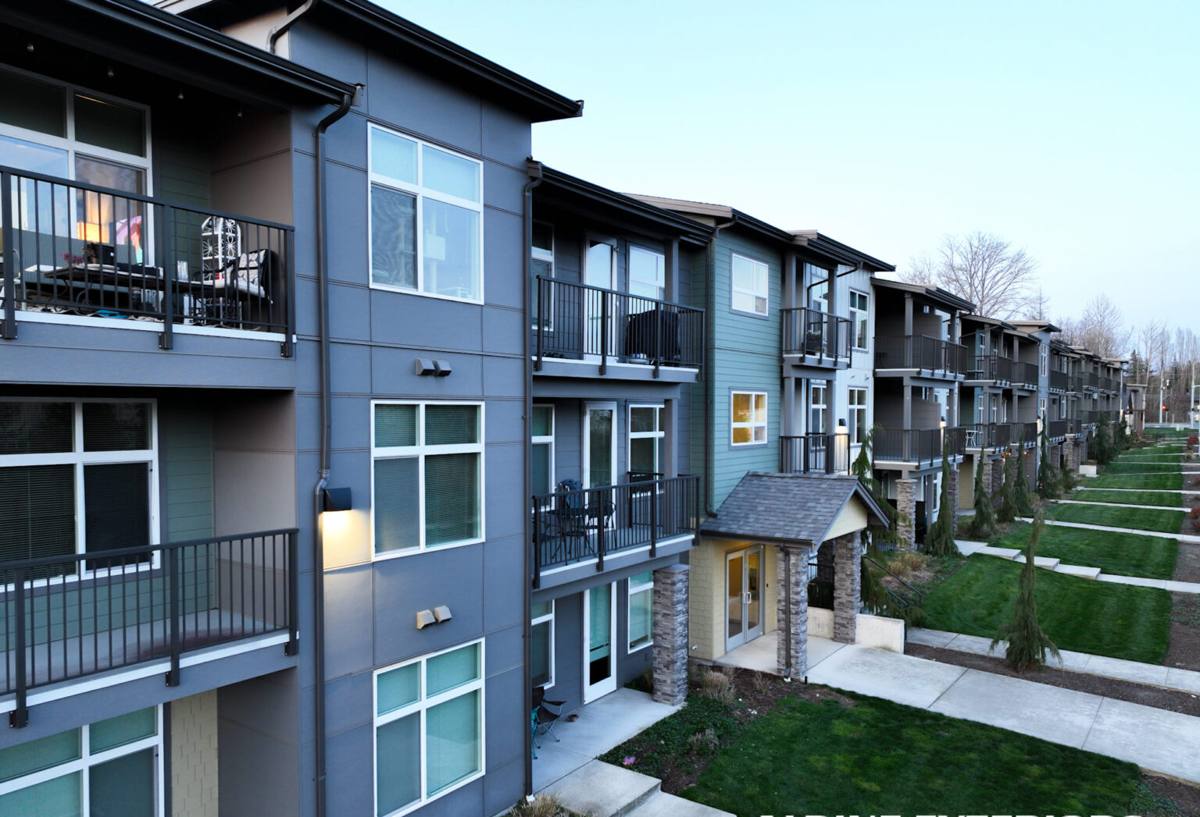
What This Climate Demands From a New Build
Whatcom County sits in a marine-influenced weather pattern: persistent moisture, frequent wind-driven rain rather than straight-down rain, and mild temperatures that let moss and mildew grow for most of the year instead of just a few wet months. Bellingham's proximity to the Salish Sea also means a steady, low-level dose of salt-carrying air reaches inland neighborhoods like Columbia, not just waterfront properties. None of that is dramatic on any single day, but it adds up over the decades a new-construction window is expected to last.
Why New Construction Is Different From a Retrofit
On a retrofit or replacement job, we're often working around an existing rough opening, existing siding, and whatever flashing decisions were made years or decades ago — sometimes correctly, sometimes not. New construction removes that variable. The rough opening, the water-resistive barrier, and the flashing sequence can all be built correctly the first time, in the right order, with no old material to cut around or old mistakes to inherit. That's the single biggest reason new-construction window installation, done right, tends to outperform even a good retrofit over the life of the house.
What Doesn't Change
The climate doesn't care whether a wall is brand new or forty years old. Driving rain still tests flashing the same way, salt-tinged air still works on hardware finishes the same way, and shaded or damp elevations still grow moss and mildew the same way. A new build gives you a clean slate, not immunity — the fundamentals of good window installation still have to be followed on every single opening.
Window Materials for a Columbia New Build
Material choice on a new-construction project is partly about long-term performance in this climate and partly about matching the house's design and budget. There's no universally correct answer, but there are real trade-offs worth understanding before the windows are ordered, since swapping frame material later means reworking the rough openings.
| Frame Material | Moisture & Salt-Air Behavior | Typical Maintenance | Realistic Lifespan Here |
|---|---|---|---|
| Vinyl | Won't rot; performance depends heavily on installation quality at seams and corners | Low; periodic track and weep-hole cleaning | 20-30 years |
| Fiberglass | Dimensionally stable across temperature swings, strong resistance to moisture and corrosion | Low | 30-40+ years |
| Wood, painted or clad | Classic look for older-style Columbia homes, but vulnerable at joints and sills without upkeep | Higher; regular paint or finish maintenance | 15-30 years depending on upkeep |
| Aluminum | Slim sightlines, but conducts cold and can corrode over time in salt-influenced air without a quality finish | Moderate | 20-30 years |
On a new build we'll walk through how each material fits your specific design — a shaded elevation facing mature trees doesn't carry the same exposure as a south-facing wall with open sky, even on the same lot. We'll size that trade-off with you rather than defaulting to whatever is easiest to install.
How New-Construction Window Installation Actually Works
New-construction windows use a nailing flange that gets integrated directly into the wall's water-resistive barrier during framing, which is different from the insert methods used in most retrofit replacement work. Getting this sequence right is what determines whether a window opening stays dry for the life of the house or becomes a slow leak point behind the siding.
- Rough opening is checked for square, level, and correct dimensions before any window arrives on site
- A sloped sill pan is installed at the base of the opening so any water that gets past the window sheds outward, not inward or downward into the framing
- Housewrap or building paper is prepped and cut in a way that allows correct shingle-lap sequencing around the opening
- The window is set, leveled, and fastened per manufacturer specifications, not just "close enough"
- The nailing flange is integrated into the water-resistive barrier in the correct order — sill first, then jambs, then head — so every layer sheds water onto the layer below it, never the reverse
- Head flashing is installed and lapped over the housewrap above the window
- Interior and exterior sealing is completed with backer rod and sealant where specified, and insulation is placed around the frame without over-packing it, which can bow the frame or trap moisture
- Weep holes and drainage paths are confirmed clear before siding goes on and covers them for good
That last step matters more than it sounds. Once siding is installed over a window, a flashing mistake underneath it is invisible until a leak eventually shows up — sometimes years later, and usually as damage rather than as a drip you'd notice right away.
Coordinating Windows With Siding and Roof Drainage
On a new build, window installation doesn't happen in isolation — it has to be sequenced correctly with the housewrap, the siding, and, where applicable, the roof and gutter system above. A window under a roofline with poor gutter coverage takes on far more water load than the same window under a properly flashed roof edge with adequate overhang or gutter protection. Because we handle siding and roofing in addition to windows, we plan the whole envelope together on new-construction jobs instead of treating the window opening as someone else's problem to work around later. That coordination is one of the more overlooked reasons new-construction water intrusion happens — not because any one trade did bad work, but because nobody was responsible for how the pieces fit together.
Full-Frame Fundamentals We Don't Treat as Optional
Because a new-construction window installation only gets built once, there's no excuse for skipping steps that would be obvious to catch on a later inspection. Every opening on a Columbia new build gets the same baseline, regardless of budget tier:
- A properly pitched sill pan under every window, not just the ones facing prevailing weather
- Head flashing correctly lapped into the water-resistive barrier above the opening
- Jamb flashing integrated into the wall assembly rather than relying on sealant alone to do that job
- Weep holes and drainage paths verified clear before the opening is covered by siding
- Corrosion-resistant fasteners and hardware suited to a consistently damp, salt-influenced climate
- Insulation around the frame installed without over-compressing it or trapping moisture against the framing
- A final water test or visual check of flashing laps before the crew moves on to the next opening
None of this adds meaningfully to the cost of a new-construction window package relative to the windows themselves. Skipping it is what turns a brand-new house into one with a hidden moisture problem behind the wall within the first few wet seasons.
Timing Windows Into the Build Schedule
Window installation on a new build has to land at the right point in the framing schedule — too early and the rough openings may not be final, too late and it holds up siding, insulation, and interior trades waiting behind it. We coordinate directly with builders and general contractors on timing, lead times for ordering windows (which can run several weeks depending on size, style, and manufacturer), and sequencing so the window install doesn't become the bottleneck on the schedule. If you're the homeowner working with your own general contractor, we're glad to coordinate directly with them rather than requiring you to relay information back and forth.
Common Timing Mistakes on New Builds
- Ordering windows before rough openings are fully framed and confirmed, leading to sizing mismatches
- Scheduling window install before housewrap is on the walls, forcing rework of the flashing sequence
- Installing siding before weep holes and drainage paths are verified clear
- Underestimating window lead times and creating a schedule gap that delays every trade behind window install
Why a Local Whatcom County Crew Matters on a New Build
A crew that installs windows across Whatcom County through every season understands how this region's weather actually behaves on real houses, not just how a product performs on a spec sheet. In a neighborhood like Columbia, that means knowing how much exposure a given lot's tree cover or open sky actually creates, how a sill pan should be pitched for the water an elevation genuinely sees, and which flashing details are worth the extra time on install day so a new house isn't dealing with a hidden leak two or three winters later. It also means we're not learning the region's climate on your project — we're applying what years of new-construction and retrofit work across Bellingham and the surrounding county have already taught us.
Getting Started
Every new-construction project is a little different depending on lot orientation, house design, builder schedule, and window selection. If you're planning a new build or major addition in the Columbia neighborhood or elsewhere in Bellingham, we're happy to take a look at the plans, talk through material options, and give you a straightforward estimate with no pressure attached. There's a form below to get that conversation started.