 Bellingham
 Why Siding Replacement Looks Different in the Columbia Neighborhood
Homes in Columbia sit close enough to Bellingham Bay that the exterior envelope takes on a different kind of stress than a house ten miles inland. Salt-laden air, wind-driven rain off the water, and long stretches of shaded, damp weather all work on siding at once. A replacement job here isn't just about picking a new color and nailing up panels — it's about matching the material and the installation to conditions that will find every weak point over time.
We've worked enough houses in this part of Whatcom County to know that a siding system that performs fine in a drier, more sheltered neighborhood can fail early here. That's the lens we bring to every Columbia estimate: what does this specific home, on this specific lot, need to actually hold up?
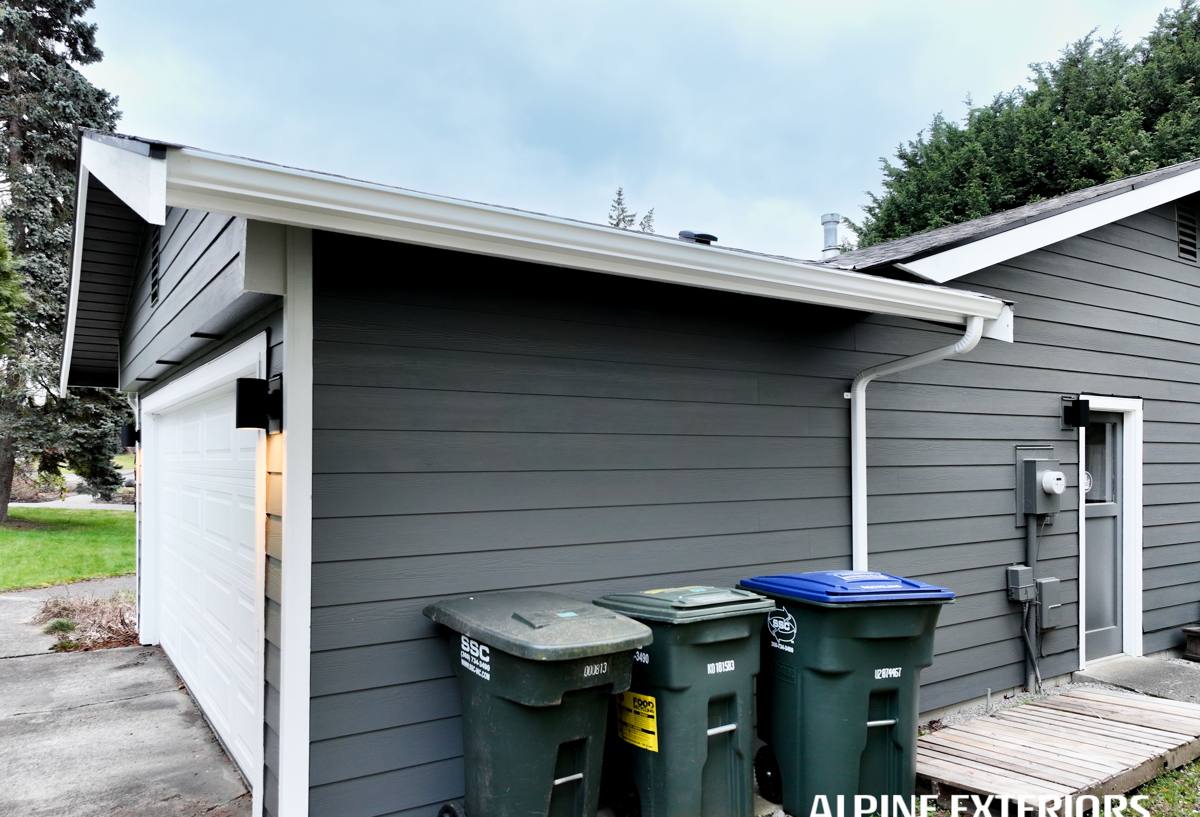
What Bellingham's Coastal Climate Does to Siding Over Time
Salt Air and Corrosion
Airborne salt doesn't just affect boats and metal railings. It accelerates the breakdown of paint films, works into seams and fastener heads, and speeds up corrosion on anything metal behind or on the siding — flashing, nail heads, trim fasteners. Siding that isn't built or coated for this kind of exposure tends to chalk, fade, and open up at the joints years before it should.
Driving Rain and Wind-Driven Moisture
Storms coming off the water don't just fall straight down — wind pushes rain sideways and up under laps, trim, and butt joints. If the water-resistive barrier, flashing, and siding overlaps aren't detailed correctly, moisture gets behind the cladding instead of shedding off it. That's when you start seeing soft sheathing, stained trim, and paint that won't hold no matter how often it's redone.
Moss Season and Trapped Moisture
Bellingham's long stretch of overcast, wet months keeps north-facing and shaded walls damp for weeks at a time. Moss and algae take hold on siding that stays wet, and on porous or absorbent materials that growth can hold moisture against the surface long after the rain stops. Over years, that constant damp cycle is what breaks down siding that was never engineered for a coastal Pacific Northwest climate in the first place.
Signs Your Columbia Home's Siding Has Reached the End
Not every siding problem means a full replacement — but several signs together usually do. Before we recommend tearing anything off, we walk the exterior and look for:
- Soft or spongy spots when you press on the siding, especially near the bottom courses and around windows
- Paint that keeps failing within a couple of years no matter how well it was applied
- Visible warping, cupping, or separation at the seams and butt joints
- Persistent moss or algae staining that comes back within a season of cleaning
- Cracked or crumbling caulk lines that won't stay sealed
- Musty smells or visible staining on interior walls that share an exterior wall
- Siding that's more than 20-25 years old and has never been fully replaced
If a homeowner is only dealing with one or two of these on an otherwise sound wall, targeted repair can make sense. When several show up together, or when we pull a board and find compromised sheathing behind it, replacement is the honest recommendation.
What a Correct Siding Replacement Actually Involves
Tear-Off and What's Underneath
Pulling old siding is also the only real chance to see what's happening behind it. We check the sheathing for rot or soft spots, look at how the old weather-resistive barrier was installed, and inspect window and door flashing before anything new goes up. Skipping this step and just re-siding over hidden damage is how homeowners end up paying for the same repair twice.
Weather-Resistive Barrier and Flashing
This layer does more of the actual waterproofing work than the siding itself. It needs to be installed shingle-style — overlapped correctly so water moving down the wall always drains outward — with proper flashing at every window, door, and penetration. In a neighborhood exposed to driving rain off the bay, this is the step that separates a wall that stays dry for decades from one that quietly rots from the inside.
Fastening and Manufacturer Spec
Fiber cement siding has specific fastening patterns, nail types, and gap requirements from the manufacturer, and following them isn't optional if you want the warranty to mean anything. Correct fastener spacing, proper clearance at the bottom of the wall, and the right gap at butt joints all affect how the siding handles moisture and movement over its lifespan.
Why We Install Only James Hardie Fiber Cement
We don't install vinyl, LP SmartSide, primed wood, or other fiber cement brands, and we're upfront about why. Vinyl can work loose or warp under sustained wind and temperature swings, and it doesn't offer the same fire performance. LP SmartSide is an engineered wood product, and engineered wood — no matter how well treated — is still wood at its core, which means it's more sensitive to the kind of sustained moisture exposure Columbia homes deal with. Primed spruce and cedar require more upkeep than most owners plan for once you're fighting salt air and a long wet season every year.
James Hardie fiber cement is non-combustible, holds a factory-applied ColorPlus finish that resists fading and doesn't need repainting on the same schedule as field-painted siding, and comes engineered for specific climate zones. For a marine climate like Bellingham's, that means a product line built to handle sustained moisture exposure rather than one adapted from a design meant for a drier region. It also carries a strong, transferable manufacturer warranty — something that matters more, not less, in a climate that's actively working against your siding every month of the year.
This is a professional standard we hold across every job, not a sales pitch attached to one product. We'd rather turn down installing something we don't think will hold up on this coastline than sell a homeowner a system we know is a compromise.
Cost Factors for Siding Replacement in Columbia
Every home is different, but the same variables tend to move the price on a Columbia siding project. Broad ranges depend heavily on home size, existing wall condition, and how much of the old system needs to come off before new siding goes on.
| Factor | Why It Matters Here |
|---|---|
| Home size and wall complexity | More corners, gables, and trim details mean more cuts, flashing, and labor hours |
| Sheathing condition | Moisture-damaged sheathing found during tear-off has to be replaced before new siding goes up |
| Existing siding type | Removing old vinyl or wood is a different scope than removing failing fiber cement |
| Siding profile and trim package | Lap width, panel vs. plank, and trim detailing all affect material and labor cost |
| Exposure of the wall | Walls that take the brunt of wind-driven rain off the bay often need extra flashing detail |
| Access and site conditions | Tight lots, mature landscaping, or multi-story walls affect staging and labor time |
We walk every home before quoting so the number reflects the actual wall, not a generic estimate.
Our Process, Built Around Working in This Neighborhood
We start with a walk-around and, where needed, a closer look behind a section of existing siding so the estimate reflects real conditions rather than guesswork. From there we lay out material needs, flashing details specific to the home's exposure, and a realistic timeline that accounts for Bellingham's weather patterns — we don't tear off more wall than we can dry-in and protect before the next rain.
During installation, we follow Hardie's fastening and clearance specs to the letter, because that's what keeps the manufacturer warranty valid and keeps the wall performing the way it's supposed to for decades, not just for the first few years.
Why Hiring a Crew That Already Works Columbia Matters
A crew that's spent time on this side of Bellingham already knows what a bay-exposed wall looks like after fifteen years of neglect versus fifteen years of correct installation. That experience shows up in the small decisions — how much clearance to leave at grade, where to add extra flashing attention, which walls need the most careful moisture detailing. It's the difference between a crew applying a generic install and one that's calibrated to this specific climate.
It also matters for accountability. A contractor who works this neighborhood regularly has a reputation to protect here, not just a one-time job to finish and move on from.
Ready for a Straight Answer on Your Siding?
If your Columbia home's siding is showing its age, or you just want an honest read on whether repair or replacement makes sense, we're glad to walk the exterior with you and explain exactly what we see. Reach out for a free, no-pressure estimate using the form below.