 Bellingham
 Cordata's Siding Problem Isn't Cosmetic — It's Moisture
Cordata sits in north Bellingham, close enough to the water that homes here deal with a steady diet of salt-laden marine air, wind-driven rain off Bellingham Bay, and long stretches of the year where surfaces simply don't dry out. That combination is hard on siding in ways that don't always show up right away. A house can look fine from the curb while the material behind the paint is quietly absorbing moisture, feeding moss and algae, or letting water track behind panels at poorly sealed joints.
Whatcom County's climate is mild compared to a lot of the country — we don't get brutal freeze-thaw cycles or extreme heat — but "mild and wet" is its own kind of punishing for exterior materials. Siding here needs to shed water aggressively, resist organic growth in shaded, damp spots, and hold up to salt air without chalking, swelling, or delaminating. That's the standard we install to on every Cordata job, not an afterthought.
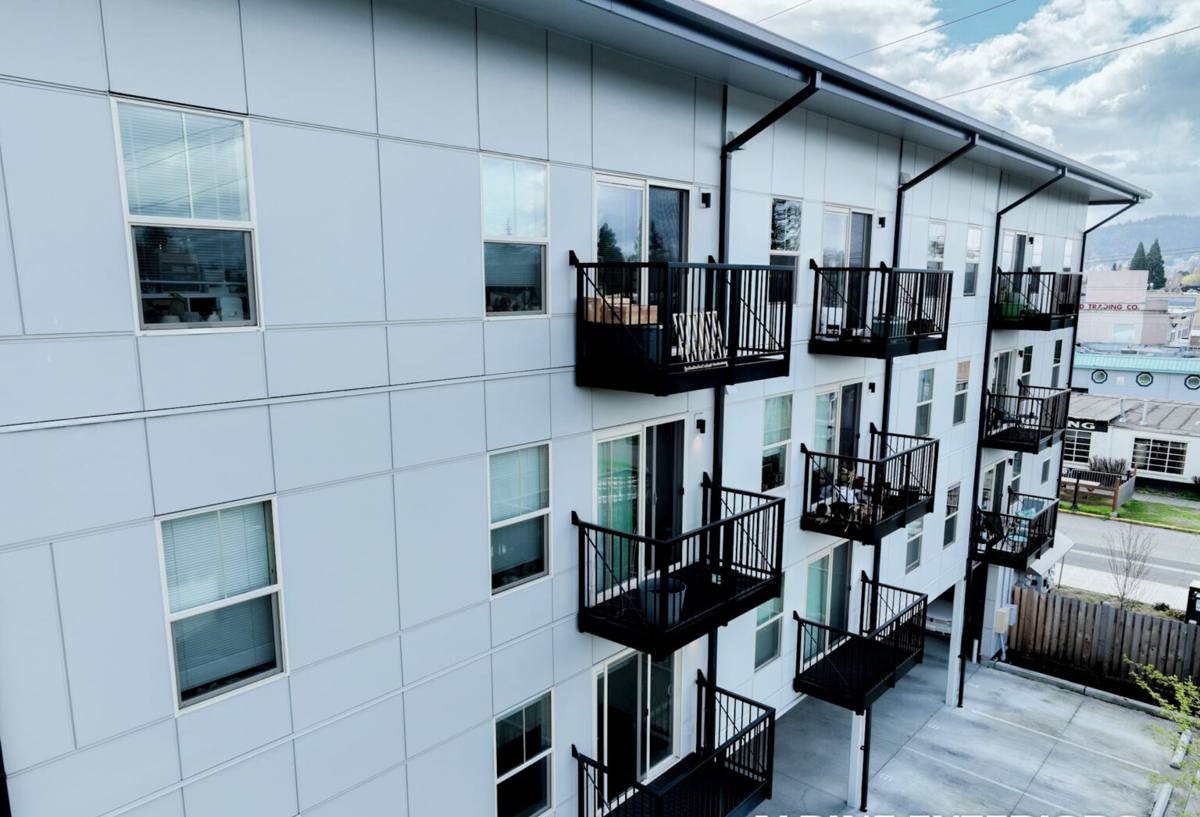
Why We Only Install James Hardie Fiber Cement
We don't offer a menu of siding brands. We install James Hardie fiber cement, full stop, and we're upfront about why: it's the product that holds up best to the specific stresses a Bellingham house faces. Vinyl siding can warp and gap at the seams over time, giving driving rain a path behind the cladding. Wood and cedar look great on day one but need real maintenance — repainting, caulking, and moisture checks — to keep water out in a climate that rarely lets things fully dry. LP SmartSide and other engineered-wood products use wood strand cores that, once water gets past the coating at a cut edge or fastener point, can swell and degrade faster than fiber cement.
James Hardie's fiber cement is cement, sand, and cellulose fiber — it doesn't rot, it doesn't feed moss the way bare wood can, and it's dimensionally stable when it gets wet, so it doesn't swell or buckle the way wood-based products can. It's also non-combustible, which matters more each year as wildfire smoke seasons stretch into the Pacific Northwest. We're not saying other products can't be installed correctly — we're saying we'd rather stand behind one system we know performs, backed by a real factory finish and a strong transferable warranty, than sell homeowners something we'd have to caveat.
What "Correct" Actually Means on a Siding Job
Most siding failures aren't a bad product — they're a bad install. The material is only as good as the water management system behind it. On every Cordata project we're paying close attention to:
- A continuous, properly lapped weather-resistant barrier (WRB) behind the siding, with no gaps at seams or penetrations
- Flashing at every window, door, and roofline transition, installed so water is directed out and down, never trapped behind the cladding
- Correct fastener type, spacing, and depth — Hardie has specific fastening requirements, and under- or over-driven nails are a common source of early problems
- Proper clearance at the bottom of the siding from grade, decks, and roof lines, so splash-back and standing water don't sit against the material
- Caulking and sealant only where Hardie's installation instructions call for it — not as a substitute for proper flashing
- Factory-cut and factory-primed edges kept intact wherever possible, with any field cuts sealed per manufacturer spec
Skip any one of these and you can end up with moisture intrusion behind siding that still looks perfect from the sidewalk. That's the failure mode we're guarding against on every job, and it's the reason installation quality matters as much as the product choice.
Our Process, Step by Step
We run the same disciplined sequence on every Cordata home:
- Assessment and tear-off. We inspect the sheathing once old siding comes off — this is when hidden rot or old water damage shows up, and it needs to be dealt with before anything new goes on.
- Sheathing repair, if needed. Any soft or damaged sheathing gets replaced. Installing new siding over compromised sheathing just hides a problem, it doesn't fix it.
- Weather barrier installation. A new, continuous WRB goes on with proper lapping and taped seams.
- Flashing at every penetration. Windows, doors, hose bibs, vents, light fixtures — anything that punches through the wall plane gets flashed before siding covers it.
- Hardie installation to manufacturer spec. Fastening pattern, spacing, and clearances follow James Hardie's published installation guidelines, not shortcuts.
- Trim, caulking, and final detailing. Finish work at corners, transitions, and butt joints, then a full site cleanup.
Which Hardie Product Lines Make Sense for Cordata
James Hardie engineers its products by climate zone, and Whatcom County falls in the HZ5 zone — the line built for wetter, cooler regions like ours. Within that, most Cordata homes land on one of these:
| Product | Best For | Why It Fits Cordata |
|---|---|---|
| HardiePlank lap siding | Traditional horizontal siding look | Most common choice; factory-primed and engineered for damp marine climates |
| HardiePanel vertical siding | Board-and-batten or modern facades | Sheds water well on vertical runs, popular for accent walls and gables |
| HardieTrim | Corners, window and door casing, fascia | Keeps trim from being the weak point where wood trim would otherwise rot |
| ColorPlus finish | Any of the above | Factory-baked finish resists fading and chalking better than field-applied paint, and doesn't need repainting on the same schedule |
ColorPlus is worth calling out on its own. Field painting siding after installation means the paint film is only as good as the weather on install day and the prep work underneath. A factory finish is cured under controlled conditions and backed by its own warranty — in a climate where a paint job might not get a real chance to dry between rain systems, that consistency matters.
Material Comparison for a Wet Marine Climate
| Factor | Fiber Cement (Hardie) | Vinyl | Wood/Cedar | Engineered Wood (LP) |
|---|---|---|---|---|
| Moisture resistance | High — cement-based, doesn't rot | Moderate — seams can let water behind panels | Low without upkeep — absorbs and holds moisture | Moderate — vulnerable at cut edges and fasteners |
| Moss/algae resistance | Good, especially with ColorPlus finish | Good on the surface, but growth can occur behind loose panels | Poor in shaded, damp areas without regular treatment | Fair, coating-dependent |
| Maintenance | Low — occasional wash, no repainting cycle with ColorPlus | Low, but can crack or warp with age | High — regular sealing, painting, and moisture checks | Moderate — coating and caulking upkeep |
| Fire resistance | Non-combustible | Melts/deforms under heat | Combustible | Combustible |
| Typical lifespan when installed to spec | Decades, with strong transferable warranty | Decades, but seams and fasteners degrade | Shorter without consistent maintenance | Shorter if moisture reaches the core |
What Drives Cost on a Cordata Project
Every home is different, but the same handful of factors move the price up or down on most jobs:
| Factor | How It Affects Cost |
|---|---|
| Home size and wall complexity | More square footage and more corners, gables, and dormers means more cutting and detail work |
| Condition of existing sheathing | Hidden rot found at tear-off adds repair cost, but skipping repair costs far more later |
| Product line chosen | HardiePanel, HardiePlank, and trim packages carry different material costs |
| Story height and access | Two-story walls, steep grades, and tight lot lines slow the work and affect staging |
| Existing siding removal | Full tear-off versus siding over existing cladding (not something we recommend, but it comes up) changes labor scope |
| Trim and detail work | Custom corner boards, window casing, and accent panels add labor time |
We give real, project-specific numbers after walking the house — we don't quote off a phone call, because the sheathing condition and wall complexity are things you have to see in person.
Signs a Cordata Home Needs New Siding
Because moisture problems here often hide behind siding that still looks acceptable, it helps to know what to check for:
- Persistent moss or algae streaking that comes back quickly after cleaning
- Soft spots when you press on siding, especially near the bottom courses or under windows
- Paint that's bubbling, peeling, or chalking heavily on wood or engineered-wood siding
- Visible gaps, warping, or buckling at seams and panel edges
- Musty smells or discoloration on interior walls that back up to exterior siding
- Siding that's original to a home more than 20-25 years old, especially wood or older vinyl
- Caulking that's cracked or missing at trim, corners, and window edges
Any one of these is worth a look. A few together usually means water has already found a way behind the cladding.
Why a Crew That Already Works Cordata Matters
A siding installer who works across Whatcom County regularly already knows how Cordata homes are built, what the older housing stock looks like versus newer construction, and how the local weather pattern actually behaves through the fall and winter storm season — not in the abstract, but from having flashed windows and lapped weather barriers on homes a few blocks away. That familiarity shows up in small decisions on install day: how tight to run clearances near grade, where extra flashing attention pays off, and which details tend to get missed on homes exposed to this much sustained damp weather. It also means a crew that's accountable locally — not a company that installed one job in the area and moved on.
If your Cordata home's siding is showing its age, or you're planning ahead of a bigger renovation, we're glad to walk the property and give you a straight, no-pressure estimate on what a proper James Hardie installation would involve and cost. There's no obligation — just a clear look at where things stand and what your options are.