 Bellingham
 Why Cordata Homes Need Siding That's Built for This Climate
Cordata sits in the wettest, greyest stretch of Washington's siding-replacement calendar. Whatcom County gets a long, low-intensity soak from fall through spring, punctuated by wind-driven storms that push rain sideways into wall assemblies rather than straight down. Add in the salt-laden air that drifts inland off Bellingham Bay and a moss season that can run eight or nine months out of the year, and you have a climate that is genuinely tough on exterior materials — even ones that look fine from the curb.
Most siding failures we see in this neighborhood aren't dramatic. They're slow: a coating that chalks and fades a few years early, seams that let moisture behind the cladding, or moss and algae holding dampness against a wall for months at a time. None of that shows up as a hole in the siding — it shows up as soft trim, peeling paint, or a moisture reading that's higher than it should be when we test the wall.
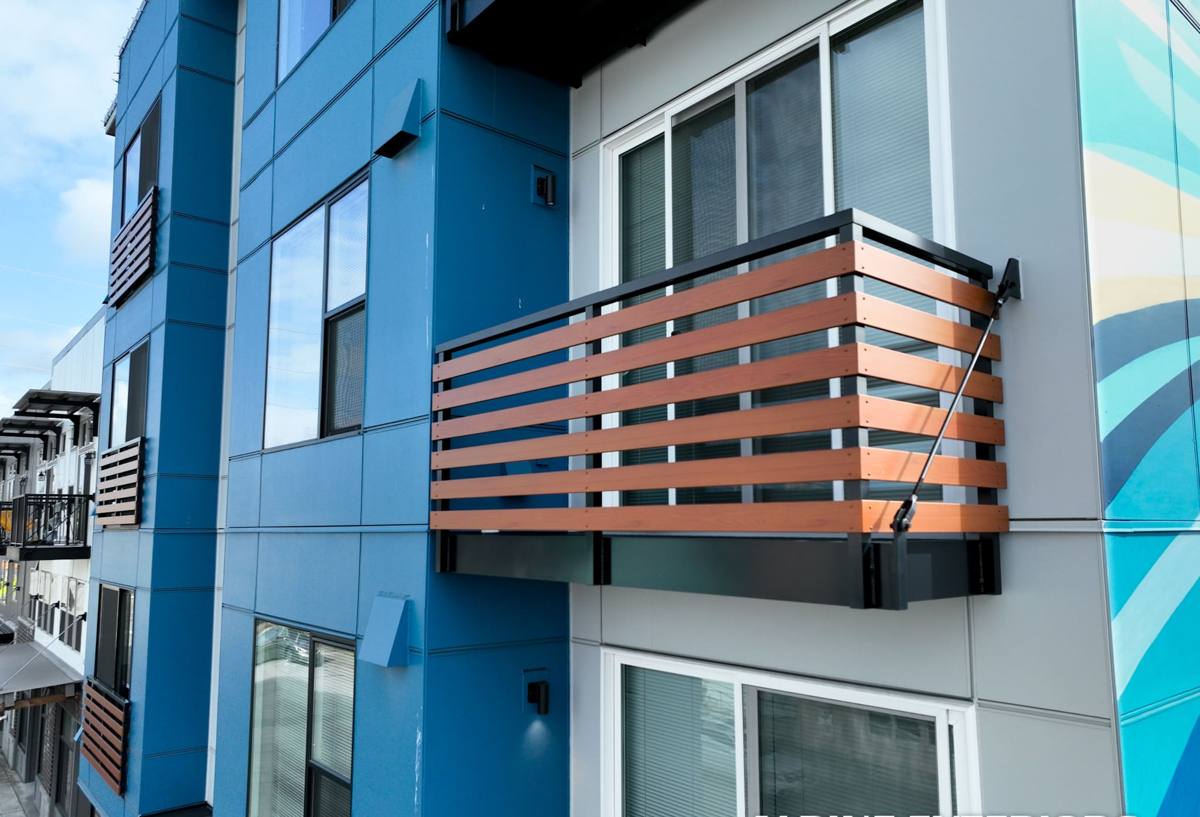
What "Correct" Looks Like With James Hardie in Cordata
James Hardie fiber cement is engineered to handle wet, temperate climates like ours — but the product only performs as designed if the installation matches the conditions it's going into. For Cordata homes, that means a few things we treat as non-negotiable, not optional upgrades:
Drainage Behind the Cladding
Fiber cement is not waterproof caulk — it's a rain-screen material, meaning the assembly behind it is what actually keeps a wall dry over time. We install a code-compliant water-resistive barrier with proper lapping and flashing at every window, door, and penetration, plus a drainage gap where the wall assembly calls for one. In a climate where wind pushes rain up under laps and around trim, this drainage plane matters more than the siding itself.
Correct Fastening and Gapping
Hardie panels and planks need specific nailing patterns, fastener types, and clearance gaps at butt joints, inside corners, and ground contact points. Undersized gaps trap moisture and moss; overdriven or wrong-length fasteners crack the material or pull loose over a few freeze-thaw cycles. This is where a lot of subpar installs go wrong — the material holds up, the installation doesn't.
The Right HZ Product for Our Climate Zone
James Hardie engineers its HZ5 product line specifically for regions with high moisture exposure, which includes western Washington. We spec HZ5 as the standard for Cordata jobs rather than a generic formulation, because the difference shows up over the long haul, not in the first year.
Signs a Cordata Home's Siding Is Due for Attention
Because failures here tend to be gradual, homeowners often live with early warning signs for a year or two before calling anyone. Worth checking for:
- Persistent moss or dark green-black staining that returns within weeks of cleaning
- Soft or spongy trim boards, especially near window sills and the bottom courses of siding
- Paint that's chalking, peeling, or fading noticeably faster on the north or west-facing walls
- Visible gaps, warping, or buckling at seams and butt joints
- A musty smell in an exterior-adjacent room, or interior drywall that feels cool or damp to the touch
- Caulking that's cracked, shrunk, or pulled away from trim and corner boards
Any one of these on its own isn't an emergency. Several together, especially paired with soft trim, usually means moisture has been getting behind the cladding for a while and it's worth having someone look at the wall assembly, not just the surface.
Our Process for a Cordata Siding Project
Every job starts with an inspection, not a sales pitch. We walk the exterior, check moisture levels at vulnerable points — sills, corners, low walls, anywhere staining suggests a history of water — and look at what's actually happening behind the existing siding before we quote anything.
- Assessment: Full exterior walkthrough, moisture readings where warranted, and a look at trim, flashing, and any rot or sheathing damage under the current cladding.
- Tear-off and inspection: Old siding comes off in sections so we can inspect the sheathing underneath — this is where hidden moisture damage gets found and addressed before anything new goes on.
- Weather barrier and flashing: A new water-resistive barrier is installed with correct laps, and flashing is set at every window, door, and penetration point.
- Installation: HardiePlank, HardiePanel, or a combination — installed to Hardie's fastening and clearance specs, with attention to the drainage gap and joint treatment that this climate demands.
- Trim, caulking, and touch-up: Corner boards, trim, and caulking are finished to manufacturer spec, and any ColorPlus touch-up is done with Hardie's matched products, not generic exterior paint.
- Final walkthrough: We go over the finished exterior with the homeowner and cover basic care specific to this climate before we leave.
Cost Factors on a Cordata Siding Job
| Factor | Why It Moves the Price |
|---|---|
| Home size and wall complexity | More square footage and more corners, gables, and dormers mean more cutting, flashing, and labor |
| Siding profile (plank vs. panel vs. shingle-style) | Some profiles require more trim work and detailing than others |
| Condition of the sheathing underneath | Rot or moisture damage found during tear-off adds repair work before new siding can go on |
| Trim and corner detailing | Custom trim, window casings, and corner treatments add labor beyond the flat wall area |
| Color and finish | Factory ColorPlus finishes cost more up front than field-painted siding but skip a repaint cycle |
| Access and site conditions | Multi-story sections, tight lot lines, or landscaping that limits staging area affect labor time |
We give a firm, itemized quote after the inspection — not a per-square-foot guess over the phone — because the sheathing condition and trim complexity vary enough house to house in this neighborhood that a phone estimate isn't a real number.
Why Working With a Crew That Already Knows Cordata Matters
A lot of exterior work in Whatcom County comes down to details that aren't obvious from a spec sheet: how much drainage detail a wall actually needs given prevailing wind direction, how quickly moss re-establishes on a shaded north wall, or how the City of Bellingham and Whatcom County permitting process handles a re-side versus a like-for-like repair. A crew that's worked this neighborhood before isn't guessing at any of that — they've already seen how these homes weather over a few winters and know where the trouble spots tend to show up first.
That local pattern recognition is also why we standardized on one product rather than installing whatever a homeowner requests. We install James Hardie exclusively — not vinyl, not LP SmartSide, not cedar or primed spruce — because after years of exterior work in this climate, it's the system that holds up to salt air, sustained moisture, and moss pressure without the maintenance burden or moisture sensitivity we've seen in the alternatives. Hardie's fiber cement is non-combustible, its ColorPlus factory finish is engineered to resist fading and cracking longer than field-applied paint, and its warranty is transferable if you sell the home — all of which matter more in a climate that never really dries out for long.
Caring for Hardie Siding in a Cordata Climate
Correctly installed Hardie siding is low-maintenance, not no-maintenance. A few habits go a long way here:
- Rinse siding with a garden hose once or twice a year, more often on shaded or north-facing walls where moss and algae take hold fastest
- Keep gutters clear so overflow doesn't run down the wall face and feed moss growth or staining
- Trim back shrubs and trees that keep a wall section shaded and damp longer than the rest of the house
- Check caulking at trim and corners every couple of years and have gaps re-sealed before they let water in
- Watch for soft spots at the bottom courses, where splashback and standing moisture do the most damage over time
None of this is heavy upkeep — it's the same kind of seasonal attention any exterior in this climate needs, and it's a lot less than what vinyl or wood siding typically demands here.
Get a Straight Answer on Your Cordata Home
If your siding is showing early wear, or you're just planning ahead for a project, we're happy to come take a look. We'll give you a straight read on what's actually going on with your walls and a clear, itemized quote for James Hardie siding done right for this climate — no pressure, no generic per-square-foot guess. Reach out for a free estimate using the form below.