 Bellingham
 Why Roofs in Cordata Wear Differently Than You'd Expect
Cordata sits back from Bellingham Bay, but the marine air off the Salish Sea still finds its way onto every roof in the neighborhood. Combine that salt-laden air with Whatcom County's rain totals and the mature tree cover on many Cordata lots, and you get a roofing environment that's tougher on materials than most homeowners realize. It's not one dramatic storm that does the damage — it's the slow, steady combination of moisture, shade, and salt exposure working on the same roof for months at a time.
The biggest factor is how long a Cordata roof stays wet. Driving rain off southwest storms doesn't just fall straight down — it gets pushed sideways into valleys, under shingle tabs, and against flashing that was never designed to shed water horizontally. Add a moss season that can run from early fall through late spring in shaded areas, and a roof here is doing more work, more of the year, than a roof in a drier or more open part of the state.
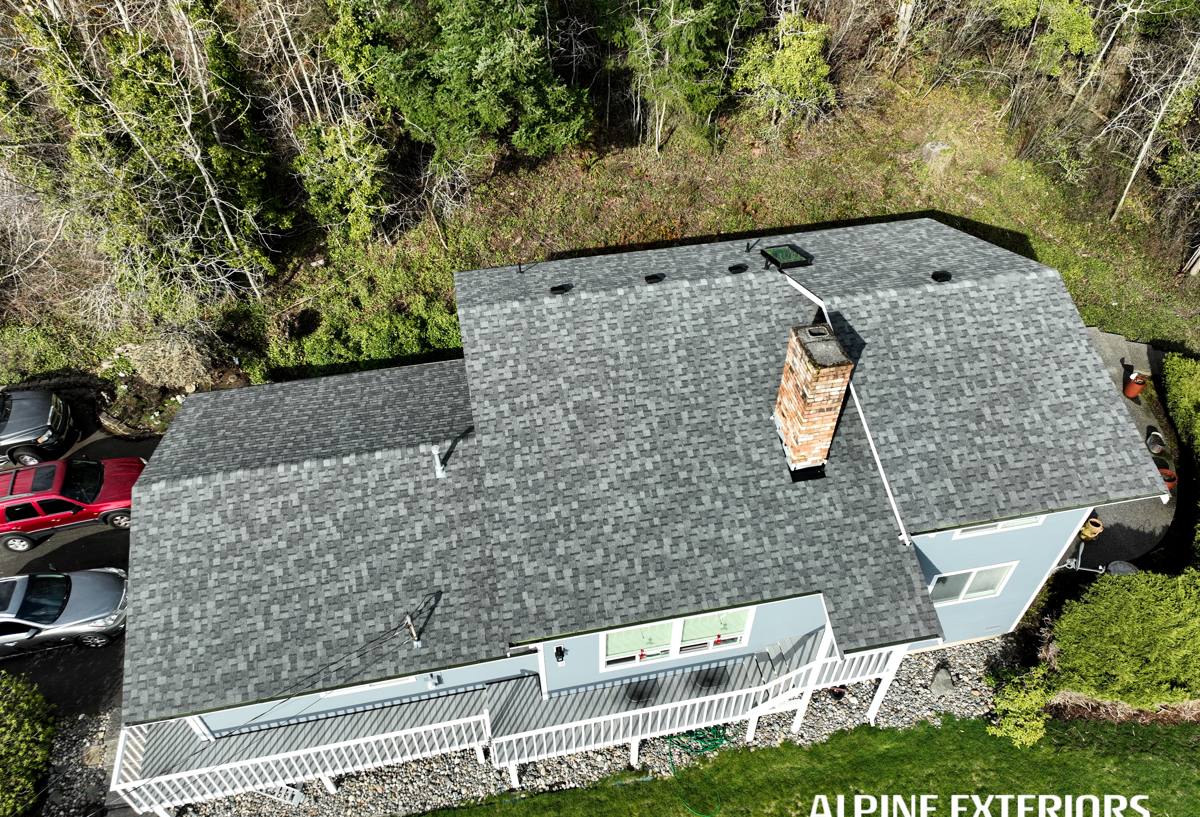
Signs It's Time for Replacement, Not Another Repair
A lot of Cordata homeowners call us after two or three patch jobs that didn't fix the underlying problem. Repairs make sense for isolated damage — a lifted shingle, a cracked pipe boot, a small flashing leak. Replacement makes sense once the roof as a whole system is failing. Here's how to tell the difference:
- Granules collecting in gutters or at downspout outlets, especially on a roof over 15-18 years old
- Moss that's rooted into the shingle mat rather than sitting loosely on the surface — you'll feel resistance if you try to lift it
- Curling, cupping, or cracked shingles across large sections of the roof, not just one spot
- Soft or spongy decking you can feel when walking the roof, or staining on the underside visible from the attic
- Daylight visible through the roof deck from inside the attic
- Repeated leaks in different locations after each rainy season, even after patching
If you're only seeing one or two of these, a repair may still be the right call. Once several show up together, the roof is telling you it's past the point where patching makes financial sense.
What a Correct Roof Replacement Actually Involves
"Roof replacement" gets used loosely, but a correct job in this climate is a specific sequence, not just new shingles laid over old material.
Full Tear-Off and Deck Inspection
We remove the existing roofing down to the deck. This is the only way to actually see what's underneath — soft plywood, delaminated sheathing, or rot around chimneys and skylights that's been hiding under the old shingles. Any damaged decking gets replaced before anything new goes down. Roofing over existing layers hides these problems and shortens the life of the new roof, which is why we don't recommend it.
Underlayment and Ice-and-Water Barrier
Underlayment is the roof's backup layer if wind-driven rain gets past the shingles — and in Bellingham, it will, eventually. We use self-adhered ice-and-water barrier at the eaves, valleys, and around every roof penetration, since those are the spots where standing water and wind-blown rain cause the most trouble. Standard felt or synthetic underlayment covers the rest of the field.
Flashing Details Around Penetrations
Chimneys, skylights, vents, and wall intersections are where the majority of roof leaks actually start — not in the open field of shingles. Correct step flashing, counter-flashing, and pipe boots matter more to a leak-free roof than the shingle brand on the box. This is also where corner-cutting is easiest to hide and hardest for a homeowner to catch after the fact.
Ventilation Before the Final Layer
Intake and exhaust ventilation gets addressed before the new roofing goes on, not treated as an afterthought. More on why that matters below.
Choosing the Right Roofing Material for This Climate
There's no single "best" roofing material — the right choice depends on your budget, how shaded your lot is, and how much maintenance you're willing to keep up with. Here's how the common options compare for a Cordata home specifically:
| Material | Typical Lifespan Here | Moss/Moisture Resistance | Maintenance |
|---|---|---|---|
| Standard 3-tab asphalt | 15-20 years | Fair — needs regular cleaning on shaded roofs | Moderate; moss and algae streaking show up faster |
| Architectural (laminate) asphalt | 25-30 years | Good, especially with algae-resistant granules | Low to moderate |
| Metal (standing seam or panel) | 40-50+ years | Excellent — moss and moisture largely shed off | Low |
| Cedar shake | Variable, highly maintenance-dependent | Poor in shaded, damp conditions without diligent upkeep | High |
A Note on Cedar in Shaded, Wet Locations
Cedar has a genuine appeal and a long history in this region, but our professional standard is to be upfront about the trade-offs on shaded, damp lots. Wood shakes stay wet longer under tree cover, which accelerates moss growth and rot, and they need more frequent cleaning and treatment to hold up than asphalt or metal. On an open, sunny roof plane, cedar can perform reasonably well. On a heavily shaded Cordata lot, we'll tell you honestly if it's a poor match for the site rather than sell you something that will give you problems in five years.
Algae-Resistant Shingles
Most quality architectural shingles now come with copper- or zinc-infused granules that resist the algae streaking common in wet Pacific Northwest climates. It's a small upcharge that's worth it here — plain shingles without this treatment tend to develop dark streaking within a few years in shaded, moist conditions.
Ventilation and Moisture Control: The Part Homeowners Don't See
A new roof can still fail early if the attic underneath isn't ventilated correctly. Balanced intake (usually at the soffits) and exhaust (at the ridge) keep air moving through the attic, which does two things: it lets summer heat escape so shingles don't cook from underneath, and it keeps moist air from condensing on the underside of the deck during our long wet stretches. Trapped attic moisture leads to mold, rot, and premature failure of the very decking we just replaced — from the inside, where you won't see it until it's serious. Baffles at the eaves keep insulation from blocking soffit intake vents, a detail that's easy to skip and common to find missing on older Cordata homes we inspect.
Our Process, Start to Finish
- Inspection and estimate. We walk the roof (weather permitting) and the attic, note the deck condition, ventilation setup, and any problem areas, and give you a written estimate with no pressure to decide on the spot.
- Material selection. We go over the options that make sense for your roof's exposure and shade, and explain the real trade-offs rather than just upselling the most expensive product.
- Permitting. We handle the permit application with the appropriate local jurisdiction before work begins.
- Tear-off and disposal. Full removal of old roofing, deck inspection, and proper disposal — nothing left behind in your yard or landscaping.
- Installation. Deck repairs, underlayment, ice-and-water barrier, flashing, ventilation, and the new roofing material installed to manufacturer specifications.
- Site cleanup. Magnetic sweep for stray nails, gutter and yard cleanup, and a final walk-through with you.
- Warranty paperwork. You get the manufacturer warranty registration and our workmanship warranty documentation in writing.
What Affects the Cost of Your Roof
Every roof is different, and any contractor quoting a firm number without seeing your roof is guessing. That said, these are the factors that actually move the price:
- Roof size and pitch — steeper roofs take longer and require more safety setup
- Number of layers to tear off — some older homes have two layers of shingles already
- Deck condition — how much plywood or sheathing needs replacing once we open it up
- Roof complexity — valleys, dormers, chimneys, and skylights all add labor and flashing work
- Material choice — asphalt, metal, and specialty products vary significantly in material cost
- Access — trees, tight lot lines, or difficult staging areas can affect labor time
- Ventilation upgrades — adding proper intake or exhaust venting where none existed
Why a Crew That Already Works Cordata Matters
A roofer who works this neighborhood regularly knows which lots hold shade long enough to grow moss twice as fast as an open roof across the street, and plans material and maintenance recommendations accordingly. We know how to sequence a tear-off around Whatcom County's rain patterns so your home isn't sitting exposed longer than necessary, and we're familiar with the local permitting process so that step doesn't stall your project. That local familiarity also means we're not learning on your roof — we've already seen how these specific conditions, the salt air, the driving rain, the shade and moss, play out on homes just like yours.
If your roof is showing its age or you just want an honest read on how much life it has left, we're happy to take a look. Reach out for a free, no-pressure estimate using the form below.