 Bellingham
 Why Happy Valley Decks Wear Out Faster Than the Manuals Say
Every deck manufacturer publishes a service life for their material, and almost none of those numbers were calculated with a Bellingham winter in mind. Happy Valley sits close enough to Bellingham Bay that homes here deal with a steady dose of salt-laden air on top of the region's long, wet fall-through-spring stretch. Add the mature tree cover common to the neighborhood's older lots, and you get shaded, slow-drying wood that stays damp for days after a storm passes. That combination — salt air, driving rain, and deep shade — is exactly what accelerates corrosion in fasteners, rot in framing, and the moss and algae growth that makes deck boards slick and dangerous underfoot.
None of this means a deck in Happy Valley is doomed. It means the repair has to account for how the structure actually gets wet and how long it stays that way, not just patch what's visible on the surface.
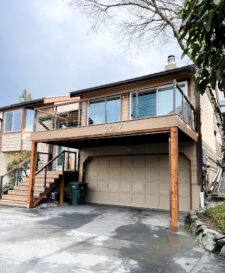
The Failure Point Most Homeowners Never See: The Ledger Board
As a siding contractor, the connection point we look at first on any deck repair is the ledger board — the framing member bolted directly to the house that carries a large share of the deck's structural load. It's also the single most common place decks fail in this climate, because it sits right behind or beneath the siding and flashing.
Why It Matters More Here
When flashing at that ledger connection is missing, undersized, or installed wrong, water works its way behind the siding and into the wall framing every time it rains — which in Whatcom County is a lot of the year. You often won't see a problem from the deck surface at all. The first signs are usually soft or discolored siding near the attachment point, or a slight give in the ledger when you put weight near the house side of the deck.
We check this connection on every repair we're called out for, even if the homeowner's complaint is about a wobbly railing or a soft board on the far end of the deck. A repair that fixes the visible problem but leaves a bad ledger connection untouched is a repair that fails again within a season or two.
Common Problems We Find on Decks in This Neighborhood
Every deck is different, but the pattern of damage in Happy Valley is fairly consistent given the shade and moisture conditions:
- Rot at post bases where wood sits in or near contact with soil or mulch beds
- Corroded or rust-streaked fasteners, especially on decks built before stainless or coated hardware was standard
- Moss and algae buildup on boards, railings, and stair treads that don't get direct sun
- Cupped or split decking from repeated wet-dry cycling
- Loose or leaning railings from posts that have rotted where they meet the frame
- Debris-clogged gaps between boards that trap moisture instead of shedding it
- Missing or degraded flashing at the ledger board connection
Most of these show up together rather than alone. A deck with moss on the surface has usually been holding moisture long enough that it's worth checking the framing underneath, not just cleaning the top.
Repair or Replace? How We Actually Decide
Homeowners often assume any rot means a full tear-out, and sometimes it does — but a lot of decks are structurally sound underneath surface damage that looks worse than it is. We make the call based on where the damage is and how much of the frame it's reached, not on the age of the deck alone.
| Factor | Usually Repairable | Usually Needs Replacement |
|---|---|---|
| Framing (joists, beams) | Isolated soft spots, sistered joists | Widespread rot through multiple structural members |
| Ledger connection | Flashing failure caught early, board intact | Rotted ledger board or house rim joist behind it |
| Decking boards | A handful of cupped or split boards | Most boards showing rot, splintering, or fastener pull-through |
| Posts & railings | Surface weathering, loose hardware | Rot at post base or non-code-compliant spacing/height |
| Footings | Stable, no movement or heaving | Undersized, frost-heaved, or not resting on solid bearing |
The honest answer, in most Happy Valley cases we see, is a hybrid: replace the decking and any rotted framing members while keeping sound footings and posts. That keeps cost reasonable without leaving compromised structure in place.
What a Correct Deck Repair Actually Involves
Structural Work First
Any board replaced or sistered gets pressure-treated lumber rated for ground or moisture contact where it's warranted, fastened with corrosion-resistant hardware sized for the load — not whatever screws happen to be on the truck. Where the ledger flashing is compromised, we pull back the affected siding, correct the flashing so water sheds away from the wall rather than behind it, and confirm the ledger bolt pattern meets current framing standards before anything gets closed back up.
Code and Safety Details
Guardrail height, baluster spacing, and stair rise/run all have code minimums under the residential building code Whatcom County and the City of Bellingham enforce. Older decks, especially ones built or altered before current code editions, sometimes fall short. We flag those during the assessment so you know upfront whether a repair also needs to bring railings or stairs up to current requirements — that's a safety issue as much as a compliance one, particularly with kids or older family members using the deck.
Finish and Protection
A repair that stops at "structurally sound" but skips finishing is only half done here. Any exposed wood gets sealed or coated appropriate to the material, and drainage details — gaps between boards, slope away from the house, keeping soil and mulch off post bases — get corrected so the next wet season doesn't undo the work.
How Our Process Works
- On-site assessment. We check the ledger connection, probe framing for soft spots, inspect posts at grade, and look at drainage and sun exposure around the deck, not just the boards you called about.
- Written scope and pricing. You get a clear breakdown of what's structural, what's cosmetic, and what's code-related, so you can decide what to do now versus what to plan for later.
- Repair. Framing and ledger work happens first, then decking, railings, and stairs, then finish work.
- Walkthrough. We show you what was replaced, what hardware and materials were used, and what maintenance will keep it in good shape.
Material Considerations for a Salt-Air, Wet Climate
Wood decking is still common in this neighborhood and holds up fine when it's finished and maintained on a regular schedule — the trade-off is that upkeep isn't optional here the way it might be in a drier climate. Composite decking sheds water and resists rot better and doesn't need refinishing, but it costs more upfront and can still grow surface moss or algae in shaded, low-airflow spots just like wood does; it isn't a maintenance-free product, just a lower-maintenance one.
Hardware matters as much as the decking material. Standard galvanized fasteners corrode faster under sustained salt-air exposure than stainless or high-grade coated fasteners rated for treated lumber contact. On repairs, we match or upgrade hardware to what the exposure calls for rather than defaulting to whatever's cheapest, since fastener failure is one of the more common causes of the loose-railing calls we get.
Maintenance Checklist Between Professional Inspections
A few habits go a long way toward stretching the time between repairs:
- Sweep debris out of the gaps between boards after leaf drop each fall
- Keep soil, mulch, and plantings from touching post bases directly
- Clean moss and algae off boards and stairs before they get slick, using a deck-safe cleaner rather than a pressure washer set too aggressively
- Check railings and stair treads for movement a couple of times a year
- Look at the point where the deck meets the house siding for staining, softness, or gaps in caulking
- Reapply sealant or stain on wood decking on the schedule the product calls for — don't wait until it visibly fails
Why Local Experience with Happy Valley Homes Matters
Deck problems in this neighborhood follow patterns tied to specific lot conditions — how much tree cover a property has, which direction a deck faces, how close it sits to grade, and how exposed it is to weather coming off the bay. A crew that already works in Happy Valley has seen those patterns enough times to know where to check first instead of guessing, and knows what the City of Bellingham and Whatcom County require for permits and inspections on structural deck work, so nothing gets flagged after the fact. That local familiarity is the difference between a repair that addresses the actual cause and one that just replaces what's visibly broken.
If you've got a deck in Happy Valley showing soft spots, loose railings, moss buildup, or you're just not sure what shape it's really in, we're happy to come take a look. The estimate is free, there's no pressure, and you'll get a straight answer about what needs fixing now versus what can wait — just fill out the form below.