 Bellingham
 Why Birch Bay Decks Fail Faster Than Inland Decks
Birch Bay sits right on the water, and that changes what a deck goes through year after year. Homes a few miles inland in Bellingham deal with plenty of rain, but they don't get the salt-laden air coming off the water, and they're often somewhat sheltered by trees, hills, or other structures. Birch Bay decks are more exposed. Salt air accelerates corrosion in fasteners, hardware, and any exposed metal connectors. Combined with near-constant moisture and long stretches of shade in the wetter months, you get a deck that's fighting corrosion, wood decay, and moss growth all at the same time.
We've replaced enough decks in this stretch of Whatcom County to know that "it still looks fine on top" doesn't mean much. The boards you can see are usually the last thing to fail. The structure underneath — ledger board, joists, hardware, footings — is where the real damage happens, quietly, for years before anyone notices a soft spot or a rail that wiggles.
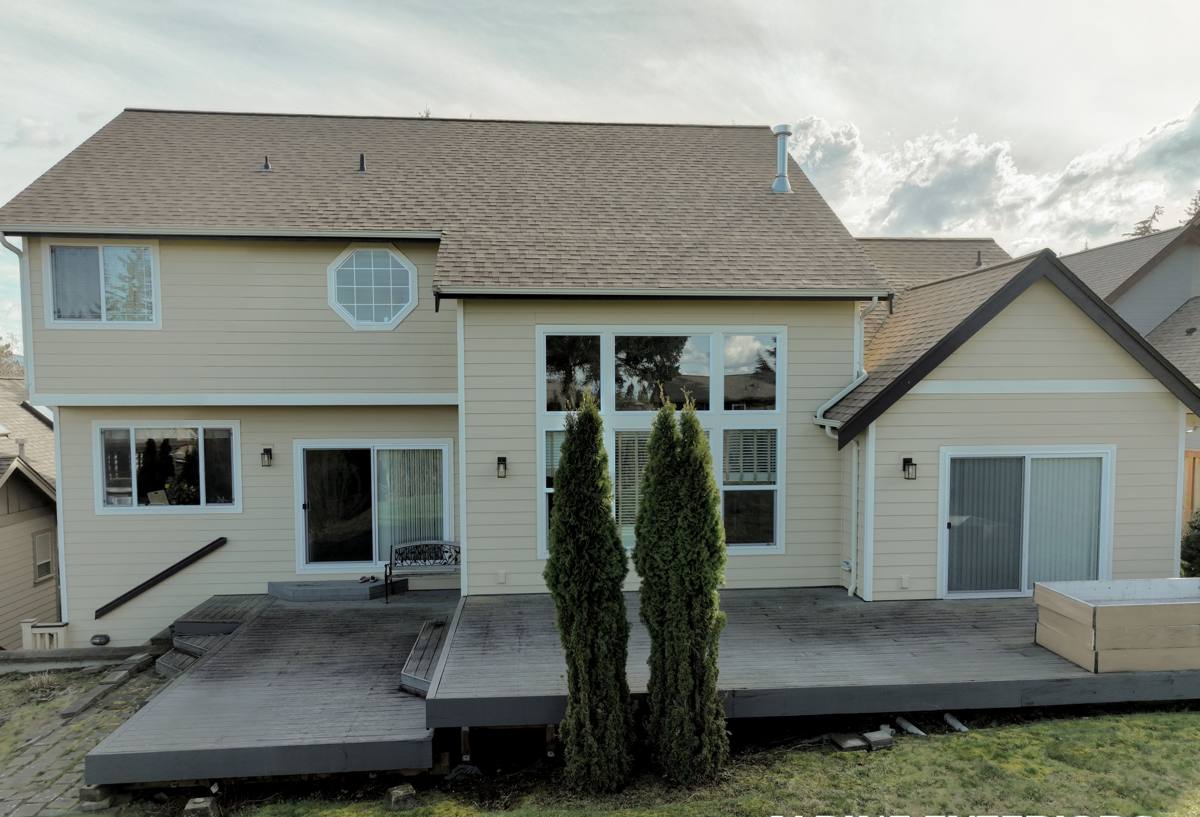
What the Coastal Climate Actually Does to a Deck
Salt Air and Metal Hardware
Standard deck screws, joist hangers, and bolts are often rated for general outdoor use, not for a marine or near-marine environment. Near Birch Bay's shoreline, salt-carrying air settles on every exposed metal surface. Over time this eats away at coatings and starts surface corrosion, which weakens the grip of fasteners and can stain the wood around them. This is one of the most common things we find when we pull up old decking — hardware that looks fine from a distance but is pitted, rusted, or loose underneath.
Driving Rain and Trapped Moisture
Wind off the water pushes rain sideways as much as it falls straight down, which means it gets into gaps, seams, and ledger connections that a calmer inland deck rarely has to deal with. Water that gets behind a ledger board or between decking boards without a way to drain and dry out is what causes rot — not rain itself, but rain that has nowhere to go.
Moss, Algae, and a Long Wet Season
Whatcom County's wet season runs long, and shaded or north-facing decks in Birch Bay can stay damp for weeks at a stretch. That's exactly the environment moss and algae need. Beyond being slippery and unattractive, moss holds moisture against the wood surface, which speeds up decay in untreated or poorly finished lumber and clogs the gaps between boards that are supposed to let water drain through.
Signs It's Time to Replace, Not Repair
- Soft, spongy, or spongy-feeling boards, especially near the house or in shaded areas
- Rust streaks or stained wood around screws, bolts, or joist hangers
- Visible gaps opening up between the ledger board and the house siding
- Rail posts that flex or feel loose when you push on them
- Persistent moss or algae that returns within weeks of cleaning
- A musty smell coming from underneath the deck
- Cracked, splintering, or delaminating boards on a deck more than 15-20 years old
A deck with one or two of these issues in a small area might be a candidate for targeted repair. A deck with several of these signs, or damage at the structural connections, is usually past the point where repair makes sense. Patching rot at the ledger or main support joists without addressing the moisture source behind it just buys a little time before the same failure shows up again.
What a Correct Deck Replacement Involves
Replacing a deck the right way in a coastal environment like Birch Bay means more than swapping old boards for new ones. We look at the whole system:
Ledger and Flashing
The ledger board — where the deck attaches to the house — is the single most common failure point on any deck, coastal or not. It needs proper flashing that directs water away from the house framing, not just caulk or paint covering a gap. This is also where we catch and address any hidden damage to the house's rim joist or sheathing before it becomes a bigger, more expensive problem.
Framing and Fasteners
Given the salt exposure in Birch Bay, we use fasteners and structural hardware rated for coastal or high-moisture environments rather than standard-grade hardware. It costs a bit more up front and saves you from dealing with corroding connectors again in five or six years.
Footings and Structural Support
If footings are undersized, frost-heaved, or set too shallow, replacement is the right time to correct that — it's far more disruptive and expensive to fix later. We check post spacing and footing depth against current code requirements, since older decks were often built to standards that have since changed.
Decking Material and Drainage
Board spacing, ventilation underneath the deck, and grading around the footings all affect how quickly the structure dries out after rain. A deck that can't dry out between storms is a deck that will grow moss and rot faster than the material itself would suggest.
Choosing Decking Material for a Salt-Air Environment
There's no single "best" decking material for every home — it depends on your budget, how much upkeep you want to do, and how the deck is used. Here's how the common options hold up specifically against Birch Bay's conditions:
| Material | How It Handles Salt Air & Moisture | Maintenance | Typical Lifespan |
|---|---|---|---|
| Pressure-treated wood | Resists rot with proper sealing; fasteners are the weak point in salt air | Annual cleaning and re-sealing recommended | 10-15 years with upkeep |
| Cedar | Naturally rot- and insect-resistant; still needs finish maintained against moisture and moss | Periodic cleaning, staining or sealing every few years | 15-20 years with upkeep |
| Composite decking | Doesn't rot or corrode from salt; some early-generation composites can trap surface moisture and grow algae if not cleaned | Occasional washing, no staining or sealing | 25-30 years, varies by product |
| PVC/vinyl decking | Fully resistant to rot and salt corrosion; surface can still grow moss/algae film in shaded, damp spots | Occasional washing | 25-30+ years |
Whichever decking material you choose, the hardware and framing underneath matter just as much. We've seen composite and PVC decking installed over corroding standard hardware — the surface looks great while the structure underneath is quietly failing. We won't cut that corner.
Railings, Stairs, and Coastal Wear
Railing posts and stair stringers take direct weather exposure and structural stress at the same time, which makes them another common trouble spot on older Birch Bay decks. Metal balusters and hardware are especially prone to salt corrosion if they aren't coated or rated for coastal use. When we replace a deck, we replace railings and stairs to match — mismatched old and new components rarely age well together, and it's not worth saving an old rail system that's already showing rust or looseness.
Our Deck Replacement Process
- On-site assessment: We inspect the ledger connection, framing, footings, and hardware condition, not just the visible decking surface.
- Honest scope and estimate: You get a clear picture of what needs to be replaced versus what could reasonably be repaired, with the reasoning explained.
- Permitting: Deck replacement in Whatcom County typically requires a permit, especially if footings or structural framing are involved. We handle that process.
- Demolition and disposal: Old decking, framing, and hardware are removed and hauled off.
- Structural rebuild: Footings, framing, ledger flashing, and hardware are brought up to current code and matched to coastal-duty materials.
- Decking, railing, and stairs installed: Finished to the material and layout you chose.
- Final walkthrough: We go over the finished deck with you before calling the job done.
Why Local Experience with Birch Bay Homes Matters
A crew that mostly works inland can still build a structurally sound deck, but they may not think twice about using standard-grade hardware or skip extra attention to ledger flashing and drainage — details that matter far more a few hundred feet from saltwater than they do across Bellingham. Working regularly in Whatcom County's coastal areas means we've seen how decks actually age out here, not just how they're built on paper. That shapes the material recommendations we make, the hardware we spec, and the details we won't skip, even when they add a little time to the job.
What Deck Replacement Typically Costs
Costs vary a lot based on deck size, material choice, framing condition, footing work, and whether stairs or multiple levels are involved. As a general guide, a straightforward wood deck replacement tends to run toward the lower end of the range for the same footprint in composite or PVC, largely due to material cost. Structural issues discovered at the ledger or footings during demolition can add to the scope — which is exactly why a thorough initial inspection matters before you commit to a number. We'll walk you through the real cost drivers for your specific deck rather than quoting a number that doesn't account for what's actually underneath it.
If your Birch Bay deck is showing its age, or you just want an honest opinion on whether repair or full replacement makes sense, we're happy to take a look. Fill out the form below for a free, no-pressure estimate.