 Bellingham
 Building Decks That Hold Up in Bellingham's Weather
A deck in Columbia has to earn its keep for most of the year, not just on the handful of dry summer weekends when everyone wants to be outside. Whatcom County's climate is tough on outdoor structures in ways that don't show up right away. Salt-tinged air off Bellingham Bay accelerates corrosion on fasteners and hardware. Driving rain gets pushed sideways by wind and finds its way into joints, ledger boards, and end grain that a calmer climate would leave alone. And the long stretch of overcast, damp months each year gives moss, algae, and mildew months to establish themselves on any surface that doesn't shed water and dry out quickly.
None of that means a deck in this part of Bellingham can't last decades. It means the build has to account for these conditions from the framing up, not just at the surface. That's the difference between a deck that looks fine for a season or two and one that's still solid, safe, and low-maintenance ten and twenty years out.
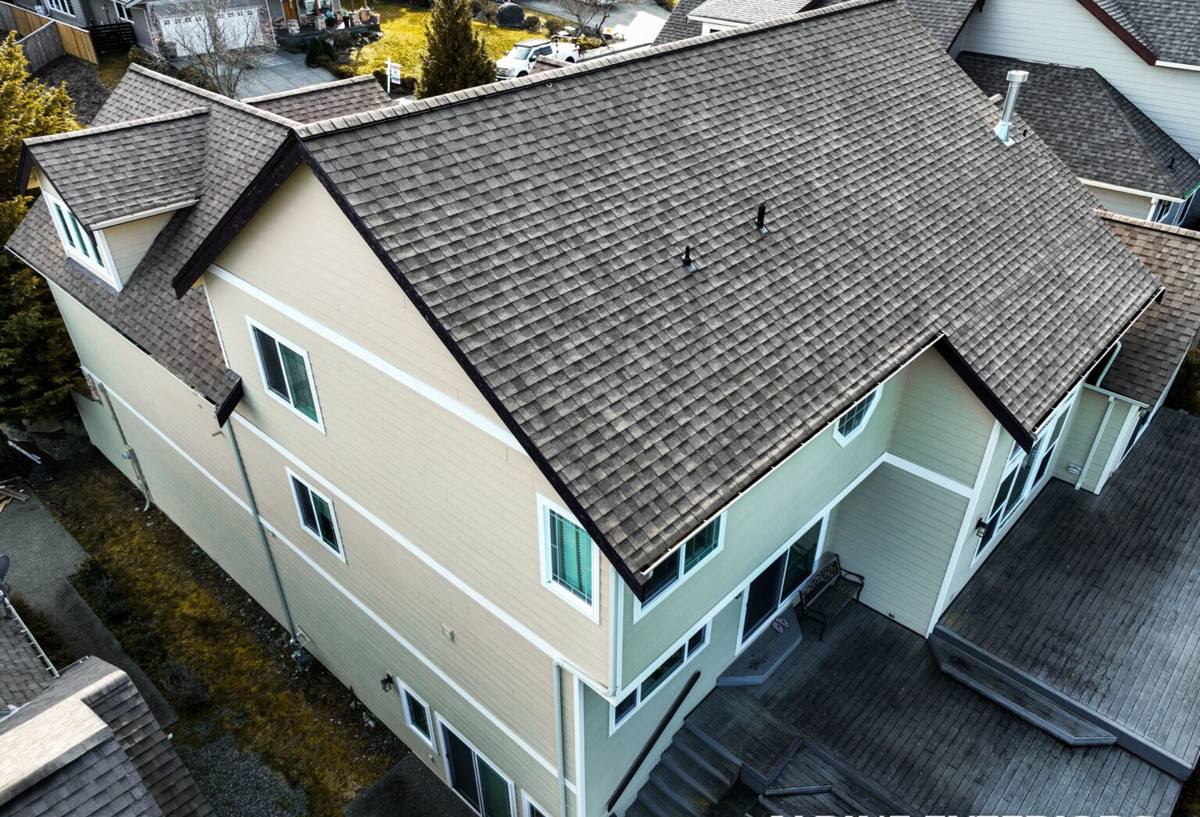
What Columbia Homes Specifically Need From a Deck
Columbia is an established residential neighborhood, and homes here span a range of ages and lot conditions, from older houses with mature landscaping and established grading to newer builds. What that generally means for deck work:
- Existing ledger board attachments on older homes often need to be reinforced or fully replaced to meet current flashing and fastening standards, not just re-used as-is.
- Mature trees and landscaping common in this area mean more organic debris landing on deck surfaces, which speeds up moss and algae growth if drainage and airflow underneath aren't handled correctly.
- Sloped or uneven lots, which show up throughout this part of Bellingham, often call for taller footings, engineered beam spans, or stepped framing rather than a simple flat build.
- Proximity to mature trees can also mean more shade on part of the structure, which changes how quickly different areas of the same deck dry out after rain — something worth planning for in material choice and layout.
We look at these site-specific factors before we ever talk about decking material or railing style, because they affect the structural plan underneath everything else.
Choosing the Right Decking Material for This Climate
There's no single "correct" decking material for every home — it depends on budget, how much upkeep you're willing to do, and how the deck will be used. Here's how the common options actually compare under Whatcom County conditions:
| Material | Upfront Cost | Maintenance | How It Handles PNW Moisture |
|---|---|---|---|
| Pressure-treated wood | Lowest | Annual cleaning, periodic staining/sealing | Prone to graying, splintering, and moss growth without regular upkeep |
| Cedar | Moderate | Regular sealing to maintain color and resist moisture | Naturally rot-resistant but still needs protection from prolonged wet exposure |
| Composite | Higher | Occasional washing, no staining/sealing | Resists rot and moisture well; surface can still support moss/algae if not cleaned |
| PVC / capped composite | Highest | Minimal — occasional washing | Best moisture resistance of the group; fully non-organic surface resists moss growth longest |
We won't push composite or PVC on every job just because it's lower maintenance — a lot of homeowners in this neighborhood like the look and feel of real wood and are willing to keep up with sealing it. Our job is to be honest about what each material actually requires over time so you're choosing based on real trade-offs, not a sales pitch.
A Note on Fastener and Hardware Choice
Whatever decking material you choose, the fasteners and structural hardware matter just as much. In an area with salt-influenced air and consistent moisture, we use corrosion-resistant, code-rated fasteners and connectors throughout — not just at the visible surface. Cutting corners on hardware is one of the most common causes of premature deck failure, and it's rarely visible until something gives way.
Framing and Structure: What's Underneath Matters Most
The decking boards are what you see, but the framing underneath is what determines whether the deck is actually safe and how long it lasts. A correct build includes:
- Footings sized and set to local frost depth and soil conditions, not guessed at.
- A ledger board properly flashed and fastened to the house structure — this is the single most common failure point on older decks we're asked to inspect or rebuild.
- Joists spaced and sized for the actual span and load, with joist tape or another moisture barrier on top to keep water from wicking into the wood from the decking above.
- Proper slope away from the house so water sheds instead of pooling against the structure.
None of this is visible once the decking goes down, which is exactly why it's worth asking a contractor to walk you through it before work starts rather than after.
Railings, Stairs, and Code Requirements
Any deck more than a modest height off grade needs a code-compliant guardrail system, and stairs need proper rise-and-run consistency and graspable handrails where required. This isn't optional detail work — it's a safety requirement, and it's also one of the first things a building inspector checks. We build railings and stairs to current code from the start rather than treating them as an afterthought, and we handle the inspection process as part of the job.
Railing material is also a climate consideration. Wood railings need the same maintenance attention as wood decking. Metal railing components should be corrosion-resistant given the coastal-influenced air in this part of Bellingham. Composite or vinyl railing systems trade a bit of that traditional look for very low upkeep.
Moss, Mildew, and Moisture Management
This is worth its own section because it's the single biggest complaint we hear from homeowners about existing decks in this area: green, slick growth that shows up every fall and winter and doesn't fully go away even with cleaning. A few things drive this, and a correct build addresses them at the source rather than leaving you to fight it every year:
- Airflow underneath the deck — a deck built too close to grade, or with skirting that blocks ventilation, stays damp longer after every rain, which is exactly what moss needs to establish.
- Surface drainage — gaps between boards and correct slope let water run off instead of sitting on the surface.
- Shade and tree cover — we can't move mature trees, but layout and material choice can account for the shadier sections of a deck that will always dry more slowly.
- Surface texture — some decking profiles hold onto grime and moisture more than others; this is worth discussing if moss has been a recurring problem at your home.
A deck built with these factors in mind still needs seasonal cleaning — nothing eliminates the need for that entirely in this climate — but it won't fight you the way a poorly ventilated, poorly drained structure will.
Our Deck Building Process
We keep the process straightforward and transparent from the first visit to final walkthrough:
- On-site assessment. We look at your lot's grading, existing structure (if replacing a deck), sun/shade exposure, and how the ledger will attach to your home.
- Design and material discussion. We go over layout, size, decking and railing material options, and give you an honest cost range for each direction before committing.
- Permitting. We handle the permit application and coordinate required inspections so you're not chasing paperwork.
- Demolition (if applicable) and site prep. Old structures are removed and the site is prepped for new footings.
- Framing. Footings, ledger, beams, and joists go in first, built to span and load requirements for your specific design.
- Decking, railing, and stairs. The visible finish work goes on once the structural inspection (where required) is complete.
- Final walkthrough. We go over the finished deck with you, including what maintenance it needs going forward.
Maintenance Checklist for Long-Term Performance
Whatever material you choose, a little regular attention goes a long way in this climate. A simple seasonal routine:
- Sweep debris (leaves, needles, seed pods) off the surface regularly, especially in fall — trapped organic material is what feeds moss growth.
- Clean the deck surface at least once a year with a deck-safe cleaner, more often in shaded or heavily wooded areas.
- Check and clear gaps between boards so water can drain instead of pooling.
- Inspect railings and stair connections annually for looseness or corrosion at hardware points.
- Re-seal or re-stain wood decking on the manufacturer or product-recommended schedule — don't wait until it's visibly gray and worn.
- Confirm under-deck ventilation isn't blocked by stored items, dense plantings, or debris buildup.
Why Hire a Crew That Already Works in Columbia
Deck building isn't unique to Bellingham — the fundamentals of good framing and material selection apply anywhere. But knowing this specific area's lot conditions, the way moisture and shade behave on the sloped and tree-lined properties common here, and what local permitting actually requires saves real time and prevents costly mistakes. A crew that's worked in this neighborhood before isn't guessing at frost depth, drainage patterns, or how a particular material holds up through a Whatcom County winter — they've already seen it firsthand.
We also stand behind the work with the same crew that shows up for the estimate, the build, and any follow-up — no subcontracted-out framing with a different standard than the finish work you were sold.
If you're planning a new deck or replacing one that's showing its age, we're happy to come take a look and walk you through honest options for your property. Use the form below to request a free, no-pressure estimate.