 Bellingham
 Why Edgemoor Decks Wear Out Faster Than You'd Expect
Edgemoor sits close to Bellingham Bay, and that proximity to salt water is exactly what makes deck repair here different from deck repair inland. Salt-laden air corrodes fasteners, hinges, and metal flashing years before you'd expect it in a drier part of Whatcom County. Add in the driving rain that comes off the water during fall and winter storms, and you've got moisture finding its way into every joint, screw hole, and end-grain cut on a deck that isn't detailed correctly.
Then there's moss. Bellingham's long, mild, wet season — often running from October through April — gives moss and algae months to colonize any shaded or north-facing deck surface. Moss doesn't just look bad; it holds moisture against the wood or composite surface constantly, which accelerates rot in wood decks and can degrade the surface layer on lower-quality composite boards. A deck built or repaired without this climate in mind will show problems within a few seasons, not decades.
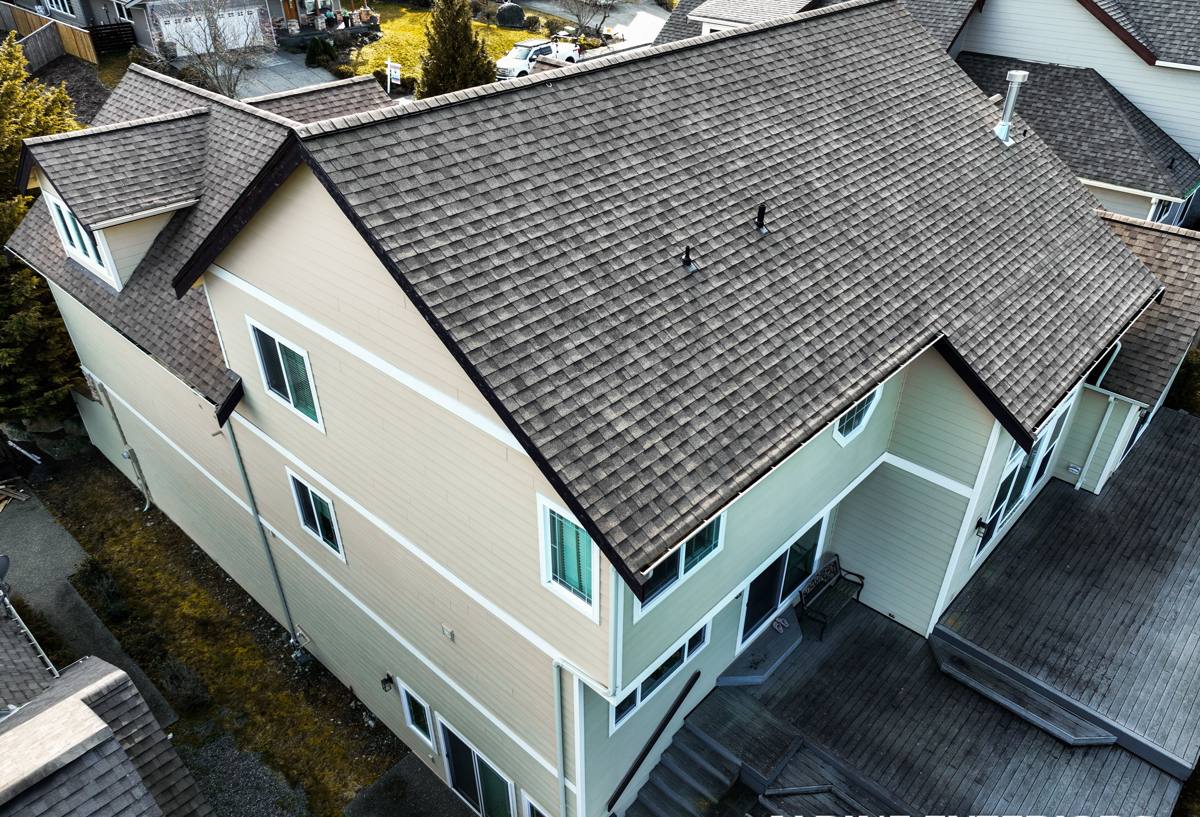
Signs Your Edgemoor Deck Needs Repair
Most deck problems don't show up as a dramatic collapse — they show up as small warning signs that get ignored until they're expensive. Here's what we look for, and what you should check yourself before it gets worse:
- Soft or spongy spots underfoot, especially near the house or at board ends
- Rust streaks running down from screws, bolts, or joist hangers
- Gaps opening up between deck boards or where the deck meets the house
- Green or black film that keeps coming back within weeks of cleaning
- Railings or stair posts that wiggle more than they used to
- Visible daylight or water staining under the deck where the ledger board attaches to the house
- Nails backing out or fastener heads popping above the board surface
Any one of these on its own might be minor. Two or three together, especially near the ledger board connection to the house, usually means the repair needs to go beyond surface cosmetics.
What a Correct Deck Repair Actually Involves
It Starts Below the Surface
A lot of deck "repairs" amount to swapping out a few visibly bad boards and calling it done. That fixes what you can see but not necessarily what's causing the damage. A proper repair starts by checking the structure underneath: joists, beams, the ledger board connection, and the posts or footings holding the whole thing up. In a marine climate like Bellingham's, we pay particular attention to the ledger board — the point where the deck attaches to the house — because that's where flashing failures let water track behind siding and into framing, often out of sight until the damage is significant.
Fasteners and Hardware Matter More Here
Standard galvanized fasteners corrode faster near salt air than most homeowners realize. Correct repair work in Edgemoor means using stainless steel or high-grade coated fasteners and hardware rated for coastal exposure, not whatever's cheapest at the hardware store. The same goes for joist hangers, post bases, and any structural connectors — if they're rusting, they're weakening, even if the wood around them still looks fine.
Drainage and Airflow Underneath
Moss and rot both thrive where air can't circulate and water can't drain. Part of a correct repair is making sure the space under the deck sheds water properly and isn't trapping moisture against joists or the underside of decking. Sometimes that means adjusting grading or adding gaps for airflow; sometimes it's as simple as clearing debris that's been damming water against the structure for years.
Repair vs. Replacement: How We Help You Decide
Not every deck problem calls for a full rebuild, and not every deck is worth patching. The honest answer depends on how much of the structure — not just the surface boards — is compromised.
| Factor | Points Toward Repair | Points Toward Replacement |
|---|---|---|
| Framing condition | Joists and beams are solid, only surface boards are damaged | Joists, beams, or the ledger board show rot or structural softness |
| Age of the deck | Under 10-15 years old, built to current code | Older deck built before current fastening and flashing standards |
| Extent of damage | Isolated boards, railings, or stairs | Damage is spread across most of the deck surface or structure |
| Budget priorities | Lower upfront cost, extends usable life a few more years | Higher upfront cost, resets the clock and can address layout issues |
| Moisture history | No history of standing water or persistent moss buildup | Chronic moss, algae, or drainage problems under the structure |
We'll always tell you honestly which side of that table your deck falls on. There's no benefit to us talking a homeowner into a full replacement when a targeted repair will hold up fine — and no benefit to patching a deck whose framing is already compromised, since that just delays a bigger expense.
Decking Material Considerations for a Bay-Adjacent Property
When boards need replacing, the material choice matters more here than it does in drier climates. Each option handles Bellingham's moisture and moss season differently.
| Material | Moisture Behavior | Maintenance Needs |
|---|---|---|
| Pressure-treated wood | Resists rot when properly sealed; end cuts and fastener holes are the weak points | Needs re-sealing every 1-2 years in this climate to stay protected |
| Cedar | Naturally moisture-resistant, but softens over time without upkeep | Regular cleaning and periodic finish renewal to prevent graying and moss growth |
| Composite | Doesn't rot, but lower-grade products can still grow surface algae in shaded, damp spots | Lower maintenance overall; occasional cleaning to keep moss from taking hold |
There's no universally "right" choice — it depends on your budget, how much upkeep you're willing to do, and how shaded your particular deck is. We'll walk through the honest trade-offs for your situation rather than pushing whatever's easiest for us to install.
How Our Process Works
1. On-Site Inspection
We start by getting under the deck, not just walking across the top of it. That means checking joists, the ledger connection, posts, and footings for rot, rust, or movement, along with the visible surface damage that prompted the call.
2. Honest Scope and Plan
You get a clear explanation of what's structural and what's cosmetic, what needs to be replaced now versus what can wait, and a straightforward estimate. No pressure to upsell into a full rebuild if a repair will genuinely do the job.
3. The Repair Itself
Damaged framing gets addressed first, using corrosion-resistant fasteners and hardware suited to a marine climate. Surface boards, railings, or stairs are replaced to match as closely as possible, and flashing at the ledger board is corrected or replaced if it's failing.
4. Sealing and Finish Work
Wood decks get properly sealed or finished before we consider the job done — an unsealed repair in this climate starts absorbing moisture within the first wet season. Composite repairs are checked for proper spacing and drainage so water doesn't pool against the new sections.
5. Cleanup and Walkthrough
We clear debris, walk you through what was done and why, and flag anything worth watching going forward — like a shaded corner that's likely to need moss treatment sooner than the rest of the deck.
Living With Moss Season: Maintenance That Actually Helps
Repair work buys you time, but Bellingham's climate means ongoing maintenance is part of owning a deck here, not an optional extra. A little consistent upkeep prevents most of the repair calls we get.
- Sweep leaves and debris off the deck regularly through fall — trapped organic matter feeds moss and holds moisture
- Clean visible moss and algae before it spreads, using a method appropriate to your decking material
- Check and reseal wood decking on the schedule your finish product calls for, typically every 1-2 years locally
- Keep gutters and downspouts near the deck clear so runoff isn't dumping extra water onto or under it
- Inspect fasteners and hardware once a year for early rust, especially anything within a few years of the coast
- Trim back vegetation that's shading the deck and keeping it damp longer than the rest of the yard
Why Hiring a Crew That Already Works in Edgemoor Matters
Deck repair advice that works in a dry inland climate can actively fail near Bellingham Bay. A crew unfamiliar with the area might use standard fasteners that rust out in a few years, skip flashing details that matter more here than elsewhere, or misjudge how much moss and moisture a shaded, bay-adjacent deck will actually deal with over a Whatcom County winter. We work on homes throughout the Bellingham area regularly, including Edgemoor, so we're not guessing at what this climate does to a deck — we're accounting for it in every repair, from the hardware we choose to how we detail the ledger board and finish the wood.
That local familiarity also means a faster, more accurate estimate. We know what we're likely to find before we even get under the deck, which means fewer surprises and a scope that's realistic from the start.
Getting Started
If your deck has soft spots, rust stains, persistent moss, or just feels less solid than it used to, it's worth having someone look before another wet season adds to the damage. We offer free, no-pressure estimates for deck repair in Edgemoor and the surrounding Bellingham area — fill out the form below and we'll take a look and give you an honest read on what it needs.