 Bellingham
 Edgemoor's Bluff Exposure Is Its Own Category of Weather
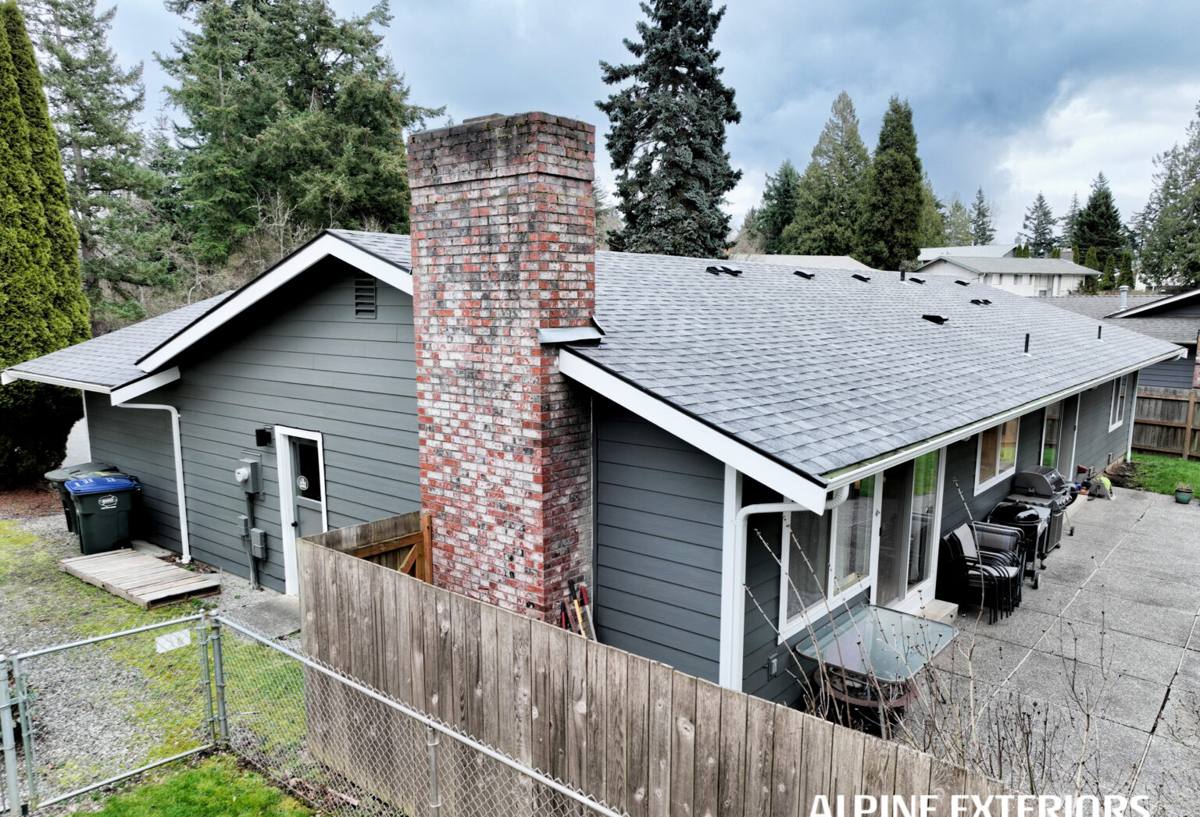
Edgemoor sits on the bluff above Bellingham Bay, and that position gives it two things most inland Bellingham neighborhoods don't deal with in the same combination: direct exposure to salt-laden air coming off the water, and wooded, often shaded lots that stay damp long after a storm has passed. Add in Whatcom County's driving winter rain, which comes in sideways off the Strait more often than it falls straight down, and you have siding conditions that punish anything not built and installed for the coast. Homes here don't just get wet — they get wet, salted, and shaded, sometimes all at once.
That combination matters more than most homeowners realize when they're comparing siding materials. A product that performs fine forty minutes inland can fail early on a bluff lot facing open water. This page is about what fiber cement siding needs to do differently for an Edgemoor home, what a correct installation actually involves, and why we send crews that already know this neighborhood's exposure rather than treating every job the same.
What Salt Air, Rain, and Moss Actually Do to Siding
Salt Air
Airborne salt is corrosive to metal fasteners, trim flashing, and any hardware not rated for coastal exposure. It also accelerates the breakdown of paint films and cheaper composite materials, drawing moisture into seams and edges faster than the same product would experience even a few miles inland. Fiber cement itself doesn't corrode — it's cement, sand, and cellulose fiber — but the fasteners, flashing, and caulk joints around it absolutely can if they're not spec'd for the exposure.
Driving Rain
Wind-driven rain off Bellingham Bay pushes water sideways into laps, joints, and butt seams that would stay dry in a calmer inland setting. Siding systems rely on gravity and overlap to shed water; when rain is coming in at an angle, any gap in flashing or any undersized overlap becomes an entry point. This is a water-management problem more than a material problem, and it's where installation quality matters as much as the product itself.
Moss and Shade
Edgemoor's tree cover is part of what makes the neighborhood desirable, but shaded, north-facing walls stay damp for days after a storm, and that's exactly where moss and algae take hold. Moss holds moisture against the wall surface, and over years that constant dampness works against paint, caulk, and any material with a wood component. Fiber cement resists this far better than wood or engineered wood products because there's no organic wood fiber for moisture to break down — but the surface still needs periodic cleaning to keep growth from building up in shaded corners.
Why Fiber Cement Is the Right Call for This Exposure
We install James Hardie fiber cement siding exclusively, and Edgemoor is a good illustration of why. Fiber cement doesn't rot, doesn't feed insects, and doesn't swell and shrink with moisture the way wood-based products do. It's non-combustible, which matters on wooded bluff lots where wildfire smoke and ember exposure are a growing concern in late summer. And James Hardie's ColorPlus factory finish is baked on and warranted against fading and chipping in a way field-applied paint on other siding materials generally isn't — a real advantage on a wall that's going to see direct salt spray and UV off open water.
James Hardie also builds region-specific product lines engineered for exposure like this. The HZ5 formulation used in the Pacific Northwest is designed around freeze-thaw cycling and sustained moisture exposure, which is a closer match to Whatcom County's coastal winters than a generic all-climate product. That's not a marketing detail — it's the difference between a siding system engineered for this weather and one that merely tolerates it.
What a Correct Installation Involves Here
Fiber cement siding is only as good as the water-management details behind it. On an exposed bluff lot, we pay particular attention to a few things that get skipped on lower-quality jobs:
- Weather-resistive barrier installed and lapped correctly behind the siding, with no gaps at seams or penetrations
- Flashing at every window, door, and roofline intersection, integrated with the barrier rather than just caulked over
- Corrosion-resistant fasteners rated for coastal exposure, driven to Hardie's specified depth and spacing — not overdriven, which cracks the board's face and opens a moisture path
- Proper clearance between the bottom of the siding and grade, decks, and roof lines, so splash-back and standing water don't wick into the plank
- Correct caulking at butt joints and trim, using sealants rated for the coastal UV and moisture exposure — not a generic latex caulk that will fail in a season or two
- Ventilation gaps maintained where the siding system calls for a rainscreen or drainage plane, especially on shaded north- and west-facing walls
None of this is exotic. It's the manufacturer's installation spec, followed completely, on a home where the exposure gives you less room for error than an inland lot would. Skipping any one of these steps might not show up for a year or two — but on a bluff-facing wall, it shows up faster than most homeowners expect.
Fastener and Flashing Choices Matter More Here
This is worth calling out on its own because it's the detail most likely to get overlooked. Standard galvanized fasteners can start showing corrosion streaking within a few years in direct salt air exposure. We spec stainless or coated fasteners rated for coastal use on Edgemoor jobs, along with flashing metals chosen for the same exposure. It costs more up front than using whatever's in the truck. It's also the difference between trim that looks clean in ten years and trim that's staining and failing in three.
Our Process for an Edgemoor Project
- Site walk and exposure assessment. We look at which walls face open water, which stay shaded, where existing moss or paint failure is showing, and what that tells us about water paths.
- Tear-off and substrate check. Old siding comes off and we inspect sheathing for rot or moisture damage before anything new goes up — this is where hidden problems from a previous, less careful install usually surface.
- Barrier and flashing installation. Weather-resistive barrier and flashing go in correctly the first time, since this layer is what actually keeps water out — the siding itself is the second line of defense, not the only one.
- Hardie panel or plank installation. Installed to manufacturer spec with coastal-rated fasteners, correct nailing patterns, and proper joint treatment.
- Trim, caulk, and touch-up. Factory-finished ColorPlus product limits field painting, but cut edges and seams still get properly sealed and touched up per Hardie's specs.
- Walkthrough and cleanup. We review the finished work with the homeowner and leave the site clean — no leftover fasteners, cut-offs, or debris in the yard or garden beds.
Fiber Cement Compared to Other Siding Materials in This Setting
Homeowners comparing siding materials for a bluff-facing home in Edgemoor are usually weighing fiber cement against vinyl, engineered wood, or repainting existing wood siding. Here's how they hold up against this specific exposure:
| Material | Salt air performance | Moisture/moss resistance | Maintenance burden |
|---|---|---|---|
| James Hardie fiber cement | Cement base doesn't corrode; factory finish resists salt-driven fading | No organic fiber to break down; handles sustained damp shade well | Periodic wash; no repainting for years under the ColorPlus warranty |
| Vinyl siding | Can become brittle and discolor faster under direct salt/UV exposure | Won't rot, but seams and J-channels trap moisture behind the panel | Low, but panels can warp or crack and are hard to color-match if replaced |
| Engineered wood (e.g. LP SmartSide) | Wood-strand core is more vulnerable to sustained coastal moisture | Edge swelling is a known risk if moisture reaches the strand core | Requires diligent caulk and paint maintenance to keep moisture out |
| Repainted existing wood siding | Salt air accelerates paint breakdown and wood weathering | Wood feeds moss and is vulnerable to rot in shaded, damp areas | Highest — repainting cycles shorten significantly in this exposure |
This is exactly why we standardized on James Hardie rather than carrying multiple product lines. On an exposure like Edgemoor's, the material choice has real consequences within a decade, not just at year twenty-five.
What Ongoing Care Looks Like After Installation
Fiber cement is low-maintenance, not no-maintenance. For an Edgemoor home, we'd suggest a rinse-down of shaded, moss-prone walls once or twice a year with a garden hose or soft wash — never a pressure washer aimed directly at seams, which can force water behind the siding. Keep gutters clear so overflow isn't running down the wall face, and trim back vegetation that's holding shade and moisture directly against the siding. Caulked joints and trim are worth a visual check every year or two; catching a failed caulk line early is a five-minute fix, while ignoring it for a few seasons can mean repairing water damage behind the wall.
Why a Crew That Already Works Edgemoor Matters
A siding crew that's only worked inland Bellingham jobs doesn't automatically know to spec coastal-rated fasteners, or to pay extra attention to flashing on a north-facing wall that never fully dries out. Those aren't things you learn from a manufacturer's install manual alone — they're things you learn from having stood on enough bluff-facing roofs and torn off enough failed siding jobs in this specific microclimate to know where the weak points actually show up first. We work Whatcom County's coastal neighborhoods regularly, and that experience shows up in the details — fastener choice, flashing sequencing, and where we spend the extra time that a generic install doesn't.
Questions Worth Asking Before You Hire
- Are the fasteners and flashing rated for coastal salt exposure, or standard-grade?
- Will the crew inspect and repair sheathing before new siding goes up, or just cover what's there?
- Is the siding installed to the manufacturer's written spec, including nailing pattern and clearances?
- What warranty covers the product, and what warranty covers the labor separately?
- Has the crew worked on bluff or waterfront-exposed homes in this area before?
Cost Factors for an Edgemoor Fiber Cement Project
| Factor | Why it affects cost here |
|---|---|
| Wall exposure and access | Bluff lots with steep grades or limited driveway access can add setup and material-handling time |
| Existing siding removal | Tear-off and disposal of old material, plus any sheathing repair found underneath |
| Fastener and flashing spec | Coastal-rated hardware costs more than standard-grade but is not optional for this exposure |
| Trim complexity | Custom homes with more windows, corners, and architectural trim take more install time |
| Siding profile chosen | Lap plank, shingle-style panel, and board-and-batten each price differently in labor and material |
Every home on the bluff is a little different, which is why we walk the actual house rather than quoting off square footage alone. If you're weighing a siding replacement on an Edgemoor property, we're happy to come take a look, explain what we're seeing, and put together a straightforward, no-pressure estimate — no obligation, just an honest read on what the job actually needs.