 Bellingham
 Edgemoor's Siding Challenge: Salt Air, Rain, and Moss
Edgemoor sits close enough to Bellingham Bay that salt-laden air is part of daily life on the exterior of every home in the neighborhood. That air carries fine salt particles that settle on siding, trim, and fasteners, and over years it accelerates corrosion on anything metal and breaks down finishes that weren't built to shed it. Combine that with the driving rain that comes off the Sound in fall and winter storms, plus a moss and algae season that in Whatcom County can run eight or nine months out of the year, and you have a set of conditions that punishes the wrong siding choice fast.
None of this is unique to one street or one lot in Edgemoor — it's the shared reality of anything close to the water in this part of Washington. But it does mean siding installation here isn't a generic job. The product, the water management behind it, and the fastening details all need to be chosen with this specific exposure in mind, not just copied from a spec sheet written for a drier inland climate.
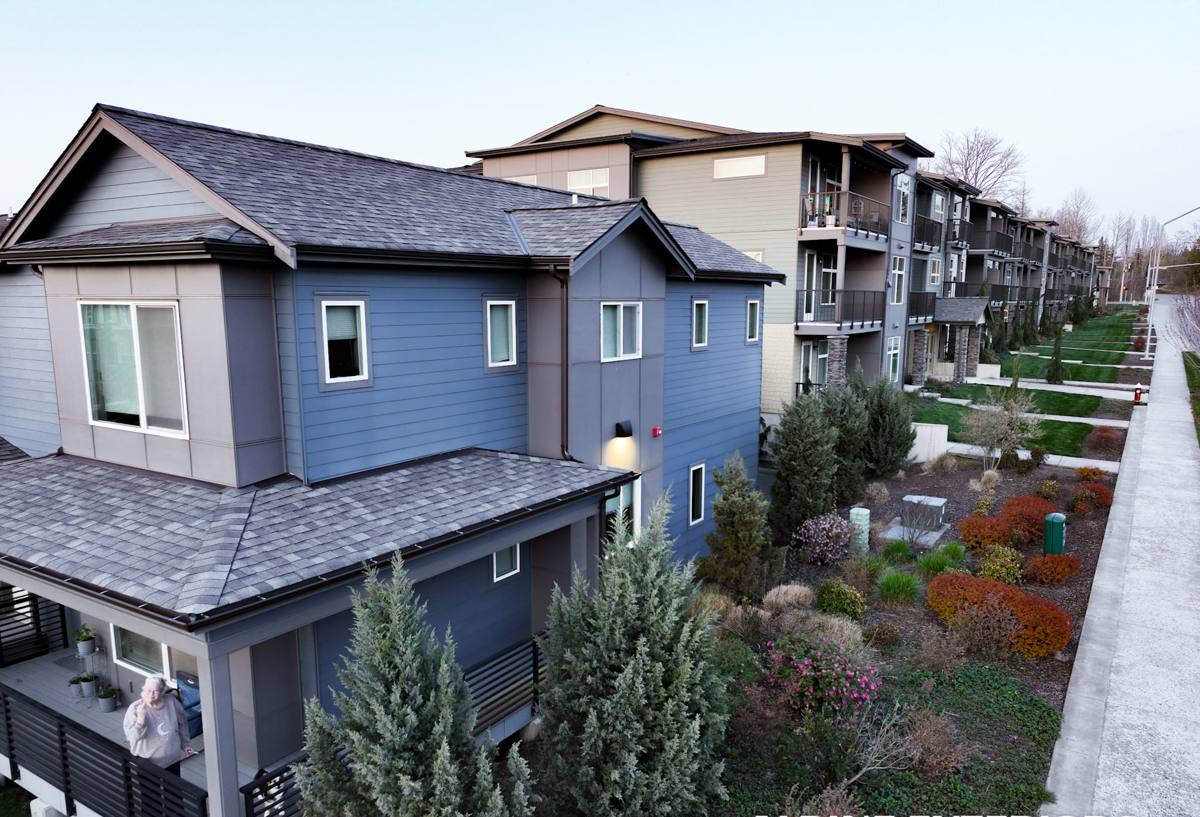
What Correct Siding Installation Requires in This Climate
Siding fails in wet coastal climates almost never because the surface material itself couldn't handle moisture — it fails because water got behind it and had nowhere to go. Getting that right is the actual job, and it's mostly invisible once the siding is up.
Weather-Resistive Barrier and Flashing
A continuous, properly lapped weather-resistive barrier underneath the siding is the first line of defense. Every window, door, and penetration needs flashing detailed so that any water that gets past the siding face drains back out and away from the sheathing, not into it. In a neighborhood that sees sustained wind-driven rain, sloppy flashing at a window head or a deck ledger is where rot starts.
Drainage Gap Behind the Siding
A rainscreen gap — a small air space between the back of the siding and the weather barrier — lets any moisture that does get through drain and evaporate instead of sitting against the wall assembly. This detail matters more in a high-moisture, low-sun-exposure climate like Bellingham's than it would somewhere dry, because siding here simply doesn't get the drying time between rain events that it would in other parts of the country.
Fastening and Joint Sealing
Every fastener needs to be corrosion-resistant and driven to the manufacturer's exact spec — not too deep, not too shallow. Butt joints and trim transitions need to be sealed with a sealant rated for the product and the exposure, not just caulked shut and left. Get any of these wrong and you've built a house that looks fine for a season or two before problems start showing at the seams.
Why We Only Install James Hardie Fiber Cement
We install one siding system: James Hardie fiber cement. That's a deliberate standard, not a limitation on what we're capable of installing.
Fiber cement is non-combustible, which matters given the wildfire-smoke seasons the Pacific Northwest has seen in recent summers even if Whatcom County itself isn't a high fire-risk zone. More directly relevant to Edgemoor: Hardie's HZ product lines are engineered for specific climate zones, and the HZ5 formulation used in wetter, cooler regions is built to resist moisture-related damage better than the standard formulation sold in drier climates. The factory-applied ColorPlus finish is baked on and warranted against fading and flaking in a way that field-applied paint on other substrates isn't, which matters when a home is absorbing salt air and rain nine months a year. It also carries a strong transferable limited warranty, which protects the investment for whoever owns the home next.
We don't install LP SmartSide, vinyl, Cemplank, Allura, primed spruce, or cedar. Some of those are decent products in the right application — vinyl is inexpensive and low-maintenance in mild, dry climates; wood-based products can look great when maintained aggressively; cedar has real appeal. But in a coastal, high-moisture, high-moss climate like Edgemoor's, each carries trade-offs — moisture absorption at cut edges, more frequent repainting or resealing, or vulnerability to the kind of sustained damp that this area gets more of than most — that we've decided aren't worth passing on to a homeowner who's paying for a siding job meant to last decades. Hardie fiber cement, installed correctly, is what we've standardized on for that reason.
Our Installation Process for Edgemoor Homes
- Site and wall assessment. We check the condition of the existing sheathing and framing, look for any signs of prior moisture intrusion, and confirm what's actually behind the current siding before pricing the job.
- Removal and inspection. Old siding comes off, and we inspect the sheathing underneath. Any soft or damaged sheathing gets flagged and addressed before anything new goes on — covering rot with new siding just hides the problem.
- Weather barrier and flashing installation. A new, continuous weather-resistive barrier goes on, with flashing detailed at every window, door, and penetration to shed water outward.
- Rainscreen furring. We install the drainage gap that lets moisture that gets behind the siding escape instead of sitting against the wall.
- Hardie panel or lap installation. Siding goes up to manufacturer fastening specs — correct nail spacing, correct penetration depth, correct clearances at grade, decks, and roof lines.
- Trim, caulking, and touch-up. Trim is set, joints are sealed with an appropriate sealant, and any cut edges are sealed per Hardie's specifications to protect against moisture wicking.
- Final walkthrough. We walk the finished job with the homeowner and go over what maintenance, if any, is needed going forward.
Comparing Siding Options for a Climate Like Edgemoor's
| Factor | James Hardie Fiber Cement | Vinyl | Wood-Based / Engineered Wood |
|---|---|---|---|
| Moisture behavior in coastal climates | Engineered HZ5 formulation for wet regions; resists moisture damage when installed with proper drainage details | Doesn't absorb moisture itself, but seams and panels can flex and let water track behind in driving rain | Absorbs moisture at cut edges and joints if not maintained; more sensitive to sustained damp |
| Salt air exposure | Factory finish resists fading and flaking near the water | Can chalk and become brittle over time near salt air and UV | Finish breaks down faster near salt air, requiring more frequent recoating |
| Moss and algae growth | Surface can be gently cleaned without damaging the substrate | Similar cleaning tolerance, but seams can trap growth | More porous surface can hold moisture that feeds moss and mildew |
| Fire resistance | Non-combustible | Combustible, can melt or warp under heat | Combustible |
| Warranty structure | Strong, transferable limited warranty | Varies widely by manufacturer and grade | Often shorter, and paint/finish warranties are typically separate from the substrate warranty |
Cost Factors for Edgemoor Siding Installation
Every Edgemoor home is different, so we don't quote a number without seeing the house, but the factors that actually move a siding estimate are the same ones we walk through on every job:
- Condition of the sheathing underneath. Rot or water damage found during tear-off adds repair scope before new siding can go on.
- Home size and wall complexity. More corners, dormers, and roof intersections mean more flashing detail and labor time.
- Siding profile chosen. Lap siding, panel systems, and shingle-style Hardie products differ in material and labor cost.
- Trim and accessory scope. Fascia, soffits, and trim replacement alongside the siding add to the project but often make sense to do at the same time.
- Access and site conditions. Tight lots, mature landscaping, or multi-story walls can affect equipment needs and labor time.
Signs Your Edgemoor Home May Need New Siding
- Persistent moss, algae, or dark staining that comes back quickly after cleaning
- Soft spots, bubbling, or visible warping in the siding surface
- Paint that's peeling or finish that's chalking faster than it should
- Gaps opening up at seams, corners, or trim boards
- Musty smells or visible staining on interior walls that share an exterior wall
- Siding that's original to a home more than 20–25 years old and hasn't been evaluated recently
Any one of these on its own might not mean full replacement, but a few together — especially combined with siding that's already older — is worth having looked at before it turns into a sheathing or framing repair.
Why Hiring a Crew That Already Works in Edgemoor Matters
A crew that's already installed siding across Bellingham and Whatcom County isn't guessing at how much drainage detail a wall needs or how aggressive the moss growth will be on a north-facing elevation near the water — they've seen it on the last job and the one before that. That translates into fewer surprises during tear-off, flashing details that are sized for what this specific climate actually throws at a house, and a realistic sense of how the job should be sequenced around the region's rain patterns so the wall isn't left exposed longer than it needs to be. It also means familiarity with Bellingham's permitting and inspection process, which keeps the project moving instead of stalling on paperwork.
Maintenance After Installation
Correctly installed Hardie siding is low-maintenance, not no-maintenance. In a neighborhood like Edgemoor, that mostly means periodically rinsing off moss and salt residue with a garden hose and soft brush — never a pressure washer aimed directly at the siding face or seams — and keeping an eye on caulking at trim joints and penetrations over the years, since sealant has a shorter service life than the siding itself. Gutters and downspouts should stay clear so water isn't sheeting down the wall face more than it has to. None of this is heavy lifting, but skipping it entirely shortens the life of even the best-installed system.
If your Edgemoor home's siding is showing its age, or you're planning ahead for a project, we're happy to take a look and give you a straightforward, no-pressure estimate — just fill out the form below.