 Bellingham
 Why Fairhaven's Climate Is Hard on an Asphalt Shingle Roof
Fairhaven sits close enough to the water that homes here take a different kind of weathering than roofs a few miles inland. Salt-laden air off Bellingham Bay works on metal fasteners, flashing, and vent components year-round, even when nothing looks visibly wrong from the ground. Add in driving rain that comes sideways during winter storms, and you have wind-driven water testing every seam, nail head, and shingle edge on the roof instead of just running straight down and off.
Then there's the moss. Whatcom County's damp, mild climate keeps moisture sitting on north-facing and shaded slopes for months at a stretch, which is exactly what moss and algae need to take hold. A roof that would stay dry and clean for years in a drier climate can grow a moss mat here in two or three seasons if it wasn't built or maintained with that in mind. None of this means asphalt shingles are the wrong choice for Fairhaven — they're not — it means the installation details matter more here than they would somewhere with a milder, drier roof climate.
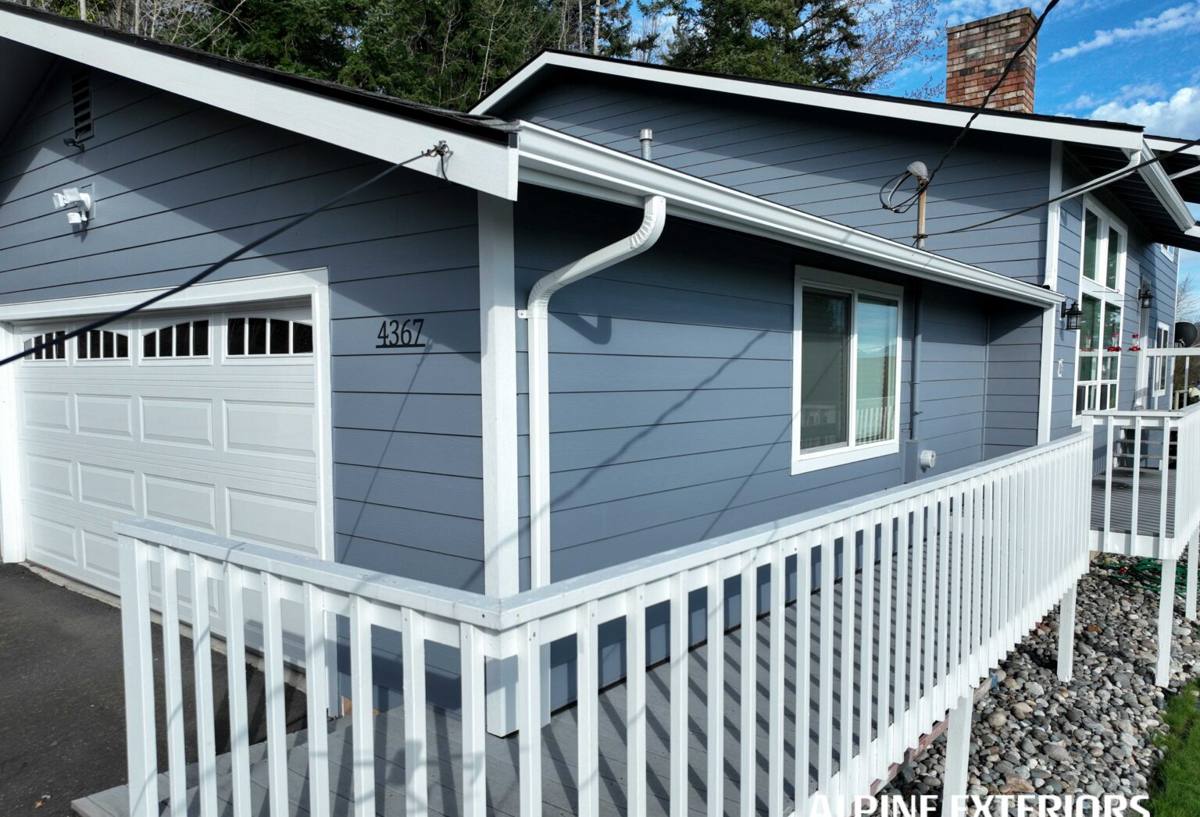
What a Correctly Installed Roof Needs to Handle These Conditions
A shingle roof that's going to hold up in this environment needs a few things done right underneath the shingles, not just on top of them.
Underlayment and Water Protection
Synthetic underlayment across the whole deck is the baseline, but the eaves, valleys, and any low-slope transitions need self-adhering ice-and-water membrane. That membrane is what keeps wind-driven rain from working its way up under the shingle courses at the edges, which is the single most common point of failure we see on older roofs in this area.
Fastening for Wind Exposure
Homes with open exposure toward the water or sitting up on a bluff take more direct wind load than a roof tucked into trees. Correct nail placement, nail count per shingle, and using a fastening pattern rated for higher wind speeds all matter more here than the manufacturer's bare minimum spec would suggest.
Ventilation
Balanced intake and exhaust ventilation keeps the underside of the roof deck dry and at a stable temperature. Poor ventilation traps moisture in the attic, which shortens shingle life from underneath — a problem that's easy to miss because it doesn't show up as a leak until it's already caused damage.
Metal and Flashing Quality
In a salt-air environment, the grade and coating of the metal used for flashing, drip edge, and valley metal matters. Lower-grade or poorly coated metal corrodes faster here than it would inland, and once flashing starts to fail, water finds its way in around chimneys, skylights, and roof-to-wall intersections long before the shingles themselves are worn out.
Problems We Commonly Find on Fairhaven Roofs
Every roof is different, but a handful of issues show up repeatedly on inspections in this neighborhood:
- Moss growth on shaded or north-facing slopes, which holds moisture against the shingle surface and accelerates granule loss
- Lifted or cracked shingle tabs along exposed edges and ridgelines from repeated wind loading
- Corroded fasteners and flashing, especially on roofs over 12-15 years old that weren't installed with marine-grade materials
- Nail pops from wood movement and temperature swings, which telegraph through the shingle surface over time
- Failed flashing around penetrations — chimneys, skylights, and plumbing vents — where the original sealant or step flashing has degraded
- Granule loss in valleys and low-slope areas where water sits longer during our long wet season
Most of these are manageable if caught early through a straightforward repair. Left alone, they compound — moss holds moisture that accelerates granule loss, which exposes the asphalt mat to UV and rain, which shortens the life of the whole roof.
Choosing a Shingle Built for a Marine Climate
Not every asphalt shingle product is equally suited to salt air, driving rain, and a long moss season. The table below lays out the honest trade-offs between the common options.
| Shingle Type | Typical Lifespan Here | Moss/Algae Resistance | Best Use Case |
|---|---|---|---|
| Standard 3-tab | 15-20 years | Low unless treated | Budget-conscious projects, lower-slope simple roofs |
| Algae-resistant laminate/architectural | 25-30 years | Built-in copper or zinc granules resist streaking | Most Fairhaven homes, especially shaded lots |
| Impact-rated/high-wind laminate | 25-30+ years | Good, varies by product | Exposed sites near the water or on ridgelines |
We generally steer homeowners in this neighborhood toward algae-resistant laminate shingles as the standard choice, not because other products are bad, but because the added copper or zinc granule content is a direct answer to the moss and staining problem this climate causes. On more wind-exposed lots, an upgraded high-wind-rated laminate is worth the modest cost difference given how much more direct exposure those roofs take.
Zinc or Copper Strips as a Moss Control Add-On
Ridge-mounted zinc or copper strips are a simple, low-maintenance way to slow moss regrowth on shaded slopes. Rain washes trace metal ions down the roof face, which inhibits moss and algae growth over time. It's not a substitute for a correctly installed roof, but it's a worthwhile add-on for slopes that stay damp for long stretches of the year.
Our Fairhaven Asphalt Shingle Roofing Process
Whether it's a full replacement or a targeted repair, we follow the same disciplined sequence on every job:
- Inspection and assessment — we get on the roof (or use a camera where access is limited) to check deck condition, flashing, ventilation, and the extent of any moss or storm damage before quoting anything
- Deck evaluation — any soft, rotted, or delaminated decking gets identified and priced separately so there are no surprises mid-project
- Tear-off and disposal — old shingles, underlayment, and damaged flashing come off down to bare deck; we don't install new shingles over old ones
- Deck repair — damaged sheathing is replaced and re-fastened to current code before anything new goes down
- Ice-and-water membrane and underlayment — installed at eaves, valleys, and penetrations first, then synthetic underlayment across the field
- Flashing and drip edge — new, properly rated metal at all edges, valleys, and penetrations
- Shingle installation — laid to the wind-rated fastening pattern appropriate for the site's exposure
- Ridge vent and ventilation check — confirming intake and exhaust are balanced before closing out the job
- Cleanup and final walkthrough — magnetic sweep for stray fasteners, debris removal, and a walkthrough so you know exactly what was done
Maintenance That Actually Matters During Moss Season
A well-installed roof still needs some basic upkeep in this climate. Here's what's worth doing on a regular schedule:
- Clear gutters and downspouts before the fall rains start, so water isn't backing up under the eaves
- Have shaded or north-facing slopes checked for early moss growth once a year, before it establishes a mat
- Trim back overhanging branches that keep sections of the roof shaded and slow to dry
- Avoid pressure washing shingles — it strips granules and shortens shingle life; soft washing or manual moss removal is safer
- Have flashing around chimneys and skylights checked every few years, since these are the first places sealant and metal degrade
- After any major windstorm, do a visual check from the ground for lifted or missing shingles
What Drives Cost on a Fairhaven Roofing Project
Every roof is priced on its own specifics, but the main factors that move the number up or down are consistent:
| Factor | Why It Matters |
|---|---|
| Roof size and number of slopes | More material and more labor hours, plus more valleys and hips to flash correctly |
| Existing deck condition | Rotted or delaminated sheathing found during tear-off adds material and labor not visible before the job starts |
| Shingle grade chosen | Standard 3-tab, algae-resistant laminate, and high-wind laminate carry different material costs |
| Roof pitch and access | Steep or hard-to-access roofs take longer and require more safety setup |
| Number of penetrations | Each chimney, skylight, and vent needs its own flashing detail |
| Layers to remove | Tearing off multiple existing layers costs more than a single-layer tear-off |
We don't quote off square footage alone — an accurate number comes from actually getting eyes on the roof.
Why It Matters to Hire a Crew That Already Works in Fairhaven
A roofing crew that regularly works this part of Bellingham already knows which slopes on which street orientations tend to hold moss, which older homes commonly have undersized ventilation, and how much wind exposure a given lot actually gets based on its position relative to the water. That local pattern recognition shows up in better material choices and fewer callbacks — not because the trade knowledge is exotic, but because it's built from doing this specific type of roof, in this specific climate, repeatedly.
It also matters for the practical side of the job. Most reroofing work in Bellingham requires a building permit, and a local crew handles that process as a routine part of the job rather than something that slows the project down. Knowing realistic scheduling around Whatcom County's wet season — and being honest about which weeks are and aren't good for a tear-off — is the kind of thing that only comes from working here consistently.
Repair or Full Replacement — How to Tell
Not every roof problem in Fairhaven means a full replacement. A general guide:
- Isolated moss on one slope with otherwise sound shingles: cleaning plus a repair, not a replacement
- A handful of lifted or cracked shingles after a storm: targeted repair
- Widespread granule loss, multiple soft spots on the deck, or a roof already past 20-25 years: replacement is usually the more cost-effective path
- Recurring leaks around the same penetration despite prior sealant repairs: often a flashing design issue that needs to be corrected properly, not resealed again
An honest inspection should tell you which category your roof falls into, along with the reasoning behind that call — not just a recommendation to replace everything by default.
If you're dealing with moss buildup, a storm-damaged section, or you're just due for an honest look at where your roof stands, we're happy to come out and take a look. The estimate is free, there's no pressure to move forward, and you'll get a straight answer about whether you need a repair or a replacement.