 Bellingham
 Happy Valley is a close-in Bellingham neighborhood with a mix of older homes and newer infill, many of them sitting under mature tree cover a few blocks from Bellingham Bay. That combination — shade, moisture, and salt-tinged air rolling up off the water — is hard on an outdoor deck. If you've noticed soft spots underfoot, green film that comes back within weeks of cleaning, or fasteners bleeding rust through the boards, you're seeing what this climate does to a deck that's past its service life. This page walks through what a proper deck replacement looks like for a Happy Valley home, and what separates a repair that buys you a couple more years from a replacement that actually holds up.
Why Decks in Happy Valley Wear the Way They Do
Whatcom County's marine climate means Happy Valley decks deal with three things at once, most of the year: rain that comes in sideways during winter storms, salt-laden air off the bay that accelerates corrosion on metal fasteners and connectors, and shade from established trees that keeps deck surfaces damp long after a storm has passed. That shade is the quiet killer — a deck in full sun dries out within a day of rain; a shaded deck under a stand of firs or maples can stay damp for the better part of a week. Add a long moss season that runs roughly from October through April, and you've got a surface that's constantly cycling between wet and dry, which is exactly the condition that rots wood framing, corrodes fasteners, and lets moss and algae take hold in ledger boards, stair stringers, and anywhere water pools instead of shedding.
None of this means a deck can't last in this neighborhood — it means the details of how it's built (drainage, flashing, fastener choice, ventilation underneath) matter more here than they would in a drier climate.
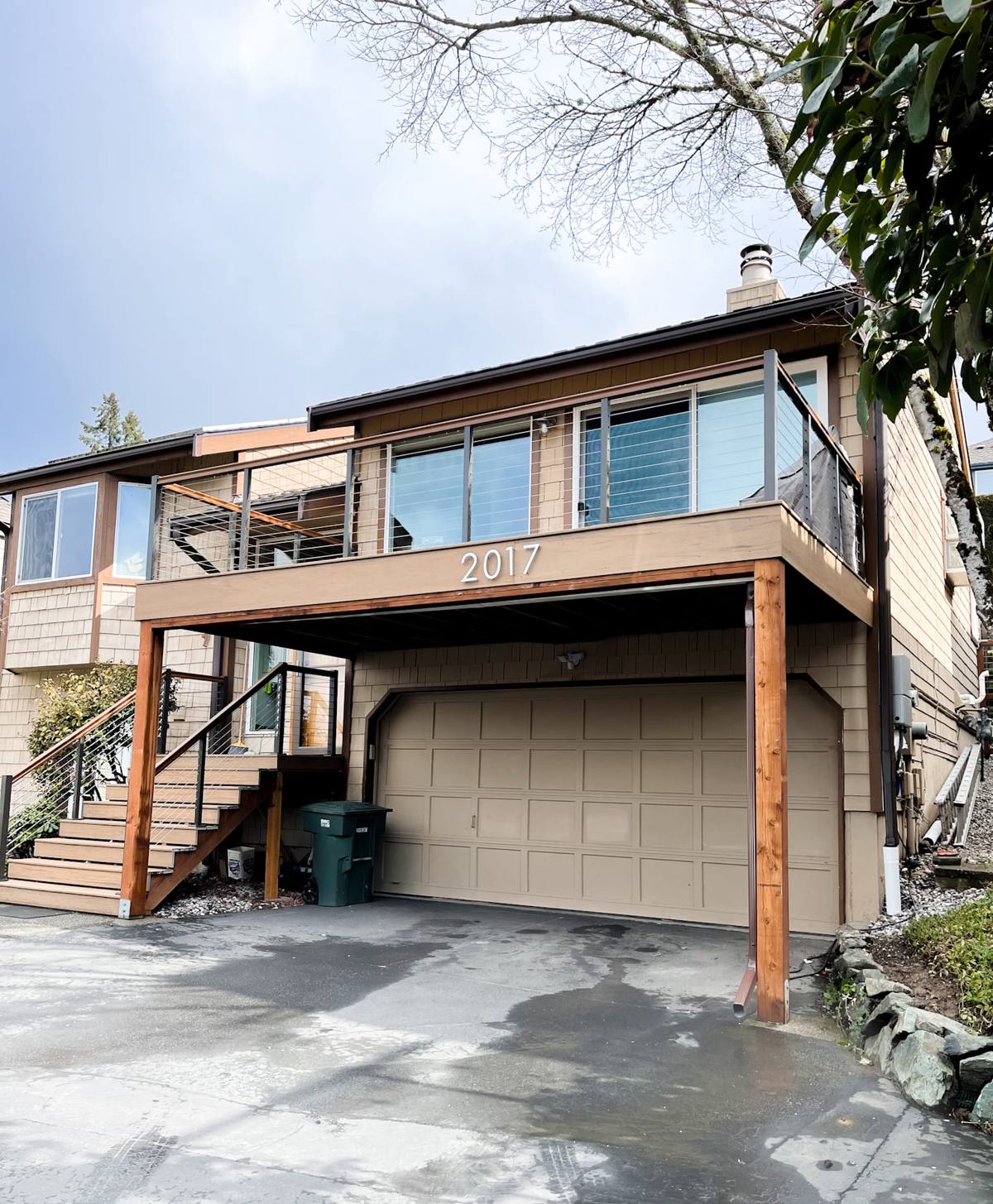
Signs You're Looking at Replacement, Not Repair
A lot of deck problems can be fixed board by board. Others are signs the structure itself has had enough. Here's how we tell the difference on a Happy Valley job:
- Soft or spongy decking in multiple areas, not just one board — usually means moisture has gotten under the surface and is working on the joists below.
- Rust streaking from screws or nails — a sign fasteners are corroding, which is common where salt air is a factor, and it only gets worse from here.
- Ledger board separation or gaps where the deck meets the house — this is a structural safety issue, not cosmetic, and it's one of the most common failure points we find.
- Persistent moss or black staining that returns within a month of cleaning, even after a good scrub — usually means the wood itself is holding moisture rather than shedding it.
- Visible rot or crumbling wood at post bases, stair stringers, or joist ends — these are load-bearing points, and once they've started to go, patching rarely holds.
- The deck predates 2000 and has never had the framing inspected — older decks were often built to lighter standards than current code requires, especially around railings and ledger attachment.
If you're seeing one or two of these, a repair might genuinely be the right call. If you're seeing three or more, or if the problems are concentrated at the ledger or support posts, replacement is usually the more honest recommendation — and cheaper in the long run than repeated patch jobs.
What a Correct Deck Replacement Actually Involves
The Structure Comes First
The decking boards are the part everyone sees, but the framing underneath is what determines whether the deck is safe and how long it lasts. A proper replacement starts with the ledger board — the piece that attaches the deck to the house — flashed correctly so water is directed away from the house rim joist rather than trapped behind it. This single detail is the source of more rot and insurance claims than any other part of a deck, and it's frequently done wrong on older builds.
Fasteners and Hardware
In a neighborhood with salt air in the mix, fastener choice isn't a minor detail. We use corrosion-resistant, code-rated hardware — hot-dip galvanized or stainless connectors, and fasteners rated for contact with modern treated lumber, which is more corrosive to standard fasteners than older treatments were. Mixing the wrong metals, or using interior-grade screws because they were on hand, is how you get the rust streaking and hardware failure we see on older Happy Valley decks.
Drainage and Airflow Underneath
Because shade keeps things damp longer here, we pay close attention to how air moves under the deck and where water goes once it hits the ground below. Post bases sitting in standing water, or skirting that seals off airflow completely, both shorten the life of a new deck fast. Small grading and spacing decisions at this stage matter more in Happy Valley's moss season than they would in a drier part of the state.
Choosing a Decking Material for This Climate
There's no single "best" decking material — it depends on budget, maintenance appetite, and how much shade the deck actually sits in. Here's how the common options hold up specifically against Bellingham's wet, mossy conditions:
| Material | Moisture & Moss Behavior | Maintenance | Typical Lifespan |
|---|---|---|---|
| Pressure-treated wood | Absorbs moisture, needs sealing to shed water well; moss takes hold if not maintained | Annual cleaning and re-sealing recommended | 10-15 years with upkeep |
| Cedar | Naturally rot-resistant but still needs sealing in shaded, damp spots | Sealing every 1-2 years | 15-20 years with upkeep |
| Composite decking | Doesn't rot, but can develop surface mold/algae in deep shade if not cleaned | Periodic washing, no sealing needed | 25-30 years |
| PVC/capped composite | Best moisture resistance; sheds water and resists staining even in heavy shade | Occasional washing | 25+ years |
For a shaded Happy Valley lot, we lean toward recommending composite or capped composite unless a homeowner specifically wants the look and feel of real wood and is prepared for the maintenance schedule that comes with it. That's a preference we're upfront about — it's not that wood decking is bad, it's that it demands more consistent upkeep in a climate that doesn't give it much of a break.
How Our Deck Replacement Process Works
- On-site assessment. We look at the existing structure, note where rot and corrosion have taken hold, and check the ledger, posts, and footings — not just the visible decking.
- Honest scope and estimate. You get a clear picture of what's being replaced, what materials we're recommending and why, and a written estimate before any work starts.
- Permit handling. Most full deck replacements in the City of Bellingham and unincorporated Whatcom County require a building permit, particularly when the deck is attached to the house or elevated above a certain height. We handle that process rather than leaving it to the homeowner.
- Demolition and disposal. Old decking, framing, and any compromised posts or footings are removed and hauled off site.
- Structural rebuild. New framing, properly flashed ledger, corrosion-resistant hardware, and footings brought up to current code where needed.
- Decking installation. Boards, railings, and stairs installed to the material manufacturer's specifications — fastening patterns and spacing matter for warranty coverage on composite products.
- Final walk-through. We go over the finished deck with you, including basic care guidance for the specific material installed.
Permits and Code Considerations Specific to This Area
Deck work in Whatcom County isn't just a matter of swapping boards. Depending on size, height, and attachment to the home, a replacement can trigger requirements around guardrail height, stair geometry, footing depth (frost depth matters here even though our winters are mild), and ledger attachment method. Decks built decades ago were often built to standards that have since changed, so a full replacement is also a chance to bring the structure up to current code rather than rebuilding the same shortcuts. We pull permits and coordinate inspections as part of the job so you're not left navigating that process solo.
Maintenance That Actually Matters Here
Whatever material you choose, a few habits make the biggest difference in how long a Happy Valley deck holds up against moss and driving rain:
- Sweep leaves and needles off the surface regularly in fall — trapped organic debris holds moisture and feeds moss growth.
- Clean moss and algae with a deck-safe cleaner rather than a pressure washer on full power, which can gouge wood fibers and create more places for moisture to hide.
- Check and clear gaps between boards each season so water keeps draining through rather than pooling.
- If you have wood decking, reseal on the schedule your product recommends — skipping a year in this climate shows up fast.
- Keep an eye on the ledger board area and post bases once a year; catching an early moisture issue there is far cheaper than a full rebuild later.
Why Local Experience Matters for This Job
A deck replacement is one of those projects where general contracting knowledge only gets you so far — the details that matter are specific to this coastline and this climate. A crew that's worked other jobs in Happy Valley and nearby Bellingham neighborhoods already knows which fastener and hardware choices hold up against the salt air off the bay, how much shade a given lot typically holds through moss season, and what the City of Bellingham and Whatcom County permitting offices actually expect on plan sets and inspections. That local pattern recognition shows up in fewer surprises mid-project and a deck that's built for the conditions it will actually face, not a generic spec sheet.
Getting an Honest Estimate
If your deck is showing soft spots, rust streaks, or moss that won't stay gone, it's worth having someone look at the framing, not just the surface boards. We offer free, no-pressure estimates for deck replacement in Happy Valley and the surrounding Bellingham area — you'll get a straight answer on whether you're looking at a repair or a full replacement, and what that would involve. Fill out the form below to get started.