 Bellingham
 Siding Replacement for Happy Valley Homes
Happy Valley is one of Bellingham's older in-town neighborhoods, with a housing stock that spans early-1900s bungalows and craftsman-era homes alongside decades of infill construction. That mix means we see almost every siding material in circulation when we work in this neighborhood — old wood lap that's been painted a dozen times, vinyl retrofits from the 1980s and 90s, a few fiber cement jobs done right and some done wrong. What all of it has in common is exposure to the same Bellingham climate: salt-tinged air off the Bay, driving rain that comes in sideways off Puget Sound weather systems, and a moss season that runs longer here than almost anywhere else in the Lower 48.
This page is specifically about siding replacement — tearing off failing or worn-out siding and installing a new system correctly — for Happy Valley properties. It's not a general overview of siding types; it's what we've learned about doing this one job right, in this one part of Bellingham, given what the climate does to a house.
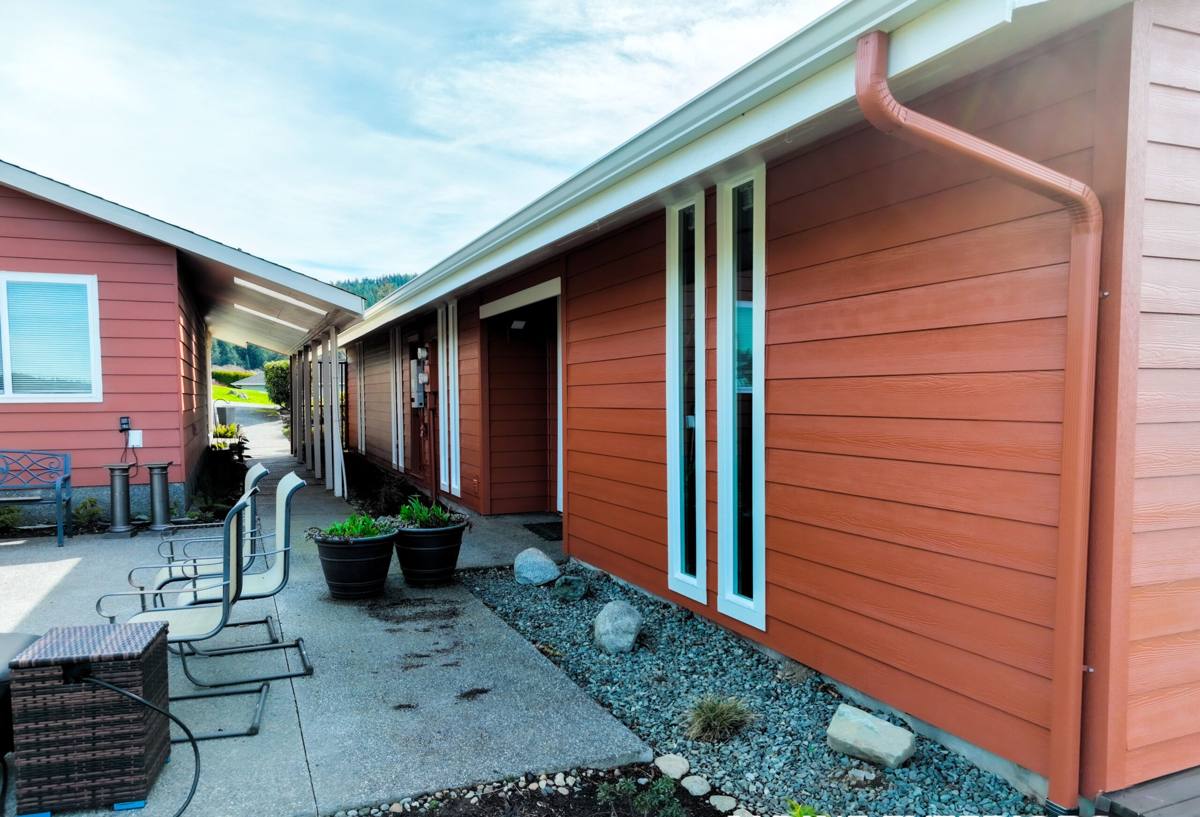
What This Climate Does to Siding
Salt Air
Homes closer to Bellingham Bay pick up airborne salt that settles on exterior surfaces. It doesn't rot wood by itself, but it accelerates paint and coating breakdown, corrodes exposed fasteners and metal trim faster than inland areas, and works its way into any crack or seam where moisture can follow. Siding that isn't rated for coastal exposure, or that's fastened with the wrong hardware, shows the effects years before it should.
Driving Rain
Whatcom County doesn't just get a lot of rain — it gets wind-driven rain that hits siding at an angle instead of running straight down. That matters because it pushes water into laps, seams, and butt joints that would stay dry in a calmer climate. A siding system's weather-resistive barrier, flashing details, and lap spacing all have to account for wind-driven moisture, not just gravity.
Moss and Sustained Dampness
Bellingham's moss season is long — shaded north and west walls, especially under overhangs or near mature trees (common in Happy Valley's older lots), can stay damp for months at a stretch. Moss and algae growth on siding isn't just cosmetic. Sustained dampness against a wall assembly is exactly the condition that causes rot in wood-based products and coating failure in lower-grade materials.
Signs a Happy Valley Home Needs Siding Replacement
- Soft, spongy, or crumbling spots when you press on the siding, especially near the bottom courses or under windows
- Paint that keeps failing within a couple of years no matter how well it was applied
- Visible gaps, warping, or cupping in lap siding boards
- Persistent moss or algae staining that returns quickly after cleaning
- Bubbling, delamination, or swelling at seams and butt joints
- Rising heating bills or drafts that suggest the wall assembly behind the siding has been compromised
- Visible rust streaking from old or undersized fasteners
Any one of these can be a minor fix. Several at once, especially on a wall that gets the brunt of the weather, usually means the siding system as a whole — not just the visible boards — has reached the end of its service life.
What a Correct Siding Replacement Job Involves
Replacing siding is not a cosmetic swap. Done right, it's a full rebuild of the exterior wall's weather barrier, and skipping steps is exactly how a brand-new siding job ends up with rot problems five years later. Our process on every tear-off includes:
1. Full Removal and Inspection
Old siding comes off completely so we can see the sheathing underneath. This is the point where hidden rot, past water damage, or failed flashing gets found and dealt with — not covered over.
2. Sheathing Repair
Any damaged or compromised sheathing gets replaced before anything new goes up. Installing new siding over bad sheathing just hides the problem and shortens the life of the new material.
3. Weather-Resistive Barrier
A new, correctly lapped and taped weather barrier goes on the wall. In a driving-rain climate like this one, how this layer is installed — lap direction, seam taping, window and door integration — matters as much as the siding itself.
4. Flashing at Every Penetration
Windows, doors, hose bibs, vents, and any other wall penetration get proper flashing so water is directed out and away, not into the wall cavity. This is one of the most common places we find shortcuts on older installs.
5. Correct Fastening and Lap Spacing
Fastener type, spacing, and depth all follow the manufacturer's specification for the climate zone — not a generic install. Coastal exposure calls for corrosion-resistant fasteners; getting this wrong is how you end up with rust streaking in a few years.
6. Trim, Caulking, and Finish Details
The finish work — trim, corners, caulking at transitions — is what determines whether the house actually sheds water the way the system is designed to, or whether it just looks finished.
Why We Install James Hardie — and Only James Hardie
We standardized on James Hardie fiber cement siding for every job we do, including here in Happy Valley, and we don't install vinyl, LP SmartSide, or cedar. That's a deliberate call based on what this climate does to a house over time, not a sales preference.
Fiber cement doesn't absorb water and swell the way wood-based or engineered-wood products can, which matters directly in a market with a long moss and rain season. It's non-combustible, holds paint and factory finish far longer than wood substrates, and doesn't have the seam and joint vulnerabilities that make vinyl a weak point in wind-driven rain. James Hardie's HZ5 product line is specifically engineered for wetter, harsher climates like the Pacific Northwest, and the factory-applied ColorPlus finish is baked on under controlled conditions rather than field-painted, which means far more consistent, long-term protection against the exact salt-air and moisture cycling this neighborhood sees.
We're not going to tell you cedar or engineered wood products are bad materials — they have real strengths. But we've made a professional decision that for the maintenance burden, moisture behavior, and long-term performance we want to stand behind on every home we touch, fiber cement is what goes up. That's the whole reason we only install one product line.
Comparing Siding Options for This Climate
| Factor | James Hardie Fiber Cement | Vinyl | Wood / Engineered Wood |
|---|---|---|---|
| Moisture resistance | Does not absorb water; resists swelling | Won't rot, but seams and laps can let water behind panels | Vulnerable to swelling and rot if moisture gets in |
| Coastal / salt air durability | Engineered for harsh climates (HZ5) | Can become brittle and discolor over time | Requires regular refinishing to hold up |
| Fire resistance | Non-combustible | Combustible, can melt/deform | Combustible |
| Finish longevity | Factory ColorPlus finish, long repaint interval | Color molded in, can fade and chalk | Field-applied paint/stain, needs recoating every few years |
| Maintenance | Low — occasional wash | Low, but repairs can be visible | Higher — repainting, moss treatment, spot repairs |
Our Process for Happy Valley Homeowners
- On-site assessment — we walk the exterior, check for rot and moisture issues wall by wall, and talk through what we find
- Written scope and estimate — clear on what's included: tear-off, sheathing repair if needed, house wrap, flashing, siding, trim, cleanup
- Scheduling around Bellingham weather — we plan tear-off and dry-in around forecast windows so open walls aren't exposed to rain longer than necessary
- Tear-off and inspection — old siding removed, sheathing checked and repaired
- Weather barrier and flashing — installed to spec before any siding goes up
- James Hardie installation — fastened, spaced, and finished per manufacturer requirements for this climate zone
- Final walkthrough and cleanup — site cleared, work reviewed with the homeowner before we call it done
Why a Crew That Already Works in Happy Valley Matters
Happy Valley's older housing stock, hillside lots, and tighter in-town setbacks aren't the same as working on a newer subdivision home. A crew that already knows the neighborhood's typical construction — the wall assemblies common to homes of that era, the drainage and grading quirks of hillside lots, how much shade and moss exposure a given block tends to get — spots problems faster during the initial assessment and doesn't have to relearn the basics on your dime. We pull permits through the City of Bellingham and work within Whatcom County's climate and building requirements as a matter of course, not as an afterthought.
There's also a practical logistics side: staging materials, parking crew vehicles, and managing tear-off debris on tighter in-town lots takes more planning than it does on a wide-open suburban lot, and that's easier to get right the second, tenth, or fiftieth time than the first.
What to Expect and Ask Before You Hire
- Ask whether the contractor removes and inspects sheathing, or just re-sides over what's there
- Confirm what weather-resistive barrier and flashing details are included, not just the visible siding brand
- Ask about fastener type and spacing for coastal/high-moisture exposure
- Get the manufacturer, product line, and warranty terms in writing
- Confirm licensing, insurance, and whether the crew is factory-trained on the product they're installing
- Ask how they plan around weather during tear-off so open walls aren't exposed longer than needed
If your Happy Valley home is showing signs of siding failure, or you just want an honest read on where it stands, we're glad to come take a look. The estimate is free, there's no pressure, and you'll get a straight answer about what your siding actually needs — use the form below to get started.