 Bellingham
 Metal Roofing Built for Puget's Weather, Not Just Sold to Puget Homeowners
Puget sits close enough to the water that homes here take a different kind of beating than roofs ten miles inland. Salt-laden air off the bay, wind-driven rain that gets pushed sideways under poorly lapped shingles, and a moss season that can stretch from October into May all add up. A roof that would hold up fine in a drier part of Whatcom County can start failing early here if it wasn't specified and installed with this specific exposure in mind. Metal roofing, done correctly, handles all three of those stresses better than most alternatives — but "done correctly" is doing a lot of work in that sentence, and it's the part homeowners rarely get a straight answer about before they sign a contract.
This page is about metal roofing specifically for the Puget area: what the local conditions actually demand from a metal roof system, what separates a correct installation from a rushed one, and how we approach the work when we're on a roof in your neighborhood.
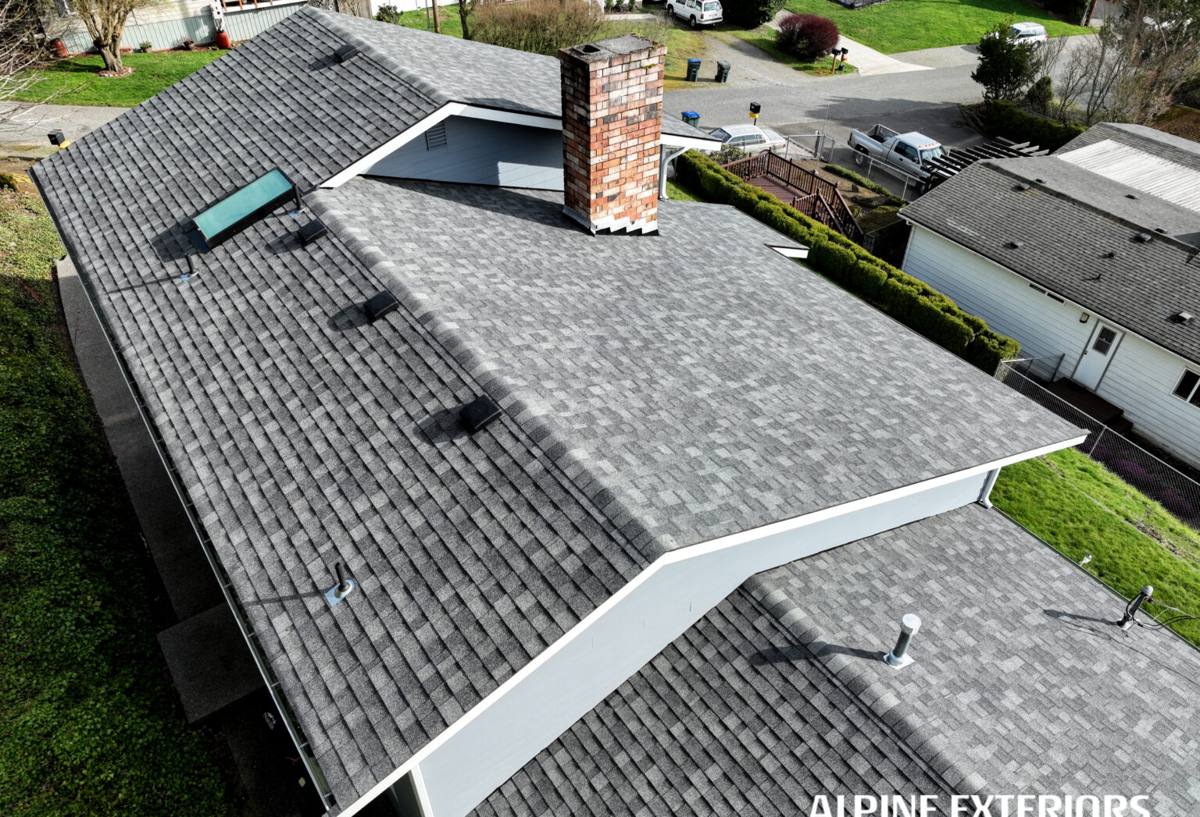
What Puget's Climate Actually Does to a Roof
Salt Air and Corrosion
Proximity to saltwater means airborne salt settles on every exterior surface, including your roof, year-round. Bare or poorly coated steel fasteners and cut edges are where this shows up first — small rust spots that start at exposed metal and spread if they're not sealed properly at install. This isn't a reason to avoid metal roofing; it's a reason to be specific about coatings, fastener grade, and how cut edges get treated, which we cover below.
Driving Rain
Bellingham's rain doesn't always fall straight down. Wind off the water pushes it sideways and up under laps, flashing edges, and around penetrations like vents and chimneys. A roof system that relies on gravity alone to shed water — thin underlayment, minimal overlap, skipped flashing details — will eventually let water in during a real storm, even if it looks fine on a calm day when it was installed.
Moss and Organic Growth
Shade, moisture, and mild temperatures make Whatcom County prime moss territory, and Puget's tree cover is no exception. Moss holds moisture against a roofing surface far longer than open sun and wind would allow it to dry. On asphalt shingles, that trapped moisture works into the granule layer and shortens the roof's life. Metal sheds moss far more effectively because there's no granule surface for spores to grab onto and less to hold moisture against — but moss can still gather in valleys, around fasteners, and against anything that traps debris, so panel profile and detailing still matter.
Why Metal Makes Sense Here — and Where It Doesn't Automatically Solve Everything
Metal roofing's real advantages for a Puget home are straightforward: it sheds water fast off a smooth or ribbed surface, it doesn't absorb moisture into a mat the way asphalt does, and it resists moss far better than a granulated surface. It also tends to outlast asphalt by decades when installed and maintained correctly.
What it doesn't automatically fix is a poorly ventilated attic, bad flashing at a chimney, or gutters that back up and hold water against a fascia. Metal roofing is a system, and its performance in this climate depends on every part of that system — underlayment, fastening, flashing, and ventilation — being handled correctly, not just the panels themselves.
Metal Roofing Systems We Install
Not every metal roofing product is a good fit for coastal exposure, and we're upfront about the trade-offs rather than pushing whatever's easiest to install.
| System | How It's Fastened | Best Fit | Trade-Off |
|---|---|---|---|
| Standing Seam | Concealed clips, no exposed fasteners on the field | Coastal exposure, long-term low maintenance | Higher upfront cost, more installation skill required |
| Exposed Fastener Panel | Screws driven through the panel face | Outbuildings, budget-conscious projects, lower-exposure roofs | Fasteners and washers age faster in salt air and need periodic inspection |
| Stone-Coated Steel | Concealed or semi-concealed, interlocking panels | Homes wanting a traditional shingle or shake look with metal's durability | Textured surface can hold organic debris more than a smooth standing seam |
For homes closest to the water or with heavy tree cover, we lean toward standing seam because it has no exposed fastener heads for salt air to work on over time. For detached garages, shops, or homes further from direct salt exposure, exposed fastener panel systems are a legitimate, more affordable option — as long as the fastener spec and washer quality are right, and as long as the homeowner understands the maintenance difference going in.
Coatings and Fastener Grade Matter More Here Than Inland
In a coastal-influenced area, we specify panel coatings and fastener hardware rated for higher corrosion resistance than we'd use on a project further from the water. Cut edges get treated rather than left bare, and fastener washers are checked for the right compound so they don't harden and crack under UV and salt exposure years down the road. These are small line items that make a real difference in how the roof looks and performs at year fifteen versus year five.
What a Correct Metal Roof Installation Involves
The panels get the attention because they're what you see, but most of what determines whether a metal roof performs in Puget's weather happens underneath them.
- Underlayment: A synthetic or high-temp ice-and-water-type underlayment suited to metal, not a leftover roll meant for asphalt — it needs to handle both moisture and the heat metal panels can carry.
- Fastening pattern: Correct spacing and torque so panels are secure in wind without over-driving screws, which crushes washers and creates leak points.
- Flashing at penetrations: Chimneys, vents, and skylights are where driving rain finds its way in — flashing has to be formed and lapped to shed water moving sideways, not just straight down.
- Valley and edge detail: Valleys concentrate water flow and debris; edges are where wind uplift starts. Both need deliberate detailing, not a standard trim piece applied without thought.
- Ventilation: Metal roofs perform best over a properly ventilated attic — trapped heat and moisture underneath the deck can cause condensation issues that have nothing to do with the panels themselves.
How We Work in Puget
Assessment First
We start by looking at your existing roof deck, ventilation, and any moss or moisture staining, not just measuring for panels. If your decking has soft spots from long-term moisture, that gets addressed before anything goes on top of it — covering a problem with new metal doesn't fix the problem.
Detailing for Your Specific Exposure
How close your home sits to open water, how much tree cover shades your roof, and which direction your prevailing weather comes from all affect our flashing and fastener choices. A roof on a shaded, tree-heavy lot gets extra attention to valley and gutter interaction for moss and debris; a more exposed roof gets extra attention to fastener grade and edge security for wind and salt.
Cleanup and Walkthrough
We clear job-site debris, including stray fasteners and cut-offs, and walk the finished roof with you so you know what was done and why — particularly around any flashing or ventilation changes, since those are the details that matter most later and are hardest to inspect yourself from the ground.
What Drives the Cost of a Metal Roof in Puget
| Factor | Why It Matters Here |
|---|---|
| Panel system chosen | Standing seam costs more than exposed fastener but needs less long-term maintenance in salt air |
| Roof complexity | More valleys, penetrations, and roof planes mean more flashing labor, which is where leaks are prevented or created |
| Deck condition | Moisture-damaged decking from a prior moss or leak issue may need repair before install |
| Ventilation upgrades | Older Puget homes sometimes need ventilation improvements to get full performance from a new metal roof |
| Access | Steep pitches, tree cover, or tight lot access can affect labor and equipment needs |
We give real, project-specific numbers after we've actually looked at your roof — broad national averages you'll find online rarely account for coastal detailing, deck repair, or the access realities of a specific property.
Maintaining a Metal Roof in a Moss and Salt Environment
Metal needs far less maintenance than asphalt, but "far less" isn't "none," especially this close to the water and under tree cover.
- Clear needles, leaves, and debris from valleys and around penetrations at least once or twice a year, more often under heavy tree cover
- Keep gutters clear so water isn't backing up against roof edges or fascia
- Do a visual check after major windstorms for lifted panels or dislodged flashing
- Watch for any rust starting at cut edges or fastener heads and address it early rather than letting it spread
- Avoid pressure washing the roof surface directly — it can drive water under laps and damage coatings; a soft rinse or brush is safer for moss buildup
Why a Crew That Already Works Puget Is Worth Choosing
A roofing crew that mainly works drier, inland areas of Whatcom County isn't necessarily going to over-spec fastener hardware or think twice about cut-edge treatment, because it hasn't been a problem for them elsewhere. Working Puget roofs regularly means we've seen where salt air and driving rain actually cause trouble — which fastener washers hold up, which flashing laps leak in a real sideways storm, which valleys collect moss under specific tree cover — and we build that into the spec by default rather than as an upsell.
If you're weighing metal roofing for a Puget-area home, we're happy to take a look at your existing roof, talk through which system actually fits your exposure and budget, and give you a straightforward, no-pressure estimate — no obligation, just honest numbers based on your roof, not a generic estimate.