 Bellingham
 Windows in Puget Face a Different Kind of Wear
Homes in the Puget area, just outside Bellingham, sit close enough to the water that salt air is part of daily weather rather than an occasional event. Salt-laden moisture works into every gap around a window frame, corrodes hardware, breaks down seals, and pits metal cladding faster than it does in the drier inland pockets of Whatcom County. Add Bellingham's long stretch of driving rain each fall and winter, plus a moss season that can run from October well into spring, and windows that aren't built or installed with this environment in mind tend to show trouble years before the same product would fail somewhere drier and calmer.
What driving rain does to a window opening
Wind off the water doesn't just fall straight down — it pushes rain sideways into window heads, jambs, and sills at an angle. A window opening that relies on caulk alone to keep water out will eventually let some in, and once water gets behind the trim it has nowhere to go if the opening wasn't built to drain. That's the difference between a window that just looks sealed and one that's actually detailed to shed water on a wall that takes weather from the side, not just from above.
Moss, salt film, and slow rot
Moss favors the shaded, north-facing sides of a house and holds moisture against wood trim and frame edges long after the rain stops. Salt residue does something similar — it's hygroscopic, meaning it actually pulls moisture out of the air and holds it against whatever surface it's sitting on. On a window, that combination means trim and sill areas need to dry out fast between storms, not stay damp. When they don't, soft wood and slow rot follow, usually starting at the corners and under the sill where nobody looks until there's a problem.
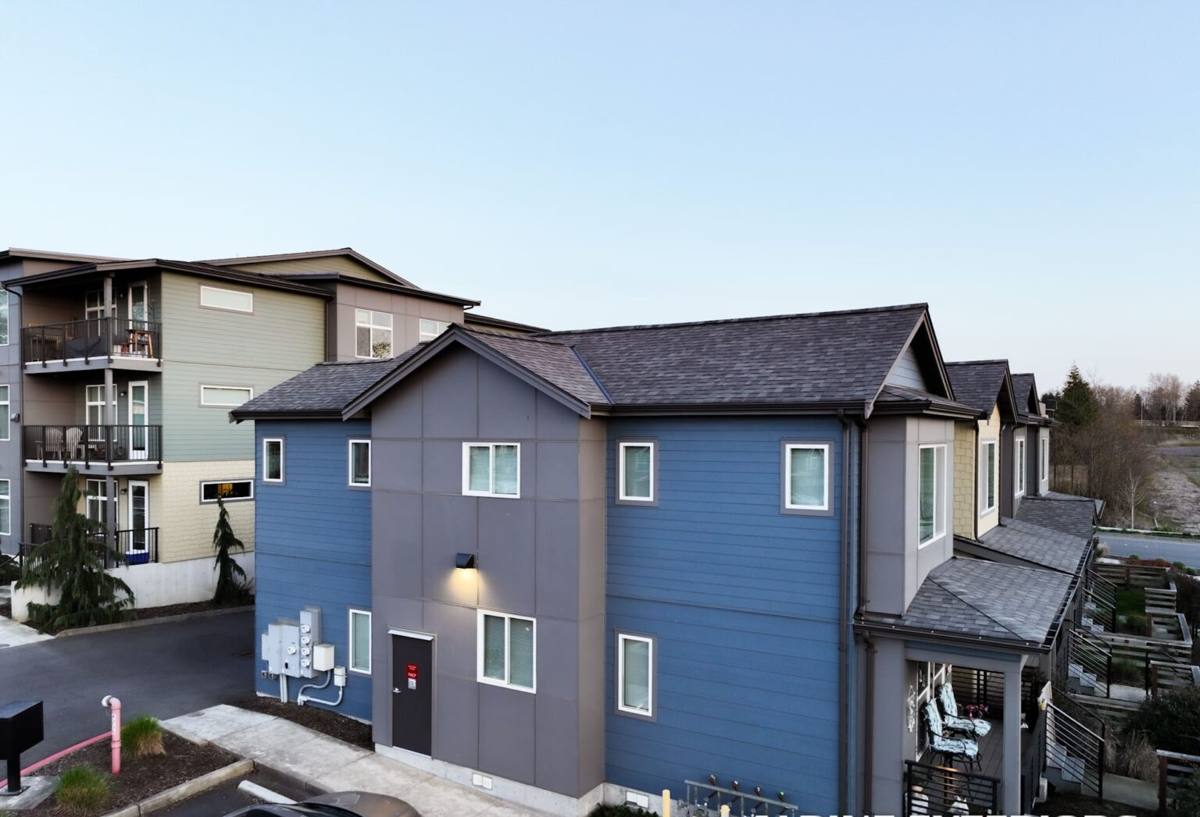
What "Custom" Should Actually Mean on a Puget Job
Custom isn't a marketing word here — it's a practical one. A lot of homes in this part of Whatcom County are older, and rough openings have shifted slightly over decades of settling and seasonal moisture cycles. A true custom window is measured to the actual opening as it exists today, not ordered off a standard size chart and shimmed to fit. That matters because gaps packed with extra shims and caulk are exactly the kind of detail that fails first in driving rain.
Custom also means matching the window to which side of the house it's going on. A window facing the prevailing wind and rain off the water needs a different glass and drainage approach than one on a sheltered, sun-exposed wall. Grille pattern, frame color, and interior trim profile are part of the conversation too, but on a Puget job those choices come after the performance details are settled, not before.
Materials and Glass That Hold Up Here
There's no single "best" window material — each comes with real trade-offs in maintenance, moisture behavior, and cost. Here's how the common options compare for a home dealing with salt air and heavy seasonal rain:
| Material | Moisture & salt air behavior | Maintenance | Relative cost |
|---|---|---|---|
| Vinyl | Won't rot or corrode; seams and hardware are the weak point over time | Low — occasional cleaning | Lower |
| Fiberglass | Dimensionally stable, resists salt corrosion well, holds paint | Low to moderate | Mid to higher |
| Wood-clad | Good insulator, but any breach in the cladding exposes wood to rot risk | Higher — cladding seams and interior wood need periodic checks | Higher |
| Aluminum | Prone to corrosion pitting in salt air unless properly finished | Moderate | Lower to mid |
On glass, a dual-pane unit with a low-E coating and argon fill is standard for this climate — it cuts condensation on the interior during cold, wet stretches and holds up to the temperature swings between a damp night and a sunny afternoon. For walls that take the brunt of wind-driven rain, we'll also talk through frame drainage design and weatherstripping quality, since those details matter as much as the glass package itself.
The Installation Details That Actually Prevent Rot and Leaks
Most window failures we see in this area aren't a bad window — they're a window installed without the flashing details a wet, wind-driven climate requires. A correct install includes a sloped sill pan so any water that gets past the outer seal drains back outside instead of sitting on bare sheathing. Flashing tape at the jambs and head needs to integrate with the home's existing weather-resistant barrier in the right shingle-lap order — house wrap over the top flange, never under it — so water is always directed down and out, never trapped behind the trim.
Backer rod and sealant at the exterior trim joint, proper shimming for square and plumb without over-compressing the frame, and insulation (not just caulk) in the gap between the frame and rough opening all matter just as much as the window itself. When we open up an existing opening on a Puget home, we also check the sheathing and framing underneath — if there's already hidden moisture damage from a prior install, that gets addressed before a new window ever goes in, not covered back up.
Signs a Puget Home's Windows Are Already Failing
Because damage from salt air and driving rain tends to start hidden, it helps to know what to check for before a small issue becomes a rot repair:
- Fogging or a milky haze between the panes of a double-pane window — the seal has failed
- Soft or spongy wood at the sill, corners, or exterior trim
- Dark staining, streaking, or moss buildup concentrated at window corners
- Noticeable drafts or a whistling sound during windy, rainy weather
- Windows that stick, won't latch fully, or are hard to open and close
- Interior condensation on the glass or frame that wasn't there a few years ago
- Visible daylight or gaps between the sash and frame when the window is closed
Any one of these on its own isn't necessarily an emergency, but on a home in this climate they tend to compound quickly once moisture finds a way in.
Our Process, Start to Finish
- Walkthrough of the home to check each opening, note which walls take the worst weather exposure, and look for existing moisture or rot signs
- Precise measurement of the actual rough openings — not assumed standard sizes
- A plan for how new flashing and drainage details will tie into the existing siding and weather barrier at each opening
- Ordering the windows to spec, with material and glass matched to each wall's exposure
- Removal of the old windows with an inspection of the sheathing and framing before anything new goes in
- Installation with sill pan flashing, properly lapped house wrap integration, correct shimming, and insulated gaps
- Exterior trim, sealant, and touch-up work, followed by a full cleanup
- A final walkthrough with the homeowner to check operation and answer questions
What Drives the Cost
We don't post fixed prices because every home and opening is different, but these are the factors that actually move the number on a Puget-area job:
| Factor | How it affects cost |
|---|---|
| Number and size of openings | More or larger windows means more material and labor |
| Material choice | Vinyl is typically the most affordable; fiberglass and wood-clad cost more upfront |
| Glass package | Low-E coatings and upgraded gas fills add cost but pay back in comfort and lower condensation |
| Hidden rot or framing repair | If sheathing or framing is damaged behind an old window, that repair is additional but necessary work |
| Trim and siding integration | Matching new trim to existing siding, especially on a house with custom or older siding profiles, can add labor |
| Access and second-story work | Harder-to-reach openings take more time and equipment |
The honest answer is that a walkthrough is the only way to give a real number — anything quoted sight unseen is a guess.
Why a Crew That Already Works Puget Matters
A crew that's worked windows in this specific pocket of Whatcom County has already seen how the wind-driven rain off the water hits different exposures on homes in the area, what typical framing and siding conditions look like on older builds here, and how fast moss and salt residue can undo a mediocre install. That's not something you can fully substitute with a general contractor bio or a manufacturer's spec sheet — it's knowledge built from doing this work, on these homes, in this weather, more than once. It also means faster response if a seal ever needs a look after the fact, instead of waiting on a crew that has to drive in from somewhere with a very different climate profile.
Caring for New Windows After the Install
A correctly installed custom window in Puget still benefits from a little seasonal attention. Rinse salt residue off frames and glass occasionally, especially after a stretch of windy weather off the water. Keep gutters and downspouts clear so runoff isn't sheeting down over window heads. Clean moss off nearby trim and siding promptly rather than letting it sit against the wood. And each fall, before the heavy rain sets in, take a quick look at the exterior caulk lines around each window — catching a hairline gap early is a five-minute fix compared to what it can turn into by spring.
If you're seeing any of the warning signs above, or you're just planning ahead before this year's rain and moss season, we're happy to come take a look. The estimate is free, there's no pressure, and you'll get a straight answer about what your windows actually need.