 Bellingham
 Board & Batten in Sehome: A Look That Has to Earn Its Keep
Board and batten has become one of the most requested siding styles in Sehome, and it's easy to see why. The vertical lines read clean and modern against the neighborhood's mix of older bungalows and newer infill homes, and it pairs well with the hillside lots and mature tree canopy that give this part of Bellingham its character. But board and batten is also one of the least forgiving siding styles to get wrong. Every seam, every batten, every fastener location is a chance for water to find its way behind the wall — and in a climate like ours, water always finds the mistakes eventually.
This page is about doing board and batten correctly for a home in Sehome specifically: what the local climate asks of the material, what a proper install looks like underneath the good looks, and why we only do this work in one product line.
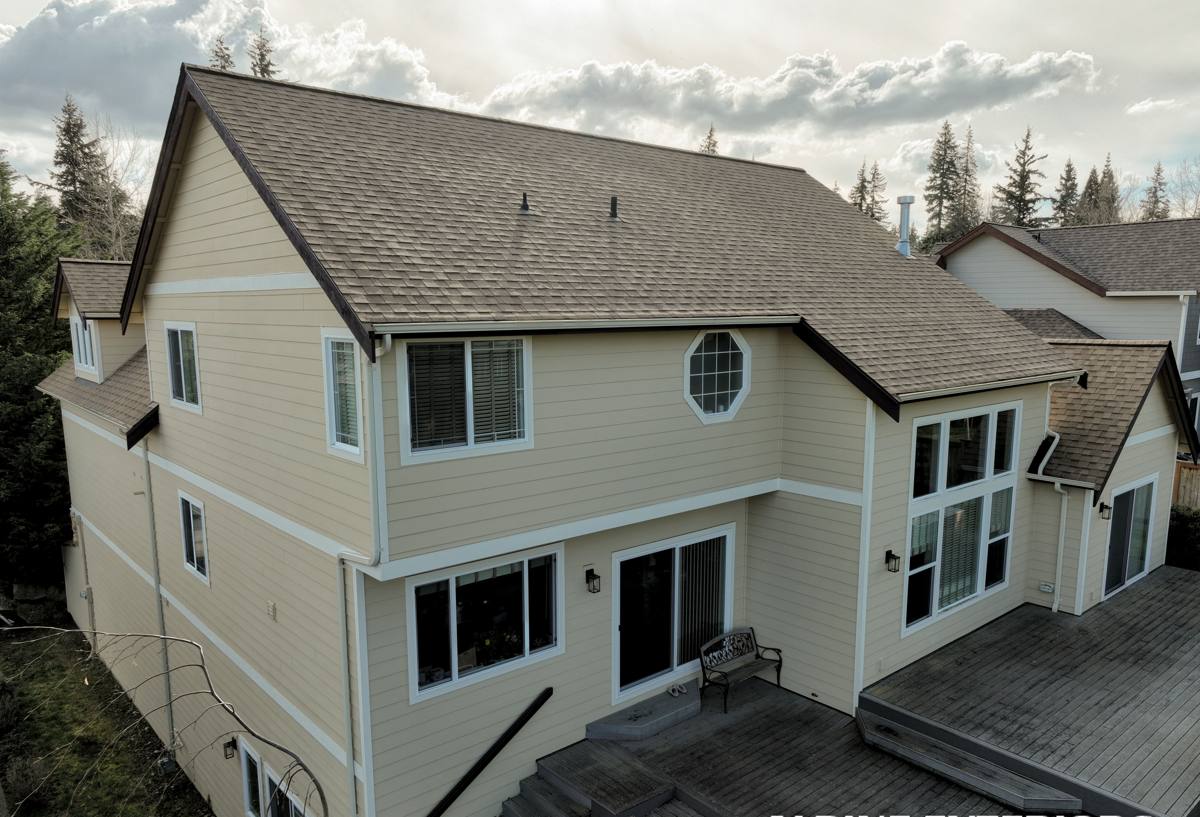
What Bellingham's Climate Does to Vertical Siding
Whatcom County sits in a marine climate that's genuinely tough on exterior materials, even though it rarely gets the extreme heat or cold that stresses siding elsewhere in the country. The stress here is steady and cumulative.
Salt Air
Proximity to Bellingham Bay means airborne salt is a constant, low-grade presence on siding, trim, and fasteners across the city, Sehome included. Salt-laden moisture accelerates corrosion on anything metal — nail heads, flashing, fastener shanks — long before most homeowners notice a problem on the siding face itself. A siding system is only as good as the metal holding it up, so fastener choice matters more here than it does in a dry inland climate.
Driving Rain
Rain in this region doesn't just fall — wind pushes it sideways into wall assemblies, especially on exposed elevations and hillside lots where wind can accelerate around the terrain. Vertical board and batten has more seams per square foot than horizontal lap siding, and every one of those seams is a potential entry point if it isn't detailed and sealed correctly.
A Long Moss Season
Bellingham's moss season runs long — realistically most of the year in shaded, tree-covered lots like many in Sehome. Moss and algae need sustained moisture and shade to establish, and once they take hold on a siding surface, they hold moisture against it, which speeds up whatever failure is already starting underneath. Board and batten's vertical grooves and batten shadow lines can trap organic debris if the design doesn't allow water to shed cleanly.
Why We Only Install Board & Batten in James Hardie Fiber Cement
Board and batten can be built in a few different materials, and we get asked about all of them. We've made a deliberate choice to install this style exclusively in James Hardie fiber cement, because the other common options each carry a trade-off that shows up specifically in a climate like ours.
| Material | Moisture & Rot Behavior | Moss/Algae Resistance | Salt Air Durability | Long-Term Maintenance |
|---|---|---|---|---|
| James Hardie Fiber Cement | Does not absorb water like wood; engineered for wet climates | Factory finish resists organic growth better than bare wood | Non-combustible cement composition doesn't corrode; fasteners are the only metal exposure | Periodic wash-down; factory finish holds color for years |
| Wood (cedar, primed spruce) | Absorbs and releases moisture; prone to swelling, cupping, rot at end grain and seams | Organic material is a food source for moss and mildew | No inherent corrosion issue, but fasteners and hardware still exposed | Regular repainting/staining and moisture inspection |
| Vinyl Vertical Panels | Doesn't rot, but seams and J-channels can trap water behind the panel | Smooth surface resists growth better than wood, but grime still builds in channels | Plastic doesn't corrode, but can become brittle and fade over time | Low, but panels can warp, crack, or fade and are difficult to color-match if replaced later |
Wood board and batten looks great on day one, but it asks a homeowner to stay on top of repainting and moisture checks indefinitely, and it's the material most likely to show real problems in a climate that stays damp as long as ours does. Vinyl solves the rot problem but introduces its own — it's a plastic product being asked to perform in UV, wind, and temperature swings, and its seams are a known weak point for water intrusion behind the panel. We simply don't think either is the right long-term answer for a Sehome home, so we don't install them.
James Hardie fiber cement is cement, sand, and cellulose fiber — it doesn't feed moss, it doesn't absorb water the way wood does, and it isn't vulnerable to the brittleness and fading that eventually catches up with vinyl. James Hardie also engineers its formulations by climate zone under its HardieZone system, so the boards specified for a Pacific Northwest marine climate are built for exactly the conditions Sehome sees. It comes prefinished with ColorPlus Technology — a factory-baked finish that resists fading and chipping better than field-applied paint — and it's backed by a long, transferable product warranty. That combination is why it's the only material we put on a home.
What a Correct Board & Batten Installation Actually Involves
The finished look of board and batten hides most of the work that determines whether it lasts. A correct install has several layers most homeowners never see:
- Weather-resistive barrier installed over the sheathing, lapped correctly at every seam so water sheds down and out, not in.
- Drainage gap behind the siding so any moisture that does get past the outer layer can drain and dry instead of sitting against the wall — important in a climate with as much sustained rainfall as ours.
- Correct fastener type — corrosion-resistant, manufacturer-approved fasteners driven into structural framing, not just the panel or sheathing, and sized correctly given how many face-nailed battens a vertical pattern requires.
- Flashing at every horizontal interruption — window and door heads, roof-to-wall transitions, and any point where trim breaks the wall plane.
- Batten layout and spacing planned before the first panel goes up, not adjusted on the fly, so reveals stay even and every batten lands on framing.
- Manufacturer-specified caulking and sealant at joints and terminations, applied to product spec rather than "however much looks right."
- Bottom clearance from grade, decks, and roofing so the lowest boards aren't sitting in standing water or splash-back.
Skip any one of these steps and the siding can still look correct for a year or two. In this climate, the problems that come from a rushed or poorly detailed install tend to show up as moisture damage, moss buildup at trapped seams, or rust streaking from the wrong fasteners — usually well after the crew that installed it is gone.
Our Process for a Sehome Board & Batten Project
We run the same disciplined process on every board and batten project, adjusted for the specifics of the home:
- On-site assessment. We look at the existing wall assembly, sheathing condition, sun/shade exposure, and any moss or moisture staining already present — Sehome's tree cover means this step matters more here than on an open lot.
- Tear-off and sheathing check. We remove the old siding and inspect what's underneath before covering anything up. Hidden rot or moisture damage gets addressed before new siding ever goes on.
- Weather barrier and drainage plane. Installed to manufacturer spec, with attention to how water will actually move down this specific wall.
- Layout. Batten spacing and reveals are planned and measured for the whole elevation before installation starts, so the pattern reads correctly and every batten lands on framing.
- Installation and flashing. Panels and battens go on with the correct fasteners, with flashing integrated at every window, door, and roofline.
- Finish and detail. Caulking, trim, and touch-up to manufacturer spec, with a final walkthrough so you understand what was done and why.
Cost Factors for Board & Batten Siding in Sehome
Board and batten typically costs somewhat more than standard horizontal lap siding to install, mainly because of the extra material (battens) and the additional labor for layout and fastening. The real range for any given home depends on several factors:
| Factor | Why It Affects Cost |
|---|---|
| Home size and number of stories | More square footage and taller walls mean more material, more battens, and more scaffolding/lift time |
| Tear-off scope | Removing existing siding down to sheathing takes longer than installing over a prepared surface, and can reveal repair work |
| Sheathing or framing repairs | Rot or moisture damage found during tear-off has to be fixed before new siding goes on — this is common on older Sehome homes |
| Batten spacing and trim detail | Tighter batten spacing and custom corner/trim details add material and labor time |
| Access and site conditions | Hillside lots, mature trees close to the house, and tight side yards common in this neighborhood can slow staging and installation |
| Prefinished vs. field-painted | ColorPlus factory-finished panels cost more up front but remove the ongoing cost and risk of field painting |
Living With Board & Batten After Installation
Fiber cement board and batten is genuinely low-maintenance compared to wood, but "low-maintenance" in a climate like this still means paying attention a couple of times a year:
- Rinse the siding down periodically, especially on shaded or tree-covered elevations where moss and algae are most likely to establish.
- Walk the exterior after major wind or rain events and look for any caulking that's pulled away from a joint or trim piece.
- Keep gutters clear and downspouts directed away from the wall — a surprising amount of siding damage starts with water that had nowhere else to go.
- Trim back vegetation that's grown in against the siding, since constant leaf contact holds moisture and shade against the wall.
- Address any impact damage (branches, equipment) promptly rather than letting a small gap become an entry point for water.
Why Hiring a Crew That Already Works in Sehome Matters
Board and batten installed to a generic national spec sheet, by a crew that's never dealt with Bellingham's moss season or salt air, is how homes end up with siding that looks fine for a couple of years and then starts showing problems. A crew that regularly works this neighborhood already knows which elevations take the worst wind-driven rain, how much shade a given lot's tree cover creates, and where moisture tends to collect on the hillside terrain common in this part of the city. That local pattern recognition shows up in small decisions — flashing details, drainage planning, fastener choice — that a spec sheet alone won't catch.
It also matters for accountability. A local crew with a track record in Whatcom County is easy to reach if a question comes up two, five, or ten years down the road, and stands behind a workmanship warranty that means something because the business isn't going anywhere.
If you're considering board and batten for a home in Sehome, we're happy to walk the property, talk through what your specific lot and exposure call for, and give you a straightforward, no-pressure estimate. Use the form below to get started.