 Bellingham
 Why Metal Roofing Makes Sense in Sehome
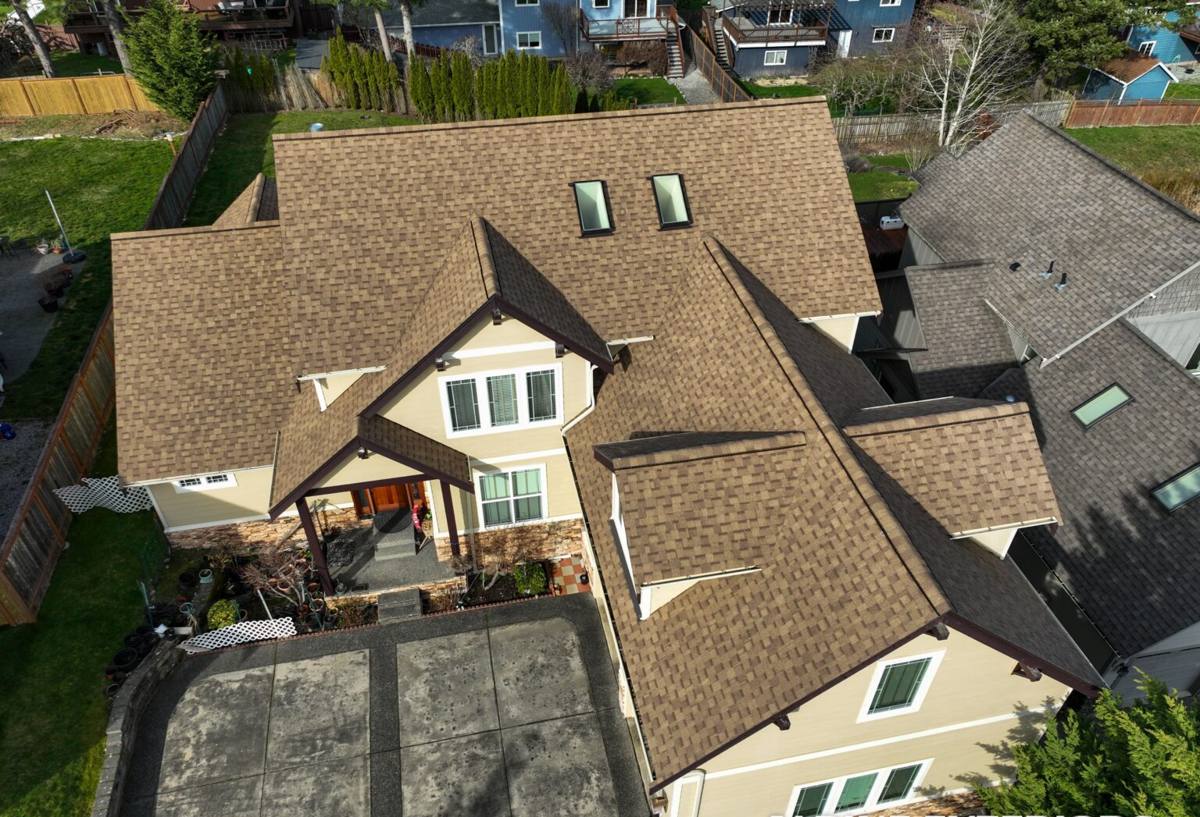
Sehome sits on hilly, tree-covered ground close to the center of Bellingham, and a lot of the housing stock here is older — homes that have already been through several roof cycles. When we get called out to look at a failing shingle roof in this neighborhood, the wear pattern is almost always the same: moss holding moisture against the surface, valleys and north-facing slopes that never fully dry out, and granule loss from years of wind-driven rain. Metal roofing doesn't solve every one of those problems automatically, but a correctly specified and installed metal roof handles this particular mix of conditions better than most alternatives, which is why we're installing more of them in this part of town every year.
This page is specifically about metal roofing for Sehome. It's not a general "why metal roofing is great" pitch — it's what we look at, specify, and build differently because of where the house sits and what Whatcom County weather does to a roof over time.
What Bellingham's Climate Actually Does to a Roof
Salt Air and Slow Corrosion
Bellingham Bay is close enough that salt-laden air reaches well inland, including hillside neighborhoods like Sehome that aren't right on the water. Salt exposure doesn't destroy a roof overnight — it works slowly, attacking cut edges, exposed fasteners, and any coating that's thinner or lower-grade than it should be. A metal roof that isn't specified for a coastal environment can start showing rust streaks and fastener corrosion years before it should, which is exactly the kind of premature failure a correct material choice avoids.
Driving Rain and Wind-Driven Moisture
Storms coming off the Sound don't always fall straight down. Wind pushes rain sideways under panel laps, into valleys, and behind flashing that isn't lapped correctly. A roof in this climate needs underlayment and seam details built for wind-driven rain, not just a system that sheds water on a calm day.
A Long Moss and Algae Season
Bellingham's mild, wet winters give moss and algae months to get established, and Sehome's hillside terrain and mature tree canopy keep a lot of roofs shaded and slow to dry. On asphalt shingles, that texture gives spores something to grip. On a smooth metal panel, moss and algae have a much harder time taking hold — but debris still collects in valleys and against obstructions, and those spots need to be detailed correctly or they'll hold moisture just like any other roof.
Why Metal Roofing Fits This Environment — When It's Done Right
The advantage of metal in a climate like this is real: a smooth, continuous panel surface sheds moss, algae, and rain better than a textured shingle surface, and a quality metal roofing system will outlast asphalt by decades. But that advantage only holds if the metal, coating, and fasteners are matched to a coastal environment. The wrong alloy or an uncoated fastener can corrode faster here than a well-installed asphalt roof would have worn out. Metal roofing isn't a shortcut around Bellingham's climate — it's a system that has to be specified correctly to take advantage of what it's actually good at.
Choosing the Right System for a Sehome Roof
Not every metal roofing product performs the same way in salt air and heavy rain. Here's how the main options compare for a home in this area:
| System | Coastal Durability | Maintenance | Best Fit |
|---|---|---|---|
| Standing seam (concealed fastener) | Excellent — no exposed fasteners for salt air or UV to attack | Low; panels expand and contract freely | Most Sehome homes, especially steeper or more visible roof planes |
| Exposed-fastener panel (screw-down) | Good, but only as durable as the fastener gaskets, which wear over time | Moderate; gaskets and fasteners should be checked periodically | Outbuildings, secondary roofs, or budget-driven projects |
| Stone-coated steel | Good if the coating and cut edges are properly sealed | Low to moderate | Homeowners wanting a shingle or tile look with metal's underlying performance |
Beyond panel style, the base metal and finish matter just as much. Galvalume steel with a quality PVDF (Kynar-type) finish is a solid, cost-effective choice for most inland Sehome properties. Aluminum costs more but is naturally corrosion-resistant and worth considering for homes with more direct exposure to salt air or wind. We'll walk through the trade-offs for your specific property rather than defaulting to one product for every job.
What a Correct Metal Roof Installation Involves
Metal roofing fails early almost exclusively because of installation shortcuts, not because the material itself is weak. On every Sehome project, a correct install includes:
- Ice-and-water shield underlayment at eaves, valleys, and roof-to-wall transitions, not just field felt
- A high-temperature synthetic underlayment rated for the panel type being installed
- Fasteners and flashing metal matched to the panel material to prevent galvanic corrosion between dissimilar metals
- Properly lapped, soldered, or sealed flashing at every chimney, dormer, skylight, and wall intersection
- Room for thermal expansion and contraction built into the panel fastening method
- Adequate attic ventilation so moisture isn't trapped under the deck, especially in older Sehome homes with limited or outdated ventilation
- Gutters and downspouts sized for the volume metal roofing sheds during heavy rain, since it moves water faster than shingles
Skip any one of these and you can end up with a roof that looks right for a few years and then leaks at exactly the spots that were cut short.
Common Problems We Find on Older Sehome Roofs
When we're called out to inspect or repair an existing metal roof — or to replace an aging shingle roof — a few issues show up repeatedly in this neighborhood:
Mismatched metals. Steel flashing against aluminum panels, or the wrong fastener alloy, sets up galvanic corrosion that eats through metal from the inside of the joint outward, often invisibly until it's already leaking.
Worn exposed-fastener gaskets. Screw-down panels rely on rubber washers that harden and crack with age and UV exposure. Once that happens, every one of those hundreds of fasteners is a potential leak point.
Moss-clogged valleys on shingle roofs. This is the single most common reason Sehome homeowners start asking us about metal roofing in the first place — years of moss buildup in valleys and behind chimneys that keeps the deck wet long after the rain stops.
Undersized ventilation. Many older homes in this area were built before current attic ventilation standards, and trapped moisture shortens the life of any roofing material, metal included.
Our Process for a Sehome Metal Roofing Project
- On-site inspection and assessment — we check the existing deck, ventilation, flashing points, and moisture history before recommending anything.
- System and finish selection — matched to your home's style, roof pitch, and exposure, with straightforward trade-offs explained rather than a single default recommendation.
- Tear-off or overlay decision — most Sehome projects call for tear-off given deck age and moisture concerns, but we'll tell you honestly if overlay is a reasonable option.
- Installation — underlayment, flashing, panels, and ventilation installed to the standards above, with attention to every transition point.
- Final walkthrough — we go over the finished roof with you, including care and maintenance notes specific to the product installed.
- Warranty documentation — manufacturer and workmanship warranty paperwork provided in writing, not just promised verbally.
Cost Factors for a Sehome Metal Roofing Project
Metal roofing costs more upfront than asphalt shingles, but the range varies a lot depending on a handful of factors specific to your property:
| Factor | How It Affects Cost |
|---|---|
| Roof pitch and complexity | Steeper roofs and more valleys, dormers, or penetrations mean more labor and flashing detail |
| Tear-off vs. overlay | Removing an old roof and repairing deck damage adds cost but is often necessary given moisture history |
| Panel and coating choice | Standing seam and premium finishes cost more than exposed-fastener panels but need far less maintenance |
| Site access | Sehome's hillside lots and mature trees can limit staging space and add setup time |
| Additional work | Upgraded ventilation, new flashing systems, or gutter replacement add to the total but reduce future problems |
We'll break down exactly where your estimate comes from rather than handing over a single number with no explanation.
Why Hiring a Crew That Already Works in Sehome Matters
A metal roofing job is only as good as the details most homeowners never see — the flashing under a panel lap, the fastener choice, the ventilation path through an older attic. A crew that regularly works in Sehome has already seen how this neighborhood's older homes, hillside exposure, and tree cover interact with a roof over time, and specifies the job accordingly instead of installing the same generic system on every house. We're also familiar with Bellingham's permitting process and the practical realities of working on sloped, tree-lined lots, which keeps a project moving instead of stalling on avoidable surprises.
If you're weighing a metal roof for your Sehome home, we're glad to walk the roof with you, explain what we see, and put together a clear, no-pressure estimate — just fill out the form below to get started.