 Bellingham
 Why Sehome Siding Takes a Different Kind of Beating
Sehome sits close enough to Bellingham Bay to catch salt-laden air, and its mature tree canopy and hillside streets mean shade, moisture, and slow-drying siding are a way of life for a lot of the neighborhood's homes. That combination — salt air, driving rain off the Sound, and a moss season that can stretch from October well into spring — is hard on any exterior wall, but it's especially hard on siding that wasn't built for the Pacific Northwest to begin with. We repair siding in Sehome regularly enough to know which failure patterns show up here and which don't, and that local knowledge changes how we diagnose and fix a problem versus a crew seeing the neighborhood for the first time.
Whatcom County's climate is mild, but "mild" is deceptive. It rarely gets cold enough to freeze siding damage into obvious cracks the way it might inland, so problems here tend to hide. Moisture gets behind panels quietly, moss and algae creep across north-facing walls without anyone noticing until the paint starts bubbling, and salt air accelerates corrosion on fasteners and trim in ways homeowners in drier climates never have to think about. By the time damage is visible from the street, it's often been developing for a year or more.
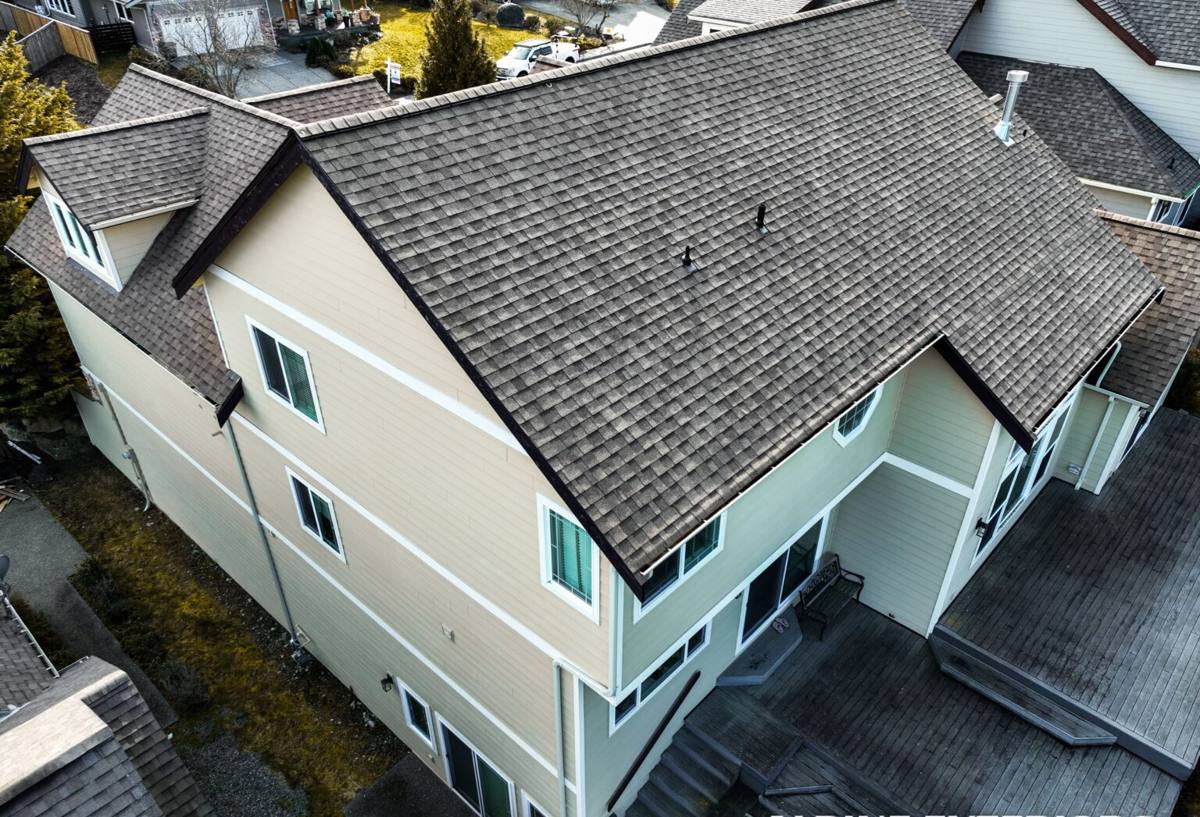
What Actually Causes Siding Damage in This Neighborhood
Moss and Organic Growth
Sehome's shaded lots and older tree cover keep siding damp longer after every rain. Moss and algae don't just look bad — they hold moisture against the siding surface, and on products that aren't dimensionally stable or properly sealed, that constant dampness is what starts rot, delamination, or paint failure underneath.
Driving Rain and Wind-Driven Moisture
Storms coming off the water don't fall straight down — they drive sideways into walls, working moisture into every seam, joint, and fastener penetration. Siding systems and flashing details that would be fine in a calmer climate can fail here simply because the water is coming in at an angle they weren't detailed for.
Salt Air and Corrosion
Proximity to the bay means airborne salt settles on exterior surfaces and accelerates the breakdown of unprotected fasteners, trim edges, and paint film. This shows up as premature rust streaking, paint that chalks or fades faster than it should, and edges that deteriorate before the field of the siding does.
Age and Prior Installation Shortcuts
A lot of Sehome's housing stock has been through multiple owners and, in some cases, multiple exterior repairs. When earlier work skipped proper flashing, used the wrong fasteners, or caulked over a problem instead of solving it, that shows up later as damage in a specific, repeatable spot — often around windows, at butt joints, or where a deck or porch roof meets the wall.
What a Correct Siding Repair Actually Involves
A repair that just replaces the visibly damaged board and moves on is a temporary fix. A correct repair addresses the reason the damage happened in the first place, or it will simply come back.
- Confirm the extent of the damage — pull back adjacent panels if needed to check for hidden rot or moisture behind the visible problem area.
- Identify the moisture source: a failed seal, missing or damaged flashing, a clogged gutter dumping water onto a wall, or grade/landscaping pushing moisture up from below.
- Check the sheathing and framing behind the siding for soft spots or rot before any new material goes on — covering up compromised sheathing guarantees a repeat repair.
- Repair or replace flashing at windows, doors, and any wall penetrations before new siding goes back up.
- Match the replacement material, profile, and reveal so the repair doesn't stand out from the rest of the wall.
- Prime and finish all cut edges — an unsealed edge is where the next round of moisture intrusion starts.
- Re-inspect fastener pattern and type, especially in a salt-air environment where the wrong fastener corrodes early.
Why We Only Repair and Replace With James Hardie Fiber Cement
We install and repair with James Hardie fiber cement siding exclusively — we don't install LP SmartSide, vinyl, Cemplank, Allura, primed spruce, or cedar, and we won't patch a failing wall with a product we wouldn't put on a house ourselves. That's a deliberate standard, not a sales pitch.
In a neighborhood like Sehome, where moss, driving rain, and salt air are constant, the material matters as much as the workmanship. James Hardie's HZ product lines are engineered specifically for climates like this one — they're non-combustible, dimensionally stable in wet-dry cycling, and the factory-applied ColorPlus finish holds up to UV and moisture exposure far better than field-applied paint on wood-based or engineered wood siding. When we're called out to repair a section of Hardie board, we're almost always dealing with an isolated impact or a flashing failure, not a systemic moisture or material breakdown problem. That's not a coincidence — it's the reason we standardized on it.
| Factor | What It Means for a Sehome Repair |
|---|---|
| Moisture resistance | Fiber cement doesn't swell, delaminate, or rot the way wood-based products can when kept damp by shade and moss |
| Salt air exposure | ColorPlus factory finish resists chalking and fading better than field-applied paint near the water |
| Repair matching | Consistent factory coloring makes new sections blend with existing Hardie siding more predictably than repainted patches |
| Fire resistance | Non-combustible material, relevant given regional wildfire smoke and ember exposure in dry summer stretches |
| Warranty | Transferable manufacturer warranty backs both the material and factory finish when installed to spec |
Our Repair Process, Start to Finish
- On-site assessment — we walk the exterior, identify every damaged or suspect area, and check for hidden moisture, not just the obvious spot.
- Root-cause diagnosis — we determine why the damage happened: flashing, grading, moss buildup, gutter overflow, or a prior installation shortcut.
- Written scope and estimate — a clear explanation of what needs to be repaired, what caused it, and what it will cost, before any work starts.
- Repair execution — remove damaged material, address the underlying cause, replace with matched Hardie product, and reseal and refinish cut edges.
- Final inspection — confirm the repair is watertight, properly fastened, and blends with the surrounding siding.
Signs a Sehome Homeowner Shouldn't Ignore
- Paint bubbling, peeling, or chalking unusually fast on one section of the house, especially north- or west-facing walls
- Soft or spongy areas when you press on the siding near the bottom of walls or below windows
- Visible moss or dark streaking that keeps returning after cleaning
- Gaps, warping, or boards that have pulled away from the wall slightly
- Rust streaks running down from fasteners or trim
- Musty smells or interior wall staining that could point to moisture coming in from outside
Why Hiring a Crew That Already Works This Neighborhood Matters
Repair work is diagnostic work as much as it's construction work. A crew that's already repaired siding on other Sehome homes knows which wall orientations catch the worst driving rain, which older flashing details tend to fail first, and how aggressively moss and algae build up on the shaded, tree-covered lots common to the neighborhood. That familiarity means a faster, more accurate diagnosis and a repair that's built for what your specific block actually deals with — not a generic fix pulled from a different climate.
It also means fewer surprises. Bellingham and Whatcom County permitting, typical lot drainage patterns, and the realities of working around mature landscaping are all things a local crew has already worked through many times over.
What to Expect Cost-Wise
Repair costs vary widely depending on how much material needs replacing, whether hidden rot or sheathing damage is involved, and how much of the underlying cause (flashing, drainage, moss remediation) needs to be addressed alongside the visible repair. A small, isolated panel repair with no hidden damage is a modest job. A repair that uncovers rotted sheathing behind several boards, or a flashing failure that's been letting water in for a season or more, is a larger scope. We won't quote a number without seeing the damage in person, but we'll always explain what's driving the cost before we start.
Get a Straight Answer on Your Siding
If you're seeing moss buildup, soft spots, peeling paint, or damage anywhere on your Sehome home's exterior, it's worth having someone look at it before it spreads. We offer free, no-pressure estimates — we'll tell you honestly whether it's a repair or something bigger, and what it would take to fix it right. Fill out the form below to get started.