 Bellingham
 Silver Beach's Climate Puts Real Demands on Siding
Silver Beach sits close enough to Bellingham Bay that homes here take on a steady diet of moisture the rest of the year doesn't hand out evenly. Salt-laden air off the water works its way into fastener heads and seams, driving rain comes in sideways during fall and winter storms, and the shaded, damp stretches of the neighborhood grow moss on anything that holds water for more than a day or two. None of that is unusual for Whatcom County, but it adds up differently on a house that sits closer to the shoreline than most.
Siding in this environment isn't just a weather barrier — it's the thing standing between that salt-and-rain cycle and your sheathing, framing, and insulation. A siding job that looks fine going up but wasn't detailed for this exposure tends to show its weaknesses in year three or four, not year one. That's the gap we're installing to close.
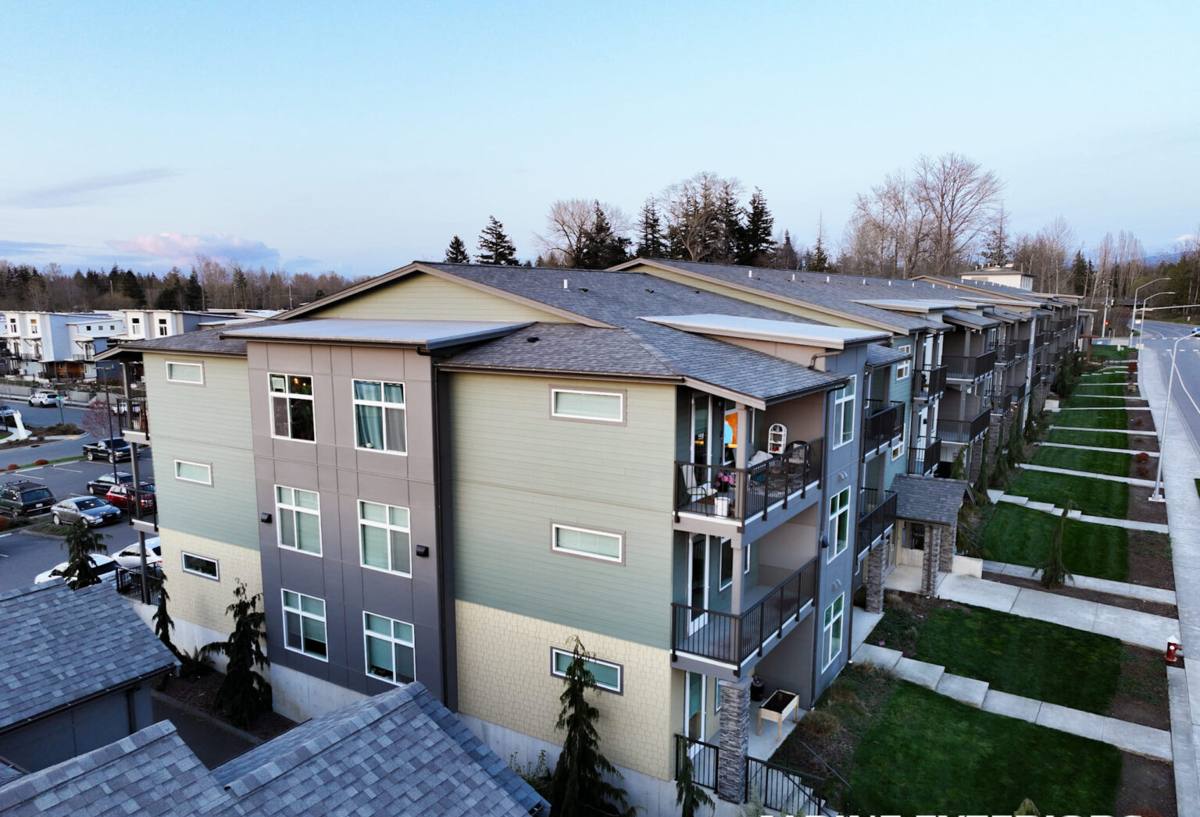
What Silver Beach Homes Actually Need From a Siding Job
Moisture Management, Not Just a Weather-Resistant Surface
Any siding sheds bulk rain reasonably well when it's new. The real test is what happens behind it — at window and door openings, at the bottom of walls, at inside corners, and anywhere two planes meet. A correct installation manages water with flashing, house wrap, and drainage gaps that let incidental moisture escape instead of getting trapped against the sheathing.
Fastener and Fastening Pattern Discipline
Salt air accelerates corrosion on anything less than the corrosion-resistant fasteners the manufacturer specifies. Nail placement, spacing, and depth also matter more here than in a dry inland climate — over-driven or under-driven fasteners create tiny gaps that become entry points for wind-driven rain.
Ventilation and Air Gaps
A siding assembly with a proper drainage plane behind it dries out between storms. One installed tight to the sheathing with no gap holds moisture longer, which is exactly what feeds moss and mildew growth on the surface and rot underneath it.
Why We Only Install James Hardie Fiber Cement
We don't install vinyl, LP SmartSide, Cemplank, Allura, primed spruce, or cedar. That's a deliberate standard, not a sales pitch, and it's worth explaining honestly rather than just asserting it.
Vinyl is affordable and low-maintenance in mild climates, but it's a petroleum-based product that can warp under sustained heat and become brittle in freeze-thaw cycles, and its seams and J-channels give wind-driven coastal rain more paths inward than a properly lapped fiber cement wall. LP SmartSide and primed wood products (including cedar) are wood-based — engineered or solid — and wood-based siding depends entirely on an intact paint or coating layer to keep moisture out. In a marine climate with a long wet season and heavy moss pressure, any breach in that coating (a hairline check, a fastener pop, a scuff during a windstorm) opens the door to swelling, delamination, or rot faster than it would inland. Cedar is a genuinely attractive natural material, but it requires ongoing refinishing and is more vulnerable to moisture retention and insect activity than a cement-based product, which is a real maintenance commitment for a house exposed to salt air and shade-driven dampness.
James Hardie fiber cement is non-combustible, dimensionally stable when wet or dry, and comes with a factory-applied ColorPlus finish baked on under controlled conditions rather than field-painted on site. Hardie also engineers specific product lines (its HZ5 designation, for example) for harsher, wetter climate zones, which matters in a neighborhood dealing with salt exposure and a long moss season. It's not the cheapest material on the market, and it is heavier and more particular to install correctly than vinyl — but installed to spec, it holds up to exactly the conditions Silver Beach sees, and it carries a strong transferable warranty that follows the house, not just the original owner.
Siding Materials Compared for This Climate
| Material | Moisture Behavior in Salt Air / Rain | Maintenance Burden | Typical Lifespan Here |
|---|---|---|---|
| James Hardie fiber cement | Dimensionally stable; won't swell, rot, or corrode | Occasional wash; factory finish resists fading | 30+ years installed to spec |
| Vinyl | Seams and channels allow wind-driven rain intrusion; can warp with heat cycling | Low, but cracks/fades over time | 15–25 years |
| LP SmartSide / primed wood | Coating-dependent; moisture entry leads to swelling at cut edges and fasteners | Regular caulk/paint upkeep required | 15–20 years with diligent maintenance |
| Cedar | Natural material; absorbs moisture, prone to moss and rot in shade | High — refinishing every few years | 20–30 years with heavy upkeep |
What Correct Installation Involves
Hardie's own installation instructions are specific for a reason — the product performs as engineered only when the details are followed. On a Silver Beach job, that means:
- House wrap or weather-resistant barrier installed and lapped correctly, with flashing integrated at every window, door, and penetration
- A minimum clearance maintained between the bottom edge of the siding and grade, decks, patios, or roof lines, so splashback and standing moisture can't wick into the board
- Corrosion-resistant fasteners, at the manufacturer's specified spacing and depth — not overdriven, not underdriven
- Proper joint treatment and caulking at butt joints and trim, using products compatible with the ColorPlus finish
- Rainscreen or drainage gap detailing where the wall assembly calls for it, so the cladding can dry between storms
- Field-cut edges primed or sealed per Hardie's guidance, since factory finish protects the face but cut ends need attention too
Skip any one of these and the siding can still look right for a season or two. In this climate, the shortcuts tend to surface as moss buildup at low clearances, staining below poorly flashed windows, or soft spots at joints that were caulked instead of properly lapped.
Our Process for a Silver Beach Siding Installation
1. On-Site Assessment
We walk the exterior, check the current siding and sheathing condition where accessible, note drainage patterns, shade exposure, and any areas already showing moss or moisture staining.
2. Product and Line Selection
We recommend the Hardie product line and profile suited to the exposure — this isn't a one-size answer, since a shaded, damp-prone wall may warrant different detailing than a wall that gets more sun and airflow.
3. Tear-Off and Sheathing Check
Old siding comes off and we inspect the sheathing underneath before anything new goes up. Hidden rot or compromised wrap gets addressed before it's covered again.
4. Weather Barrier and Flashing Installation
This is the step that determines how the house performs in a storm five years from now, not just on install day — it gets done to spec, not rushed.
5. Siding Installation to Manufacturer Spec
Fastening, clearances, joint treatment, and finish detailing all follow Hardie's published installation requirements, which is also what keeps the manufacturer's warranty intact.
6. Final Walkthrough
We review the finished job with the homeowner, point out maintenance basics specific to the site, and answer questions before we consider the job done.
Cost Factors for a Silver Beach Project
| Factor | Why It Affects Cost |
|---|---|
| Home size and number of stories | More surface area and access complexity (scaffolding, lifts) increase labor |
| Current siding removal | Tear-off of old material, and any sheathing repair found underneath, adds time before new siding starts |
| Product line and profile | Hardie offers multiple plank widths, textures, and climate-engineered lines; choices affect material cost |
| Trim and detail work | Corners, window trim, and architectural detailing take more labor than flat wall runs |
| Site access | Sloped lots, close property lines, or limited driveway access can affect equipment and labor time |
We give honest, project-specific numbers after a walkthrough rather than a ballpark that doesn't reflect your actual house — every Silver Beach lot and structure is a little different.
Signs a Silver Beach Home May Need New Siding Soon
- Moss or dark streaking that returns quickly after cleaning, especially on shaded walls
- Soft or spongy spots when pressed, particularly near the bottom edge or around windows
- Visible warping, cupping, or gaps opening up at seams and corners
- Paint or finish that's peeling or bubbling rather than just fading
- Rising energy bills that suggest the wall assembly isn't sealing and insulating the way it should
- Fastener heads showing rust or corrosion staining bleeding down the face of the siding
Why Hiring a Crew That Already Works Silver Beach Matters
A crew that's put siding on homes in this specific pocket of Bellingham already knows how the salt air, the rain angles, and the shade patterns in this neighborhood behave differently than a job three miles inland. That translates into decisions on the job — where to add extra flashing attention, which walls need more clearance at grade, which sides of the house see the worst moss pressure — made from experience rather than a generic checklist. It also means a crew that's still around if a warranty question comes up years down the road, not a company that did one job in the area and moved on.
If you're weighing a siding replacement or new installation for a home in Silver Beach, we're happy to walk the property, talk through what your specific walls need, and give you a straightforward, no-pressure estimate — just fill out the form below to get started.