 Bellingham
 Why Silver Beach Siding Takes a Different Kind of Beating
Silver Beach sits close enough to the water that homes here catch a steady dose of salt-laden marine air on top of everything else Whatcom County's weather throws at a house. That combination is harder on siding than most homeowners realize. It isn't one big storm that causes the damage — it's the slow, repeated cycle of wet, damp, and wet again that barely lets a wall system dry out between rounds, month after month, for most of the year.
Add in a moss season that can run eight months or longer in this part of Bellingham, and you've got three separate stressors working on your siding at once: salt air that speeds up corrosion on anything metal, driving rain that finds every gap and gets pushed sideways by wind off the water, and moss that holds moisture against the surface of the siding long after the rain has stopped. A repair that ignores any one of those three isn't a real repair — it's a temporary fix that will need to be redone.
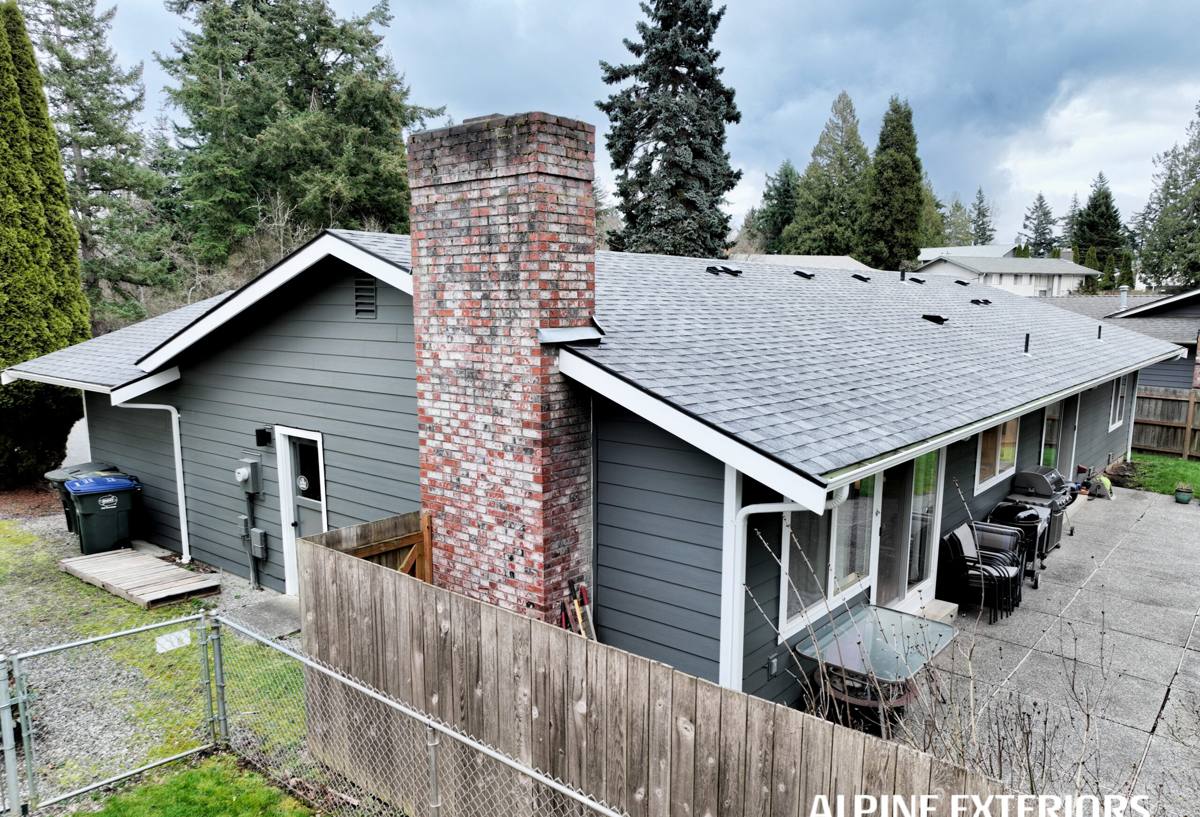
The Damage Patterns We See Most in Silver Beach
Every neighborhood has its own siding failure signature based on age of construction, exposure, and materials used when homes were built. In Silver Beach, the calls we get tend to fall into a handful of recurring categories:
- Moss bridging at seams and laps — moss doesn't just sit on the surface, it grows into the seam between panels and holds water against the substrate underneath.
- Caulk failure at trim and joints — constant wet-dry cycling breaks down sealant faster here than in drier inland areas, opening gaps that let rain track behind the siding.
- Swelling or delamination on older wood-based or engineered-wood siding, where the panel itself has started absorbing water it was never meant to hold.
- Rust streaking from fasteners or trim hardware that weren't rated for a salt-air environment.
- Soft, spongy siding near ground level, usually from splash-back off hardscaping or grading that pushes water back toward the wall instead of away from it.
- Gaps at inside and outside corners where wind-driven rain gets pushed in sideways rather than falling straight down.
None of these are unusual or a sign that a home was built badly. They're just what happens to siding over time in a marine climate — the question is whether the repair actually addresses the cause or just covers the symptom.
What a Correct Repair Actually Involves
A lot of "siding repair" in this region is really just cosmetic patching — new caulk over a crack, a fresh coat of paint over a stain, a piece of trim nailed over a soft spot. That kind of work looks fine for a season or two and then fails again, often worse than before, because it never dealt with what's happening behind the siding.
Finding out what's underneath
Before we touch a panel, we want to know why it failed. That means pulling the damaged section and actually looking at the weather-resistive barrier and the sheathing behind it — not assuming it's fine because the outside looks okay. If moisture has been getting behind the siding for a while, the housewrap or sheathing may already be compromised, and putting new siding over a wet wall just hides the problem for another few years.
Matching material the right way
A repair that's obviously a patch — different texture, different sheen, visible seam lines — isn't a job done right. Matching profile, reveal, and finish so the repair blends into the rest of the wall takes more care than most patch jobs get, but it's what separates a professional repair from a stopgap.
Correct repair work also means replacing fasteners with hardware rated for coastal and marine exposure, re-flashing any trim or transition that was compromised, and sealing with products that are actually built to hold up to Whatcom County's wet-dry cycle rather than whatever caulk was on the truck.
Repair or Replace? How We Actually Make That Call
Not every siding problem needs a full re-side, and we're not going to tell you it does just because that's a bigger job. But there's a point where patching stops making financial sense. We weigh a few things honestly with the homeowner before recommending either path:
| Factor | Leans Toward Repair | Leans Toward Replacement |
|---|---|---|
| Extent of damage | Isolated to one wall or a few panels | Spread across multiple elevations |
| Sheathing condition | Dry, sound wood underneath | Soft, rotted, or water-stained sheathing |
| Cause of failure | Localized issue (bad flashing, one damaged panel) | Systemic issue (original installation defects, wrong material for the climate) |
| Age of existing siding | Still well within expected service life | Near or past end of expected life |
| Cosmetic match | New material will blend acceptably | Visible mismatch across a highly visible elevation |
When the underlying problem is systemic — for example, an original installation that didn't account for how much rain this area gets — patching one section usually just means we'll be back for the section next to it in a year or two. We'll tell you that plainly instead of running up repair bills that don't solve anything.
Our Process for a Silver Beach Repair Call
- On-site inspection. We look at the damaged area and the surrounding siding, not just the spot you called about — hidden problems are common right next to visible ones.
- Moisture check. Where there's any sign of past water intrusion, we check moisture levels in the material before deciding on scope.
- Written scope and price. You get a clear explanation of what we found, what needs to happen, and what it costs — before any work starts.
- Weather-aware scheduling. Given how much of the year sees rain here, we schedule repair work for realistic dry windows so sealants and finishes cure the way they're supposed to.
- The repair itself. Removal of damaged material, inspection and correction of anything underneath, proper flashing and fastening, and a finish match that doesn't stand out.
- Cleanup and walkthrough. We don't consider a repair finished until you've seen it and are satisfied it's done right.
Why We Only Repair With James Hardie Fiber Cement
When we're replacing damaged sections of siding, we use James Hardie fiber cement — full stop. We don't install vinyl, LP SmartSide, primed spruce, cedar, or other fiber cement brands, and that standard applies to repair work just as much as full re-sides. There's a reason for that, not just a preference.
Fiber cement doesn't absorb water and swell the way wood-based siding can, which matters enormously in a climate where siding rarely gets a long stretch to fully dry out. It's non-combustible. And Hardie's ColorPlus factory finish holds color and resists the kind of moss and algae staining that plagues field-painted siding in wet climates — which is directly relevant to a moss season that runs most of the year here. Hardie also builds climate-specific HZ product lines engineered for exactly this kind of moisture exposure, backed by a strong transferable warranty when installed to spec.
That said, we're not going to oversell it. Fiber cement is heavier to work with than vinyl or wood, it requires specific fastening patterns to perform as designed, and cutting it correctly requires dust control that a lot of crews skip. Installed wrong, any siding material will fail early — Hardie included. That's exactly why correct installation and repair technique matter as much as the material choice itself.
What Affects the Cost of a Siding Repair
| Cost Factor | Why It Matters |
|---|---|
| Size of the affected area | A single panel is a different job than a full wall section |
| Condition of the sheathing | Rotted sheathing behind the siding adds structural repair before any siding goes back on |
| Accessibility | Second-story or hard-to-reach walls take more time and equipment |
| Matching existing siding | Discontinued colors or profiles may require broader replacement to keep a consistent look |
| Trim and flashing work | Repairs that involve re-flashing windows or corners take longer than a straight panel swap |
Because every one of these varies house to house, we don't quote siding repair sight unseen — an accurate number requires actually looking at the damage and what's behind it.
Signs It's Time to Call for a Repair Estimate
- Persistent moss or dark staining that keeps coming back after cleaning
- Soft or spongy spots anywhere on the siding, especially near the ground
- Visible gaps, cracks, or separated caulk lines at trim and corners
- Panels that look warped, bowed, or are pulling away from the wall
- Rust streaks running down from fasteners or trim hardware
- Peeling or bubbling paint that keeps returning in the same spot
- Musty smell or interior wall discoloration near an exterior wall
Catching any of these early is almost always cheaper than waiting — moisture problems in siding don't stay small.
Why a Crew That Already Works This Neighborhood Matters
Siding repair isn't one-size-fits-all, and a crew that regularly works Silver Beach and the rest of Bellingham brings something a traveling or general-handyman crew doesn't: familiarity with how homes in this specific area were built, what materials were commonly used at different points, and where the recurring trouble spots tend to show up given the wind, rain, and moss exposure here. That local pattern recognition speeds up diagnosis and helps us avoid repairs that look fine in the fall and fail again by spring.
It also means faster response. Moisture problems in siding get worse the longer they sit, and a crew that's already working in Whatcom County can typically get eyes on a problem sooner than one coming from farther away.
If you're dealing with siding damage on a Silver Beach home, we're glad to take a look and give you a straight answer on what's actually going on — no pressure, no upsell, just an honest assessment and a free estimate.