 Bellingham
 Why Silver Beach Homes Ask More of Their Siding
Silver Beach sits close enough to Bellingham Bay that the air itself works against a house differently than it does a few miles inland. Salt-laden air off the water accelerates corrosion on fasteners, flashing, and trim. Wind coming across open water hits siding at angles that push rain sideways into laps and seams that would stay dry on a more sheltered lot. And like the rest of Whatcom County, the neighborhood gets a long, wet shoulder season every fall and spring where siding rarely gets a chance to fully dry out between storms — which is exactly the condition moss and algae need to take hold.
None of that means siding fails overnight. It means the margin for error is smaller. A siding system that's borderline adequate in a drier climate, or installed a little loose on the details, tends to show its weaknesses first in a spot like this — faded and chalking finishes, soft trim, staining at butt joints, moss creeping up from the bottom courses. If you're looking at replacement, it's worth understanding what this specific setting demands before you decide what goes back up.
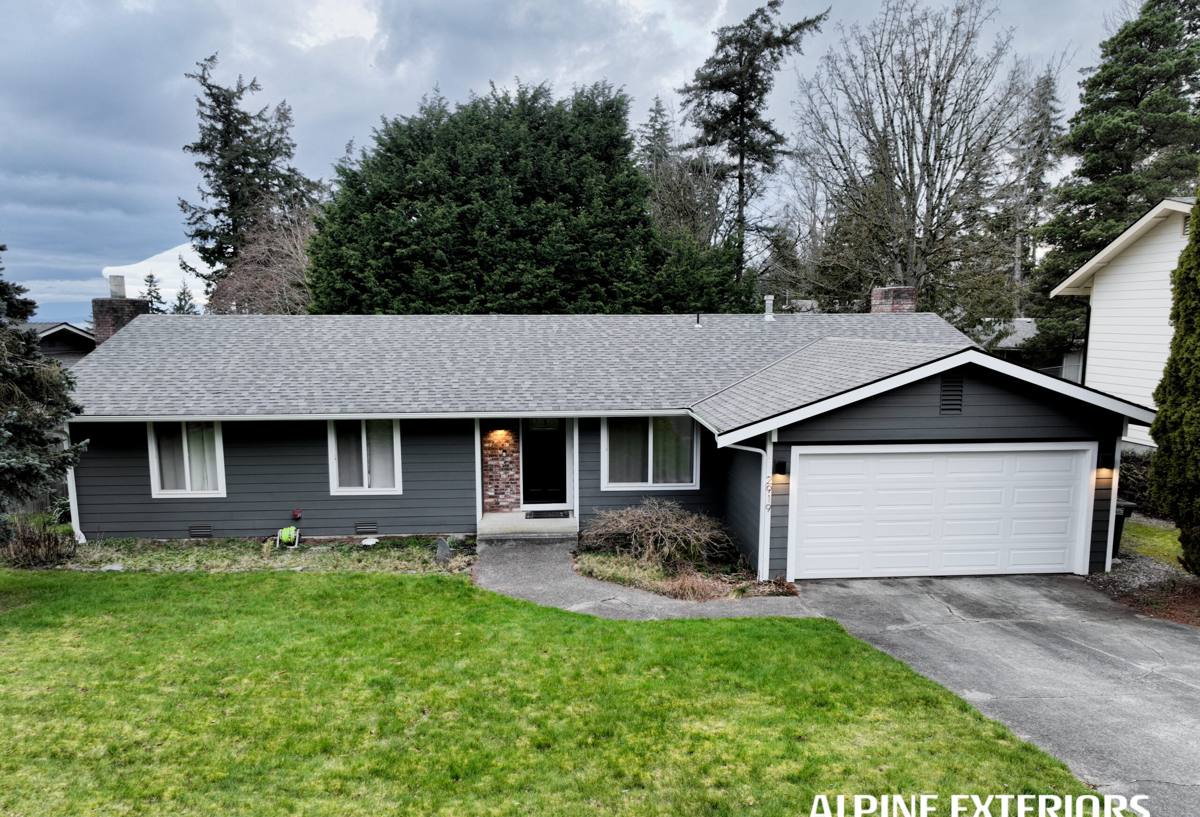
Signs a Silver Beach Home Is Due for Replacement
Repainting or patching can buy time, but certain signs mean the siding itself — not just the finish — has reached the end of its service life. We look for:
- Soft, spongy, or crumbling spots when you press on the siding, especially near the bottom courses and around windows
- Persistent moss or dark streaking that comes back within a season or two of cleaning
- Visible warping, cupping, or separation at the seams or lap joints
- Paint that's failing in patches rather than evenly — a sign moisture is getting behind the material in specific spots
- Rot or discoloration at corner boards, window trim, or anywhere two materials meet
- A musty smell or soft drywall on interior walls that back up to exterior siding
- Siding that's original to a home built more than 20–25 years ago, particularly wood-based products never designed for this moisture load
One or two of these can sometimes be repaired locally. Several at once, especially combined with age, usually means the underlying material and possibly the water-resistive barrier behind it are compromised, and patching just delays a full tear-off.
What a Correct Siding Replacement Actually Involves
It starts underneath the old siding, not on top of it
The siding you see is the last line of defense, not the only one. A correct replacement means removing the old cladding down to the sheathing, then actually inspecting what's there — checking for soft or delaminated sheathing, confirming the water-resistive barrier is intact and properly lapped, and repairing or replacing any framing that's taken on moisture damage. Skipping this step and installing new siding over a compromised wall assembly is the single most common way a "new" siding job fails within a few years, especially in a wet coastal environment.
Flashing and drainage details matter more here than the siding itself
Most siding failures near the water trace back to flashing, not the panels. Window and door heads, deck ledgers, roof-to-wall transitions, and any horizontal trim all need properly lapped flashing and a drainage plane behind the siding so any water that does get past the surface has somewhere to go besides the wall cavity. Given the wind-driven rain this stretch of the county sees, we treat these details as non-negotiable, not optional upgrades.
Fastening and clearances
Fastener type, spacing, and depth are all spec'd by the siding manufacturer for a reason — get them wrong and you create thousands of tiny entry points for moisture. We also hold proper clearance between the bottom of the siding and grade, decks, patios, and roof lines, which is one of the most commonly overlooked details and a major contributor to the rot we see at the bottom courses of older homes in this area.
Why We Install Only James Hardie Fiber Cement
We don't install vinyl, LP SmartSide, primed wood, or the other fiber cement alternatives on the market, and we're upfront about why: in a marine climate like Bellingham's, the products cut corners in different ways. Vinyl can warp and doesn't stand up to sustained direct heat or impact, and its seams and channels give algae and moisture plenty of places to collect. Wood-based products, including OEM engineered wood siding, depend heavily on unbroken paint and caulking to keep moisture out — miss a spot during maintenance and the substrate itself starts to break down from the inside, which is much harder to catch early than surface wear on fiber cement.
James Hardie's fiber cement is non-combustible, holds paint and factory finish far longer than wood-based alternatives, and doesn't support the kind of moisture-driven decay that wood products are prone to. It's not maintenance-free, but the maintenance it needs is mostly surface-level — periodic washing and repainting on a much longer cycle — rather than the substrate-level vigilance wood siding demands. That's the trade-off that made us standardize on one product line instead of installing whatever a customer read about online.
HZ5 engineering and what it means locally
James Hardie manufactures its siding in climate-specific formulations, and the HZ5 line is engineered for regions with more moisture exposure and freeze-thaw cycling than the deep South sees. Whatcom County, sitting where it does along the water, falls squarely into that category. HZ5 products are formulated to resist moisture-related damage better than a generic, one-size-fits-all fiber cement mix, which matters more here than it would in a drier inland climate.
Color also deserves a second thought in a bayfront setting. Hardie's ColorPlus factory finish is baked on under controlled conditions and backed by its own finish warranty, which holds up better against UV and salt exposure than field-applied paint. For a home this close to the water, that factory finish is doing real work — it's one less seam where moisture and salt air can start breaking down a coating over time.
Cost Factors on a Job Like This
Every siding replacement is priced around the specifics of the house, not a flat per-square-foot number pulled from a general estimate. The factors that move the number most on Silver Beach homes:
| Factor | Why It Affects Cost |
|---|---|
| Condition of sheathing and framing underneath | Rot or moisture damage found during tear-off means repair work before new siding can go up |
| Home size and number of stories | More wall area and taller elevations mean more material and more staging/access equipment |
| Existing siding material | Some materials come off faster and cleaner than others; wood and old fiber cement can require more careful, slower removal |
| Trim, corner, and window detail complexity | Homes with more architectural detail need more cuts, more flashing work, and more labor time |
| Siding profile chosen | Lap, shingle, and panel profiles differ in material and installation labor |
| Site access and exposure | Wind exposure and site layout can affect scaffolding, scheduling around weather, and protection of the work area |
We won't give a number without seeing the house, but we will walk you through which of these factors apply to yours and why, so the estimate makes sense rather than arriving as a mystery total.
Our Process From Estimate to Finished Job
- On-site assessment — we look at the current siding, trim, and any visible moisture damage, and talk through what we expect to find once tear-off starts
- Written estimate — a clear scope covering material, tear-off, any anticipated repairs, and a firm product and color selection
- Tear-off and inspection — old siding comes off, sheathing and the water-resistive barrier get inspected, and we flag anything that needs repair before proceeding
- Flashing and moisture barrier work — window, door, and transition flashing installed or corrected to manufacturer spec
- Hardie installation — fastened, spaced, and cleared to manufacturer requirements, not shortcuts
- Final walkthrough — we go over the finished job with you before calling it done
Why a Crew That Already Works Silver Beach Matters
Siding installation isn't just a spec sheet — it's judgment calls about how a specific house sits relative to wind, water, and drainage. A crew that already works this part of Bellingham has seen where moisture tends to collect on homes with similar exposure, which flashing details actually hold up against wind-driven rain off the bay, and how quickly moss reestablishes itself on north- and west-facing walls in this climate. That's the kind of pattern recognition that comes from repetition in one area, not from a general contractor doing one job here and moving on.
There's also the practical side: familiarity with Bellingham's permitting process, realistic scheduling around the wet months so tear-off and dry-in happen efficiently, and being reachable afterward if a question comes up — all of which matter more when you're trusting a crew with the one layer of your house that keeps the weather out.
Questions Worth Asking Before You Commit
Whoever you hire, a few questions separate a solid contractor from one you'll regret:
- Will you inspect and, if needed, repair the sheathing and moisture barrier before new siding goes on, or just install over what's there?
- What's your plan for flashing at windows, doors, and roof-to-wall transitions specifically?
- Which manufacturer and product line are you installing, and why that one for this location?
- Is the warranty from the manufacturer, from your company, or both — and what does it actually cover?
- Can you walk me through how the estimate breaks down before I sign anything?
If a contractor can't answer these clearly, that's worth noting before you hire them, not after the tear-off has already started.
If your siding is showing its age or you're just not sure what condition it's really in underneath, we're happy to come take a look. The estimate is free, there's no pressure, and you'll walk away with a straight answer about what your home actually needs.