 Bellingham
 Roof Repair Built for Sudden Valley's Climate
Sudden Valley sits close enough to the water and the timber around Lake Whatcom that its roofs take a different kind of beating than a roof twenty miles inland. Homes here deal with salt-tinged air moving up from Bellingham Bay, long stretches of driving rain off the Sound, and a moss season that can run eight or nine months out of the year under the tree cover common to this part of Whatcom County. None of that is unusual for Northwest Washington, but it does mean a roof repair here needs to account for things a dry-climate crew might not think about: sustained moisture exposure, shaded roof planes that never fully dry out, and fasteners and flashing that see more corrosive air than a roof twenty minutes east.
We work on roofs throughout Bellingham and the surrounding county, and Sudden Valley is a regular stop for us. That matters more than it sounds like it should. A repair crew that already knows how the moss grows on north-facing slopes out here, how the wind comes off the lake during a fall storm, and what the typical roof age and material mix looks like in this neighborhood is going to diagnose a leak faster and fix it more permanently than a crew guessing at regional conditions for the first time.
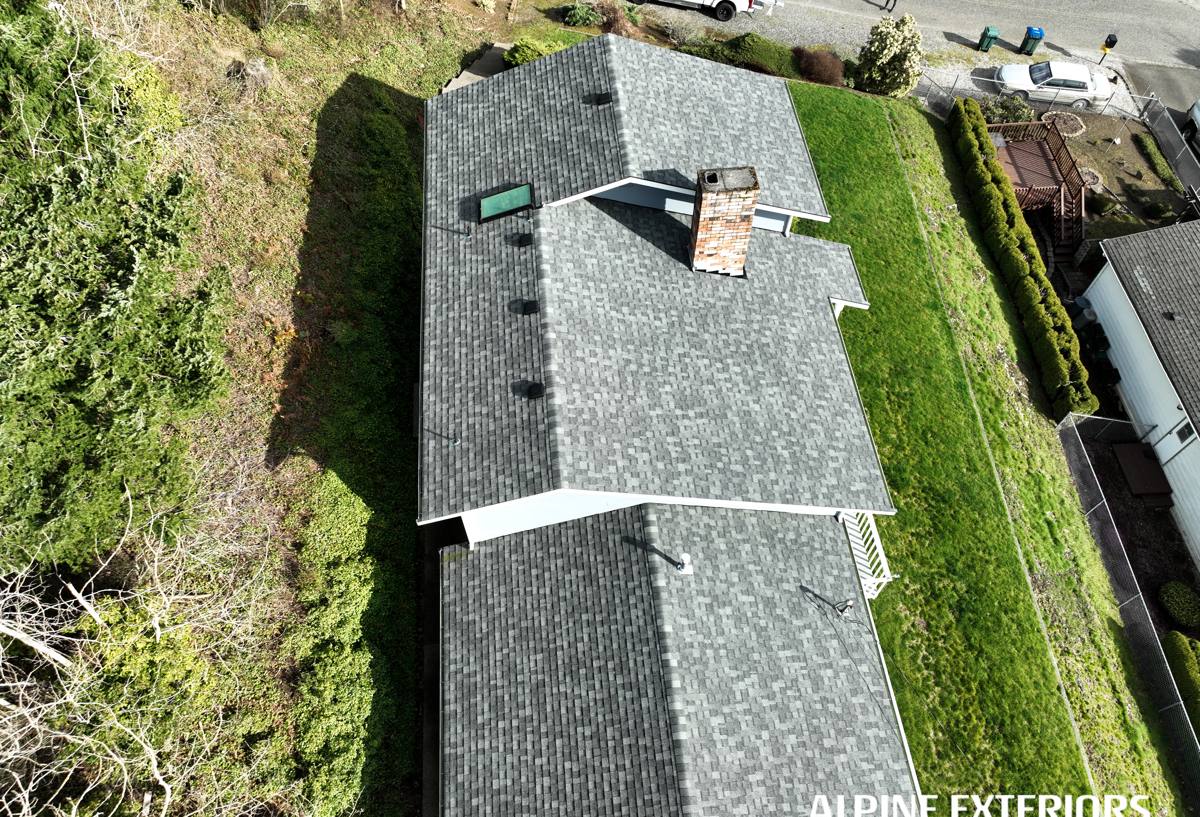
What Sudden Valley Roofs Actually Deal With
Moss and Organic Growth
The tree canopy around Sudden Valley keeps a lot of roof surfaces shaded for large parts of the day, which slows drying after every rain. Moss and algae take hold in those shaded, north- and east-facing sections first, and once established they hold moisture against the shingle or shake surface far longer than bare roofing would. Over time that constant dampness breaks down asphalt shingles, rots wood shakes, and works granules loose faster than sun exposure alone ever would. Left unaddressed, moss doesn't just look bad — it lifts shingle edges, channels water sideways instead of down, and opens the door to leaks at the exact spots where two roof planes meet.
Driving Rain and Wind-Driven Water
Storms coming off the water don't always fall straight down. Wind-driven rain gets pushed sideways and upward under shingle tabs, around vent flashing, and into any gap that a calm-weather rain would never reach. This is why so many Sudden Valley leaks show up at flashing details — chimneys, skylights, roof-to-wall intersections — rather than in the open field of the roof. Those are the spots where a repair has to be done with real attention to detail, not just a bead of sealant over the visible gap.
Salt Air and Metal Fatigue
Proximity to Bellingham Bay means a steady low-level exposure to salt-laden air, which accelerates corrosion on exposed metal — nails, flashing, gutter hardware, and vent stacks. A fastener that would last decades inland can start showing rust streaks and losing grip years sooner out here. When we're repairing a roof in this area, we're looking at fastener condition and flashing metal as closely as we look at the shingles themselves.
Signs You Need a Roof Repair, Not Just a Cleaning
- Dark streaking or thick moss mats on north-facing slopes that keep coming back after washing
- Granules collecting in gutters or at downspout outlets
- Curling, cupping, or lifted shingle edges, especially on shaded planes
- Water stains on interior ceilings or in the attic near chimneys, skylights, or vent penetrations
- Soft or spongy spots when walking the roof (a sign of rotted decking underneath)
- Visible daylight through the roof deck from inside the attic
- Rusted or lifted flashing around chimneys, valleys, or wall intersections
- Missing or cracked shingles after a windstorm
A roof cleaning or moss treatment handles surface growth, but it won't fix a compromised flashing detail or rotted decking underneath. If you're seeing any of the interior signs — stains, daylight, soft decking — that's a repair issue, not a cleaning one, and it's worth having someone look at it before the next heavy rain.
What a Correct Repair Actually Involves
A lot of roof repairs done wrong aren't wrong because someone was careless — they're wrong because the repair only addressed the visible symptom and not the underlying cause. On a Sudden Valley roof, that usually means one of a few things:
1. Finding the Real Source of the Leak
Water rarely shows up on the ceiling directly below where it entered the roof. It travels along rafters, sheathing, and underlayment before dripping somewhere else entirely. A proper repair starts with tracing the water path from the interior stain or attic evidence back up to the actual entry point — usually a flashing failure, a cracked or lifted shingle, or a worn pipe boot — rather than just patching the spot that looks worst.
2. Assessing the Decking
Given how long moisture can sit on a shaded roof plane here, we check the condition of the roof decking anywhere we open up a repair area. Soft or delaminated plywood needs to be cut out and replaced before any new roofing material goes down — patching over rotted decking just guarantees a repeat call in a year or two.
3. Correct Flashing Work
Flashing is where most Sudden Valley leaks originate, and it's also where a lot of quick patch jobs fail. Proper flashing repair means removing and replacing the compromised metal and integrating it correctly with the surrounding shingle courses — not just running a bead of roofing cement over the top and calling it done. Cement-only patches fail within a season or two out here because they can't flex with temperature changes and don't hold up under the salt air corrosion this area sees.
4. Matching Materials
Whenever possible, we match the replacement shingles or shakes to the existing roof's material, weight, and color so the repair blends in rather than standing out as an obvious patch. Where an exact match isn't available — common on older roofs — we place new material where it's least visually noticeable.
5. Moss and Debris Removal Before Repair
Any moss or debris in the repair area gets cleared before work starts. Nailing new shingles down over moss or trapped organic debris just seals moisture in from the start.
Our Repair Process
- On-site inspection. We walk the roof and the attic (where accessible) to trace the leak or damage back to its actual source, not just the visible symptom.
- Written assessment. You get a clear explanation of what's causing the problem, what needs to be done, and a straightforward cost range before any work starts.
- Repair. Damaged shingles, shakes, decking, and flashing are removed and replaced correctly, matched to your existing roof material as closely as possible.
- Cleanup and check. We clear moss and debris from the work area, check surrounding sections for related wear, and clean up job-site debris before we leave.
We don't upsell a full re-roof when a repair will genuinely hold. If a roof is old enough or has enough scattered failure points that a repair would just be a stopgap, we'll tell you that plainly and explain why — but that's a conversation, not an assumption we lead with.
Repair vs. Replacement: How We Think About It
| Factor | Repair Usually Makes Sense | Replacement Worth Considering |
|---|---|---|
| Roof age | Under 15-20 years, depending on material | At or past expected material lifespan |
| Damage extent | Isolated to one area or flashing detail | Widespread across multiple roof planes |
| Decking condition | Solid, no rot beyond the immediate repair spot | Rot or soft spots in multiple areas |
| Moss/growth history | Manageable with cleaning and spot treatment | Chronic, damaging growth returning every season |
| Prior repairs | First or second repair on the roof | Long history of patch-on-patch repairs |
This is a general guide, not a hard rule — every roof is a little different, which is why the on-site inspection matters more than any chart.
Cost Factors for Roof Repair
Repair costs vary based on a handful of straightforward factors, and we'll walk through all of them during your estimate rather than quoting a number sight unseen:
- Size and number of areas needing repair
- Roof pitch and accessibility (steep or high roofs take more time and safety setup)
- Whether decking replacement is needed underneath the damaged area
- Type of roofing material (asphalt shingle, wood shake, metal) and whether matching material is readily available
- Extent of flashing work required
- How much moss or debris removal is needed before repair can begin
Broadly, a small, contained repair — a section of flashing or a handful of damaged shingles — tends to run in the low hundreds to low thousands of dollars, while more involved repairs with decking replacement or extensive flashing work cost more. We'll give you a real number after we've actually looked at the roof, not a phone-quote guess.
Why a Crew That Already Works Sudden Valley Matters
Roofing crews that mostly work drier or more open parts of the region sometimes underestimate how aggressively moss and moisture reestablish themselves under heavy tree cover, or how much salt air exposure accelerates hardware wear near the water. A crew that's out here regularly already has a feel for which roof orientations in this neighborhood need extra attention, how the local storm patterns push water into flashing details, and what material choices hold up best given the shade and moisture pattern typical of this part of Bellingham. That local familiarity translates into fewer callbacks and a repair that's diagnosed right the first time.
It also means faster response. Being local to Bellingham and Whatcom County, we're not driving in from out of the area to get to you, which matters when a leak shows up during a storm and needs attention before more water gets into the structure.
Maintaining Your Roof Between Repairs
A repair holds longer when the rest of the roof is kept in reasonable shape. A few habits go a long way in a moss-prone, high-rainfall area like this:
- Keep gutters clear so water isn't backing up under the shingle edge
- Trim back overhanging branches to cut down on shade and debris buildup
- Have moss treated before it becomes a thick mat, not after
- Schedule a roof check after any major windstorm
- Address small leaks early — they rarely stay small once the decking underneath starts absorbing water
If you're seeing signs of a leak, moss buildup that keeps coming back, or damage after a recent storm, we're happy to take a look and give you an honest read on what it needs. Reach out for a free, no-pressure estimate — the form below gets you started.