 Bellingham
 What Sunnyland Homes Are Up Against
Sunnyland sits close enough to Bellingham Bay that homes here deal with a specific mix of weather stress most inland Whatcom County neighborhoods don't see in the same combination: salty marine air, wind-driven rain coming off the water, and a moss season that can run eight months or longer in a wet year. None of these things alone is unusual for Western Washington. Together, applied to a home year after year, they expose every weak point in a siding installation — the caulk joints that were rushed, the flashing that was skipped, the fastener that was driven at the wrong angle.
A siding job that looks fine on installation day can start failing in three to five years if it wasn't built for this specific exposure. That's the difference between a crew that installs siding in a lot of different climates and a crew that installs siding in Sunnyland specifically, on a regular basis, and knows exactly where the problems show up first.
Salt Air and Coastal Exposure
Airborne salt accelerates corrosion on fasteners, flashing, and any metal trim components. It also breaks down cheap or improperly sealed coatings faster than inland exposure does. Siding materials and hardware that aren't rated for coastal-adjacent use will show pitting, streaking, and finish breakdown well ahead of their expected lifespan.
Driving Rain and Wind-Driven Moisture
Rain that comes in sideways doesn't behave like rain that falls straight down. It gets pushed up under laps, into gaps around trim, and behind poorly flashed penetrations — vents, hose bibs, light fixtures, anywhere something passes through the siding plane. A correct installation assumes water will reach these points and gives it a way out. An incorrect one assumes water won't get there at all, which is the wrong assumption in Sunnyland.
The Long Moss Season
Constant damp shade — common on the north and west-facing walls of many Sunnyland lots with mature tree cover — keeps siding surfaces wet longer between dry spells. That extended dampness is exactly what moss, algae, and mildew need to establish. Wood-based and wood-fiber siding products absorb that moisture into the substrate itself, which is where the real damage happens, even when the surface still looks okay.
Why the Wrong Siding Job Shows Up Fast Here
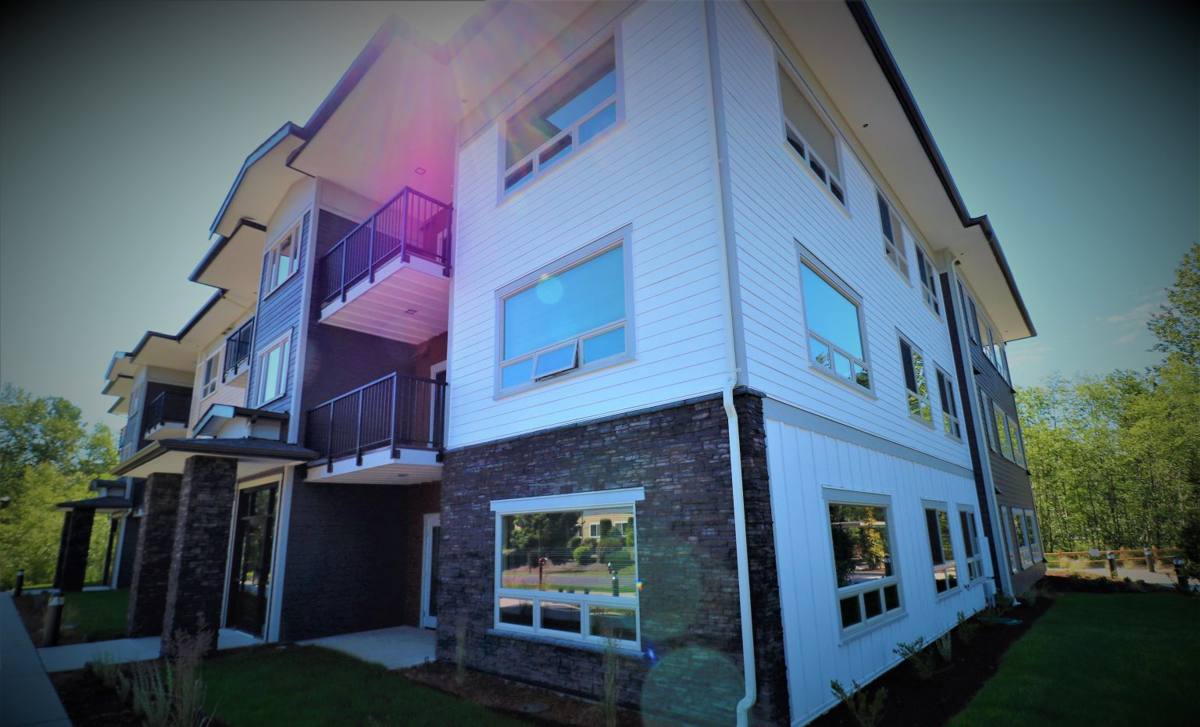
Most siding failures we get called out to inspect in this neighborhood aren't material failures — they're installation failures that the local climate simply exposed faster than it would somewhere drier. A missing kick-out flashing above a roof-wall intersection, a caulk-only seal where a proper flashing detail belongs, panels face-nailed instead of blind-nailed per spec, or a drainage gap that was never built in at all. In a mild, dry climate those shortcuts might not surface for a decade. In Sunnyland, with driving rain and constant moisture cycling, they show up in windows, in soft trim, in stained or bubbling paint, often within a few winters.
This is also why "the siding looked new when we bought the house" isn't a reliable guide to what's underneath. Cosmetic condition and installation quality are two different things, and the gap between them widens fastest in exactly this kind of climate.
What a Correct Siding Installation Involves
A siding installation is really a water-management system with a finished surface on top. Getting the visible part right matters, but it's the parts you don't see afterward that determine whether the job lasts fifteen years or fifty.
Weather-Resistive Barrier and Drainage Gap
Behind the siding, a continuous weather-resistive barrier has to be installed correctly lapped, shingle-style, so water sheds downward and out rather than working its way behind the barrier. In a home exposed to driving rain, we also build in a drainage gap so any moisture that does get past the siding face has a clear path down and out instead of sitting against the wall sheathing.
Flashing and Trim Details
Every window, door, vent, and roof intersection needs flashing sized and lapped to shed water outward, not just caulk bridging a gap. Caulk is a supplement to good flashing, not a substitute for it — caulk degrades, flashing doesn't, and in this climate that distinction matters within a few years, not decades.
Fastening to Manufacturer Spec
Fiber cement siding has a specific fastener pattern, fastener type, and blind-nail or face-nail spec depending on the product line and exposure category. Deviating from it — wrong nail spacing, wrong penetration depth, nailing through laps instead of into the framing correctly — is one of the most common causes of early siding failure, and it's invisible once the job is finished. It only shows up later, as panels that work loose, crack at fastener points, or let water track behind the plane.
Why We Only Install James Hardie Siding in Sunnyland
We standardized on James Hardie fiber cement siding company-wide, and in a neighborhood with this exposure profile the reasoning is especially direct. Hardie's HZ product lines are engineered for specific climate zones, including the wetter, milder Pacific Northwest zone Whatcom County falls into — the formulation and moisture performance are matched to the conditions the siding will actually face here, not a generic national average.
Fiber cement doesn't absorb and swell the way wood-based products can, which matters directly for moss and mildew resistance in a shaded, damp neighborhood like this one. It's also non-combustible, which is a real consideration as wildfire smoke seasons have become a more regular part of Pacific Northwest summers. The ColorPlus factory finish is baked on under controlled conditions rather than field-applied, which gives it better adhesion and fade resistance against sun, salt air, and repeated wet-dry cycling than a job-site paint job typically achieves. And Hardie backs the product with a strong, transferable warranty — worth something to a future buyer if you sell, and worth something to you if you don't.
We don't install LP SmartSide, vinyl, Cemplank, Allura, primed spruce, or cedar. Each of those has situations where it can be the right call for someone, but we've made a professional decision to put our installation expertise behind one system we can stand behind fully, install to spec every time, and warranty with confidence — rather than spreading that expertise thin across several products with different moisture behaviors, different installation tolerances, and different long-term maintenance demands.
Our Process for a Sunnyland Siding Project
- On-site assessment: We look at your home's specific exposure — which walls face prevailing wind and rain, where shade and moisture linger longest, and the condition of the existing siding, sheathing, and trim.
- Moisture and substrate check: Before any new siding goes up, we check for hidden moisture damage in the wall assembly. Covering up a wet or rotted substrate with new siding just hides a problem that gets worse.
- Product and color selection: We help you choose the right Hardie line and ColorPlus finish for your home's exposure and your style, from lap siding to shingle-style panels and trim.
- Tear-off and prep: Old siding comes off, the substrate gets repaired as needed, and the weather-resistive barrier and drainage plane go in correctly before anything new is fastened.
- Installation to manufacturer spec: Flashing, fastening, and joint treatment follow Hardie's published installation requirements, not shortcuts — this is what keeps the warranty valid and the wall dry.
- Final inspection and warranty registration: We walk the finished job with you and make sure your product warranty is properly registered.
Cost Factors for Sunnyland Siding Installation
Every home is different, so we won't quote a number without seeing your house, but these are the main variables that move the price up or down on a typical siding installation project in this neighborhood:
| Factor | How It Affects the Job |
|---|---|
| Home size and wall complexity | More square footage, corners, and roof-wall intersections mean more material and more labor-intensive flashing work |
| Existing substrate condition | Hidden moisture or rot damage found during tear-off adds repair scope before new siding can go on |
| Siding profile and trim detail | Lap width, shingle-style accents, and trim complexity affect both material cost and install time |
| Exposure level | Walls facing prevailing wind and rain may need extra flashing or drainage detailing versus more sheltered walls |
| Story height and access | Multi-story sections and difficult access add staging and labor time |
Signs Your Sunnyland Home May Need New Siding
- Persistent moss or algae staining that returns quickly after cleaning
- Soft, spongy, or visibly warped siding panels or trim
- Paint that's peeling, bubbling, or failing faster than expected
- Visible gaps, cracks, or separation at panel joints and corners
- Interior signs like musty odors, damp drywall, or peeling interior paint near exterior walls
- Siding that's original to a home more than 20-25 years old, especially wood-based or older composite products
Any one of these on its own isn't necessarily an emergency, but they're worth having a professional look at before the next wet season, since moisture problems behind siding tend to get more expensive the longer they're covered up.
Living With Hardie Siding Through Bellingham's Moss Season
Even the right siding, correctly installed, benefits from a little seasonal attention in this climate. Keeping gutters clear so water isn't overflowing directly onto wall sections, trimming back vegetation that keeps a wall shaded and damp, and an occasional gentle rinse of north- and west-facing walls will keep moss and algae from taking hold in the first place. None of this is heavy maintenance — it's the kind of upkeep that's far easier with a factory-finished fiber cement product than with a painted wood-based one, since you're not chasing touch-up paint every year to keep water out.
If your Sunnyland home's siding is showing its age, or you're planning ahead for a replacement before the next wet season sets in, we'd be glad to take a look. We offer a free, no-pressure estimate — walk the property with you, answer questions honestly, and give you a clear picture of what your home actually needs. There's a form below to get started.