 Bellingham
 Deck Repair Built for York's Bay-Side Climate
The York neighborhood sits close enough to Bellingham Bay that its weather is its own thing. Homes here take on salt-laden air rolling off the water, long stretches of driving rain through the fall and winter, and a moss season that can run half the year in the shadier yards. None of that is unique to any one house — it's just what Whatcom County does to anything built outdoors — but it adds up fast on a deck. Framing lumber, ledger boards, fasteners, and decking boards all sit exposed to that cycle of wet-then-dry, and it shows in ways that are easy to miss until a board gives underfoot or a railing post wobbles.
Deck repair done right in this part of Bellingham isn't about slapping a new board over a soft spot. It's about understanding why that spot went soft in the first place — usually moisture getting somewhere it shouldn't — and fixing the cause along with the symptom.
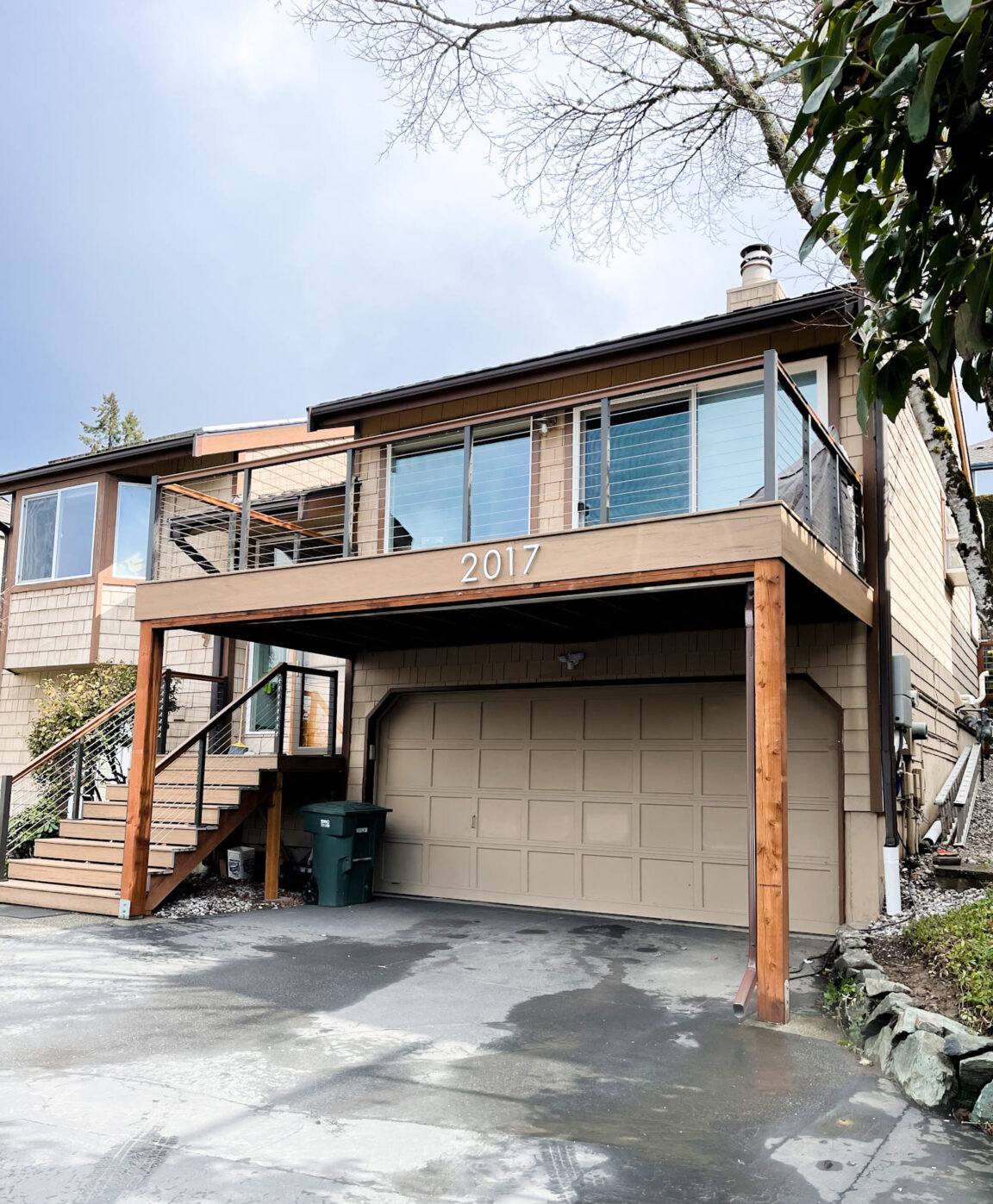
Why Decks in York Wear the Way They Do
Salt Air and Metal Fasteners
Proximity to the bay means a fine mist of salt in the air on windy days, even blocks inland. Salt accelerates corrosion on anything metal — nails, screws, joist hangers, bolts. A fastener that would last decades in a dry inland climate can start rusting and losing its grip years sooner here. Corroded fasteners are one of the most common hidden causes of a deck that feels loose or bouncy even though the wood itself looks fine.
Driving Rain and Water Intrusion
Whatcom County rain doesn't always fall straight down — wind off the bay pushes it sideways, driving water up under railings, behind fascia boards, and into any gap around the ledger board where the deck attaches to the house. That's the single most damage-prone spot on almost every deck we look at, because it's hidden and it's structural.
Moss, Shade, and Slow Drying
York has a good mix of mature trees and older lots, which means shade — and shade means decks that don't dry out between rains the way a full-sun deck would. Moss and algae take hold on the north and east-facing boards first, and beyond making the surface slick, they hold moisture against the wood far longer than bare, sun-dried decking would.
Signs a Deck Needs Repair
- Boards that feel spongy, springy, or noticeably softer than the boards around them
- Railings or posts that move or flex when leaned on
- Rust streaks running down from screw heads or around joist hangers
- Gaps opening up where the deck meets the house (ledger board area)
- Green or black staining that doesn't scrub off, especially on the underside of boards
- Stairs that feel uneven or have started to separate from their stringers
- A musty smell coming from underneath the deck
- Nail heads popping up or screws spinning freely without biting
Any one of these on its own might be minor. Two or three together, especially near the ledger board or stairs, usually means the problem has moved past the surface and into the structure.
What a Correct Deck Repair Actually Involves
Diagnosis Before Demo
The first step is figuring out how far the damage actually goes. A soft board is easy to see; a rotted joist underneath it is not. We check the framing, the ledger connection, and the fasteners before deciding what needs to be replaced versus what's still sound. Repairing only what's visible and leaving compromised framing underneath is how the same problem comes back in a year or two.
The Ledger Board Connection
Because the ledger board is bolted directly to the house and sits behind the siding line, it's the spot most exposed to water intrusion and the most expensive to get wrong. A proper repair checks for flashing that directs water away from this joint rather than into it, and confirms the bolts and hangers are still solid, not just cosmetically fine.
Matching Fasteners to the Environment
Given the salt air off the bay, we use stainless steel or hot-dip galvanized fasteners on repair work rather than standard coated screws, which corrode faster in this environment. It costs a little more up front and saves the homeowner from redoing the same repair in five years.
Framing and Structural Members
Any joist, beam, or post showing rot or significant softness gets replaced or sistered with new lumber — not painted over or wrapped. Structural repairs are the part of a deck that homeowners can't easily inspect themselves, which is exactly where a shortcut is most likely to go unnoticed until it fails.
Decking Boards and Surface Work
Once the structure underneath is sound, damaged surface boards get replaced, and the whole deck gets checked for proper spacing and drainage so water sheds instead of pooling between boards.
How Different Decking Materials Hold Up to Repair in This Climate
| Material | Common Issues in York's Climate | Repair Considerations |
|---|---|---|
| Pressure-treated lumber | Checking, splitting, fastener corrosion, rot at ground contact points | Individual board replacement is straightforward; framing rot often hides under intact-looking decking |
| Cedar | Graying, moss growth in shaded areas, softening if finish isn't maintained | Sands and refinishes well if caught early; structurally sound cedar often just needs cleaning and re-coating |
| Composite decking | Moisture wicking at cut ends, mold on the surface, fading | Individual boards can usually be swapped; edge sealing matters more here than on wood |
| Older or mixed materials | Inconsistent condition board to board, outdated fastener types | Repair plan depends heavily on what's underneath — this is where a full inspection pays off |
Our Deck Repair Process
1. On-Site Inspection
We walk the deck, check underneath it, test the railings, and probe any soft spots to see how far they extend. This is also when we look at the ledger board and flashing, since that's the area most likely to hide a bigger issue.
2. Honest Assessment
We tell you what actually needs repair, what's cosmetic, and — if the structure is too far gone in places — when repair stops making financial sense compared to a partial or full rebuild. Not every deck problem needs the same answer.
3. The Repair Itself
Framing and structural fixes happen first, then decking, then railings and stairs. We match fasteners to the environment as noted above, and we don't cover up questionable framing with new decking on top.
4. Cleanup and Finish
Depending on the material, that can mean sealing, staining, or simply making sure the repaired sections blend reasonably with the rest of the deck rather than standing out as an obvious patch.
Repair vs. Replacement: What Drives the Decision
| Factor | Leans Toward Repair | Leans Toward Replacement |
|---|---|---|
| Extent of framing damage | Isolated to one or two joists or a section | Widespread rot across multiple structural members |
| Age of the deck | Under 15-20 years, otherwise sound | Original construction is decades old with cumulative wear |
| Ledger board condition | Solid connection, minor flashing fix needed | Ledger itself compromised or improperly installed originally |
| Cost relative to full rebuild | Repair cost is a fraction of replacement | Repairs would approach or exceed rebuild cost |
Broad ranges only, since every deck is different: minor repairs (a handful of boards, a railing section, re-fastening) are typically the least expensive category of exterior work; structural repairs involving framing or the ledger board cost more because of the labor to access and rebuild them; and a deck needing repair in more than a few separate areas often makes more financial sense to rebuild in stages rather than patch indefinitely. We'll give you real numbers for your specific deck rather than a guess over the phone.
Keeping a Repaired Deck From Needing the Same Fix Again
- Rinse off moss and debris buildup at least once or twice a year, more often in shaded areas
- Keep gutters and downspouts near the deck clear so runoff isn't dumping directly onto it
- Check the ledger board area for gaps or staining once a year, especially after a wet winter
- Re-seal or re-stain wood decking on the schedule the finish product calls for, not just when it looks faded
- Trim back overhanging branches that keep sections of the deck in shade and slow to dry
- Address a soft board or loose railing as soon as you notice it rather than waiting a season
None of this is complicated, but it's the difference between a repair that lasts and one that's just a temporary fix in a climate that doesn't let up.
Why a Crew That Already Works in York Matters
Deck repair isn't a one-size-fits-all trade. A crew that regularly works this side of Bellingham already knows what the bay air does to fasteners, how much shade the older tree canopy in this neighborhood creates, and where moisture tends to collect on the kinds of homes and decks common here. That means less time spent re-diagnosing basics and more time spent on the actual repair. It also means we're not guessing about which fastener grade or finish schedule makes sense for a deck a few blocks from the water versus one further inland — we've seen both and know the difference matters.
We're a Bellingham-based crew working in Whatcom County day in and day out, not a company passing through the area for one job.
Get a Straight Answer on Your Deck
If you're noticing soft spots, rust stains, or a railing that doesn't feel as solid as it used to, it's worth having someone look before it gets worse — repair problems caught early are almost always cheaper to fix. We offer free, no-pressure estimates for York homeowners: we'll inspect the deck, tell you honestly what it needs, and give you real numbers, no obligation. The form below is the easiest way to get started.