 Bellingham
 Asphalt Shingle Roofing Built for the York Neighborhood
York is one of Bellingham's older, tree-lined neighborhoods, and that character comes with a roofing reality: mature tree canopy, close-set lots, and a housing stock that spans early-1900s bungalows to mid-century additions and newer infill. Roofs here take on a specific mix of stress that a generic roofing job doesn't always account for. We install and repair asphalt shingle roofing with York's conditions in mind, not a one-size-fits-all spec sheet.
Asphalt shingles remain the most practical roofing material for most Bellingham homes because they balance upfront cost, proven performance in wet marine climates, and a wide range of looks that suit both older York homes and newer builds. The key isn't the shingle brand alone — it's how the whole roof system is detailed to handle Whatcom County's wet season, and that's where a lot of roofs in this area actually fail.
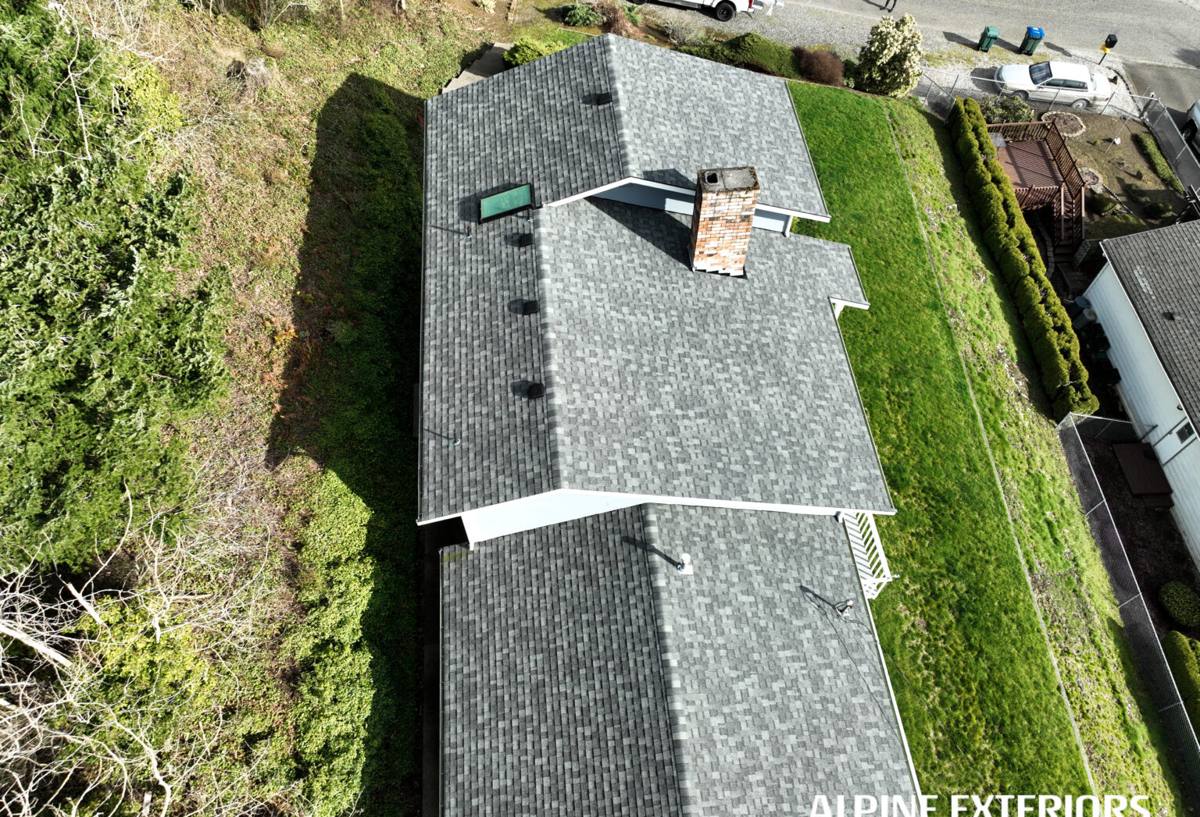
What Bellingham's Climate Does to a Roof
Bellingham sits close enough to the water that salt-laden air reaches inland neighborhoods like York, especially on windy days off the Sound. Add driving, wind-blown rain during fall and winter storms, and a moss season that can run eight months or more under shaded, north-facing roof slopes, and you get three distinct pressures on a shingle roof:
- Salt air: accelerates corrosion on exposed metal fasteners, flashing, and vent components if they aren't rated for coastal exposure.
- Driving rain: wind-driven water doesn't just run downhill — it gets pushed sideways and upward under shingle tabs, valleys, and around penetrations, which is why underlayment and flashing detail matter as much as the shingles themselves.
- Moss and organic growth: shaded roof sections under York's mature trees stay damp longer, and moss roots work into the shingle mat, lifting edges and holding moisture against the roof deck year-round.
None of these is dramatic on its own. Together, over years, they're the reason roofs in this part of Whatcom County age differently than the same product would in a drier climate.
Why This Matters More in York Specifically
Tree cover is the biggest local variable. Homes on lots with heavy overhead canopy see more moss, more debris buildup in valleys, and slower drying after rain — all things that shorten a shingle roof's usable life if the install didn't plan for it. Homes on more open, exposed lots deal more with wind uplift and direct salt-air exposure. Most York properties get some combination of both, which is why we look at the specific lot and tree situation before recommending a shingle spec, not just the neighborhood in general.
What a Correct Asphalt Shingle Job Actually Involves
A shingle roof is a system, not a single product. The shingles get the attention, but the components underneath and around them do most of the work of keeping water out over 20-30 years. A correct installation in this climate includes:
- Deck inspection and repair: any soft, delaminated, or water-stained sheathing gets replaced before anything goes back down — covering a bad deck with new shingles just hides the problem.
- Ice-and-water shield or high-quality synthetic underlayment at eaves, valleys, and around penetrations, sized for the wind-driven rain this area sees.
- Proper starter strip and drip edge at eaves and rakes — a common shortcut we correct on tear-offs is missing or undersized drip edge, which lets water wick back under the first course.
- Corrosion-resistant flashing and fasteners at chimneys, skylights, sidewalls, and vent penetrations, chosen for coastal air exposure rather than standard-grade hardware.
- Balanced attic ventilation — intake at the eaves, exhaust at the ridge — so moisture from inside the house isn't condensing against the underside of the deck.
- Correct nailing pattern and shingle exposure per manufacturer spec, which is what actually protects the wind and product warranty, not just the shingle brand.
Skip any one of these and the shingles themselves become almost irrelevant — water finds the gap in the system, not the gap in the shingle.
Shingle Options and How We Help You Choose
Most York homeowners choose between a few grades of asphalt shingle. There's no single "best" choice — it depends on the roof's exposure, the home's age and style, and budget.
| Shingle Type | Typical Lifespan | Best Fit |
|---|---|---|
| 3-tab (standard) | 15-20 years | Budget-conscious re-roofs, simpler rooflines |
| Architectural / dimensional | 25-30 years | Most York re-roofs — better wind rating, better look |
| Premium / designer | 30+ years | Older or character homes where roofline is visually prominent |
For a neighborhood like York, where a lot of homes have visible, pitched rooflines from the street, we usually steer homeowners toward architectural shingles. They carry a heavier wind rating — a real factor during winter storm systems — and their thicker profile sheds moss growth a bit more slowly than thinner 3-tab products. That said, if a roof is simple, low-slope, or largely hidden from view, standard shingles can still be the sensible, cost-effective call. We'll tell you honestly which situation you're in rather than upselling by default.
A Note on Color and Heat
Darker shingles show less visible moss staining short-term but can make attic ventilation problems more obvious in summer if the roof isn't vented correctly. Lighter and mid-tone shingles tend to show streaking sooner but run slightly cooler. Neither is a climate-driven necessity here the way it might be in a hotter region — this is mostly an aesthetic and maintenance-preference decision for York homeowners, and we'll walk through it during the estimate.
Repair, Recover, or Full Replacement?
Not every roof problem in York needs a full tear-off. We evaluate three options honestly:
- Repair: makes sense for isolated damage — a storm-damaged section, a failed flashing detail, a localized leak — on a roof that's otherwise sound and not near the end of its service life.
- Recover (new layer over existing): rarely our recommendation in this climate. Adding shingles over an existing layer traps moisture against the old layer and hides deck problems that moss and driving rain tend to cause here — it's a shortcut that costs more in the long run.
- Full replacement: the right call when the deck needs inspection anyway, when moss has been established for years, or when the existing roof is past 15-20 years old and showing granule loss, curling, or repeated leak points.
We'll always tell you if repair is the honest answer, even though it's the smaller job.
Our Process on a York Re-Roof
- On-site inspection: we walk the roof (or use a drone/photo inspection for steep or fragile roofs), check the attic for ventilation and moisture signs, and assess tree cover and drainage around the home.
- Written estimate: a clear scope covering deck condition allowances, underlayment spec, flashing details, ventilation plan, and shingle options — no vague line items.
- Tear-off and deck check: full removal of old roofing, deck inspected board by board, any damaged sheathing replaced and documented.
- Underlayment and flashing: ice-and-water shield at vulnerable areas, new flashing at all penetrations and transitions.
- Shingle installation: installed to manufacturer nailing and exposure spec to protect both wind performance and warranty coverage.
- Final walkthrough: we review the finished roof, ventilation, and any warranty paperwork with you directly.
Maintenance That Actually Extends Roof Life Here
A correctly installed shingle roof still benefits from basic upkeep in a moss-prone, tree-covered neighborhood like York:
- Keep gutters and valleys clear of needles and leaf debris, especially going into the wet season.
- Have moss growth treated or gently removed before it establishes a mat — don't pressure-wash shingles, which strips granules and shortens their life.
- Check attic ventilation isn't blocked by insulation at the eaves; poor airflow accelerates moisture problems from the inside out.
- After major wind storms, a quick visual check (or a call to us) for lifted or missing shingles catches small problems before they become interior leaks.
Why a Crew That Knows York Matters
Roofing crews that work all over Whatcom County without a feel for a specific neighborhood tend to default to generic specs. In York, that shows up as underlayment that isn't sized for tree-shaded, slow-drying sections, or ventilation plans that don't account for how enclosed some of these older rooflines are. We work in this neighborhood regularly enough to know which lots hold moisture longer, which rooflines catch wind-driven rain from certain directions, and which older homes have deck or framing quirks worth checking before quoting a number. That local familiarity shows up in fewer surprises during the tear-off and a roof that's specified correctly the first time.
Get an Honest Estimate
If you're dealing with an aging shingle roof, active moss growth, or a leak that's shown up after a recent storm, we're happy to take a look. We'll give you a straightforward assessment of repair versus replacement, walk you through shingle options that fit your home and budget, and provide a free, no-pressure estimate using the form below.