 Bellingham
 Deck Building in Barkley: Built for the Weather We Actually Get
Barkley sits close enough to Bellingham Bay and the water to catch salt-laden air on top of the steady rain and long gray stretches that define a Whatcom County winter. A deck built here has to do more than look good for one dry summer — it has to shed water fast, resist moss and mildew for months at a time, and hold up to metal fasteners and fittings that corrode faster near salt air than they would twenty miles inland. We build decks in Barkley on a regular basis, and almost every callback we get on someone else's work traces back to the same handful of decisions made wrong at the start: the wrong fastener grade, a ledger board that was never flashed correctly, or decking laid tight with no thought for drainage.
This page is about what a deck built specifically for a Barkley property needs — not a generic deck-building overview, but the actual material choices, framing details, and maintenance habits that matter for this neighborhood's exposure.
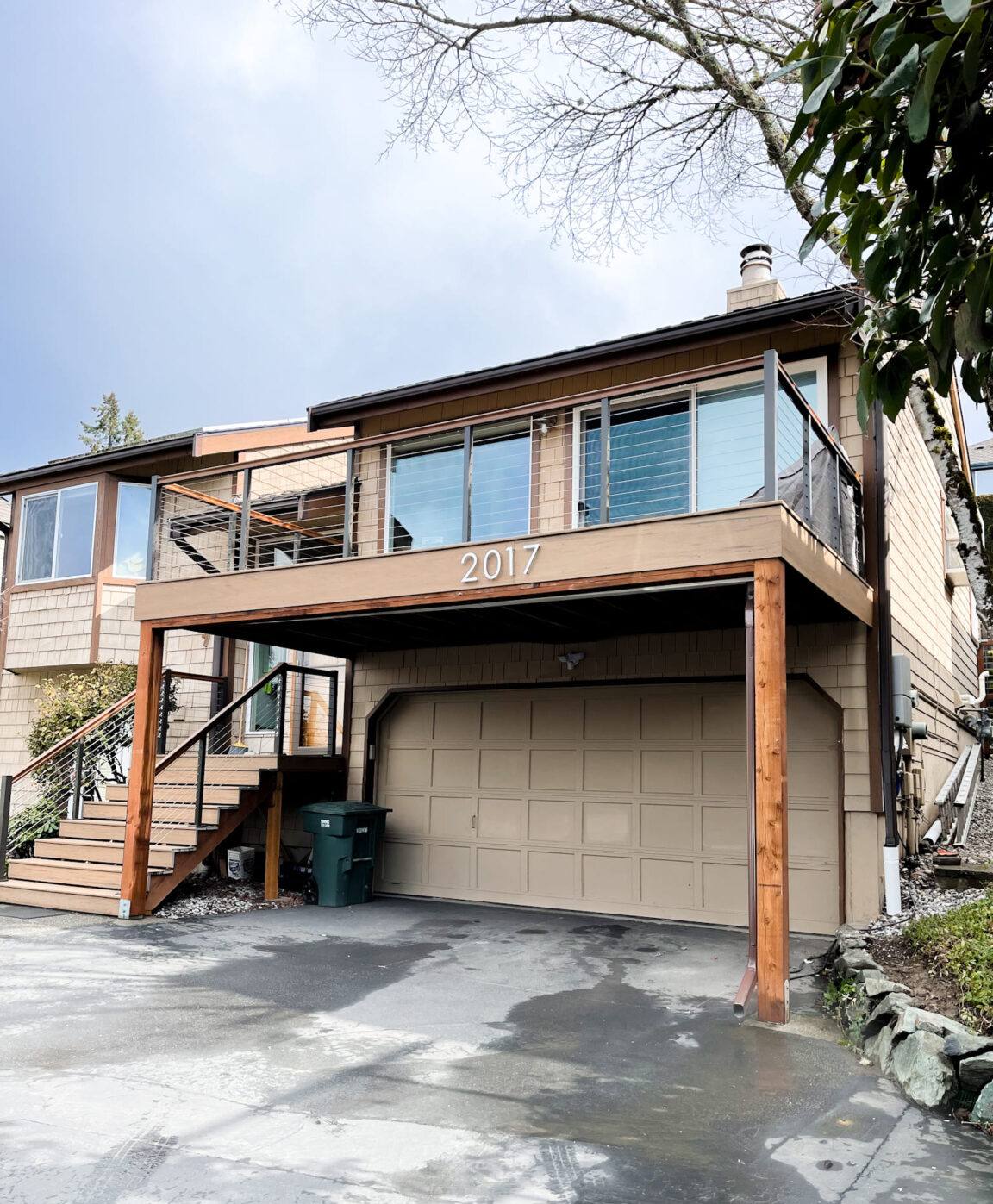
What Bellingham's Climate Does to a Deck Over Time
Whatcom County doesn't get extreme heat or brutal cold most years, but it makes up for that with sheer duration of moisture. A deck here can stay damp for days after a storm, especially in shaded yards or under tree cover, and that changes what "durable" actually means.
Moss and algae season
From fall through spring, decking surfaces that don't dry out quickly grow moss and green algae film, particularly on the north side of a house or under overhangs. Beyond looking bad, a mossy surface is slick and dangerous, and moss roots hold moisture against the wood or composite surface longer than it would otherwise sit — which accelerates rot in wood and can void warranties on some composite products if buildup isn't managed.
Driving rain and wind-blown water
Rain in this area rarely falls straight down. Wind pushes it sideways into ledger connections, under railings, and into any gap where flashing was skipped or done as an afterthought. Most of the structural failures we find on older decks start at these entry points, not out in the open field of the decking boards.
Salt air and corrosion
Being near the bay means fasteners, joist hangers, and hardware corrode faster than they would further inland. Standard hot-dip galvanized hardware can still rust prematurely in this exposure; stainless steel or high-grade coated fasteners hold up considerably longer and are worth the modest upcharge on a structure meant to last decades.
Choosing Decking Material for a Barkley Property
There's no single "best" decking material — the right choice depends on how much maintenance you want to do, your budget, and how much sun exposure the deck actually gets. Here's how the common options stack up under Bellingham's specific conditions.
| Material | Moisture & Moss Behavior | Maintenance | Typical Lifespan Here |
|---|---|---|---|
| Pressure-treated wood | Prone to moss in shaded areas; needs sealing to shed water well | Annual cleaning, re-sealing every 1-2 years | 10-15 years with upkeep |
| Cedar | Naturally rot-resistant but still needs airflow to avoid moss buildup | Regular cleaning, periodic oiling or sealing | 15-20 years with upkeep |
| Composite decking | Sheds water well; some capped products resist algae better than others | Occasional washing, no sealing required | 20-30 years |
| PVC decking | Fully synthetic, least absorbent, good moss resistance | Low — periodic washing | 25+ years |
In practice, a lot of Barkley homeowners land on a capped composite or PVC board for the field of the deck specifically because it removes the sealing cycle from the maintenance list — one less thing to stay on top of during a wet Bellingham winter. That said, a well-built and properly maintained wood deck still performs fine here; it just asks more of the owner. We'll walk through the honest trade-offs for your yard's sun and shade pattern rather than push one product across the board.
Framing and Substructure — Where Decks Actually Fail
The decking surface is what you see, but the substructure is what determines whether the deck is still safe in fifteen years. This is the part that gets shortcut most often on lower-bid jobs, and it's invisible until something fails.
Footings
Whatcom County's clay-heavy, moisture-retentive soils need footings sized and set to the correct frost depth and bearing capacity, not just a quick sonotube poured to whatever depth is convenient. Undersized or shallow footings are one of the more common issues we find when replacing an older deck.
Ledger attachment and flashing
Where a deck attaches to the house is the single most water-vulnerable connection on the whole structure. Correct flashing — installed in the right order relative to the house's siding or house wrap — keeps water from tracking behind the ledger board and into the rim joist or wall framing. This is exactly the kind of detail that's easy to fake from the outside and expensive to fix once siding is closed back up over it.
Joist hangers and fasteners
Given the salt air exposure in Barkley, we spec corrosion-resistant hardware rated for treated lumber contact rather than the cheapest galvanized option on the shelf. It costs a little more up front and saves a structural repair down the line.
Ventilation underneath
Low-clearance or skirted decks that don't get airflow underneath trap moisture against the joists and framing. Where clearance allows, we build in gaps or vents so the substructure can actually dry out between storms instead of staying damp all winter.
Our Deck Building Process
- On-site consultation — we walk the yard, look at sun/shade exposure, drainage patterns, and how the deck will connect to the house.
- Design and material selection — layout, railing style, and decking material chosen based on your use, budget, and maintenance preference.
- Permitting — we handle the permit application and inspections required for the project through the applicable jurisdiction.
- Footings and framing — footings poured to proper depth, ledger flashed correctly, joists and hardware installed to code.
- Decking, railing, and finish work — surface material installed with proper gapping for drainage and expansion.
- Final walkthrough — we go over the finished deck with you and cover maintenance basics specific to the material you chose.
Permits and Local Requirements
Most raised decks in and around Bellingham require a building permit, and depending on height and design, engineering may be required for guardrails, stairs, or footing design. If your property in Barkley falls under an HOA or planned community agreement, there may also be design guidelines around railing style or decking color — worth checking before material selection rather than after. We handle the permit process as part of the job so you're not tracking down inspections yourself.
Maintaining a Deck Through a Bellingham Winter
Whatever material you choose, a little seasonal attention goes a long way toward keeping a deck safe and good-looking through Whatcom County's wet months.
- Sweep leaves and debris off the deck regularly in fall — trapped organic matter is what feeds moss growth
- Rinse or scrub visible moss and algae before it gets a foothold, especially on shaded or north-facing sections
- Check that gaps between boards haven't filled with debris, which blocks drainage
- Inspect railing posts and stair connections annually for movement or loose fasteners
- For wood decking, re-seal on the schedule appropriate to the product — don't wait until it's visibly gray and dry
- Confirm downspouts and gutters near the deck aren't dumping extra water onto or under the structure
- Look underneath once a year if accessible — that's where early rot or hardware corrosion shows up first
Why a Crew That Already Works Barkley Matters
A deck built for a dry climate and a deck built for this one aren't the same project, even if they look identical from the street. Knowing how much wind-driven rain a given yard actually gets, which lots hold moisture longer because of tree cover or slope, and which hardware actually holds up near the bay isn't something you get from a manual — it's something you learn by building here repeatedly. We've done that work in this neighborhood, and it shows up in details other crews skip: the flashing order at the ledger, the fastener grade, the drainage gap under the decking.
If you're planning a new deck or replacing one that's showing its age, we'd rather talk through your yard's specific exposure and give you a straight answer on materials and cost than sell you a one-size-fits-all package. Reach out for a free, no-pressure estimate using the form below.