 Bellingham
 Why Ferndale Siding Takes a Different Kind of Beating
Ferndale sits close enough to the water and open farmland that its homes catch a mix of exposures most inland Whatcom County neighborhoods don't deal with all at once: salt-laden air drifting in off the Strait and bay, driving rain that comes in sideways during winter storms, and a moss season that seems to start earlier and last longer every year. None of these alone would wreck a wall. Together, over years, they find every weak point in a siding system — a gap in caulking, a missed nail pattern, a low clearance point where a board sits too close to grade or a deck.
When we get called out to a Ferndale repair, the damage almost always traces back to one of those three forces, or some combination of them. Salt air accelerates corrosion on fasteners and trim hardware. Wind-driven rain finds horizontal seams, window returns, and butt joints that weren't flashed or caulked correctly the first time. And moss — especially on the shaded, north-facing walls common in this area's tree-lined lots — holds moisture against the siding surface far longer than the material was ever meant to tolerate.
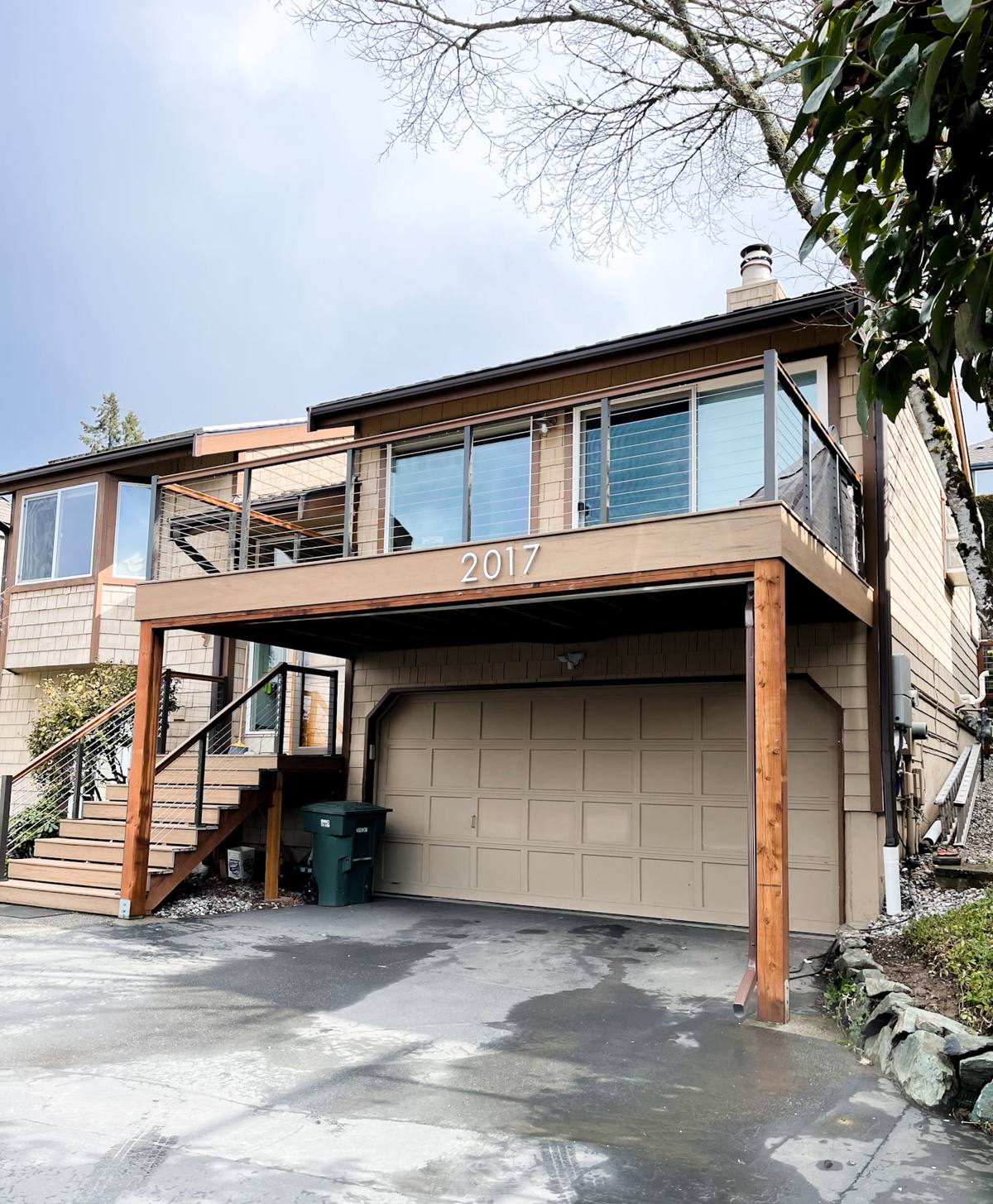
What "Correct" Siding Repair Actually Involves
A lot of siding repair in this region is done wrong — not out of laziness, but because it's genuinely tempting to just patch what's visible and move on. That approach almost never holds up here. A proper repair on a Ferndale home involves three separate steps, and skipping any one of them is why so many "repairs" fail again within a year or two.
1. Find the actual water path, not just the visible damage
Rot, staining, or a soft spot on a board is a symptom. The cause is usually somewhere else — a failed kick-out flashing above a lower roofline, a caulked joint that should have been left open to drain, or a siding course installed with insufficient clearance above a deck, patio, or grade. We trace the path before we touch a single board, because replacing the damaged piece without fixing the entry point just buys a few dry seasons before the same spot fails again.
2. Match the repair to the surrounding material and installation method
Siding is a system, not individual boards. A patch that doesn't match the reveal, the fastening pattern, or the caulk joints of the surrounding wall creates a new weak point right next to the old one. This is especially true with fiber cement, where factory-cut edges need to be primed and sealed on-site if the piece was field-cut, and where nail placement affects how the whole course performs in wind.
3. Address the moisture source, not just the wood or board itself
If moss, algae, or standing moisture caused the failure, cleaning the surface and swapping a board without correcting drainage, airflow, or shade exposure just resets the clock. Sometimes that means adjusting a downspout, sometimes it means re-flashing a transition, and sometimes it genuinely just means the wall needs better clearance from nearby landscaping.
Common Ferndale Repair Scenarios We See
| Symptom | Likely Cause | What a Correct Fix Requires |
|---|---|---|
| Soft or crumbling board near ground level | Insufficient clearance from grade, mulch, or hardscape holding moisture against the siding | Replace affected boards, correct clearance where possible, re-flash bottom course |
| Dark streaking or moss growth on shaded walls | Prolonged shade plus limited airflow, common on tree-lined and north-facing lots | Surface cleaning, trim back vegetation, evaluate whether the material is suited to that exposure |
| Paint peeling or bubbling at seams | Moisture trapped behind old caulk or a failed factory finish | Remove and reseal joints correctly, or replace boards with factory-finished material that doesn't rely on field paint |
| Corroded or rust-streaked fasteners | Salt air exposure on standard fasteners over time | Replace with corrosion-resistant fasteners rated for coastal exposure |
| Warped, swollen, or delaminating boards | Repeated wetting and drying cycles on a material not engineered for this climate | Section replacement, often a sign it's time to discuss full replacement in that area |
Repair or Replace: How We Make That Call
Not every damaged section needs a full re-side, and we're not going to tell a Ferndale homeowner they need a whole new house wrap when a targeted repair will hold. But there's a point where patchwork stops making financial sense, and we're upfront about where that line is.
- Repair makes sense when: the damage is isolated to one or two wall sections, the underlying water-resistive barrier is intact, and the rest of the siding is structurally sound.
- Replacement makes more sense when: the same failure keeps recurring in different spots, the siding material itself (not just the installation) is reaching the end of its practical life, or repair costs are approaching a meaningful fraction of what full replacement in that area would cost.
- A hybrid approach is common: repairing the sound side of the house now while planning a phased replacement of the more exposed elevations — often the side that takes the worst of the wind-driven rain or holds the most moss.
Why We Only Install James Hardie When Repair Becomes Replacement
When a repair scope grows into a section replacement or a full re-side, we install James Hardie fiber cement — nothing else. We don't carry vinyl, LP SmartSide, cedar, primed spruce, or other fiber cement brands, and that's a deliberate standard, not a limitation of what we're capable of installing.
The reasoning is straightforward for a climate like this one. Fiber cement doesn't swell, rot, or feed moss growth the way wood-based products can when they're exposed to prolonged shade and moisture. Hardie's ColorPlus factory finish is baked on and warrantied against peeling and fading, which matters on a coastal property where field-applied paint takes a beating from salt air and UV cycling. And Hardie's HZ5 product line is specifically engineered for the kind of wind-driven rain and moisture cycling that's routine here, not occasional.
We're not going to pretend every other product is worthless — vinyl is inexpensive and low-maintenance in the right setting, and cedar has a look some homeowners genuinely prefer. But for the specific combination of salt exposure, driving rain, and moss pressure that Ferndale properties deal with year-round, we've seen enough repair calls to know which material holds up with the least recurring maintenance, and it's fiber cement done right.
Our Process for a Ferndale Repair Job
- On-site diagnosis: we inspect the damaged area and trace the actual water or moisture path, not just the visible symptom.
- Honest scope conversation: we tell you plainly whether this is a repair, a section replacement, or something bigger — and why.
- Matched materials: repairs are done with material and fastening that match the existing wall system as closely as possible; replacements use James Hardie.
- Correct sealing and flashing: every repair addresses the drainage path, not just the cosmetic patch.
- Walkthrough: we show you what failed, what we did, and what (if anything) to keep an eye on going forward.
What to Check Before You Call Anyone
A little homeowner-side inspection can help you describe the problem accurately and avoid paying for a repair visit you didn't need.
- Press gently on any soft, discolored, or stained siding — note whether it flexes or crumbles.
- Check whether the affected area is near a downspout, roofline transition, deck ledger, or low-clearance point.
- Look for moss or algae buildup, and note which direction that wall faces.
- Check fastener heads for rust streaking, especially on walls facing open water or prevailing wind.
- Note whether the damage is isolated or you're seeing similar issues on more than one elevation — that pattern matters for the repair-vs-replace conversation.
Why a Bellingham-Based Crew Matters for Ferndale Homes
Siding repair isn't just a materials question — it's a familiarity question. A crew that works Whatcom County regularly already knows which wall orientations in this area take the worst weather, how far moss pressure typically travels up a shaded wall, and what a correctly flashed joint needs to look like to survive a full winter of driving rain off the water. That's not something you get from a crew passing through once. We work Bellingham, Ferndale, and the surrounding communities as a matter of routine, which means the diagnosis on your first visit is informed by dozens of similar jobs in this exact climate, not a generic checklist.
Get an Honest Look at What's Going On
If you're seeing soft boards, moss buildup, streaking, or peeling paint on your Ferndale home, we'll come take a look, tell you honestly what's causing it, and lay out what a correct fix involves — repair, partial replacement, or otherwise. There's no pressure and no upsell script. Fill out the form below for a free estimate.