 Bellingham
 Decks in Barkley Face a Different Kind of Wear
Barkley sits close enough to Bellingham Bay that salt-laden air reaches the neighborhood on a regular basis, and that air does something specific to exposed wood and metal: it accelerates corrosion in fasteners and hardware long before the decking boards themselves look bad. Add Whatcom County's long wet season — driving rain that comes in sideways off the water, followed by months of low sun angle and heavy shade from mature landscaping — and you get decks that hold moisture far longer than they would in a drier climate. That combination is exactly why deck repair in this area looks different from deck repair in, say, eastern Washington.
Moss and algae growth is the visible symptom homeowners usually notice first. What's less visible is what's happening underneath: ledger boards pulling moisture from the house wall, joists staying damp between rain events, and galvanized or coated fasteners slowly losing their protective layer. By the time a board feels soft underfoot, the structure underneath has often been compromised for a season or two already.
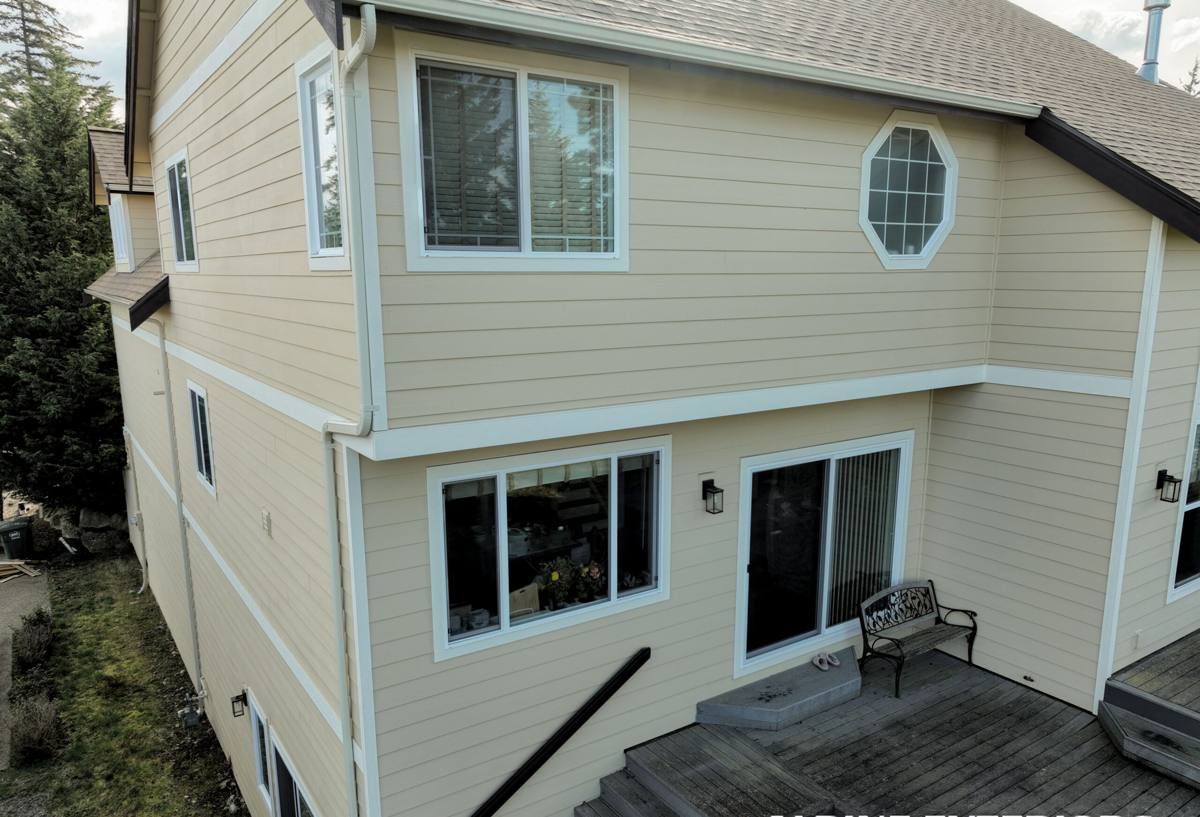
Signs a Barkley Deck Needs Repair
Most decks don't fail all at once — they show warning signs first. Knowing what to look for can be the difference between a modest repair and a full rebuild.
- Boards that feel spongy, bounce, or flex more than they used to
- Persistent moss or dark green-black staining that returns quickly after cleaning
- Rust streaks running down from screw heads or bracket connections
- Gaps opening up between deck boards, or boards cupping (edges higher than the center)
- A railing that wobbles or feels less solid when leaned on
- Visible daylight or soft wood where the deck ledger meets the house
- Standing water that doesn't drain within an hour or two of rain stopping
Any one of these on its own might be minor. Several at once, especially near the ledger board or support posts, usually means it's time for an inspection rather than another round of pressure washing.
Why the Ledger Board and Fasteners Matter Most
The Ledger Connection
The ledger board — where the deck attaches to the house — is the single most important structural connection on most decks, and it's also the part most exposed to the wall-hugging moisture that's common in this climate. Flashing that was installed correctly, or wasn't, makes a bigger long-term difference than almost any other detail on the deck. When we find rot at the ledger, we don't patch around it; we open it up, confirm how far the damage extends, and rebuild the connection with proper flashing so water sheds away from the house instead of behind the board.
Fastener Corrosion
Salt air speeds up corrosion in screws, joist hangers, and structural brackets, even ones rated for exterior use. A deck that's ten or fifteen years old and was built with standard hardware often needs a hardware upgrade during repair, not just board replacement. We check this every time — it's a cheap fix during a repair and an expensive one if it's missed and a bracket lets go later.
Wood vs. Composite: How They Age Differently Here
Barkley has a mix of older wood decks and newer composite installations, and each ages differently under Whatcom County conditions. Understanding which one you have changes both the repair approach and the maintenance plan going forward.
| Factor | Wood Decking | Composite Decking |
|---|---|---|
| Moss/algae resistance | Low — porous surface holds moisture | Moderate to good, varies by product |
| Typical repair | Board-by-board replacement, sanding, refinishing | Full board or clip replacement (rarely spot-repaired) |
| Structural framing underneath | Usually wood — same rot risk as decking | Almost always wood — same rot risk as decking |
| Maintenance need | Annual cleaning, periodic sealing/staining | Occasional cleaning, no sealing required |
| Fastener exposure | Often surface-screwed, more exposed to weather | Often hidden-fastened, less exposed but harder to inspect |
One thing that surprises homeowners: composite decking doesn't rot, but the framing underneath it almost always does. A composite deck with a soft, bouncy feel usually has a wood substructure problem, not a surface problem, and that's a repair we assess from underneath, not from the top down.
What a Correct Repair Actually Involves
A repair that only replaces the boards you can see from the top is a cosmetic fix, not a structural one. Our process on Barkley decks typically covers:
- Full structural inspection — checking joists, beams, posts, footings, and the ledger connection, not just the decking surface
- Moisture and rot mapping — probing suspect areas to find the actual boundary of damage, which is often larger than what's visible
- Hardware assessment — checking fasteners and brackets for corrosion given how much salt exposure the piece has seen
- Flashing review at the ledger board, since this is the most common failure point in our climate
- Board and framing replacement — matched to the existing material where reasonable, or upgraded where the existing product isn't holding up
- Railing and stair inspection, since these take direct weather exposure and see the most foot traffic stress
- Drainage check — confirming water is actually shedding off the deck surface and away from the house
Skipping any of these steps is how a "repaired" deck ends up with the same problem again in two or three years.
Our Process for Barkley Deck Repairs
We keep the process straightforward because most homeowners just want an honest answer about what's actually needed:
1. On-Site Assessment
We walk the deck, probe suspect boards and framing, and check the ledger and hardware. This tells us whether we're looking at a targeted repair or something more extensive.
2. Honest Repair-vs-Replace Recommendation
If a repair will genuinely solve the problem, we say so. If the structure is far enough gone that a repair would just be a short-term patch, we'll tell you that too, along with why.
3. Written Scope and Estimate
You get a clear description of what's being replaced, what's being reinforced, and what the materials and hardware will be — no vague line items.
4. The Work
Structural repairs happen before anything cosmetic. We don't put new boards over questionable framing.
5. Walkthrough and Cleanup
We show you what was done and why, and leave the site clean.
Keeping a Barkley Deck in Good Shape Between Repairs
A few habits go a long way toward stretching the life of a deck in this climate:
- Sweep off leaves and debris regularly, especially in fall — trapped organic matter feeds moss and holds moisture
- Clean moss and algae buildup at least once a year, before it gets a foothold
- Check fasteners and railings for looseness or rust once a year
- Keep gutters and downspouts clear so runoff isn't landing directly on or near the deck
- Reseal or restain wood decking on the schedule the product calls for — don't wait until it's visibly failing
- Trim back landscaping that's shading the deck and keeping it damp longer than it needs to be
Cost Factors to Expect
Every deck is different, but the same handful of factors drive most of the cost difference between jobs:
| Factor | Why It Matters |
|---|---|
| Extent of rot at the ledger/framing | Structural repairs cost more than surface board swaps |
| Material match | Matching existing wood species or a discontinued composite line can add cost |
| Deck size and height | Larger and elevated decks take more labor and safety setup |
| Railing and stair condition | Code-compliant railing work is its own scope, separate from decking |
| Access | Decks tucked against slopes or dense landscaping take longer to work around |
We give a broad range once we've actually seen the deck, not before — a phone estimate on structural work isn't worth much to either of us.
Why Local Experience on Barkley Decks Matters
A crew that regularly works decks around Bellingham Bay knows to check the ledger flashing and fastener corrosion first, because that's where this climate does its damage — not because of a checklist, but because we've opened up enough decks in Whatcom County to know where the moisture actually goes. That local pattern recognition is what separates a repair that lasts from one that resurfaces the same problem next winter.
If your deck in Barkley is showing soft spots, moss that keeps coming back, or a railing that doesn't feel as solid as it used to, we're glad to take a look. Fill out the form below for a free, no-pressure estimate — we'll tell you honestly what's going on and what it would take to fix it right.