 Bellingham
 Windows Built for Barkley's Climate, Not Just Its View
Barkley sits close enough to Bellingham Bay and the surrounding wetlands that its homes take a steady beating from moisture year-round. Salt-tinged air off the water, driving rain that comes in sideways during winter storms, and a moss season that seems to run nine months out of twelve all put real stress on window assemblies. Old aluminum-frame windows and tired vinyl units from the 80s and 90s were never built for this combination, and it shows up as fogged glass, drafts, sticky sashes, and frames that have started to pit or discolor.
Energy-efficient windows aren't just about lower heating bills, though that's a real benefit in Whatcom County's damp, mild-but-persistent cold season. In Barkley specifically, the bigger issue is often moisture management: keeping wind-driven rain out of the wall cavity, keeping condensation off the interior glass, and keeping the frame itself from breaking down under constant humidity. A window that's efficient but poorly installed will still let water in behind the trim. A window that's watertight but thermally weak will still fog up and waste energy. You need both done right, together.
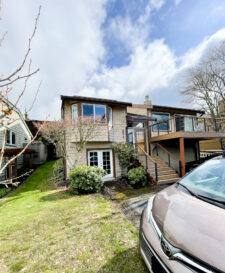
What Barkley Homes Actually Need From a Window Upgrade
We've worked on enough homes in this part of Bellingham to know the pattern. Here's what tends to matter most locally:
Wind-Driven Rain Resistance
Barkley's exposure to weather moving in off the Salish Sea means rain doesn't just fall straight down — it gets pushed sideways against the west and south-facing walls. Windows need proper flashing, sill pans, and drainage details, not just a caulked frame. This is as much about the installation as the window unit itself.
Condensation Control
High ambient humidity plus temperature swings between a warm interior and a cold, wet exterior is a recipe for condensation. Low-E glass with the right coating and a warm-edge spacer system keeps interior glass surfaces closer to room temperature, which cuts down on the fogging and moisture buildup that eventually leads to mold on sills and trim.
Moss and Organic Growth Resistance
Moss doesn't just grow on roofs here — it takes hold in window tracks, weep holes, and anywhere else standing moisture and organic debris collect. Frame materials and drainage designs that shed water quickly and don't trap debris matter more in Whatcom County than they would in a drier climate.
UV and Weathering Durability
Even with our overcast reputation, UV exposure combined with constant damp cycles breaks down cheap vinyl and seals faster than most homeowners expect. Quality frame materials and glazing seals hold up longer under that repeated wet-dry cycling.
What a Correct Installation Involves
A window is only as good as the opening it sits in. Most of the failures we get called out to fix in older Bellingham homes trace back to installation shortcuts, not the window product itself. Here's what we consider non-negotiable:
- Full removal of old sashes, frames, and any water-damaged sheathing or framing discovered underneath
- Inspection of the rough opening for rot, especially at the sill, before anything new goes in
- Proper sill pan flashing so any water that gets past the window drains back outside, not into the wall
- Correct integration with the home's weather-resistive barrier (house wrap) using the shingle-lap method so water sheds downward and outward
- Low-expansion foam and backer rod at the perimeter, not just caulk, to control both air leakage and moisture
- Exterior trim and caulking rated for continuous damp exposure, not a standard interior-grade product
- Interior finish work that matches existing trim so the upgrade doesn't look like a patch job
Skipping any one of these steps is how a brand-new, energy-efficient window ends up with a rotten sill five years later. The window itself gets the credit or the blame, but the installation is usually what determines whether it lasts.
Choosing the Right Window for This Climate
There isn't one "best" window for every Barkley home — it depends on the home's age, exposure, and budget. That said, a few general guidelines hold up across most of the jobs we do in this area:
| Factor | What to Look For | Why It Matters Here |
|---|---|---|
| Frame Material | Vinyl with reinforced corners, fiberglass, or clad wood | Handles constant damp cycling better than bare aluminum or budget vinyl |
| Glazing | Dual-pane with Low-E coating and argon fill | Reduces condensation and heat loss during our long overcast, cool season |
| Drainage Design | Multiple weep points, sloped sills | Sheds wind-driven rain instead of letting it pool in the track |
| Spacer System | Warm-edge (non-metal) spacer | Keeps edge-of-glass temperature up, cutting fog and frost at the perimeter |
| Hardware | Corrosion-resistant locks and hinges | Salt air accelerates corrosion on standard steel hardware |
We don't push a single brand as the answer for every house. What we do insist on is matching the window's drainage and glazing spec to the exposure of the specific wall it's going on — a south-facing wall catching direct storm wind needs a more robust drainage detail than a sheltered north-facing window under an eave.
Why We Don't Install Certain Budget Window Lines
There are window products on the market built for drier, milder climates that simply aren't a good fit for a wet coastal environment like Bellingham. Our standard is that we won't install a window system with weak drainage design, thin corner welds, or a warranty structure that doesn't hold up to real-world coastal exposure — not because the product is universally bad, but because we've seen how it performs specifically in conditions like Barkley's. That's a maintenance and moisture-behavior judgment call, not a knock on any particular manufacturer. We'd rather steer a homeowner toward a product suited to this climate than install something we know is going to cause callbacks in three or four years.
How Our Process Works
1. On-Site Assessment
We walk the exterior and interior of each window being replaced, checking for existing rot, drafts, condensation staining, and how exposed each opening is to prevailing wind and rain.
2. Product Recommendation
Based on that walk-through, we recommend frame and glazing options suited to each wall's exposure — not a one-size-fits-all package.
3. Written Estimate
You get a clear, itemized estimate before any work starts. No pressure, no surprise add-ons once we're mid-project.
4. Installation
Old units come out, openings get inspected and repaired as needed, and new windows go in with full flashing and drainage detailing — not just a quick swap.
5. Final Walkthrough
We check operation, seals, and finish work with you before considering the job done.
Signs Your Barkley Home Needs Window Attention Now
Some problems are obvious; others build slowly enough that homeowners get used to them. Watch for:
- Fogging or moisture between the panes of double-pane glass — a sign the seal has failed
- Visible mold or discoloration on interior sills, especially in winter
- Drafts you can feel near the frame even when the window is fully closed
- Soft or spongy wood at the exterior sill or trim
- Windows that are difficult to open, close, or lock
- Moss or dark staining building up in the exterior track or weep holes
- Noticeably higher heating costs compared to similar-sized homes nearby
Any one of these on its own might not be urgent. Several together usually mean the window system as a whole is past its useful life and starting to put the surrounding wall at risk.
Energy Efficiency Beyond the Glass
Window replacement is also a good moment to address related issues that affect the same wall assembly — trim condition, caulking around the opening, and insulation immediately adjacent to the frame. Addressing these at the same time, rather than as a separate future project, avoids opening the same wall twice and gives you a more complete result from a single job.
Working With a Crew That Knows This Neighborhood
Bellingham's neighborhoods each have their own quirks in how weather hits them, and Barkley's proximity to the bay and surrounding low-lying terrain means moisture management has to be taken seriously on every job, not treated as an afterthought. A crew that already works in this part of Whatcom County isn't guessing at flashing details or drainage requirements — we've seen what fails here and we build accordingly. That local familiarity is worth more than a lower bid from a crew unfamiliar with how this specific climate treats an exterior wall.
If you're seeing drafts, fogged glass, or moisture issues on your Barkley home's windows, we're happy to take a look and give you a straightforward, no-pressure estimate. Use the form below to get started.