 Bellingham
 Roofing in Puget: A Different Set of Problems Than Most of the Country
Puget sits close enough to Bellingham Bay and Lake Whatcom that its roofs deal with a combination most contractors elsewhere never see: salt-tinged air rolling in off the water, long stretches of driving rain, and heavy tree cover that keeps roof surfaces shaded and damp for weeks at a time. None of these things destroy a roof overnight. They wear it down slowly, through moisture that never fully dries, fasteners that corrode a little faster than the manufacturer's spec sheet assumes, and moss that works its way under shingle edges a little more every winter. A roof repair here has to account for all of that, not just patch the spot that's leaking.
This page covers roof repair specifically for homes in and around Puget. It's not a general roofing overview — it's what we actually see on Puget roofs, what a correct repair looks like given the local conditions, and how we approach the work.
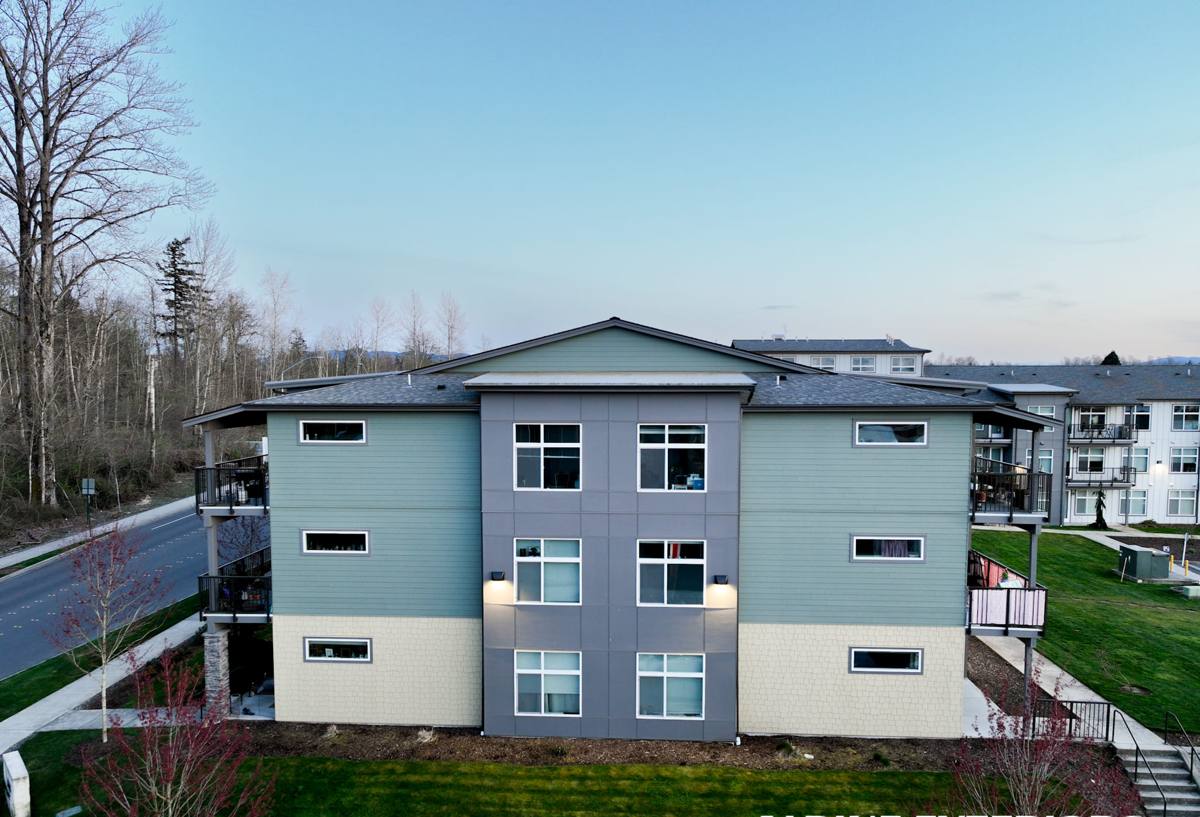
What Bellingham's Climate Does to a Roof Over Time
Whatcom County doesn't get the extreme heat or hard freezes that stress roofs in other parts of the country. Instead, the damage here is cumulative and moisture-driven:
- Salt air corrosion — proximity to the water accelerates rust on exposed fasteners, flashing, and metal vent stacks, especially on the sides of a roof that face the prevailing weather.
- Driving rain — wind-driven rain doesn't just fall straight down; it gets pushed sideways and upward under shingle tabs, around flashing laps, and into any gap that a calmer climate could get away with ignoring.
- Extended moss season — shaded, north-facing, and tree-covered sections of roof in this area can stay damp for months, giving moss and algae a long runway to establish and spread.
- Freeze-thaw cycling — winters here aren't brutal, but repeated light freezes on wet roofing material still open up small cracks in aging shingles and sealant over the years.
Individually, none of these are dramatic. Together, over several Bellingham winters, they're the reason roofs in Puget tend to develop leaks at flashing points, valleys, and moss-covered edges well before the shingles themselves are actually worn out.
Signs a Puget Roof Needs Repair
Most roof problems here show up gradually, and homeowners often notice the downstream symptom — a stain on a ceiling — long after the actual entry point started letting water in. Here's what we'd want you to look for or have checked:
- Moss buildup along the ridge, in valleys, or on the north-facing slope
- Granules collecting in gutters or downspouts
- Curling, cracked, or lifted shingle edges
- Rust streaking below metal flashing or vent boots
- Soft or discolored sheathing visible from the attic
- Daylight visible around chimney or skylight flashing
- Ceiling stains, especially ones that only appear after heavy or wind-driven rain
- Sagging sections, which usually mean moisture has reached the decking underneath
If you're seeing more than one or two of these, it's worth a real inspection rather than guessing from the ground.
The Repairs We See Most Often in Puget
Moss and organic growth damage
Moss doesn't just sit on top of shingles — its root structure lifts the edges and holds water against the surface, which is exactly the kind of standing moisture that shortens a roof's life in this climate. By the time moss is visible from the ground, it's often already worked into the shingle laps underneath.
Flashing failures
Flashing around chimneys, skylights, and roof-to-wall transitions is the single most common leak source we find. Salt air and years of wind-driven rain gradually corrode fasteners and open small gaps in the seal, and once water finds one of those gaps, it can travel a surprising distance before showing up as a stain inside.
Valley and vent leaks
Valleys concentrate a lot of water in a short amount of time during a heavy Bellingham storm, and any weak point there gets tested every time it rains hard. Vent boots — the rubber collars around plumbing stacks — are a common failure point too, since the rubber degrades faster than the shingles around it.
Storm and wind damage
Wind off the water can lift shingle tabs or tear loose ridge caps, especially on roofs that already have some age on them. These repairs are usually straightforward if caught early, but a lifted tab left alone through a wet winter turns into a much bigger repair.
What a Correct Repair Actually Involves
A repair that's done right isn't just replacing the shingle that's visibly damaged. Our process on a typical repair call includes:
- Finding the real source — water often travels along the underlayment or decking before it drips through the ceiling, so the visible stain and the actual entry point are frequently in different spots. We trace it back, not just patch where the drip shows up.
- Checking the decking — if moisture has been getting in for a while, the plywood or OSB underneath may be soft or delaminating. Repairing the surface without addressing compromised decking just hides the problem for another season.
- Matching materials properly — shingle color, profile, and age all matter for a repair that blends in and seals correctly rather than creating a new weak seam.
- Re-flashing, not just re-sealing — caulk over failed flashing is a short-term fix. Where flashing has corroded or pulled away, we replace it rather than sealing over a problem that will resurface.
- Moss and debris removal — clearing growth and buildup from the repair area and surrounding roof so the fix isn't undermined by the same moisture source that caused the original damage.
- A final water test where needed — especially on valley or flashing repairs, confirming the fix holds before we consider the job done.
Repair vs. Replacement: What Actually Drives the Decision
Not every leak means you need a new roof, and not every roof that "just needs a patch" is actually a good repair candidate. Here's how we think through it:
| Factor | Leans toward repair | Leans toward replacement |
|---|---|---|
| Age of roof | Under roughly 15 years | Nearing or past manufacturer's expected lifespan |
| Extent of damage | Isolated to one area (flashing, valley, a section of shingles) | Widespread across multiple slopes |
| Decking condition | Solid, no soft spots | Soft, delaminated, or repeatedly wet |
| Moss/algae coverage | Limited to shaded sections | Roof-wide, with granule loss underneath |
| Number of prior repairs | First or second repair on this roof | Recurring leaks in different spots each year |
We'll always tell you honestly which side of that table your roof falls on. A well-timed repair can reasonably extend a roof's useful life by several years — but we won't recommend patching a roof that's genuinely at the end of its service life just to sell a smaller job.
Our Process, Start to Finish
- Inspection — we get on the roof (not just a look from the driveway) and check attic-side conditions where accessible, since that's often where the real story is.
- Straight assessment — you get a clear explanation of what's actually wrong, what's causing it, and what it will take to fix — including if the honest answer is "this is minor" or "this needs more than a repair."
- Written scope — what's being repaired, with what materials, before any work starts.
- The work itself — done to match the existing roof system, not just whatever's fastest.
- Cleanup — old material and debris removed, gutters and ground area cleared of nails and granules.
- Walkthrough — we show you what was done and what to keep an eye on going forward.
Materials We Use and Why
For repair work in a climate like Puget's, we lean toward materials and methods built for sustained moisture exposure rather than the cheapest match available:
- Corrosion-resistant fasteners and flashing — given the salt air off the bay, standard fasteners corrode noticeably faster here than they would further inland.
- Self-adhering underlayment at vulnerable points — valleys, eaves, and flashing transitions get an extra moisture barrier, since these are the spots that take the most punishment from driving rain.
- Properly rated sealants — used to supplement correctly installed flashing, never as a substitute for it.
We're not going to tell you a particular shingle brand is "bad" — most major manufacturers make a solid product when installed correctly. Our standard is about installation quality and using components rated for sustained wet-climate exposure, not brand loyalty.
Why It Matters That We Already Work in Puget
A roofer who mostly works drier inland areas will sometimes treat a Puget roof like any other — patch the visible damage and move on. A crew that regularly works this specific pocket of Whatcom County knows to check the north-facing slopes for moss before it's visible from the street, knows which flashing details tend to fail first in salt-air exposure, and knows that a "small" leak reported in November can mean a much larger problem by the time the wet season is over. That local pattern recognition is the difference between a repair that lasts and one you're calling about again next winter.
Simple Maintenance That Extends a Repair's Life
Between repairs, a few habits go a long way toward protecting the work and slowing down the next problem:
- Keep gutters and downspouts clear, especially after fall leaf drop
- Trim back tree limbs that keep sections of roof in constant shade
- Have moss treated before it spreads, not after it's visibly thick
- Check attic ventilation — poor airflow traps moisture and speeds up rot from the inside
- Schedule a walk-through inspection every year or two, particularly before the wet season
If you're dealing with a leak, moss buildup, or storm damage on a Puget roof, we're glad to take a look and give you a straight answer about what it actually needs. Fill out the short form below for a free, no-pressure estimate.