 Bellingham
 Why Birch Bay Decks Take More Punishment Than a Typical Bellingham Yard
Birch Bay sits right on the water, and that changes what a deck has to survive year after year. A deck built a few miles inland in Bellingham deals with rain and the occasional windstorm. A deck in Birch Bay deals with all of that plus near-constant salt air moving off the water, wind that has nothing to slow it down before it hits your yard, and a moss season that runs longer here than almost anywhere else in Whatcom County. None of that is exotic weather — it's just relentless, and relentless is what wears decks out early.
Salt air is the part homeowners underestimate most. It doesn't just sit on the surface of a deck — it works into any exposed metal, any end-grain cut, and any joint where two materials meet. Combine that with driving rain that gets pushed sideways under railings and skirting, and you get moisture finding its way into places a deck built for a dry inland lot was never designed to handle. Add months of low sun angle and shade that keeps surfaces damp, and moss and algae get a real foothold on top of everything else.
None of this means a deck can't hold up in Birch Bay. It means the deck has to be built for these specific conditions from the framing up, not treated the same as a build going into a sheltered Bellingham backyard.
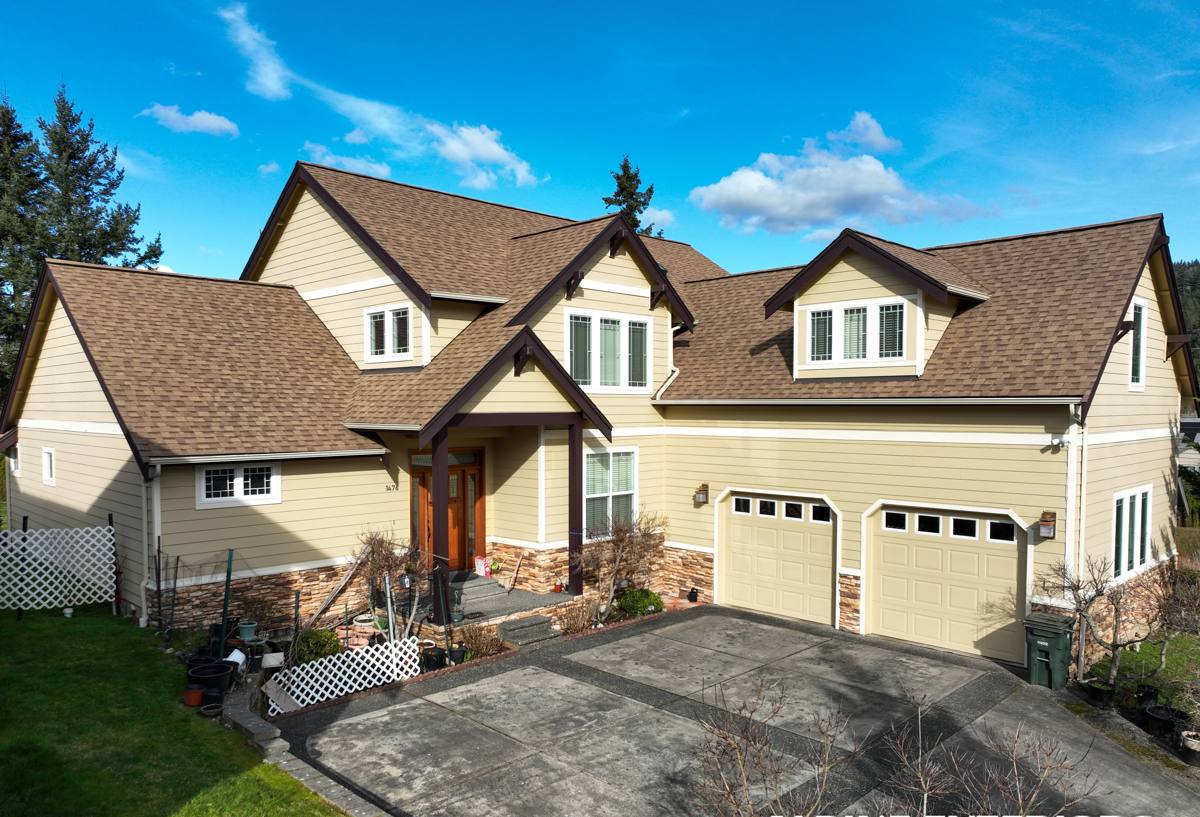
What "Built Right" Means for a Birch Bay Deck
Framing and Fasteners That Resist Salt Corrosion
The framing is the part of a deck nobody sees once it's finished, which is exactly why it matters most. In a salt-air environment, standard fasteners and connectors corrode faster than most homeowners expect — sometimes visibly staining the decking above them within a couple of seasons. We use fasteners and structural connectors rated for coastal or treated-lumber exposure, and we pay attention to compatibility between the metal in the hardware and the treatment chemicals in the lumber, since mismatched metals can accelerate corrosion in a wet, salty environment.
Footings and Ledger Attachment
Footings need to go below frost depth and bear on solid, well-drained soil — something we confirm on site rather than assume, since drainage varies a lot from lot to lot this close to the water. Where a deck attaches to the house, the ledger connection is one of the most common failure points on older decks generally, and it's worse in a wet climate: flashing has to be installed correctly so water is shed away from the house framing, not trapped behind the ledger board where it will rot the rim joist slowly and invisibly.
Decking Material: What Holds Up on the Water
Decking material choice matters more in Birch Bay than it does a few miles inland. Every material has real trade-offs — cost, appearance, maintenance, and how it behaves under constant moisture and salt exposure — and we'll walk through those honestly rather than push whatever has the best margin.
Comparing Decking Materials for Salt Air and Moss
| Material | Upfront Cost | Salt Air / Moisture Behavior | Maintenance | Typical Lifespan |
|---|---|---|---|---|
| Pressure-treated wood | Lowest | Needs sealing to resist moisture intrusion; end grain is vulnerable | Annual cleaning and periodic re-sealing | 10-15 years with upkeep |
| Cedar | Moderate | Naturally decay-resistant but still needs finish maintenance near water | Regular cleaning, periodic finish renewal | 15-20 years with upkeep |
| Composite decking | Higher | Doesn't absorb moisture like wood; some early-generation boards can still stain or grow moss film without cleaning | Periodic washing to keep moss/algae from taking hold | 20-25+ years, brand-dependent |
| PVC / capped composite | Highest | Fully sealed surface, most resistant to moisture and salt staining | Occasional washing only | 25+ years |
There's no single right answer here — it depends on your budget, how much maintenance you want to take on, and how the deck sits relative to sun, shade, and wind. What matters is picking the material with eyes open, knowing what it will ask of you five and ten years from now, not just what it looks like on day one.
Railings, Stairs, and Finish Details
Railings and stair components take a disproportionate amount of weather abuse because they're the most exposed part of the structure — full sun, full wind, and the first thing salt spray hits. Metal balusters and hardware need the same corrosion-resistant standard as the structural fasteners underneath, and any wood railing components need end-grain sealing at cuts and joints, since that's where moisture gets in first. Stair stringers deserve the same attention to fastening and flashing as the deck ledger — they're structural, not just aesthetic, and a stair connection that loosens over time is a safety issue, not just a cosmetic one.
Finish choice matters too. A film-forming stain or paint looks good initially but tends to peel and trap moisture underneath once it starts to fail, which is a bigger problem in a wet climate than a dry one. Penetrating oil-based finishes or letting a naturally resistant wood weather on its own are both reasonable approaches depending on the look you want — we'll talk through what fits your deck rather than defaulting to whichever finish is easiest to apply.
Our Process, Start to Finish
- On-site assessment — we look at your yard's actual exposure to wind and salt air, existing drainage, soil conditions, and how the deck will tie into your house.
- Design and material selection — we talk through layout, size, and material trade-offs based on your budget and how much maintenance you want to take on long-term.
- Permitting — we handle the permit application and any required inspections so you're not chasing paperwork.
- Build — footings, framing, ledger flashing, decking, and railings, built to hold up under the specific conditions your lot sees.
- Final walkthrough — we go over the finished deck with you, including what upkeep it will need and roughly when.
We build the same way whether the deck is a small platform off a back door or a larger structure meant for entertaining — the steps don't change, only the scale.
Keeping a Birch Bay Deck Ahead of Moss Season
Even a well-built deck needs some seasonal attention in a climate like this. Moss and algae don't mean the deck was built wrong — they mean organic growth had time and moisture to take hold, which happens on any exterior surface here eventually. A little regular maintenance goes a long way toward keeping a deck looking good and lasting as long as it should.
- Sweep debris off the deck surface regularly, especially in fall when leaves and needles pile up in corners and against the house.
- Rinse or wash the surface periodically to keep moss and algae from establishing, particularly in shaded or low-airflow areas.
- Check railings and stair connections once a year for looseness or corrosion around fasteners.
- Keep gutters and downspouts clear so runoff isn't being dumped directly onto or under the deck.
- Reapply sealant or finish on wood decking on the schedule appropriate to that finish, before it starts to fail rather than after.
- Trim back vegetation that's shading the deck and keeping it damp longer than it needs to be.
Permits and Whatcom County Considerations
Deck projects generally require a building permit, and depending on your specific lot's location and its proximity to the shoreline, there may be additional review involved. We handle the permitting process as part of the job, but it's worth knowing up front that timelines can vary depending on your specific property and jurisdiction — we'll give you a realistic picture once we've looked at your lot rather than guessing at the start.
Why Hiring a Crew That Already Works Birch Bay Matters
A deck built by someone who hasn't worked this stretch of coastline before is making a lot of first-time guesses about wind exposure, salt corrosion, and moisture behavior — guesses that show up as problems two or three years down the road, not on day one. A crew that already builds in Birch Bay isn't guessing. We know which fasteners actually hold up here, how much protection a ledger connection needs against driving rain, and how fast moss takes hold on a shaded section of decking near the water.
That local experience doesn't just protect the structure — it protects your budget, since the fixes for salt corrosion or trapped moisture almost always cost more than building it right the first time. If you're planning a new deck or replacing one that's showing its age, we're happy to take a look and give you a straightforward, no-pressure estimate using the form below.