 Bellingham
 Metal Roofing Built for Birchwood's Weather, Not Just Its Looks
Birchwood sits close enough to Bellingham Bay and Lake Whatcom that homes here deal with a specific mix of weather stress: salt-laden air rolling in off the water, wind-driven rain that finds its way under poorly lapped flashing, and a moss season that can run eight or nine months out of the year. A metal roof handles all three better than most other roofing materials, but only if it's specified and installed correctly for this exact environment. A metal roof installed the same way you'd install one in eastern Washington or inland won't hold up the same way in Whatcom County.
This page covers what a correct metal roofing job looks like specifically for Birchwood homes, what to ask any contractor bidding the work, and how we approach these projects.
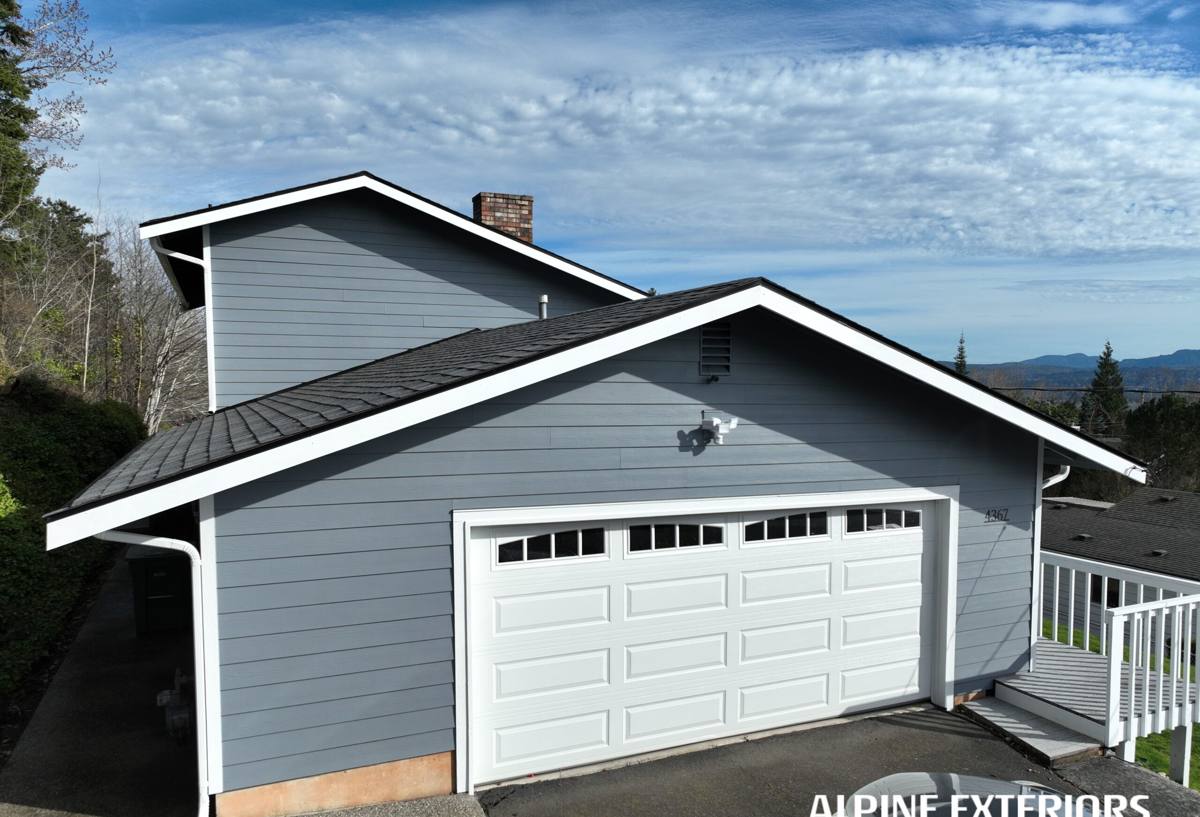
What Bellingham's Climate Actually Does to a Roof
Salt Air and Corrosion
Homes within a few miles of Bellingham Bay are exposed to airborne salt that accelerates corrosion on unprotected or poorly coated metal. This doesn't mean metal roofing is a bad choice near the water — it means the panel coating, fastener material, and flashing metal all need to be matched to a marine-influenced environment instead of a generic inland spec.
Driving Rain
Storms coming off the Strait of Georgia and Puget Sound frequently arrive with wind behind them, pushing rain sideways instead of straight down. A roof that only sheds water well in calm conditions will leak in Birchwood. Underlayment coverage, lap direction, and flashing detail at penetrations matter more here than in drier, calmer climates.
Moss and Standing Moisture
Whatcom County's long wet season keeps roofs damp for extended stretches, which is exactly what moss needs to establish. Moss holds moisture against roofing materials, and on materials that trap organic debris, that constant dampness shortens the roof's working life. Metal roofing resists moss far better than composition shingle or wood, but valleys, low-slope transitions, and areas that stay shaded still need to be designed to shed water and debris rather than collect it.
Why Metal Roofing Fits Birchwood Homes Specifically
- Sheds wind-driven rain more reliably than lapped shingle products when installed with proper underlayment and flashing detail
- Doesn't provide the organic surface moss needs to root into, unlike shingle or wood roofing
- Handles the freeze-thaw swings common in Whatcom County winters without the granule loss or cracking that shortens shingle life
- Lasts decades longer than composition shingle when the coating and fasteners are correctly matched to a coastal-influenced climate
- Sheds snow and ice load cleanly rather than holding it against the roof deck
None of that happens automatically just because a roof is metal. It happens because the system — panel, fastener, flashing, underlayment, and ventilation — was specified for this climate and installed correctly.
What a Correct Metal Roof Installation Involves
Underlayment First
On a home exposed to driving rain, the underlayment is the backup system that keeps water out if wind ever pushes moisture past the panel seams. We use a full synthetic underlayment layer, with self-adhered membrane at eaves, valleys, and any low-slope transitions where water is most likely to be pushed or pooled.
Fasteners and Flashing Matched to the Environment
Given the salt air exposure this close to the water, fastener and flashing material choice isn't cosmetic — it determines whether the roof corrodes prematurely at the connection points long before the panels themselves would fail. We match fastener coatings and flashing metals to the panel system so the whole roof ages at the same rate.
Valley and Penetration Detail
Most metal roof leaks don't happen in the open field of the panels — they happen at valleys, chimneys, vents, and skylights where two roof planes or a roof and a vertical surface meet. These are also the spots where moss and debris tend to collect first. Correct flashing detail here is the single biggest factor in whether a metal roof stays watertight for its full service life.
Attic and Roof Ventilation
A roof that's watertight from above can still fail from the inside if the attic can't release moisture. Warm, moist interior air that hits a cold roof deck in Bellingham's damp winters condenses, and over time that trapped moisture can rot sheathing regardless of what's covering it. We check existing ventilation as part of every metal roofing project and correct it when it's inadequate, rather than covering up a problem that will resurface later.
Comparing Metal Panel Options for Birchwood Homes
| Panel Type | Best For | Trade-Offs |
|---|---|---|
| Standing seam (concealed fastener) | Homes wanting the longest service life and cleanest look, especially closer to the bay | Higher upfront cost; installation is less forgiving of shortcuts |
| Exposed-fastener panel (corrugated/ribbed) | Budget-conscious projects, outbuildings, secondary structures | Fasteners penetrate the panel face and need periodic inspection and re-sealing over the roof's life |
| Stone-coated steel | Homeowners who want a shingle or tile appearance with metal's durability | More installation steps; panel-to-panel and trim detailing takes more time to get right |
We don't push one system on every home. The right choice depends on roof slope, budget, and how close the home sits to the water, which affects how much corrosion resistance is worth prioritizing.
Our Process on a Birchwood Metal Roofing Job
- On-site assessment — we look at the existing roof deck, current ventilation, valley and penetration layout, and any signs of past moisture or moss problems before quoting anything.
- Written estimate — panel type, underlayment spec, flashing detail, and ventilation work are all spelled out, not bundled into a vague lump sum.
- Tear-off and deck inspection — we check the sheathing once the old roofing is off, since this is the only point where hidden rot or moisture damage is visible and fixable before it's covered again.
- Underlayment and flashing installation — the part of the job that determines whether the roof actually performs in driving rain, done before a single panel goes down.
- Panel installation — laid and fastened to the manufacturer's spec for the specific panel system and local wind exposure.
- Final walkthrough — we review the completed roof with the homeowner, including where ventilation or moss-prone areas were addressed.
What Drives Cost on a Metal Roofing Project
| Factor | Why It Matters |
|---|---|
| Panel type | Standing seam costs more than exposed-fastener panel due to material and labor complexity |
| Roof complexity | More valleys, dormers, and penetrations mean more flashing work and labor time |
| Tear-off vs. overlay | Full tear-off costs more upfront but lets us inspect and address the deck and ventilation, which overlay does not |
| Ventilation corrections | Adding or upgrading attic ventilation adds cost but protects the investment long-term |
| Roof access and pitch | Steeper or harder-to-access roofs take longer and require additional safety setup |
We give a clear written range during the on-site assessment rather than a phone estimate, since the factors above can only be judged accurately in person.
Why Hiring a Crew That Already Works in Birchwood Matters
A roofing crew that regularly works this part of Bellingham already knows which panel and flashing specs hold up to salt air near the bay, how local wind patterns push rain into valleys and penetrations, and how long moss season really runs here versus what a generic spec sheet assumes. That local experience shows up in the details — fastener choice, valley flashing, ventilation correction — that a crew unfamiliar with Whatcom County's specific weather pattern might treat as optional.
It also means faster response if something needs attention after installation, and a crew that stands behind work they can actually get back out to inspect without a long drive.
Maintaining a Metal Roof in Birchwood's Climate
- Clear debris from valleys and low-slope transitions before the wet season, since trapped leaves and needles hold moisture against the roof
- Have gutters checked and cleared regularly — overflow during driving rain is one of the most common causes of fascia and soffit damage on homes with otherwise sound roofs
- Watch for moss starting to establish in shaded valleys or north-facing slopes, and address it before it spreads
- Have flashing and fastener condition checked periodically, especially on homes closer to the bay where salt exposure is highest
- Confirm attic ventilation is still functioning as intended, particularly after any attic insulation or remodeling work
Ready for an Honest Look at Your Roof
If you're in Birchwood and thinking about metal roofing, we're happy to come take a look, walk you through what your specific roof needs given its exposure and layout, and give you a straightforward written estimate. No pressure, no upsell — just a clear picture of what a correct job involves and what it costs. Fill out the form below to get started.